आज हम बात कर रहें है सिनेमा के स्वर्णिम काल की. यह उस क्रांतिकारी दौर की बात है जब फिल्मों ने सिर्फ मनोरंजन से इतर समाज की धड़कनों को थामने का काम किया। इस क्रांतिकारी दौर में फिल्मों की परिभाषा ही बदल गई. यहाँ तक की नायक की छवि और दर्शकों के नजरिए भी बदल गए. ज्ञात है कि, यह वह दौर था जब देश राजनीतिक उथल-पुथल, बेरोजगारी, आपातकाल और सामाजिक असंतोष से जूझ रहा था.
सत्तर के दशक में जहाँ रोमांटिक नायकों का दौर समाप्त हो रहा था और सड़कों पर उतरा एक आम आदमी, जो व्यवस्था के विरुद्ध बगावत कर रहा था, सिल्वर स्क्रीन का असली हीरो बनकर उभरा। इसी दौर में ‘मसाला फिल्मों’ के साथ -साथ समानांतर या ‘आर्ट सिनेमा’ का भी जन्म हुआ था. बताते चलें कि, वर्ष 1970 का दशक भारत के लिए उथल-पुथल भरा समय था. एक तरफ बढ़ती बेरोजगारी, महंगाई, भ्रष्टाचार और 1975 में लगाई गई आपातकाल ने आम आदमी के मन में आक्रोश पैदा कर दिया था. इसी असंतोष ने हिंदी सिनेमा में ‘द अंग्रे यंग मैन’ (आक्रोशित युवा) के रूप में देखने को मिली थी.
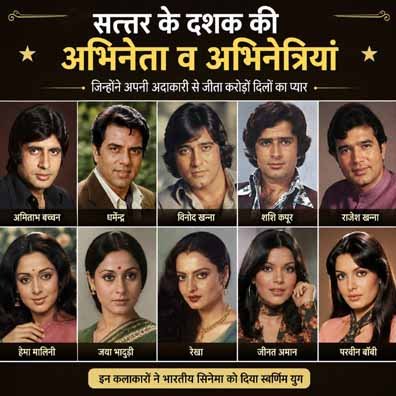
वासे तो देखा जाय तो सत्तर के दशक के अभिनेताओं को दो मुख्य धाराओं में विभाजित करके देखा जा सकता है. 1. प्रारंभिक दौर की रूमानियत 2. मध्य-उत्तरार्ध का सामाजिक आक्रोश (एक्शन). वर्ष सत्तर के दशक की शुरुआत राजेश खन्ना के ऐतिहासिक क्रेज के साथ हुई थी. उन्होंने कटी पतंग (1971), अमर प्रेम (1972) और आनंद (1971) जैसी फिल्मों से सफलता का ऐसा स्वाद चखा जो भारतीय सिनेमा में दुर्लभ था. उनकी झुकी हुई गर्दन, संवाद अदायगी का अंदाज और डिंपल वाली मुस्कान पर पूरा देश फिदा था. वे भारतीय सिनेमा के पहले ‘आधिकारिक सुपरस्टार’ कहलाए। वहीं, दूसरी ओर सलीम-जावेद के ‘द अंग्रे यंग मैन’ का क्रांतिकारी किरदार लिखा और इस किरदार को अमिताभ बच्चन ने साकार कर वर्ष 1973 में फिल्म ‘ज़ंजीर’ के साथ यह सफर शुरू हुआ और फिर ‘दीवार’, ‘शोले’, ‘त्रिशूल’ जैसी फिल्मों ने एक ऐसे हीरो की अवधारणा को जन्म दिया जो कानून को अपने हाथ में लेता है और एक ऐसी व्यवस्था से टकराता है जिसने उसे धोखा दिया है. यह सिर्फ अभिनय नहीं था बल्कि उस दौर की उपज थी, जिसने अमिताभ बच्चन को “एक आदमी का उद्योग” बना दिया था.
वर्ष 1973 के बाद परिदृश्य पूरी तरह बदल गया था. अमिताभ बच्चन ने ‘ज़ंजीर’ के साथ ‘आम आदमी’ के कोप को स्क्रीन पर उतारा और ‘शोले’ (1975 ), ‘अमर अकबर एंथोनी’ (1977 ), ‘दीवार’ (1975 ) और ‘डॉन’ (1978 ) जैसी फिल्मों के साथ उन्होंने बॉक्स ऑफिस पर ऐसा वर्चस्व स्थापित किया, जो आज भी अद्वितीय माना जाता है. इसके अलावा भी और भी अभिनेता हुए जैसे-
धर्मेंद्र – वर्ष सत्तर के दशक में धर्मेंद्र की ‘ही-मैन’ कहा गया.उन्होंने यादों की बारात (1973) और शोले (1975) में जबरदस्त एक्शन किया, वहीं चुपके चुपके (1975) जैसी फिल्म में अपनी बेहतरीन कॉमिक टाइमिंग भी दिखाई।
संजीव कुमार – सत्तर के दशक के सबसे ऊंचे ‘एक्टर्स एक्टर’ माने जाते है संजीव कुमार। उन्होंने लीक से हटकर कोशिश (मूक-बधिर किरदार), आंधी, मौसम और शोले में ठाकुर बलदेव सिंह का अमर किरदार निभाकर साबित किया कि अभिनय की कोई उम्र या तय दायरा नहीं होता है.
विनोद खन्ना शशि कपूर और शत्रुघ्न सिन्हा – शशि कपूर 1971 में ‘अमर प्रेम’ और 1973 में ‘अभिमान’ जैसी परफॉर्मेंस के साथ ओमानसी नायक के रूप में छाए रहे, जबकि विनोद खन्ना और शत्रुघ्न सिन्हा खलनायकी से शुरुआत कर मुख्य नायक के रूप में अपनी धाक जमाई। विनोद खन्ना की मर्दाना शख्सियत (अमर अकबर एंथनी, मुकद्दर का सिकंदर) ने सीधे तौर पर अमिताभ बच्चन को टक्कर दी. वहीं शत्रुघ्न सिन्हा अपने कड़क संवादों (कालीचरण) के लिए जाने गए.
ऋषि कपूर और अमोल पालेकर – ऋषि कपूर ने बॉबी (1973) से चॉकलेट बॉय और युवा प्रेम के प्रतीक के रूप में अपनी जगह बनाई। वहीं, अमोल पालेकर (रजनीगंधा, गोलमाल) ने मध्यवर्गीय, आम दफ्तर जाने वाले सीधे-सादे ‘बॉय नेक्स्ट डोर’ की छवि को लोकप्रिय बनाया।
वर्ष 1970 का दशक अभिनेत्रियों के लिए भी बेहद खास थीं. इस दौर में अभिनेत्रियां सिर्फ नायक के पीछे पेड़ के चारों ओर नाचने वाली कठपुतली नहीं रहीं, बल्कि उन्होंने फैशन और सशक्त अभिनय के नए मानक स्थापित किए.
हेमा मालिनी – हेमा मालिनी जिन्हें ‘ड्रीम गर्ल’ के नाम से जाना जाता है. वर्ष 1970 में ‘जॉनी मेरा नाम’ से लेकर 1975 की ऐतिहासिक ‘शोले’ और 1972 की दोहरी भूमिका वाली ‘सीता और गीता’ में उनके अद्भुत अभिनय ने उन्हें घर-घर में पहचान दिलाई।
ज़ीनत अमान और परवीन बाबी – सत्तर के दशक ने हिंदी सिनेमा की पारंपरिक ‘साड़ी-सलवार’ वाली भारतीय नारी की छवि को तोड़ा। ज़ीनत अमान (हरे रामा हरे कृष्णा, डॉन) और परवीन बाबी (दीवार, अमर अकबर एंथनी) ने पर्दे पर आधुनिक, बेबाक, और वेस्टर्न लुक वाली महिलाओं का प्रतिनिधित्व किया। उन्होंने पर्दे पर सिगरेट पीने, लिव-इन रिलेशनशिप और ग्लैमर को एक नई और स्वीकार्य परिभाषा दी.
जया बच्चन (भादुड़ी) – ग्लैमर के दौर में जया बच्चन ने अपनी सादगी और बेहतरीन अभिनय से दर्शकों का दिल जीता। गुड्डी, अभिमान, कोशिश और मिशी जैसी फिल्मों में उनके सरल, सहज और वास्तविक अभिनय ने यह साबित कर दिया कि प्रतिभा और प्राकृतिक लुक ही काफी है.
रेखा – सत्तर के दशक के शुरुआती सालों में रेखा को काफी आलोचनाएं झेलनी पड़ीं, लेकिन इसी दशक के अंत तक (विशेषकर घर और मुकद्दर का सिकंदर) उन्होंने खुद का पूरी तरह कायाकल्प किया. उन्होंने 1970 में ‘सावन भादो’ से अपने कैरियर की शुरुआत की, और दशक के अंत तक ‘नगीन’ (1976), ‘मुकद्दर का सिकंदर’ (1978) और ‘खूबसूरत’ (1980) जैसी फिल्मों से वे एक सफल अभिनेत्री के रूप में उभर कर आईं.
वहीं, मुमताज (1970), आशा पारेख (1971), शर्मिला टैगोर और राखी गुलज़ार (1970 -74 तक दूसरी सबसे अधिक पारिश्रमिक पाने वाली अभिनेत्री) ने भी विविध भूमिकाओं से दशक को समृद्ध किया. राखी ने कभी-कभी और त्रिशूल जैसी फिल्मों में अपनी भावुक और गंभीर अभिनय क्षमता का लोहा मनवाया. वहीं शर्मिला टैगोर ने अमर प्रेम और मौसम जैसी कलात्मक झुकाव वाली फिल्मों में यादगार भूमिकाएं निभाईं. सत्तर के दशक में मुमताज और राजेश खन्ना के साथ उनकी जोड़ी सुपरहिट रही (सच्चा झूठा, अपना देश). वे अपनी चंचलता और गजब के डांसिंग स्किल्स के लिए जानी जाती थीं.
एक तरफ जहां समानांतर सिनेमा का साम्राज्य था, वहीं दूसरी ओर श्याम बेनेगल, मृणाल सेन और मणि कौल के नेतृत्व में ‘भारतीय न्यू वेव’ या समानांतर सिनेमा का जन्म हुआ था. इस धारा ने यथार्थवादी कहानियों पर ध्यान केंद्रित किया और सिनेमा को कला के एक माध्यम के रूप में स्थापित किया. जैसे –
शबाना आज़मी – शबाना आज़मी वर्ष 1974 में फिल्म अंकुर से डेब्यू कर उन्होंने अभिनय के नये आयाम स्थापित किये। उन्होंने ‘निशांत’ (1975), ‘अर्थ’ (1982) जैसी फिल्मों के साथ ऐसे यथार्थवादी किरदारों को जीया, जिसकी कल्पना मुख्यधारा अभिनेत्रियां नहीं कर सकती थीं.
स्मिता पाटिल – स्मिता पाटिल ने वर्ष 1974 में श्याम बेनेगल की ‘निशांत’ से डेब्यू किया और अपने मजबूत और सशक्त अभिनय के दम पर समानांतर सिनेमा की एक और मुख्य स्तंभ बनीं। वर्ष 1977 में बनी फिल्म ‘भूमिका’ में उनका प्रदर्शन आज भी अविस्मरणीय है.
नसीरुद्दीन शाह और ओम पुरी ने भी समानांतर सिनेमा की आंदोलन को नई ऊंचाई दी और बाद में मुख्यधारा के सिनेमा में भी खुद को स्थापित किया था. इसी दौर में खलनायकों का सिक्का भी चमका.
प्राण – सिनेमा के इतिहास में सबसे बड़े खलनायक’ माने जाने वाले प्राण ने सत्तर के दशक में अपनी अभिनय प्रतिभा से विलेन के रोल को नई ऊंचाई दी. उन्होंने ‘ज़ंजीर’ में शेर खान और ‘डॉन’ में जसजीत की भूमिका ने उन्हें अमर बना दिया था.
अजीत ने खलनायकी को एक नया, स्टाइलिश मुकाम दिया था. इसके अलावा जीवन, मदन पुरी, प्रेम चोपड़ा, प्रेमनाथ और रंजीत जैसे खलनायकों की खलनायिका भी पर्दे पर खूब छाई रही थी. सत्तर के दौर में चरित्र और सहायक अभिनेताओं का भी जन्म हुआ था. इस दौर में हेलन ने कैबरे नृत्यांगना के रूप में ‘वैंप’ की छवि को स्थापित किया वहीं, बिन्दू और अरुणा ईरानी ने ‘लेडी विलेन’ की परंपरा शुरू की थी. पिंचू कपूर और लीला मिश्रा जैसे अभिनेताओं ने फिल्मों में एक मजबूत सहायक भूमिका निभाई थी.
वैसे तो देखा जाय तो सत्तर का दशक हिंदी सिनेमा का “मल्टी-स्टारर” और “एक्शन-पैक्ड” का स्वर्ण काल था. इस दौर के अभिनेताओं ने जहाँ पुरुषों को चॉकलेट हीरो के दायरे से निकालकर समाज से लड़ने वाला जुझारू नायक बनाया, वहीं अभिनेत्रियों ने रूढ़ियों को तोड़ते हुए अपनी एक स्वतंत्र पहचान खड़ी की. सत्तर का दशक हिंदी फिल्म उद्योग के मानचित्र पर हमेशा सुनहरे अक्षरों में लिखा रहेगा चुकि, लगभग 50 साल बाद भी सत्तर के दशक के इन सितारों की अदाकारी, उनके डायलॉग और उनका अंदाज भारतीय सिनेमा की बुनियाद बने हुए हैं.
========== ========= ===========
Actors and actresses of the 1970s…
Today we’re talking about the golden age of cinema. It was a revolutionary era when films, beyond mere entertainment, captured the pulse of society. During this revolutionary period, the very definition of films changed. Even the image of the hero and the audience’s perspectives shifted. It’s worth noting that this was a period when the country was grappling with political turmoil, unemployment, the Emergency, and social unrest.
In the 1970s, the era of romantic heroes was coming to an end, and the common man, taking to the streets and rebelling against the system, emerged as the true hero of the silver screen. Along with ‘masala films,’ parallel or ‘art cinema’ also emerged during this period. It’s worth noting that the 1970s were a turbulent time for India. Rising unemployment, inflation, corruption, and the Emergency imposed in 1975 created anger among the common man. This discontent manifested itself in Hindi cinema as “The Angry Young Man.”
In general, the actors of the seventies can be divided into two main streams: 1.The romanticism of the early period. 2. The social anger (action) of the mid-late 1970s. The 1970s began with the historic craze for Rajesh Khanna. With films like Kati Patang (1971), Amar Prem (1972), and Anand (1971), he tasted a level of success that was rare in Indian cinema. His arched neck, dialogue delivery, and dimpled smile captivated the entire nation. He was called the first “official superstar” of Indian cinema. On the other hand, Salim-Javed wrote the revolutionary character of “The English Young Man,” and Amitabh Bachchan embodied it. This journey began in 1973 with “Zanjeer.” Films like “Deewar,” “Sholay,” and “Trishul” gave birth to the concept of a hero who takes the law into his own hands and confronts a system that has betrayed him. It wasn’t just acting, but a product of the times that made Amitabh Bachchan a “one-man industry.”
The landscape changed completely after 1973. Amitabh Bachchan brought the wrath of the “common man” to the screen with “Zanjeer,” and with films like “Sholay” (1975), “Amar Akbar Anthony” (1977), “Deewar” (1975), and “Don” (1978), he established a box office dominance that remains unparalleled even today. Other actors, such as
Dharmendra – Dharmendra was called the “He-Man” of the 1970s. He delivered powerful action roles in Yaadon Ki Baaraat (1973) and Sholay (1975), while also showcasing his excellent comic timing in films like Chupke Chupke (1975).
Sanjeev Kumar – Sanjeev Kumar is considered the greatest “actor’s actor” of the 1970s. He played the unconventional role of Thakur Baldev Singh in films like Koshish (deaf and mute), Aandhi, Mausam, and Sholay, proving that acting has no age or boundaries.
Vinod Khanna, Shashi Kapoor, and Shatrughan Sinha – Shashi Kapoor dominated the film industry as an omnipotent hero with performances like “Amar Prem” in 1971 and “Abhimaan” in 1973, while Vinod Khanna and Shatrughan Sinha established themselves as leading men after starting out as villains. Vinod Khanna’s masculine personality (in “Amar Akbar Anthony” and “Muqaddar Ka Sikandar”) directly rivaled Amitabh Bachchan. Shatrughan Sinha was known for his sharp dialogue delivery (Kalicharan).
Rishi Kapoor and Amol Palekar – Rishi Kapoor established himself as a chocolate boy and a symbol of young love with Bobby (1973). Amol Palekar (Rajnigandha, Golmaal) popularized the image of the simple, middle-class office-goer, “boy next door.”
The 1970s were also a significant period for actresses. During this era, actresses were no longer merely puppets dancing around the tree behind the hero; they set new standards for fashion and powerful acting.
Hema Malini – Hema Malini, known as the “Dream Girl,” made her a household name with her stellar performances in 1970’s “Johnny Mera Naam,” 1975’s landmark “Sholay,” and 1972’s double-role “Seeta Aur Geeta.”
Zeenat Aman and Parveen Babi – The 1970s shattered the stereotype of the traditional “sari-salwar” Indian woman in Hindi cinema. Zeenat Aman (Hare Rama Hare Krishna, Don) and Parveen Babi (Deewar, Amar Akbar Anthony) represented modern, outspoken, and Western-looking women on screen. They gave a new and acceptable definition to smoking, live-in relationships, and glamour.
Jaya Bachchan (Bhaduri) – During the era of glamour, Jaya Bachchan won the hearts of audiences with her simplicity and excellent acting. Her simple, natural, and genuine performances in films like Guddi, Abhimaan, Koshish, and Mishi proved that talent and natural looks are enough.
Rekha – Rekha faced considerable criticism in the early 1970s, but by the end of the decade, especially in films like Ghar and Muqaddar Ka Sikandar, she had completely reinvented herself. She began her career in 1970 with “Sawan Bhado,” and by the end of the decade, she had emerged as a successful actress with films like “Nagin” (1976), “Muqaddar Ka Sikandar” (1978), and “Khubsoorat” (1980).
Mumtaz (1970), Asha Parekh (1971), Sharmila Tagore, and Rakhi Gulzar (the second-highest-paid actress from 1970-74) also enriched the decade with diverse roles. Rakhi proved her emotional and serious acting abilities in films like “Kabhi Kabhie” and “Trishul.” Sharmila Tagore played memorable roles in artistically inclined films like “Amar Prem” and “Mausam.” In the 1970s, her pairing with Mumtaz and Rajesh Khanna was a superhit (“Sacha Jhootha,” “Apna Desh”). She was known for her playful charm and excellent dancing skills.
While Parallel Cinema reigned supreme, the “Indian New Wave,” or Parallel Cinema, was born, led by Shyam Benegal, Mrinal Sen, and Mani Kaul. This movement focused on realistic stories and established cinema as an art form.
Shabana Azmi – Shabana Azmi broke new ground in acting with her debut in the 1974 film Ankur. With films like “Nishant” (1975) and “Arth” (1982), she portrayed realistic characters that mainstream actresses couldn’t even imagine.
Smita Patil – Smita Patil debuted in 1974 with Shyam Benegal’s “Nishant” and, with her powerful and compelling acting, became another pillar of parallel cinema. Her performance in the 1977 film “Bhoomika” remains unforgettable.
Naseeruddin Shah and Om Puri also elevated the parallel cinema movement to new heights and later established themselves in mainstream cinema. This era also saw the rise of villains.
Pran – Considered the “greatest villain in cinema history,” Pran elevated the villain’s role to new heights with his acting talent in the 1970s. His roles as Sher Khan in “Zanjeer” and Jasjeet in “Don” made him immortal.
Ajit gave villainy a new, stylish dimension. Furthermore, the villainous roles of villains like Jeevan, Madan Puri, Prem Chopra, Premnath, and Ranjeet also dominated the screen. The 1970s also saw the rise of character and supporting actors. Helen established the image of the “vamp” as a cabaret dancer, while Bindu and Aruna Irani started the tradition of the “lady villain.” Actors like Pinchoo Kapoor and Leela Mishra played strong supporting roles in films.
The 1970s were the golden age of Hindi cinema’s “multi-starrer” and “action-packed” films. While actors of this era elevated men from the realm of chocolate heroes to the role of combative social figures, actresses broke stereotypes and established their own independent identities. The seventies will always be written in golden letters on the map of the Hindi film industry because even after almost 50 years, the acting, dialogues and style of these stars of the seventies remain the foundation of Indian cinema.