परंपराओं के देश भारत में पर्व या त्यौहार सिर्फ धार्मिक अनुष्ठानों तक सीमित नहीं होते हैं बल्कि, वे जीवन-दर्शन, प्रकृति-प्रेम, सामाजिक समरसता और आध्यात्मिक चेतना के भी वाहक होते हैं. यहाँ हर दिन का अपना अलग है महत्व होता है. वतर्मान समय पवित्र और पावन कार्तिक का महीना चल रहा है. इस पवित्र और पावन महीने के शुक्ल पक्ष नवमी तिथि को “अक्षय” पुण्य की प्राप्ति के लिए भगवान विष्णु की पूजा, आँवले के वृक्ष का पूजन, दान-पुण्य, भोजन तथा धार्मिक अनुष्ठानों का विशेष महत्त्व होता है. प्रत्येक वर्ष कार्तिक मास के शुक्ल पक्ष की नवमी तिथि को “अक्षय नवमी” मनाया जाता है इसे कूष्माण्ड नवमी भी कहा जाता है. अक्षय नवमी पर्व मनाने का मुख्य उद्देश्य यह है कि मनुष्य का जीवन उसके कर्मों का प्रभाव उसके व्यक्तिगत हित से आगे बढ़कर समाज, प्रकृति और समस्त जीव-जगत के कल्याण तक पहुँचे.
अक्षय” शब्द का शाब्दिक अर्थ होता है – जो कभी समाप्त ना हो. सनातन संस्कृति में यह एक ऐसी तिथि है जिस दिन किए गए शुभ कर्मों, दान, जप, तप, पूजा और पुण्य का फल अक्षुण्ण रहता है. परंपराओं के देश भारत में कार्तिक मास की विशेष महत्ता होती है चुकिं, इस महीने में स्नान, दीपदान, तुलसी पूजन, व्रत, जप और दान का विशेष महत्व होता है. धार्मिक मान्यताओं के अनुसार, इस तिथि को सतयुग की शुरुआत से भी जोड़ा जाता है. मान्यता है कि इसी दिन से सतयुग की शुरुआत हुई थी, इसलिए इसे “सतयुगादि नवमी” भी कहते हैं. सतयुग को सभी युगों में श्रेष्ठ और धर्म, सत्य एवं पुण्य का युग माना गया है, इसलिए इस दिन किए गए पुण्य कार्य, जैसे दान, तप, और सेवा का फल अक्षय रहता है.
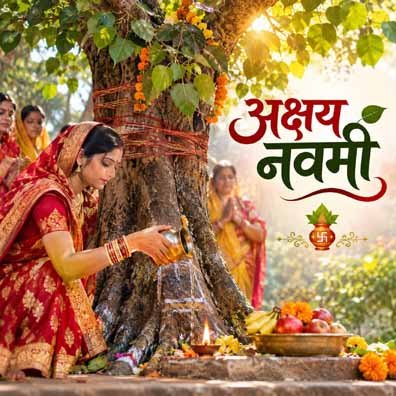
परंपराओं के देश भारत में प्रकृति का विशेष महव होता है चुकिं, ये जीवन के आधार होते हैं साथ ही इन्हें दैवीय चेतना के प्रतीक के रूप में भी देखा जाता है. इस संस्कृति में आज के दिन आँवले के वृक्ष की पूजा की पूजा की जाती है इसीलिए अक्षय नवमी को आँवला नवमी भी कहा जाता है. धार्मिक ग्रंथों व लोक मान्यताओं के अनुसार आँवले के वृक्ष में भगवान विष्णु का निवास होता है. इसीलिए अक्षय नवमी के दिन आँवले के वृक्ष की पूजा, परिक्रमा और उसके नीचे बैठकर भोजन करने की परंपरा प्रचलित है. आँवले के वृक्ष की पूजा के पीछे कई महत्व निहित हैं. उदाहरण –
- वृक्ष की पूजा मनुष्य को प्रकृति के प्रति श्रद्धा और कृतज्ञता का भाव सिखाती है.
- आयुर्वेद में आँवले को अत्यंत उपयोगी औषधीय फल माना गया है. इसमें विटामिन सी तथा अनेक पोषक तत्त्व पाए जाते हैं। इसका उपयोग पारंपरिक चिकित्सा, आहार और स्वास्थ्यवर्धक उत्पादों में किया जाता है.
- आँवले के वृक्ष का संरक्षण जैव-विविधता, हरित आवरण और पर्यावरणीय संतुलन की दृष्टि से उपयोगी माना जाता है.
- इस दिन आँवले के वृक्ष के नीचे परिवार एवं समाज के लोगों के साथ भोजन करने की विशेष परंपरा है.
- अक्षय नवमी के दिन गरीबों और असहाय लोगों की सहायता को विशेष पुण्यदायी माना जाता है.
परंपराओं के देश भारत में ‘दान’ को मनुष्य के श्रेष्ठ कर्मों में गिना गया है. वहीँ, अक्षय नवमी का सबसे महत्त्वपूर्ण पक्ष है दान-पुण्य की परंपरा. दान का अर्थ सिर्फ धन से नहीं होता है बल्कि, जरूरतमंदों को दैनिक जरूरत की वस्तुओं का दान होता है. भगवद्गीता के अनुसार, सात्त्विक दान उसे कहा गया है, जो उचित स्थान, उचित समय और योग्य व्यक्ति को बिना किसी अपेक्षा के दिया जाए.वैसे तो देखा जाय तो दान तीन प्रकार के होतें हैं – आर्थिक, नैतिक और सामाजिक.
सनातन संस्कृति में एक तरफ आँवले के वृक्ष की पूजा, कथा, दान और वृक्ष के नीचे सामूहिक भोजन की परंपरा प्रचलित है तो वहीं अयोध्या व मथुरा-वृंदावन में अक्षय नवमी के दिन से परिक्रमा भी जाती है. अक्षय नवमी जीवन-दर्शन की एक महत्त्वपूर्ण अभिव्यक्ति है. एक तरफ वृक्ष पूजा हमें प्रकृति के प्रति कृतज्ञ बनाती है वहीं, दूसरी तरफ दान-पुण्य हमें सामाजिक उत्तरदायित्व का बोध कराता है साथ ही भगवान विष्णु की आराधना जीवन में संरक्षण, संतुलन और लोककल्याण की भावना विकसित करती है.
========== ========= ===========
Akshaya Navami – 2026.

In India—a land of rich traditions—festivals are not merely confined to religious rituals; rather, they serve as vehicles for a philosophy of life, a love for nature, social harmony, and spiritual consciousness. Here, every single day holds its own unique significance. Currently, we are in the sacred and auspicious month of Kartika. On the ninth day (Navami) of the bright fortnight (Shukla Paksha) of this holy month, the worship of Lord Vishnu and the Amla (Indian gooseberry) tree, along with acts of charity, the offering of food, and the performance of religious rituals, hold special importance for attaining “Akshaya” (imperishable/everlasting) merit. Celebrated annually on the ninth day of the bright fortnight of the month of Kartika, “Akshaya Navami”—also known as Kushmanda Navami—carries a profound purpose: it encourages individuals to ensure that the impact of their actions extends beyond their own personal interests, reaching toward the well-being of society, nature, and all living beings. The term “Akshay” literally means “that which never ends.” In Sanatan culture, this specific day is significant because the merits earned through auspicious deeds—such as charity, chanting, penance, worship, and virtuous acts—remain eternal (imperishable). In India, a land deeply rooted in tradition, the month of Kartika holds special importance, as it is a time particularly suited for ritual bathing, offering lamps, worshipping the Tulsi plant, observing fasts, chanting, and performing acts of charity. According to religious beliefs, this day is linked to the beginning of the Satyuga (the Age of Truth). It is believed that the Satyuga commenced on this very day; hence, it is also known as “Satyugadi Navami.” Since Satyuga is considered the supreme era—an age defined by righteousness (dharma), truth, and virtue—the merits gained from virtuous deeds performed on this day, such as charity, penance, and service, remain eternal.
In India, nature is held in high regard, as it forms the very foundation of life and is viewed as a manifestation of divine consciousness. In this cultural tradition, the Amla (Indian gooseberry) tree is worshipped on this day, which is why Akshay Navami is also referred to as Amla Navami. According to religious texts and folk traditions, Lord Vishnu resides within the Amla tree. Consequently, it is customary on Akshay Navami to worship the Amla tree, perform parikrama (circumambulation) around it, and partake in a meal while sitting beneath it. There are several layers of significance behind the worship of the Amla tree; for instance:
- Worshipping the tree instills a sense of reverence and gratitude toward nature.
- In Ayurveda, the Amla fruit is considered a highly beneficial medicinal resource. It is rich in Vitamin C and various other nutrients, and is widely used in traditional medicine, dietary practices, and health-promoting products.
- Preserving the Amla tree contributes to biodiversity, maintains green cover, and supports environmental balance.
- On this day, there is a special tradition of sharing a meal beneath the *Amla* tree with family members and the community. It is a tradition.
- Assisting the poor and the helpless on the day of Akshaya Navami is considered to be an act of great merit.
In India—a land of traditions—‘daan’ (charity/giving) is regarded as one of the noblest human deeds. Indeed, the most significant aspect of Akshaya Navami is the tradition of charity and virtuous giving. Charity is not limited to monetary donations; it also encompasses providing items of daily necessity to those in need. According to the Bhagavad Gita, sattvic (pure/virtuous) charity is that which is offered at the right place, at the right time, and to a deserving person, without any expectation of a return. Broadly speaking, charity can be categorized into three types: economic, moral, and social.
In Sanatan culture, there is a tradition of worshipping the amla (Indian gooseberry) tree, reciting its associated legends, performing acts of charity, and partaking in communal meals beneath the tree. Furthermore, in places like Ayodhya and Mathura-Vrindavan, the practice of parikrama (circumambulation) also begins on the day of Akshaya Navami. Akshaya Navami serves as a profound expression of a philosophy of life: the worship of the tree fosters gratitude toward nature, while the act of charity instills a sense of social responsibility. Simultaneously, the worship of Lord Vishnu cultivates a spirit of protection, balance, and concern for the welfare of all.