 21वीं सदी के इस आधुनिक दुनिया में मानव के तौर- तरिके तो आधुनिक हो गए लेकिन, प्रकृति की अपनी चाल अनूठी और अनुपम होती है. वहीं, मानव की आधुनिक सोच ने पर्यावरण की जड़े हिलाने में भी कोई कसर नहीं छोड़ी है. एक तरफ मानव जितना आधुनिक होता गया वहीं, पर्यावरण और दूषित होती गई. पर्यावरण के दूषित होने से मौसम भी विकृत होती गई आलम ये है कि, वर्तमान समय के इस दौर में वैश्विक मौसम प्रणालियां भी तेजी से बदल रही हैं.
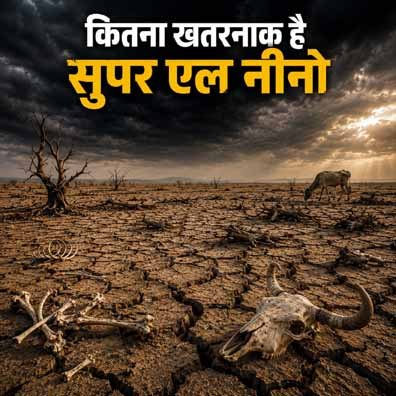
इस धरती पर कई सागर और महासागर हैं उन्हीं महासागरों में एक महासागर है प्रशांत महासागर. वर्तमान समय में प्रशांत महासागर के विशाल जल क्षेत्र में एक ऐसी घटना की शुरुआत हुई है जिसके कारण वैश्विक मौसम प्रणालियां भी तेजी से बदल रही हैं. मौसम विज्ञानियों और विश्व मौसम विज्ञान संगठन के अनुसार, प्रशांत महासागर में तेजी से तापमान बढ़ रहा है, जो न केवल एक मजबूत और विनाशकारी ‘सुपर अल नीनो’ की आहट दे रहा है.
एल नीनो – एक स्पेनिश शब्द है जिसका अर्थ होता है “छोटा लड़का”. वहीं, एल नीनो और ला नीना महासागरीय घटक हैं जबकि दक्षिणी दोलन वायुमंडलीय घटक है, इसी से एल नीनो/दक्षिणी दोलन शब्द का जन्म हुआ. यह एक जटिल जलवायु पैटर्न है जो तब घटित होता है जब प्रशांत महासागर के भूमध्यरेखीय क्षेत्र (सेंट्रल और पूर्वी प्रशांत) में समुद्र की सतह का तापमान सामान्य से काफी अधिक गर्म हो जाता है या यूँ कहें कि, भूमध्यरेखीय प्रशांत महासागर के मध्य और पूर्वी हिस्सों में समुद्र की सतह के तापमान में असामान्य रूप से वृद्धि को कहते हैं, जो वायुमंडलीय परिवर्तनों के साथ मिलकर वैश्विक मौसम को प्रभावित करता है.
सुपर एल नीनो: – जब समुद्र की सतह का तापमान सामान्य से अधिक करीब दो डिग्री सेंटीग्रेट या उससे अधिक ) बढ़ जाता है और यह स्थिति लंबे समय तक बनी रहती है. इस अवस्था को वैज्ञानिक भाषा में ‘सुपर एल नीनो’ या अत्यधिक तीव्र एल नीनो भी कहा जाता है.
एल नीनो – आमतौर पर व्यापारिक पवनें होती है जो गर्म पानी को पूर्व से पश्चिम (एशिया और ऑस्ट्रेलिया की तरफ) धकेलती हैं. गर्म पानी को एशिया और ऑस्ट्रेलिया की ओर धकेलती हैं, जिससे अमेरिका के तट पर ठंडा पानी ऊपर आता है. एल नीनो के दौरान, ये हवाएँ कमजोर पड़ कर दिशा भी बदल लेती हैं. जिसके कारण वैश्विक वायुमंडलीय परिसंचरण बदल जाता है और दुनिया भर का मौसम चक्र बिगड़ जाता है. वहीं, सुपर अल नीनो केवल सामान्य मौसम को ही तीव्र नहीं करता, बल्कि उसे चरम पर पहुँचा देता है. जिसके कारण भयंकर सूखा, विनाशकारी बाढ़ साथ ही प्रशांत महासागर में चक्रवातों की संख्या और इजाफा होता है,जिसके कारण वैश्विक तापमान में अभूतपूर्व वृद्धि होती है. बताते चलें कि, वर्ष 2015-16 के सुपर अल नीनो ने वर्ष 2016 को उस समय का सबसे गर्म वर्ष बना दिया था.
सुपर अल नीनो का वैश्विक और वित्तीय प्रभाव चौंका देने वाला होता है. यह सिर्फ फसलों तक ही सीमित नहीं होता है, बल्कि इसके वैश्विक आपूर्ति श्रृंखलाओं, बुनियादी ढाँचे व स्वास्थ्य सेवाओं को भी प्रभावित करता है. बताते चलें कि, वर्ष वर्ष 1997-98 के सुपर अल नीनो में वैश्विक आय का $5.7 ट्रिलियन डॉलर का नुकसान हुआ था. वर्ष वर्ष 1982-83 के भीषण अल नीनो में यह नुकसान $4.1 ट्रिलियन डॉलर के साथ शार्क के हमले,साँप के काटने और एन्सेफलाइटिस (मस्तिष्क ज्वर) जैसी अजीबोगरीब घटनाएँ भी इससे जुड़ी हुई है. समुद्र के अत्यधिक गर्म होने से कोरल रीफ (मूंगा चट्टानें) बड़े पैमाने पर नष्ट हो जाती हैं. जिससे समुद्री जैव विविधता खतरे में पड़ जाती है.
भारतवर्ष में एल नीनो का संबंध मानसून से होता है. बताते चलें कि, भारतवर्ष की 70% आबादी दक्षिण-पश्चिम मानसून पर निर्भर करती है. वहीं, भारतीय मौसम विज्ञान विभाग और अंतरराष्ट्रीय अध्ययनों के अनुसार, वर्ष 2026 में भारत के लिए सुपर अल नीनो सीधे तौर पर एक बड़ी आर्थिक और सामाजिक चुनौती बना है. भारत की लगभग 50% से अधिक कृषि प्रत्यक्ष या अप्रत्यक्ष रूप से जून से सितंबर के बीच होने वाले दक्षिण-पश्चिम मानसून पर निर्भर करती है जबकि, एल नीनो मानसूनी हवाओं को कमजोर कर देता है.
बीते कुछ वर्ष पूर्व में देखें तो वर्ष 1980 के बाद से लगभग 70% एल नीनो से भारत को सूखे का सामना करना पड़ा है. वहीं, इस वर्ष 2026 में सुपर एल नीनो के कारण देश के मुख्य कृषि बेल्ट (उत्तर, मध्य और पश्चिम भारत) में मानसून पूरी तरह से पटरी से उतर सकता है. वर्ष 2026 में सुपर एल नीनो के कारण पंजाब, हरियाणा, राजस्थान, उत्तर प्रदेश और मध्य प्रदेश (विशेषकर मालवा और बुंदेलखंड क्षेत्र) के साथ-साथ महाराष्ट्र का मराठवाड़ा और उत्तरी कर्नाटक भयंकर सूखे की चपेट में आ सकते हैं. दूसरी तरफ मई, जून और जुलाई के महीनों में उत्तर और मध्य भारत में पारा असहनीय स्तर तक पहुंच सकता है, जिससे ‘हीट डोम’ जैसी स्थितियां बनने के कारण आम लोगों के स्वास्थ्य पर भी असर पड़ सकता है.
तीसरी तरफ देश का बड़ा हिस्सा पानी की बूंद-बूंद को तरसेगा, वहीं दूसरी तरफ तमिलनाडु (चेन्नई), तटीय आंध्र प्रदेश और ओडिशा में पूर्वोत्तर मानसून (सर्दियों के मानसून) के दौरान अत्यधिक भारी बारिश और विनाशकारी बाढ़ का भी खतरा बढ़ जाएगा. पानी की कमी के कारण खरीफ की फसलों (धान, दालें, मक्का, सोयाबीन) का उत्पादन बुरी तरह प्रभावित होगा, जिससे ग्रामीण अर्थव्यवस्था चरमरा सकती है. अनाज, दालों और सब्जियों की आपूर्ति घटने से बाजार में कीमतों में भारी उछाल आएगा और महंगाई बढ़ेगी. चौथी तरफ जलाशयों में पानी का स्तर घटने से न केवल पीने के पानी की किल्लत होगी, बल्कि जलविद्युत उत्पादन घटने से देश को गंभीर बिजली संकट का भी सामना करना पड़ सकता है.
इतिहास गवाह है कि, जब-जब एल नीनो का प्रभाव भारतवर्ष पर पड़ा है तब-तब सुपर अल नीनो ने भारत को तबाह ही किया है. उदाहरण – वर्ष 1877-78 का एल नीनो के कारण पांच करोड़ लोगों की मृत्यु हुई थी. उस वक्त की वैश्विक आबादी 3.5% था. वर्ष 1877-78 के एल नीनो के दौरान भारत (तब ब्रिटिश भारत), चीन और ब्राजील में भयंकर अकाल पड़ा था.
सुपर एल नीनो से सिर्फ भारत ही पूरी दुनिया को भी खतरा है. यह प्रकृति की एक ऐसी चेतावनी है जिसे नजरअंदाज नहीं किया जा सकता है. वर्ष 1877 से वर्तमान समय में पूर्वानुमान प्रणालियाँ पहले से बेहतर हुई हैं वहीं, भारत का कृषि अर्थव्यवस्था और सार्वजनिक स्वास्थ्य पहले से और अधिक लचीला हो गया है. इसके लिए ठोस रणनीतियों की भी आवश्यकता होगी. देश के सभी जलाशयों और पारंपरिक जल स्रोतों में पानी का संचयन अभी से सुनिश्चित करना होगा साथ ही किसानों को भी कम पानी वाली फसलों को उगाने की सलाह देते हुए बिजली आपूर्ति को भी सुनिश्चित करना होगा.
सुपर एल नीनो केवल मौसमीय घटना नहीं, बल्कि वैश्विक जलवायु संकट का संकेत है. वहीं, भारत के लिए यह मानसून, कृषि, जल और ऊर्जा सुरक्षा पर गंभीर खतरा है. अगर समय रहते हुए राज्य व केंद्र सरकार ने मिलकर ठोस कदम नहीं उठाए तो इसके परिणाम अति खतरनाक हो सकते हैं. समय रहते जल संरक्षण, कृषि सुधार और शहरी प्रबंधन को और मजबूत करना ही इसके मुख्य समाधान है.
संजय कुमार सिंह,
पोलिटिकल एडिटर.
========== ========= ===========
How dangerous is Super El Niño?
In the modern world of the 21st century, while human lifestyles and practices have certainly evolved, nature’s own rhythms remain unique and unparalleled. At the same time, modern human endeavors have spared no effort in destabilizing the very foundations of the environment. As humanity has become increasingly modernized, the environment has simultaneously grown more polluted. This environmental degradation has led to distorted weather patterns; indeed, the current era is characterized by rapidly shifting global weather systems.
This Earth is home to numerous seas and oceans, among which lies the vast Pacific Ocean. Currently, an event has begun unfolding within the immense waters of the Pacific—an occurrence that is driving rapid changes in global weather systems. According to meteorologists and the World Meteorological Organization, temperatures within the Pacific Ocean are rising rapidly—a phenomenon that signals the imminent arrival of a powerful and destructive “Super El Niño.”
El Niño is a Spanish term meaning “The Little Boy.” While El Niño and La Niña represent oceanic components, the Southern Oscillation constitutes the atmospheric component; it is from this interplay that the term “El Niño/Southern Oscillation” was coined. This constitutes a complex climate pattern that emerges when sea surface temperatures in the equatorial region of the Pacific Ocean (specifically the Central and Eastern Pacific) rise significantly above normal levels. More precisely, it describes an anomalous increase in sea surface temperatures across the central and eastern sectors of the equatorial Pacific—a phenomenon that, in conjunction with atmospheric shifts, exerts a profound influence on global weather patterns.
Super El Niño: – This specific condition arises when sea surface temperatures rise by approximately two degrees Celsius (or more) above normal levels, and this elevated state persists over an extended period. In scientific terminology, this phase is referred to as a “Super El Niño” or an “exceptionally intense El Niño.”
El Niño: – Typically, trade winds serve to push warm water from east to west (towards Asia and Australia). These winds push warm water toward Asia and Australia, causing cold water to well up along the coast of the Americas. During an El Niño event, these winds weaken and even reverse direction. Consequently, global atmospheric circulation shifts, disrupting weather patterns across the world. Meanwhile, a “Super El Niño” does not merely intensify normal weather conditions; it pushes them to the extreme. This leads to severe droughts, devastating floods, and an increased frequency of cyclones in the Pacific Ocean, resulting in an unprecedented rise in global temperatures. It is worth noting that the Super El Niño of 2015–16 made 2016 the hottest year on record at the time.
The global and financial impact of a Super El Niño is staggering. Its effects are not limited solely to agricultural crops; they also impact global supply chains, infrastructure, and healthcare services. Notably, the Super El Niño of 1997–98 resulted in a loss of $5.7 trillion in global income. The severe El Niño of 1982–83 caused losses amounting to $4.1 trillion and was also linked to bizarre phenomena such as increased shark attacks, snakebites, and encephalitis (brain fever). Furthermore, the excessive warming of the ocean causes the widespread destruction of coral reefs, thereby endangering marine biodiversity.
In India, El Niño is intrinsically linked to the monsoon. It is worth noting that 70% of India’s population relies on the Southwest Monsoon. Furthermore, according to the India Meteorological Department and various international studies, the “Super El Niño” of 2026 poses a direct and significant economic and social challenge for the country. More than 50% of India’s agriculture depends—either directly or indirectly—on the Southwest Monsoon that occurs between June and September; however, El Niño tends to weaken these monsoon winds.
Looking back at recent history, since 1980, approximately 70% of El Niño events have resulted in drought conditions across India. Moreover, in 2026, the Super El Niño could cause the monsoon to completely go off track in the country’s primary agricultural belts (North, Central, and West India). Consequently, in 2026, regions such as Punjab, Haryana, Rajasthan, Uttar Pradesh, and Madhya Pradesh (particularly the Malwa and Bundelkhand regions)—as well as Maharashtra’s Marathwada and Northern Karnataka—could fall victim to severe drought. Conversely, during the months of May, June, and July, temperatures in North and Central India could soar to unbearable levels; this could lead to the formation of “heat domes,” thereby adversely impacting the health of the general public.
On one hand, a vast portion of the country will face acute water scarcity, yearning for every drop; on the other hand, the risk of extremely heavy rainfall and devastating floods will escalate in Tamil Nadu (Chennai), coastal Andhra Pradesh, and Odisha during the Northeast Monsoon (the winter monsoon). The shortage of water will severely disrupt the production of Kharif crops (such as paddy, pulses, maize, and soybean), potentially causing the rural economy to crumble. A decline in the supply of grains, pulses, and vegetables will trigger a sharp surge in market prices, thereby fueling inflation. Furthermore, the declining water levels in reservoirs will not only lead to a shortage of drinking water but could also plunge the country into a severe power crisis due to reduced hydroelectric generation.
History bears witness that whenever the influence of El Niño has impacted India, a “Super El Niño” event has invariably wreaked havoc upon the nation. For instance, the El Niño event of 1877–78 claimed the lives of 50 million people—a figure that constituted 3.5% of the global population at the time. During the 1877–78 El Niño, severe famines struck India (then British India), China, and Brazil.
The threat posed by a Super El Niño extends beyond India to the entire world. It serves as a warning from nature that simply cannot be ignored. While forecasting systems have improved significantly since 1877, India’s agrarian economy and public health infrastructure have also become far more resilient. Nevertheless, this situation demands the implementation of robust strategies. It is imperative to ensure the replenishment of water levels in all the country’s reservoirs and traditional water sources starting immediately; concurrently, farmers must be advised to cultivate water-efficient crops, and a reliable power supply must be guaranteed.
A Super El Niño is not merely a meteorological phenomenon; it is a harbinger of a global climate crisis. For India, specifically, it poses a grave threat to monsoon patterns, agriculture, and water and energy security. If the central and state governments fail to take decisive, concerted action in a timely manner, the consequences could be catastrophic. The primary solution lies in proactively strengthening water conservation efforts, agricultural reforms, and urban management systems.
Sanjay Kumar Singh,
Political Editor