परम्पराओं के देश में किसी पर्व या उत्सव का ऐतिहासिक व पौराणिक महत्व होता है साथ उस कार्यक्रम में गुप्त संदेश भी छुपा होता है. परम्पराओं के देश में प्रत्येक दिन, महीना व वर्ष का अपना अलग रंग और अंदाज होता है. वर्तमान समय अभी कार्तिक का पावन और पवित्र महीना चल रहा है. इस महीने की शुरुआत कृष्ण पक्ष की वैकुंठ चतुर्दशी से हुई थी और इसका समापन कार्तिक पूर्णिमा से होगा. आज हम एक ऐसे एतिहासिक क्षेत्र की बात कर रहें है जिसकी समृद्ध सांस्कृतिक परंपरा से पूरी दुनिया के लोग परिचित है. उस क्षेत्र का नाम है बिहार, जिसकी चर्चा पौराणिक ग्रंथों में भी हुई है.
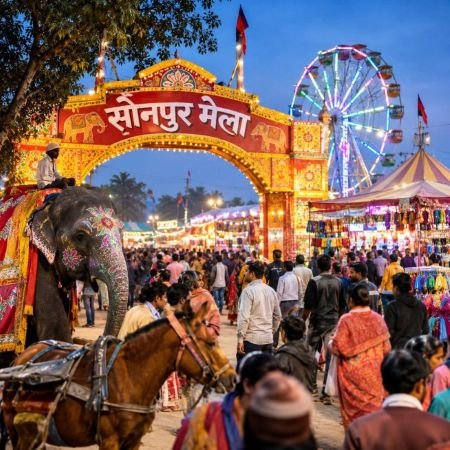
प्रत्येक वर्ष राज्य बिहार के सारण जिले में गंगा और गंडक नदियों के संगम पर कार्तिक पूर्णिमा के दिन से अद्वितीय ऐतिहासिक पशु मेला की शुरुआत होती है जिसे आम भाषा में छत्तर मेला या हरिहर क्षेत्र मेला या सोनपुर मेला के नाम से भी जानते हैं. वास्तविकता तो यह है कि यह मेला अपनी ऐतिहासिक प्राचीनता, धार्मिक महत्ता, पशु व्यापार, ग्रामीण अर्थव्यवस्था, लोककला, हस्तशिल्प और सामाजिक-सांस्कृतिक विविधता के कारण राष्ट्रीय एवं अंतरराष्ट्रीय स्तर पर विशिष्ट पहचान रखता है.
जिस स्थान पर सोनपुर मेला लगाया जाता है उस क्षेत्र को हम सभी हरिहर क्षेत्र के नाम से जानते हैं जिसका वर्णन महाभागवत पुराण में भी आया है, एक कथा के अनुसार यहाँ गज(हाथी) और ग्राह(घडियाल) की लड़ाई हुई थी. कई दिनों तक लड़ाई होने के बाद भी गज कमजोर पड़कर भगवान विष्णु को याद करता है. भगवान विष्णु तत्काल ही अपने भक्त की रक्षा करने के लिए ग्राह को मारकर गज की रक्षा करते हैं. बताते चलें कि, उत्तर वैदिक काल से ही शुरू हुआ था सोनपुर मेला. कार्तिक पूर्णिमा के स्नान के बाद से शुरू होता है सोनपुर मेला जो एशिया का सबसे बड़ा पशु मेला माना जाता है, कहा जाता है कि, इस मेले में मध्य एशिया के व्यापारी भी आते थे.
यह मेला जितना पुरातन है उतना ही पुरातन इसका इतिहास भी है, कहा जाता है कि एक जमाने में यहाँ जंगी हाथियों का सबसे बड़ा केंद्र था और यहाँ से मौर्य वंश के संस्थापक चन्द्रगुप्त मौर्य, मुगल सम्राट अकबर और बाबू वीर कुँवर सिंह ने भी से यहां हाथियां खरीदी थी. भारत एक कृषि प्रधान देश है और यहाँ की बड़ी आबादी कृषि से ही जुड़ी हुई है. कृषि प्रधान देश में किसानो का सच्चा और विश्वसनीय साथी जानवर ही होते हैं, पर आधुनिक युग में आधुनिक सोच के कारण यहाँ के किसान जानवर से दूर हो रहें हैं साथ ही कई प्रकार के जातियों के जीव-जन्तु लुप्त हो रहे हैं. केंद्र व राज्य सरकार के मनमानी की भेंट चढ़ गया सोनपुर मेला. एक तरफ तो केंद्र व राज्य सरकार चीन की बात करती है, उसके तरक्की की भी बात करती है लेकिन सरकारे सिर्फ बात ही करती है सीखने व अमल में लाने की बात हो तो ध्यान भी नहीं जाता है.
सोनपुर मेले से राज्य सरकार को अच्छी राजस्व मिलती पर पशु प्रेम ने राजस्व की ही छुट्टी कर दी. विश्व प्रसिद्ध सोनपुर मेले में कई विदेशी सैलानी आते थे और उनका मुख्य आकर्षण हुआ करता था हाथी. एक समय था जब हाथियों की स्नान होती थी तब विदेशी सैलानी उसे देखने के लिए गंगा घाट पर भीड़ उमड़ती थी लेकिन, प्रदूषण, वन्य विभाग और पीपुल्स फॉर एनिमल के कारण इस बार मेले में जानवरों के प्रतिबन्ध के कारण सैलानी इक्के-दुक्के ही दिख रहें हैं. राज्य के वर्तमान मुखिया चीन की सिर्फ बड़ाई ही करते हैं उससे सीखने की कोशिस नहीं करते है. एक तरफ सरकार ने जानवरों पर प्रतिबंध लगाया तो दूसरी तरफ सरकार ने थियेटर को लाइसेंस नहीं देने के कारण मेले से भीड़ ही गायब है.
जब-जब बात आती सोनपुर मेले की, तो बस एक ही बात याद आती है थियेटर की. कहा जाता है कि नौटंकी का विकृत हुआ रूप है थियेटर. बताते चलें कि, फणीश्वरनाथ रेणु के उपन्यास मारे गए गुलफाम पर बनी फिल्म ‘तीसरी कसम’ और उसका हीरामन और सर्कस में लगे थियेटर की नर्तकी हीराबाई याद ताजा हो गई, उस फिल्म में एक गाना था “पान खाएं सैयां हमारो सांवली सूरतिया होठ लाल-लाल “ शायद आपको फिल्म याद आ गई होगी. पुरातन समय में वर्तमान समय की व्यवस्था नहीं थी आम-आवाम पैदल या बैलगाड़ी से एक-स्थान से दुसरे स्थान जाते थे और आने-जाने में महीनों लगते थे, मनोरंजन के लिए स्वांग, नृत्य–नाटक या नौटंकी ही हुआ करता था.
एक समय था कि इसी हरिहरनाथ मेले में कई नामी-गिरामी नौटंकी कम्पनी आती थी उन कम्पनी में नामी-गिरामी कलाकार जैसे सोहराब, दोहराब जी, हकसार खां, गुलाब बाई और कृष्णा बाई जैसी मंजी हुईं कलाकार आते थे और सुरों की महफिल सजा करती थी. उन महफिलों में ठुमरी अैर दादरा के बोल से गुलजार हुआ करते थे. इसे देखने और सुनने के लिए देशभर से लोग आते थे. छत्तर मेले की दूसरी पहचान हुआ करती थी नौटंकी. समय के साथ धीरे-धीरे मेले में अश्लीलता घर कर गई, और देह प्रदर्शन, अश्लील और भौंडे डांस ने इसकी जगह ले ली. पिछले साल तक ऐतिहासिक सोनपुर मेला में सैलानियों के आकर्षण का केंद्र थियेटर कम्पनी की बालाएं होती थी जो अपने मनमोहक नृत्य एवं शोख अदाओं से सैलानियों को आकृष्ट करती थी.
वर्तमान समय के आधुनिक व डिजिटल युग में सोनपुर मेले के स्वरूप में काफी परिवर्तन आया है. कभी इस मेले का आकर्षण पशु व्यापार हुआ करता था लेकिन वर्तमान समय के हालत और कानूनी प्रतिबंधों के कारण पारंपरिक व्यापारिक गतिविधियाँ लगभग समाप्त ही हो गई है उसकी जगह पर – सरकारी विभागों की विकास संबंधी प्रदर्शनियां, पर्यटन और स्थानीय उत्पादों का प्रचार, मनोरंजन और सांस्कृतिक कार्यक्रम, हस्तशिल्प और पारंपरिक वस्तुओं की बिक्री, आधुनिक व्यापारिक प्रतिष्ठानों की भागीदारी और जागरूकता और सूचना प्रसार जैसे कार्यक्रम की बाढ़ आ गई है. इस तरह के कार्यक्रमों के कारण ऐतिहासिक व सांस्कृतिक पहचान कमजोर हो रही है.
सोनपुर मेले का महत्व केवल उसकी आर्थिक गतिविधियों अथवा धार्मिक परंपराओं तक सीमित नहीं है बल्कि, यह मेला बिहार की सामूहिक सांस्कृतिक चेतना और ऐतिहासिक निरंतरता का भी प्रतीक है. ज्ञात है कि, राज्य बिहार की पहचान प्राचीन मगध की राजनीतिक शक्ति, वैशाली की गणतांत्रिक परंपरा, नालंदा के ज्ञान-विज्ञान, बौद्ध-जैन दर्शन, लोकसंस्कृति और कृषि आधारित सामाजिक जीवन से निर्मित हुई है. सोनपुर मेले में परंपरा और आधुनिकता का सहअस्तित्व दिखाई देता है. जहाँ एक ओर यहां धार्मिक आस्थाएं और पारंपरिक व्यापारिक गतिविधियां मौजूद हैं, तो दूसरी ओर आधुनिक पर्यटन, मनोरंजन और बाजार व्यवस्था भी विकसित हो रही है.
बदलते समय के साथ सोनपुर मेला में काफी बदलाव हुआ हुआ है कभी यह मेला राज्य बिहार की ऐतिहासिक विरासत, धार्मिक आस्था, लोकसंस्कृति, पशुपालन परंपरा और ग्रामीण अर्थव्यवस्था का अद्वितीय संगम हुआ करता था. लेकिन, बदलते परिवेश में बदलती आर्थिक परिस्थितियों, कृषि के मशीनीकरण, पशु व्यापार पर लागू कानूनी प्रतिबंधों, आधारभूत सुविधाओं की चुनौतियों और आधुनिक मनोरंजन के प्रभाव ने इसके पारंपरिक स्वरूप को प्रभावित किया है. वर्तमान समय में यह मेला एक वार्षिक उत्सव बनकर रह गया है जो कभी राज्य बिहार के अतीत की स्मृतियों, वर्तमान की सामाजिक-आर्थिक गतिविधियों और भविष्य की सांस्कृतिक संभावनाओं के बीच एक जीवंत सेतु हुआ करता था.
=========== =========== ==============
Sonepur Mela -2026.
In a land steeped in tradition, every festival or celebration carries historical and mythological significance, often concealing deeper, symbolic meanings. Here, every day, month, and year possesses its own unique character and flair. Currently, we are in the sacred and auspicious month of ‘Kartik’. This month begins with ‘Vaikuntha Chaturdashi’ (during the waning phase of the moon, or Krishna Paksha) and concludes on ‘Kartik Purnima’ (the full moon day of the month of Kartik). Today, we turn our attention to a region with a rich cultural heritage—a place known to the world as Bihar, which also finds mention in ancient mythological texts.
Every year, in the Saran district of Bihar, at the confluence of the Ganges and Gandak rivers, a unique, historic cattle fair commences on the day of Kartik Purnima. It is popularly known as ‘Chhatar Mela’, ‘Harihar Kshetra Mela’, or ‘Sonepur Mela’. This fair holds a distinct national and international reputation, owing to its ancient historical roots, religious importance, livestock trade, role in the rural economy, and its vibrant display of folk art, handicrafts, and socio-cultural diversity.
The site where the Sonepur Mela is held is known as ‘Harihar Kshetra’—a location described in the Mahabhagavata Purana. According to legend, this is where a fierce battle took place between an elephant (Gaja) and a crocodile (Graha). As the elephant began to weaken after days of struggle, it prayed to Lord Vishnu. Responding immediately to his devotee’s plea, Lord Vishnu intervened, vanquishing the crocodile and saving the elephant. It is worth noting that the Sonepur Mela dates back to the post-Vedic period. Beginning with the ritual bathing on Kartik Purnima, this event is considered the largest cattle fair in Asia; historically, it is said that even traders from Central Asia would travel here to participate. This fair is as ancient as its history; it is said that, at one time, this place served as the largest hub for war elephants. Notable figures—including Chandragupta Maurya (founder of the Mauryan Empire), the Mughal Emperor Akbar, and Babu Veer Kunwar Singh—all procured elephants from here. India is an agrarian nation, with a vast portion of its population dependent on agriculture. In such a society, animals have traditionally been the true and reliable companions of farmers. However, in the modern era, shifting mindsets have led farmers to drift away from animals, while various species of creatures are gradually disappearing. The Sonepur Mela has fallen victim to the arbitrary policies of the central and state governments. While these governments frequently discuss China and its progress, their engagement remains limited to mere talk; when it comes to learning from such examples or implementing meaningful changes, they show no real interest.
The Sonepur Mela used to generate significant revenue for the state government, but a newfound concern for animal welfare has effectively put an end to that income. The world-famous Sonepur Mela once attracted many foreign tourists, for whom elephants were the primary draw. There was a time when crowds of foreign visitors would gather at the banks of the Ganges to watch the elephants being bathed. However, due to concerns regarding pollution, as well as interventions by the Forest Department and ‘People for Animals’—which led to a ban on animals at the fair—hardly any tourists are to be seen these days. The current head of the state government is quick to praise China, yet makes no effort to learn from it. Furthermore, the government’s decision to deny licenses for the ‘theatres’ (traditional traveling performance troupes) has caused the crowds to vanish entirely.
Whenever the Sonepur Mela is mentioned, the first thing that comes to mind is its ‘theatres.’ It is often said that these theatres are a distorted evolution of the traditional Nautanki (folk theatre). One is reminded of the film Teesri Kasam—based on Phanishwarnath Renu’s novel Mare Gaye Gulfam—featuring the character Hiraman and the theatre dancer Hirabai. The film includes the song, “Paan Khaye Saiyan Hamaro, Sanwali Suratiya Hoth Lal-Lal”—perhaps you recall the film! In the past, the modern infrastructure we have today did not exist; people traveled from place to place on foot or by bullock cart, journeys that often took months. For entertainment, they relied on swang (skits), dance-dramas, or Nautanki.
There was a time when the Hariharnath Mela (Sonepur Mela) hosted renowned Nautanki troupes. These troupes featured celebrated performers—such as Sohrab, Dohrabji, Haksar Khan, Gulab Bai, and Krishna Bai—who would transform the fairgrounds into a vibrant arena of music and performance, filled with the melodies of thumri and dadra. People from across the country used to come to witness and experience this. ‘Nautanki’ (traditional folk theatre) was another hallmark of the Chhatar Mela. Over time, however, vulgarity crept into the fair, with the display of the human body and lewd, crude dances taking center stage. Until last year, a major attraction for visitors at the historic Sonepur Mela was the performers from theatre troupes, who would captivate audiences with their enchanting dances and coquettish gestures.
In today’s modern, digital era, the character of the Sonepur Mela has undergone a significant transformation. While the fair was once defined by its livestock trade, traditional commercial activities have all but vanished due to contemporary circumstances and legal restrictions. In their place, there has been an influx of government-led development exhibitions, tourism and local product promotions, entertainment and cultural programs, the sale of handicrafts and traditional goods, the participation of modern commercial enterprises, and various awareness and information-dissemination initiatives. Consequently, the fair’s historical and cultural identity is gradually weakening.
The significance of the Sonepur Mela is not limited merely to its economic activities or religious traditions; rather, it serves as a symbol of Bihar’s collective cultural consciousness and historical continuity. It is well known that the identity of Bihar is rooted in the political power of ancient Magadha, the republican traditions of Vaishali, the intellectual and scientific legacy of Nalanda, the philosophies of Buddhism and Jainism, its rich folk culture, and an agrarian-based social structure. The Sonepur Mela embodies a coexistence of tradition and modernity; while it remains a space for religious faith and traditional commerce, it has also evolved to incorporate modern tourism, entertainment, and contemporary market systems.
Over time, the Sonepur Mela has undergone significant transformation. Once, it served as a unique confluence of Bihar’s historical heritage, religious beliefs, folk culture, traditions of animal husbandry, and rural economy. However, shifting circumstances—including changing economic conditions, the mechanization of agriculture, legal restrictions on the livestock trade, challenges related to infrastructure, and the influence of modern forms of entertainment—have altered its traditional character. Today, the fair has largely become an annual festival, whereas it once functioned as a vibrant bridge connecting the memories of Bihar’s past, its contemporary socio-economic activities, and the cultural possibilities of its future.