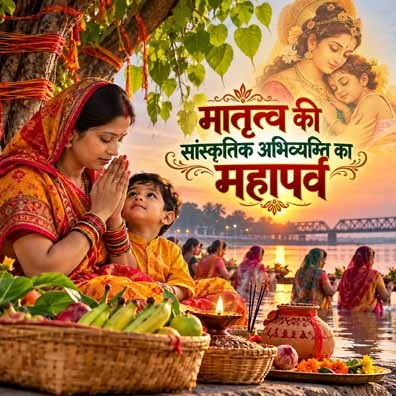
भारतीय संस्कृति की अनूठी परंपरा जो समाज की सामूहिक स्मृति, पारिवारिक संबंधों, लोकविश्वासों और सांस्कृतिक मूल्यों के जीवंत दस्तावेज होते हैं. इसी परंपरा में जितिया अथवा जीवित्पुत्रिका व्रत का विशिष्ट स्थान है. यह केवल एक धार्मिक उपवास नहीं है बल्कि, मातृत्व की सबसे गहन, सामूहिक और सांस्कृतिक अभिव्यक्ति का महापर्व है. यह व्रत मुख्यतः माताएँ अपनी संतान की दीर्घायु, स्वास्थ्य, सुरक्षा और सुख-समृद्धि की कामना से करती हैं.
हिंदू पंचांग के अनुसार, आश्विन मास के कृष्ण पक्ष की अष्टमी को मनाया जाने वाला यह तीन-दिवसीय अनुष्ठान बिहार, झारखंड, पूर्वी उत्तर प्रदेश, पश्चिम बंगाल और नेपाल के मिथिला-थरुहट क्षेत्रों में माताओं द्वारा संतान की दीर्घायु, स्वास्थ्य और सुरक्षा की कामना से रखा जाता है. वर्ष 2026 में जीवित्पुत्रिका व्रत 2 अक्टूबर से शुरू होकर नहाय-खाय से शुरू होकर 3 अक्टूबर को निर्जला व्रत और 4 अक्टूबर को पारण के साथ पूरा होगा. व्रत की मुख्य विशेषता यह है कि व्रती महिलाएँ संतान की मंगलकामना के लिए कठिन संयम का पालन करती हैं। कई परंपराओं में व्रत के दौरान निर्जल उपवास भी किया जाता है.
“जीवित्पुत्रिका” का शाब्दिक अर्थ होता है “वह पुत्री (या माता) जिसकी संतान जीवित रहे” या “संतान को जीवनदान देने वाली”. वैसे, तो जितिया शब्द “जीउतिया” से निकला है, जो जीवन की रक्षा से जुड़ा हुआ है. जीवित्पुत्रिका व्रत का यह पर्व लोक-परंपरा और प्रकृति-प्रेम का जीवंत संगम है. चुकि, यह आडंबरों से दूर, सीधे प्रकृति और लोक-जीवन से जुड़ा हुआ है. इस पर्व में पशु-पक्षियों के आदर के साथ मड़ुआ (रागी), नोनी का साग, और झिंगुनी (तोरई) का सेवन किया जाता है.
तीन दिनों तक चलने वाले जीवित्पुत्रिका व्रत के पहले दिन की शुरुआत स्नान और सात्विक भोजन से होता है. दुसरे दिन लगभग 24 से 30 घंटे से अधिक का अत्यंत कठिन निर्जला (बिना जल के) उपवास होता है और तीसरे दिन सूर्योदय के बाद व्रत तोड़ना (जिसे पारण भी कहा जाता है.), उसके बाद प्रसाद वतरण होता है. त्रिदिवसीय व्रत का सबसे काठी भाग है 24 से 30 घंटे से अधिक का निर्जला व्रत. वर्तमान समय के दौर में मातृत्व अक्सर व्यक्तिगत और आर्थिक दबावों से घिरा होता है जबकि, यह संतान के प्रति माँ का स्वैच्छिक प्रेम और संकल्प है, जो यह साबित करता है कि मातृत्व में भौतिक सुखों से ऊपर उठने की असीम शक्ति होती है.
वैसे तो भारतीय परमपराओ में माँ के लिए संतान केवल परिवार का सदस्य नहीं, बल्कि उसके जीवन के अर्थ, आशा और भविष्य का केंद्र होती है. वहीं, एक माँ अपने शरीर की आवश्यकताओं को पीछे रखकर संतान के कल्याण को ही प्राथमिकता देती है. जितिया इसी भाव को सार्वजनिक और सामुदायिक रूप प्रदान करता है. जितिया में स्त्री की भूमिका को केवल त्याग तक सीमित करना भी पर्याप्त नहीं होगा. व्रत और अनुष्ठान के माध्यम से स्त्रियाँ धार्मिक-सांस्कृतिक क्षेत्र में सक्रिय भूमिका निभाती हैं. वे कथा कहती हैं, गीतों को जीवित रखती हैं, विधियों को अगली पीढ़ी तक पहुँचाती हैं और सामुदायिक स्मृति का भी संरक्षण करती हैं. जीवित्पुत्रिका व्रत में स्त्री केवल ‘त्याग करने वाली माँ’ नहीं, बल्कि लोकसंस्कृति की सक्रिय निर्माता भी है.
जीवित्पुत्रिका व्रत मुख्यतः माताओं का पर्व है, जो पितृसत्तात्मक समाज में संतान-रक्षा को माँ की प्राथमिक जिम्मेदारी के रूप में स्थापित करता है. साथ ही, यह महिलाओं को धार्मिक और सांस्कृतिक मंच प्रदान करता है, जहाँ वे सामूहिक रूप से अपनी भूमिका का जश्न मनाती हैं. यह निर्जला व्रत माँ के शरीर को सीमित करके उसकी आंतरिक शक्ति को भी उजागर करता है. साथ ही यह अवसर महिलाओं के परस्पर दुख-सुख बांटने, लोकगीत गाने और एक-दूसरे का संबल बनने का सामाजिक मंच बनता है. वहीं, दूसरी ओर एक बेटी अपनी माँ को निर्जल रहकर कठिन नियमों का पालन करते और कथा सुनते देखती है, तो उसके भीतर त्याग, सहिष्णुता, और अपनी संस्कृति के प्रति गर्व का भाव अनजाने में ही रोपित हो जाता है.
इस व्रत के दौरान माताओं का संयम, उपवास और प्रार्थना इस बात को रेखांकित करते हैं कि मातृत्व भारतीय लोकसंस्कृति में त्याग और संरक्षण की भावना से गहरे जुड़ा हुआ है. माँ स्वयं कष्ट सहकर संतान के सुख की कामना करती है. यहाँ मातृत्व किसी अमूर्त आदर्श के रूप में नहीं, बल्कि लोकाचार, गीत, कथा, भोजन, अनुष्ठान और सामुदायिक सहभागिता के माध्यम से प्रत्यक्ष दिखाई देता है.
जीवित्पुत्रिका व्रत में तीन कथाएं प्रचलित हैं –
पहली कथा जो सबसे ज्यादा प्रचलित है वो है जीमूतवाहन की कथा के अनुसार, – जीमूतवाहन अपने पिता के आदेश पर राजपाठ छोड़कर वन में रहने चले गए थे. एक दिन वे वन में घूमते समय एक वृद्ध महिला से मिले, जो बहुत दुखी थी. उन्होंने उससे उसके दुख का कारण पूछा, तो महिला ने बताया कि वह नागवंश की है और उसके पुत्र का आज गरुड़ द्वारा बलि दी जाएगी. गरुड़ प्रतिवर्ष एक नाग को भोजन के रूप में बलि स्वरूप मांगता था.
जीमूतवाहन को यह सुनकर बहुत दुःख हुआ और उन्होंने वृद्ध महिला के पुत्र की जगह स्वयं को बलि देने का निश्चय किया. जीमूतवाहन गरुड़ के पास गए और खुद को नाग के रूप में प्रस्तुत कर दिया. जब गरुड़ ने उन्हें पकड़ लिया और आकाश में उड़ गया, तो उसने देखा कि जीमूतवाहन बिना किसी डर के उसकी चोंच में है और बिना किसी प्रतिरोध के अपनी बलि स्वीकार कर रहा है. गरुड़ को यह जानकर आश्चर्य हुआ कि उसने किसी साधारण नाग को नहीं, बल्कि एक महान राजा को पकड़ लिया है.
गरुड़ ने जीमूतवाहन की इस अद्वितीय त्याग की भावना को देखकर उनसे क्षमा मांगी और वचन दिया कि वह कभी भी नागवंश के किसी भी सदस्य को कष्ट नहीं देगा. इसके बाद जीमूतवाहन ने गरुड़ से नागों के जीवन की रक्षा का वचन लिया और इस तरह से उन्होंने नागवंश को गरुड़ से मुक्ति दिलाई.
वहीं, दूसरी कथा है चिल्हो-सियारो की कथा – इस कथा के अनुसार, एक जंगल में चील और सियारिन मित्र थीं. उन्होंने महिलाओं को जितिया व्रत करते देखा और स्वयं भी व्रत रखने का संकल्प लिया. चील ने पूर्ण निष्ठा से निर्जला व्रत पूरा किया, जबकि सियारिन भूख से टूट गई और नियम भंग कर दिया. जिसके परिणाम स्वरूप – चील की संतान दीर्घायु हुई वहीं, सियारिन के बच्चे जल्दी मर गए. बाद में दोनों मनुष्य योनि में बहनें बनीं और व्रत की महिमा समझी.
तीसरी कथा महाभारत से जुड़ा हुआ है जिसमें उत्तरा और परीक्षित की कथा है. इस कथा के अनुसार, महाभारत युद्ध के बाद अश्वत्थामा ने क्रोध में ब्रह्मास्त्र चलाकर अभिमन्यु की पत्नी उत्तरा के गर्भस्थ पुत्र को मारने का प्रयास किया. भगवान कृष्ण ने अपने पुण्य और शक्ति से उस मृत गर्भ को पुनः जीवित कर दिया. गर्भ में मरकर जीवित होने के कारण वह “जीवित्पुत्र” कहलाया, जो आगे चलकर राजा परीक्षित बना. ये तीन कथाओं में संतान की रक्षा के लिए त्याग, निष्ठा और दैवीय अनुग्रह आवश्यक माना गया है. इस धार्मिक कथा का महत्व केवल उसके चमत्कारिक पक्ष में नहीं है बल्कि, वर्तमान समय के आधुनिक सामाज के सामने त्याग, करुणा, संरक्षण और जीवन-मूल्य जैसे आदर्श भी प्रस्तुत करती है.
जितिया की सांस्कृतिक अभिव्यक्ति को समझने के लिए उसके लोकगीतों को समझना अत्यंत आवश्यक है. चूकिं, ये लोकगीत स्त्री-स्मृति और लोक-अनुभव के मौखिक का अभिलेख भी है जो पीढ़ी-दर-पीढ़ी जीवित रहते हैं. इस पर्व का एक महत्वपूर्ण पक्ष इसका सामुदायिक स्वरूप भी है चूकिं, महिलाएँ समूह में पूजा करती हैं, कथा सुनती हैं, गीत गाती हैं और एक-दूसरे के साथ अपने अनुभव साझा करती हैं. यह व्रत की कठिनाई व्यक्तिगत अनुभव होते हुए भी सामूहिक आस्था में बदल जाती है। एक महिला दूसरी महिला के अनुभव, स्मृति और विश्वास से भी जुड़ती है.
भारतीय पर्वों में भोजन और उपवास का गहरा संबंध होता है. व्रत से पहले और व्रत के बाद के भोजन की अपनी विशिष्ट परंपराएँ होती हैं. लेकिन इस व्रत में मड़ुआ (रागी), नोनी का साग, और झिंगुनी (तोरई) का सेवन किया जाता है. यह परंपरा धार्मिक आस्था के साथ-साथ अत्यंत गहरे वैज्ञानिक और स्वास्थ्य संबंधी दृष्टिकोण पर आधारित होते हैं.
- मड़ुआ (रागी) – इसमें कॉम्प्लेक्स कार्बोहाइड्रेट्स और प्रचुर मात्रा में फाइबर होता है. जो शरीर में ग्लूकोज का स्तर धीरे-धीरे रिलीज होता है, जिससे लंबे समय तक भूख का अहसास नहीं होता है. साथ ही इसमें सबसे अधिक कैल्शियम, आयरन और मिनरल्स होते हैं जो शरीर के हीमोग्लोबिन स्तर को बनाए रखते हैं.
- नोनी के साग – जिसे नोनिया साग या कुल्फा भी कहते हैं. ईसका वैज्ञानिक नाम पोर्टुलाका ओलेरासिया (Portulaca oleracea) है. यह एक पौष्टिक जंगली पौधा है जो बरसात के दिनों में उगता है. इसमें ओमेगा-3 फैटी एसिड, विटामिन (A, C, E) और एंटी-ऑक्सीडेंट भरपूर मात्रा में पाया जाता है. इस्क्का साग शरीर की प्रतिरोधक क्षमता को बढ़ाता है और उपवास के दौरान होने वाले सेलुलर तनाव को कम करता है साथ ही नोनी का साग खाने से पेट की आंतों को राहत मिलती है, कब्ज दूर होता है और भारी अन्न को पचाने में मदद मिलती है. इसमें पोटैशियम और मैग्नीशियम प्रचुर मात्रा में होते हैं, जो लंबे समय तक पानी न पीने से शरीर में हुई इलेक्ट्रोलाइट की कमी को तुरंत पूरा करते हैं.
भारतीय व्रतों में मौसम के अनुसार खान-पान होता है. वर्तमान समय में वर्षा ऋतू की विदाई हो रही है और इस मौसम में पड़ने वाले व्रतों में मड़ुआ और नोनी का साग केवल रीति-रिवाज का हिस्सा नहीं हैं, बल्कि हमारे पूर्वजों ने आयुर्वेद, पोषण विज्ञान और धार्मिक अनुष्ठानों को कितनी कुशलता से एक साथ जोड़ा था. जिसका पालन वर्तमान समय के आधुनिक व आभासी दुनिया में भी हो रहा है.
लोक-परंपरा का पवन पर्व जीवित्पुत्रिका व्रत या जितिया परंपरागत रूप से यह पुत्र की दीर्घायु के लिए किए जाने वाले व्रत के रूप में जाना जाता है परन्तु, आधुनिक संदर्भ में इसके पुत्र-केंद्रित सांस्कृतिक अर्थ पर प्रश्न भी उठते हैं. वर्तमान समय के दौर में परिवार और समाज में बेटियों के महत्व को लेकर दृष्टिकोण बदल रहा है वहीं, अनेक परिवारों में माताएँ पुत्र और पुत्री दोनों की मंगलकामना के साथ इस पर्व को मनाती हैं. फिर भी आधुनिक दृष्टि से यह प्रश्न उठाना जरुरी है कि, कि मातृत्व का आदर्श कहीं स्त्री से निरंतर त्याग और आत्मपीड़ा की अपेक्षा तो नहीं करता है.
बदलते समय में जितिया के शहरीकरण, प्रवासन, संयुक्त परिवारों के विघटन और डिजिटल संस्कृति ने लोकपर्वों के स्वरूप को प्रभावित किया है. कभी यह पर्व गाँव और परिवार के सामुदायिक परिवेश में होता था वहीं, वर्तमान समय में सोशल मीडिया, डिजिटल संगीत और ऑनलाइन संवाद के माध्यम से इसकी सांस्कृतिक सामग्री दूर-दूर तक पहुँचती है. एअक तरफ शहरों में रहने वाले परिवार भी अपने मूल क्षेत्र की परंपराओं को नए तरीके से निभा रहे हैं वहीं दूसरी तरफ यह पर्व प्रदर्शन, सोशल मीडिया की तस्वीरों और बाहरी अनुष्ठान तक ही सीमित ना हो जाए. इससे इस पर्व के पीछे मौजूद सामुदायिक स्मृति और जीवन-दर्शन कमजोर हो सकता है.
जितिया मातृत्व की सांस्कृतिक अभिव्यक्ति का महापर्व इसलिए है क्योंकि यह व्यक्तिगत प्रेम को सामूहिक अनुष्ठान, पौराणिक आदर्श और क्षेत्रीय पहचान में बदल देता है. यह पर्व हमें सिखाता है कि माँ का प्रेम केवल भावना नहीं, बल्कि त्याग, निष्ठा और सांस्कृतिक निरंतरता का स्रोत है. जीमूतवाहन के बलिदान से लेकर चील की निष्ठा तक, यह पर्व हमें याद दिलाता है कि संतान की रक्षा के लिए माँ का संकल्प समाज की सबसे मजबूत नींव है. वर्तमान समय के आधुनिक व डिजिटल युग में मातृत्व अक्सर आर्थिक दबावों और व्यक्तिगत आकांक्षाओं से घिरा होता है, जबकि, जितिया संयम, एकाग्रता और पारिवारिक मूल्यों की भी याद दिलाता है. यह पर्व यह सिद्ध करता है कि एक माँ का प्रेम ही इस संसार का सबसे सशक्त और अभेद्य सुरक्षा कवच है.
========== ========= ===========
Matratva Ki Sanskritik Abhivyakti Ka Mahaparv
Indian culture boasts unique traditions that serve as living testaments to collective societal memory, familial bonds, folk beliefs, and cultural values. The Jitiya—or Jivitputrika—Vrat holds a distinguished place among these traditions. It is not merely a religious fast but a grand festival representing the deepest, collective, and cultural expression of motherhood. Mothers primarily observe this fast to pray for the longevity, health, safety, and prosperity of their children.
Observed on the Ashtami (eighth day) of the Krishna Paksha (waning phase of the moon) in the Hindu month of Ashwin, this three-day ritual is performed by mothers in Bihar, Jharkhand, Eastern Uttar Pradesh, West Bengal, and the Mithila-Tharuhat regions of Nepal. In 2026, the Jivitputrika Vrat will commence with Nahay-Khay on October 2, followed by the Nirjala (waterless) fast on October 3, and conclude with Paran (breaking the fast) on October 4. A key feature of this observance is the rigorous discipline and restraint practiced by women for the well-being of their children; in many traditions, the fast is observed without consuming even water.
The literal meaning of “Jivitputrika” is “she whose children remain alive” or “she who bestows life upon her children.” The term “Jitiya” is derived from “Jiutiya,” a word associated with the protection of life. This festival is a vibrant confluence of folk tradition and a love for nature, remaining free from ostentation and deeply rooted in nature and folk life. During the festival, alongside showing respect for animals and birds, specific foods such as Madua (finger millet/ragi), Noni greens, and Jhinguni (ridge gourd) are consumed.
The three-day Jivitputrika Vrat begins on the first day with a ritual bath and the consumption of Sattvic (pure, simple) food. The second day involves an extremely arduous nirjala (waterless) fast lasting over 24 to 30 hours, followed on the third day by the breaking of the fast—known as Paran—and the subsequent distribution of Prasad. The most challenging aspect of this three-day observance is the nirjala fast itself. In contemporary times, motherhood is often beset by personal and financial pressures; yet, this voluntary act of love and resolve by a mother for her child demonstrates that motherhood possesses the boundless power to rise above material comforts.
In Indian traditions, a child is not merely a family member to a mother but the very center of her life’s meaning, hope, and future. A mother prioritizes her child’s well-being over her own physical needs. Jitiya gives a public and communal expression to this sentiment. It would be insufficient to limit a woman’s role in Jitiya solely to the act of sacrifice; through the fast and rituals, women play an active role in the religious and cultural spheres. They narrate stories, keep songs alive, pass down rituals to the next generation, and preserve communal memory. In the Jivitputrika Vrat, a woman is not just a ‘sacrificing mother’ but also an active creator of folk culture.
The Jivitputrika Vrat is primarily a festival for mothers, establishing the protection of the child as a mother’s primary responsibility within a patriarchal society. At the same time, it offers women a religious and cultural platform to collectively celebrate their roles. This nirjala (waterless) fast, while physically demanding for the mother, also reveals her inner strength. It serves as a social forum where women share their joys and sorrows, sing folk songs, and become sources of support for one another. Furthermore, when a daughter observes her mother adhering to strict rules—abstaining from water and listening to the sacred narrative—values of sacrifice, endurance, and pride in her culture are unconsciously instilled within her.
During this fast, the mothers’ restraint, fasting, and prayers underscore the fact that motherhood in Indian folk culture is deeply intertwined with the spirit of sacrifice and protection. A mother willingly endures hardship to wish for her child’s happiness. Here, motherhood does not manifest as an abstract ideal but becomes tangible through folk customs, songs, stories, food, rituals, and communal participation.
Three legends are associated with the Jivitputrika Vrat –
The first and most popular legend is that of Jimutavahana. Acting on his father’s orders, Jimutavahana had renounced his kingdom to live in the forest. One day, while wandering through the woods, he encountered an elderly woman who was deeply distressed. When he asked the reason for her sorrow, she revealed that she belonged to the Naga clan and that her son was to be sacrificed to Garuda that day; Garuda demanded one Naga as a sacrificial offering for food every year.
Deeply saddened by this, Jimutavahana resolved to offer himself as a sacrifice in place of the elderly woman’s son. He approached Garuda and presented himself as the Naga. As Garuda seized him and flew into the sky, he noticed that Jimutavahana remained fearless in his beak, accepting the sacrifice without any resistance. Garuda was astonished to realize that he had captured not an ordinary Naga, but a noble king.
Moved by Jimutavahana’s unparalleled spirit of sacrifice, Garuda apologized and vowed never to harm any member of the Naga clan again. Jimutavahana then secured a promise from Garuda to protect the lives of the Nagas, thereby liberating the Naga clan from Garuda’s threat.
The second legend is that of the Chil (Kite) and the Siyar (Jackal/Vixen). According to this story, a kite and a female jackal were friends living in a forest. They observed women performing the Jitiya Vrat and resolved to observe the fast themselves. The kite completed the Nirjala fast (a fast without water) with utmost devotion, whereas the female jackal succumbed to hunger and broke the rules of the fast. Consequently, the kite’s offspring were blessed with long lives, while the jackal’s offspring died prematurely. Later, both were born as sisters in human form and understood the glory of the fast.
The third story is linked to the Mahabharata and concerns Uttara and Parikshit. According to this tale, following the Mahabharata war, a furious Ashwatthama unleashed the Brahmastra in an attempt to kill the unborn son of Abhimanyu’s wife, Uttara. Lord Krishna, through the power of His virtue and might, revived the stillborn fetus. Having died in the womb and been brought back to life, the child came to be known as “Jivitputra” (the living son) and later ascended the throne as King Parikshit. These three stories underscore that sacrifice, devotion, and divine grace are essential for the protection of one’s offspring. The significance of this religious narrative lies not merely in its miraculous aspect; it also presents ideals such as sacrifice, compassion, protection, and core life values to contemporary modern society.
To truly grasp the cultural expression of Jitiya, it is vital to understand its folk songs, which serve as an oral record of women’s memories and lived experiences, preserved across generations. A significant facet of this festival is its communal nature; women perform rituals, listen to the story, sing songs, and share experiences in groups. Thus, the rigors of the fast—while personally experienced—transform into a shared act of faith, allowing women to connect through one another’s experiences, memories, and beliefs.
Food and fasting are deeply intertwined in Indian festivals, with distinct traditions governing the meals consumed before and after the fast. In the case of Jitiya, specific foods such as Madua (Ragi/finger millet), Noni greens, and Jhinguni (ridge gourd) are consumed. These dietary traditions are rooted not only in religious faith but also in profound scientific and health-related perspectives.
- Madua (Ragi/Finger Millet) – It contains complex carbohydrates and abundant fiber. This ensures a slow release of glucose into the body, preventing hunger pangs for an extended period. Additionally, it is rich in calcium, iron, and minerals, which help maintain the body’s hemoglobin levels.
- Noni Saag – Also known as Noniya Saag or Kulfa, its scientific name is Portulaca oleracea. It is a nutritious wild plant that grows during the monsoon season. It is rich in Omega-3 fatty acids, vitamins (A, C, E), and antioxidants. Consuming this green boosts immunity and reduces cellular stress associated with fasting; it also soothes the intestines, relieves constipation, and aids in the digestion of heavy grains. It contains high levels of potassium and magnesium, which rapidly replenish electrolytes lost due to prolonged periods without water intake.
Indian fasting traditions are closely aligned with seasonal dietary practices. As the monsoon season draws to a close, the fasts observed during this period—featuring foods like madua (finger millet) and noni greens—demonstrate not merely ritualistic adherence but the remarkable way our ancestors integrated Ayurveda, nutritional science, and religious observance—practices that endure even in today’s modern, virtual world.
Jivitputrika Vrat, or Jitiya, is a cherished folk festival traditionally observed to pray for the longevity of one’s son; however, in a modern context, its son-centric cultural significance is being questioned. While societal attitudes toward the importance of daughters are shifting, many mothers now observe this festival while praying for the well-being of both sons and daughters. Nevertheless, from a modern perspective, it is essential to ask whether the ideal of motherhood inadvertently demands constant sacrifice and self-suffering from women.
With changing times, factors such as urbanization, migration, the disintegration of joint families, and digital culture have transformed the nature of this folk festival. Once celebrated within the communal setting of villages and families, the festival’s cultural essence now reaches far and wide through social media, digital music, and online interaction. While urban families are finding new ways to uphold the traditions of their native regions, there is a risk that the festival could be reduced to mere performance, social media snapshots, and external rituals—potentially eroding the communal memory and philosophy of life that underpin it.
Jitiya stands as a grand festival celebrating the cultural expression of motherhood because it elevates personal love into a collective ritual, a mythological ideal, and an expression of regional identity. It teaches us that a mother’s love is not merely an emotion but a source of sacrifice, devotion, and cultural continuity. From the sacrifice of Jimutavahana to the devotion of the kite, this festival reminds us that a mother’s resolve to protect her children forms the strongest foundation of society. In today’s modern, digital age, motherhood is often beset by economic pressures and personal aspirations; yet, Jitiya serves as a reminder of the virtues of restraint, focus, and family values. This festival affirms that a mother’s love is the most powerful and impenetrable protective shield in the world.