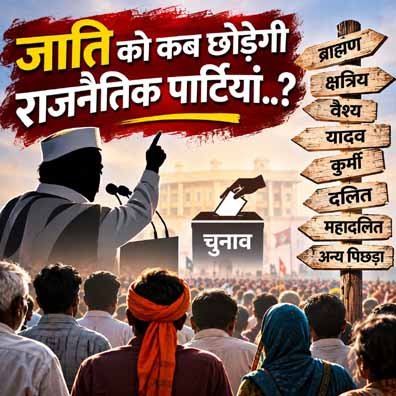
भारतीय राजनीति में जाति एक कड़वी सच्चाई है, जिससे मुंह मोड़ना लगभग हर राजनीतिक दल के लिए असंभव प्रतीत हो रहा है. चुनावी गणित, उम्मीदवारों का चयन, और नीतिगत प्राथमिकताएं सब कुछ जातीय समीकरणों से प्रभावित होता है. विशेषकर बिहार, उत्तर प्रदेश, तमिलनाडु जैसे राज्यों में यह प्रवृत्ति सबसे अधिक स्पष्ट रही है.सवाल यह है कि राजनीतिक पार्टियाँ जाति की इस बैसाखी को कब छोड़ेंगी?
भारत एक विविधतापूर्ण देश है जहाँ सामाजिक संरचना में जाति की जड़ें बड़ी गहरी हैं. यहाँ के वयस्क मताधिकार ने जाति को एक राजनीतिक शक्ति के रूप में बदल दिया है. राजनीतिक दलों के लिए, जाति एक बना-बनाया वोट बैंक और संगठनात्मक ढाँचा प्रदान करती है. खासतौर पर चुनाव के समय इसे नज़रअंदाज़ करना जोखिम भरा साबित हो सकता है.
वर्ष 2025 में केंद्र सरकार द्वारा जाति जनगणना को मंजूरी देना एक ऐतिहासिक कदम माना जा रहा है. लोकतांत्रिक प्रक्रिया में, राजनीतिक दलों का मुख्य लक्ष्य सत्ता प्राप्त करना होता है. चूंकि मतदाता अक्सर जातीय पहचान के आधार पर संगठित होते हैं, इसलिए दल प्रत्याशियों का चयन, रैलियों का आयोजन और यहाँ तक कि चुनावी घोषणापत्र को भी जातिगत समीकरणों को ध्यान में रखकर बनाते हैं.इस तरह, जाति उन्हें चुनावी जीत की एक निश्चित गारंटी देती है.
विशेषज्ञों के अनुसार, जातिगत आंकड़ों की पारदर्शिता से वंचित वर्गों को वास्तविक लाभ मिल सकता है. लेकिन यह भी आशंका है कि इन आंकड़ों का इस्तेमाल नए जातीय ध्रुवीकरण के लिए किया जा सकता है.
कई पार्टियाँ जाति को सामाजिक न्याय और वंचितों के उत्थान के नाम पर इस्तेमाल करती हैं. आरक्षण और कल्याणकारी योजनाओं का समर्थन करके वे विशेष जाति समूहों का समर्थन हासिल करती हैं. वहीँ, राजनीतिक दलों में नेतृत्व का उदय भी अक्सर जाति के आधार पर होता है, जिससे जातिगत समीकरण साधने वाले नेताओं को आगे बढ़ने का मौका मिलता है.
वहीँ, जाति-आधारित राजनीति राष्ट्रीय एकता और समावेशी विकास के लिए बाधक है. लोकतंत्र व्यक्ति को इकाई मानता है, न कि जाति या समूह को. जातिवादी राजनीति इस मूल भावना के विपरीत है.यह समाज में जातिगत विभाजन और प्रतिद्वंद्विता को बढ़ावा देती है, जिससे सामाजिक सद्भाव बिगड़ता है और कई बार हिंसक झड़पें भी होती हैं. जब राजनीति जाति पर केंद्रित हो जाती है, तो योग्यता, दक्षता और विकास जैसे महत्वपूर्ण मुद्दे पीछे छूट जाते हैं. दलों का ध्यान देश हित के बजाय विशिष्ट जाति समूहों के तुष्टीकरण पर केंद्रित हो जाता है.
जातिगत राजनीति का अंत किसी एक दिन अचानक नहीं होगा बल्कि, यह एक धीमी, क्रमिक प्रक्रिया होगी, जो समाज और राजनीति दोनों में बदलाव पर निर्भर करती है. जब मतदाता जाति से ऊपर उठकर शिक्षा, स्वास्थ्य, रोजगार जैसे मुद्दों पर वोट देंगे. आर्थिक विकास और वर्ग आधारित राजनीति के उदय से जाति की पकड़ कमजोर हो सकती है. जब लोगों की पहचान उनकी आय, रोजगार और आर्थिक स्थिति से अधिक जुड़ेगी, तो ही जातिगत भावनाएँ गौण हो सकती हैं.
चुनाव आयोग द्वारा जातिगत नफरत फैलाने वाली रैलियों और बयानों पर सख्त कार्रवाई करने से भी राजनीतिक दल इस हथियार का इस्तेमाल करने से डरेंगे. हाल ही में कुछ राज्यों में सरकारी दस्तावेज़ों (जैसे FIR) से जाति का उल्लेख हटाने जैसे कदम भी इस दिशा में सकारात्मक संकेत हैं. वर्तमान समय में बिहार में चुनाव हो रहा है और इस चुनाव में भी जाति आधारित राजनीति फिर से केंद्र में है—एनडीए और महागठबंधन दोनों ने उम्मीदवारों के चयन में जातीय समीकरणों को प्राथमिकता दी है.
जाति आधारित राजनीति को पार्टियां तभी छोड़ेंगी जब मतदाता उसे छोड़ेंगे. जब तक जातिगत पहचान चुनावी सफलता की कुंजी बनी रहेगी, राजनीतिक दल अपने स्वार्थ के लिए इसका इस्तेमाल करते रहेंगे. इस दुष्चक्र को तोड़ने के लिए जनता, मीडिया और राजनीतिक नेतृत्व को संयुक्त प्रयास करने होंगे.
संजय कुमार सिंह,
पॉलिटिकल संपादक.
========== ========= ===========
When Will Political Parties Abandon the Crutch of Caste?
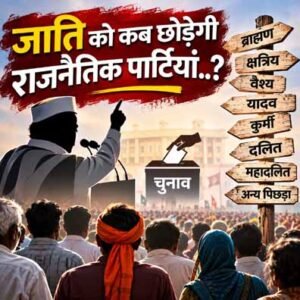
Caste is a bitter reality in Indian politics, one that almost every political party finds impossible to ignore. Electoral calculations, candidate selection, and policy priorities are all influenced by caste equations. This trend has been most evident in states like Bihar, Uttar Pradesh, and Tamil Nadu. The question is, when will political parties abandon this crutch of caste?
India is a diverse country where caste is deeply rooted in the social structure. Adult suffrage has transformed caste into a political force. For political parties, caste provides a ready-made vote bank and organizational structure. Ignoring it, especially during elections, can prove risky.
The central government’s approval of a caste census in 2025 is considered a historic step. In a democratic process, the main goal of political parties is to gain power. Since voters are often organized along caste lines, parties select candidates, organize rallies, and even draft election manifestos keeping caste equations in mind. In this way, caste provides them with a certain guarantee of electoral victory.
According to experts, transparency in caste data can provide real benefits to marginalized sections. However, there is also a fear that this data could be used for new caste polarization.
Many parties use caste in the name of social justice and the upliftment of the underprivileged. By supporting reservations and welfare schemes, they gain the support of specific caste groups. Similarly, the rise of leadership within political parties is also often based on caste, giving leaders who can manage caste equations a chance to advance.
However, caste-based politics is an obstacle to national unity and inclusive development. Democracy considers the individual as the unit, not caste or group. Casteist politics is contrary to this fundamental principle. It promotes caste divisions and rivalries in society, disrupting social harmony and sometimes leading to violent clashes. When politics becomes centered on caste, important issues like merit, efficiency, and development take a backseat. Parties focus on appeasing specific caste groups rather than prioritizing the national interest.
The end of caste-based politics will not happen suddenly in a single day; rather, it will be a slow, gradual process, dependent on changes in both society and politics. This will happen when voters rise above caste and vote on issues like education, health, and employment. Economic development and the rise of class-based politics can weaken the hold of caste. Only when people’s identities are more closely linked to their income, employment, and economic status will caste sentiments become secondary.
Strict action by the Election Commission against rallies and statements that incite caste hatred will also deter political parties from using this weapon. Recent steps in some states to remove the mention of caste from government documents (such as FIRs) are also positive signs in this direction. Currently, elections are underway in Bihar, and caste-based politics is once again at the center of this election—both the NDA and the Mahagathbandhan have prioritized caste equations in the selection of candidates.
Parties will only abandon caste-based politics when voters abandon it. As long as caste identity remains the key to electoral success, political parties will continue to exploit it for their own benefit. Breaking this vicious cycle requires a concerted effort from the public, the media, and the political leadership.
Sanjay Kumar Singh
Political Editor.