आज हम एक ऐसे प्रहरी की बात कर रहें है जो सत्ता, प्रशासन, सामाजिक व्यवस्था और शासन की गतिविधियों पर निगरानी रखता है तथा जनता तक सत्य और तथ्यपरक सूचनाएँ पहुंचाने के साथ ही ,समाज में व्याप्त भ्रष्टाचार, अन्याय, शोषण, मानवाधिकारों के उल्लंघन और सत्ता के दुरुपयोग को भी उजागर करता है. यह भूमिका लोकतंत्र के चौथे स्तंभ के कारण होता है. इस महत्वपूर्ण भूमिका को पत्रकारिता कहा जाता है. इसके साथ ही एक बड़ी विडंबना यह भी है कि जो पत्रकार समाज को सच का आईना दिखाते हैं, उन्हें स्वयं भी अनेक प्रकार के खतरों, हिंसा, धमकियों, उत्पीड़न और हत्याओं का सामना करना पड़ता है.
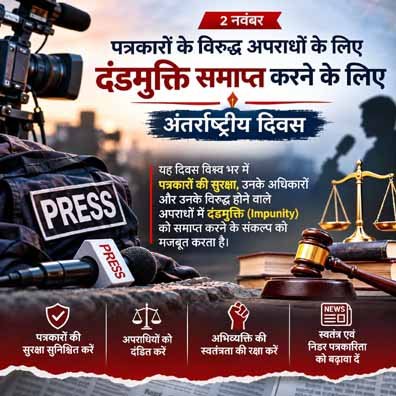
भारत सहित दुनिया के तमाम देशों में पत्रकारों को केवल इसलिए निशाना बनाया जाता है क्योंकि वे सच्चाई सामने लाने का प्रयास करते हैं. इसी गंभीर समस्या के प्रति विश्व समुदाय का ध्यान आकर्षित करने तथा पत्रकारों के विरुद्ध होने वाले अपराधों में दंडमुक्ति की संस्कृति को समाप्त करने के उद्देश्य से प्रत्येक वर्ष 2 नवंबर को ‘पत्रकारों के विरुद्ध अपराधों के लिए दंडमुक्ति समाप्त करने का अंतर्राष्ट्रीय दिवस’ मनाया जाता है. इस दिवस का मुख्य उद्देश्य पत्रकारों पर होने वाले हमलों की जांच में होने वाली देरी, न्याय मिलने में आने वाली बाधाओं और अपराधियों को सजा न मिलने (दंडमुक्ति) की संस्कृति के खिलाफ वैश्विक स्तर पर जागरूकता फैलाना है.
इस दिवस की शुरुआत वर्ष 2013 के दिसंबर महीने में संयुक्त राष्ट्र महासभा ने अपने 68वें सत्र के दौरान संकल्प को पारित किया था. बताते चलें कि, 2 नवंबर 2007 को माली देश में दो फ्रांसीसी पत्रकारों की हत्या की याद में चुनी गई थी. यह दिन इस बात की याद दिलाता है कि जब भी किसी पत्रकार को उसकी सच्चाई बयां करने की वजह से चुप कराया जाता है, तो पूरा समाज के साथ -साथ लोकतंत्र भी कमजोर होता है. यूनेस्को के आंकड़ों के अनुसार, पिछले एक दशक में दुनिया भर में सैकड़ों पत्रकारों को अपने कर्तव्यों का पालन करते हुए अपनी जान गवानी पड़ी है. सबसे हैरान करने वाली बात तो यह है कि, हत्यारों और हमलावरों को कानून के शिकंजे से छूट मिल जाती है वहीं, दूसरी तरफ सजा की बात की जाय तो 10 में से नौ मामलों में अपराधियों को सजा भी नहीं मिलती है. इससे पत्रकारों के मन में एक स्थायी भय पैदा होता है.
वर्तमान समय के डिजिटल युग में पत्रकारों के खतरों का दायरा भी बढ़ गया है. अक्सर स्थानीय पत्रकारों को निशाना बनाया जाता है चूकिं वो भ्रष्टाचार, संगठित अपराध, राजनीति और अवैध गतिविधियों का पर्दाफाश करते है वहीं, पत्रकारों को चुप कराने के लिए कई बार भारी-भरकम मानहानि के मुकदमे या दमनकारी कानूनों का इस्तेमाल कर उनका आर्थिक और मानसिक शोषण भी किया जाता है. साथ ही महिला पत्रकारों को विशेष रूप से ऑनलाइन ट्रोलिंग, मानहानि के झूठे मुकदमों, और साइबर हमलों का भी सामना करना पड़ता है.
भारत की बात करें तो – चूकिं, भारत विश्व का सबसे बड़ा लोकतंत्र है. यहाँ संविधान प्रत्येक नागरिक को अभिव्यक्ति की स्वतंत्रता प्रदान करता है. विशेष रूप से स्थानीय और स्वतंत्र पत्रकारों को अपने कार्य के दौरान अनेक चुनौतियों का भी सामना करना पड़ता है. खासकर नगरों,महानगरों या ग्रामीण क्षेत्र में विभिन्न सामाजिक, राजनीतिक और आर्थिक विषयों पर रिपोर्टिंग करते समय वे भ्रष्टाचार, प्रशासनिक लापरवाही, पर्यावरण विनाश, महिला उत्पीड़न, जातिगत भेदभाव, अवैध खनन और मानवाधिकारों के उल्लंघन जैसी समस्याओं को उजागर करते रहते हैं जिसके कारण उन्हें कई प्रकार की समस्याओं से भी दो-चार होना पड़ता है. हद तो तब हो जाती है जब प्रखंड और जिला स्तर पर कार्यरत पत्रकारों को कई बार स्थानीय दबाव, धमकी जैसी समस्याओं का भी सामना करना पड़ता है.
पत्रकारों की सुरक्षा केवल सरकार या मीडिया संस्थानों की जिम्मेदारी नहीं है, बल्कि प्रत्येक नागरिक का भी दायित्व होता है. आम नागरिकों को पत्रकारों के प्रति सम्मानजनक व्यवहार करना चाहिए. अगर किसी समाचार या विचार से असहमति होने पर हिंसा, धमकी अथवा उत्पीड़न का सहारा लेने के बजाय लोकतांत्रिक और कानूनी तरीकों से अपनी असहमति व्यक्त करनी चाहिए. यदि पत्रकारों को स्वतंत्र रूप से कार्य करने का अवसर नहीं मिलेगा, तो समाज में व्याप्त समस्याओं, भ्रष्टाचार और अन्याय को उजागर करना कठिन हो जाएगा.
पत्रकारों के विरुद्ध अपराधों के लिए दंडमुक्ति समाप्त करने का अंतर्राष्ट्रीय दिवस महज एक दिवस नहीं है बल्कि, यह हमें याद दिलाता है कि सत्य की आवाज को दबाने का प्रयास केवल एक पत्रकार पर हमला नहीं, बल्कि लोकतंत्र, अभिव्यक्ति की स्वतंत्रता और नागरिकों के सूचना प्राप्त करने के अधिकार पर भी हमला है. पत्रकार समाज का वह प्रहरी है, जो अंधकार में प्रकाश की किरण बनकर लोगों तक वास्तविकता पहुँचाने का प्रयास करता है. अगर पत्रकार ही भय, हिंसा और धमकियों के साये में जीने को विवश हो जाए, तो लोकतंत्र की पारदर्शिता और जवाबदेही दोनों ही कमजोर पड़ जाती है.
========== ========= ===========
International Day to End Impunity for Crimes against Journalists
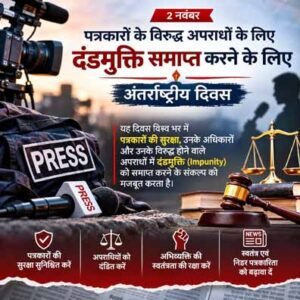
Today, we are discussing a watchdog that monitors the activities of those in power, the administration, the social order, and the government. Beyond delivering truthful and fact-based information to the public, it also exposes corruption, injustice, exploitation, human rights violations, and the abuse of power within society. This function is fulfilled by what is known as the ‘fourth pillar’ of democracy—journalism. Yet, there is a profound irony: the very journalists who hold up a mirror of truth to society often find themselves facing various dangers, including violence, threats, harassment, and even murder.
In many countries across the globe—including India—journalists are targeted precisely because they strive to bring the truth to light. To draw the world’s attention to this grave issue and to dismantle the culture of impunity for crimes committed against journalists, the ‘International Day to End Impunity for Crimes against Journalists’ is observed annually on November 2nd. The primary objective of this day is to raise global awareness regarding the delays in investigating attacks on journalists, the obstacles to securing justice, and the prevailing culture of impunity—where perpetrators often go unpunished.
This observance was established in December 2013, when the United Nations General Assembly adopted a resolution during its 68th session. The date, November 2nd, was chosen in memory of two French journalists who were murdered in Mali on that day in 2007. This day serves as a stark reminder that whenever a journalist is silenced for speaking the truth, both society as a whole and democracy itself are weakened. According to UNESCO data, hundreds of journalists worldwide have lost their lives over the past decade while performing their professional duties. Perhaps the most alarming aspect is that murderers and attackers often manage to evade the clutches of the law; in fact, in nine out of ten cases, the perpetrators go unpunished. This creates a persistent sense of fear among journalists.
In today’s digital age, the range of threats faced by journalists has expanded. Local journalists, in particular, are frequently targeted because they expose corruption, organized crime, political wrongdoing, and illicit activities. Furthermore, to silence them, they are often subjected to economic and psychological exploitation through exorbitant defamation lawsuits or the use of repressive laws. Additionally, female journalists specifically face online trolling, malicious defamation suits, and cyberattacks.
In the context of India—the world’s largest democracy, where the Constitution guarantees freedom of expression to every citizen—journalists, especially those working locally or independently, encounter numerous challenges. Whether in cities, metropolitan areas, or rural regions, they report on a wide array of social, political, and economic issues—uncovering corruption, administrative negligence, environmental destruction, the oppression of women, caste-based discrimination, illegal mining, and human rights violations—all of which expose them to various forms of adversity. The situation becomes even more dire for journalists working at the sub-district (block) and district levels, who frequently face intense local pressure and direct threats.
The safety of journalists is not solely the responsibility of the government or media organizations; it is an obligation that rests with every citizen. Ordinary citizens should treat journalists with respect. If one disagrees with a news report or an opinion, such disagreement should be expressed through democratic and legal channels, rather than resorting to violence, threats, or harassment. If journalists are not afforded the opportunity to work freely, it will become increasingly difficult to bring to light the problems, corruption, and injustices that exist within society. The International Day to End Impunity for Crimes against Journalists is more than just a date on the calendar; it serves as a reminder that attempts to silence the voice of truth are not merely attacks on an individual journalist, but assaults on democracy, freedom of expression, and the citizens’ right to access information. Journalists act as society’s watchdogs—a beacon of light in the darkness—striving to bring reality to the public. If journalists themselves are forced to live under the shadow of fear, violence, and threats, then both the transparency and accountability of democracy are weakened.