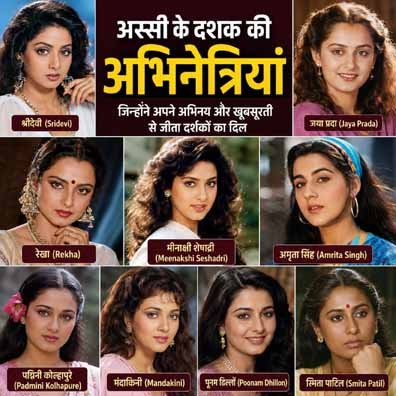
भारतीय सिनेमा के इतिहास में वर्ष 1980 के दशक को संक्रमण काल के रूप में देखा जाता है. एक तरफ मासाला फिल्मों के साथ-साथ समानांतर सिनेमा को भी नई ऊंचाई दी. इस दशक की अभिनेत्रियाँ केवल ‘हीरोइन’ नहीं थीं, बल्कि उन्होंने पर्दे पर सशक्त, संवेदनशील और यथार्थवादी चरित्रों को जीवंत करते हुए उन्होंने भारतीय समाज की बदलती मानसिकता और स्त्री की नई पहचान को भी आकार दिया.
अस्सी के दशक से पहले तक फिल्मों की व्यावसायिक सफलता का पूरा दारोमदार मुख्य रूप से नायक पर होता था. बताते चलें कि, इसी अस्सी के दशक में भारतीय सिनेमा को पहली ‘फीमेल सुपरस्टार’ भी दिया जिनका नाम था श्रीदेवी. वहीं, श्रीदेवी ने साबित किया कि एक अभिनेत्री अपने दम पर फिल्म को बॉक्स ऑफिस पर ब्लॉकबस्टर बना सकती है. उन्होंने ‘सद्मा’ (1983) और ‘नगीना’ (1986) जैसी फिल्मों में अभिनय की सीमाओं को तोड़ते हुए ‘चालबाज’ (1989) में दोहरी भूमिका और ‘मि. इंडिया’ (1987) में चार्ली चैप्लिन की याद दिलाती ‘हावड़ा ब्रिज’ वाली चार्ली ने दिखाया कि वह हास्य, नाटक और एक्शन तीनों में समान रूप से कुशल थीं. श्रीदेवी ने नायक के समकक्ष या उससे भी अधिक फीस और स्टारडम भी हासिल किया था.
हिंदी सिनेमा में दक्षिण भारतीय सिनेमा से आईं इन अभिनेत्रियों ने एक नई ऊर्जा और ग्लैमर का संचार किया. जिनमे प्रमुख नाम श्रीदेवी और जयाप्रदा. अस्सी के दशक में दर्शक भी दोनों अभिनेत्रयों के बीच एक स्वस्थ प्रतिस्पर्धा होती थी. जया प्रदा ने अपनी क्लासिक भारतीय खूबसूरती और अभिनय कला से एक अमिट छाप छोड़ी. श्रीदेवी और जया प्रदा की जोड़ी ने व्यावसायिक सिनेमा को कई सुपरहिट फिल्में (तोहफा, मवाली) दीं.
अस्सी का दशक कमर्शियल मसाला फिल्मों के साथ-साथ गंभीर, यथार्थवादी और सामाजिक मुद्दों पर आधारित सिनेमा के लिए भी स्वर्ण काल था. इस काल में शबाना आज़मी और स्मिता पाटिल का योगदान अतुलनीय रहा. दोनों अभिनेत्रियों ने पारंपरिक ‘ग्लैमरस हिरोइन’ की छवि को पूरी तरह से ध्वस्त कर दिया था. शबाना आज़मी ने ‘अर्थ’ (1982), ‘मंडी’ (1983) और ‘मासूम’ (1983) जैसी फिल्मों के जरिए समाज में महिलाओं के अस्तित्व, उनके अधिकारों और मानसिक अंतर्द्वंद्व के साथ जिया वहीं, स्मिता पाटिल ने ‘चक्र’ (1981), ‘बाज़ार’ (1982) और ‘मिर्च मसाला’ (1987) में अपनी तीखी आँखों और स्वाभाविक अभिनय से शोषित और ग्रामीण महिलाओं की आवाज़ को भी एक वैश्विक मंच दिया.
अस्सी के दशक में और भी कई अभिनेत्रियां आईं और अपनी सादगी और चुलबुलेपन से दर्शकों को दीवाना बनाया. इस दौर में पूनम ढिल्लों, मीनाक्षी शेषाद्रि, पद्मिनी कोल्हापुरे, माधुरी दीक्षित, पूजा बेदी, मंदाकिनी और किमी काटकर का नाम आता है. पूनम ढिल्लों ने ‘नूरी’ और ‘ये वादा रहा’ जैसी फिल्मों से ‘गर्ल नेक्स्ट डोर’ (आम लड़की) की छवि को लोकप्रिय बनाया तो दूसरी ओर मीनाक्षी शेषाद्रि ने ‘हीरो’ (1983) से शुरुआत कर ‘मेरी जंग’ और बाद में ‘दामिनी’ जैसी फिल्मों में अपनी बेजोड़ अभिनय क्षमता और शास्त्रीय नृत्य का भी लोहा मनवाया. पद्मिनी कोल्हापुरी ने बहुत ही काम उम्र में ‘प्रेम रोग’ (1982) और ‘वो सात दिन’ (1983) जैसी बेहद संवेदनशील और सामाजिक कुप्रथाओं पर चोट करने वाली फिल्मों में उन्होंने जो परिपक्व अभिनय किया था.
अस्सी के दशक के उत्तरार्ध में मीनाक्षी शेषाद्रि ने हीरो और दामिनी जैसी फिल्मों से उभरीं और गंभीर भूमिकाओं में अपनी पहचान बनाई. अस्सी के दशक के अंत में अपनी कैरियर की शुरुआत करने वाली माधुरी दीक्षित ने ‘तेजाब (1988) से की. उन्होंने ‘राम लखन’ (1989) जैसी फिल्मों में जिस ऊर्जा और नृत्य क्षमता का प्रदर्शन करते हुए उन्होंने नब्बे के दशक की भी बुनियाद रखी. वहीं, पूजा बेदी, मंदाकिनी और किमी काटकर ने बोल्ड और प्रयोगधर्मी भूमिकाओं से चर्चा बटोरी, जो उस समय के सामाजिक बदलावों का संकेत था.
अस्सी के दशक शबाना आज़मी ने एक पत्नी की मानसिक पीड़ा और उसके बाद आत्म-सम्मान की वापसी की कहानी इतनी सशक्त तरीके से पेश की कि वह सिर्फ एक अभिनेत्री नहीं, बल्कि स्त्री-विमर्श का प्रतीक भी बन गईं थीं. उन्होंने ‘त्यागमूर्ति नारी’ की परिभाषा को तोड़ने में कामयाब हुई थीं.वहीं, स्मिता पाटिल ने एक विवाहेतर संबंध से पैदा हुए बच्चे की मां की भूमिका निभाकर और उषा किरण ने एक दृढ़, व्यावसायिक महिला (डॉक्टर) की भूमिका निभाकर साबित कर दिया कि नायिकाएं समस्याग्रस्त नैतिक स्थितियों का भी सामना कर सकती हैं.
अस्सी के दशक की फिल्मों में हास्य की भूमिकाएँ भी उतनी ही महत्वपूर्ण थीं. रति अग्निहोत्री ने हल्की-फुल्की रोमांटिक कॉमेडी फिल्मों में एक मासूम प्रेमिका की छवि बनाई वहीं, सोनिया साहनी और मंदाकिनी जैसी अभिनेत्रियाँ मुख्यतः हास्य और पारिवारिक फिल्मों में अपनी दमदार उपस्थिति दर्ज कराती थीं, जिससे प्रमुख नायकों (जैसे गोविंदा) के कैरियर को भी मजबूती मिली थी.
सत्तर के दशक की कई अभिनेत्रियों ने अस्सी के दशक में खुद को नए सिरे से स्थापित करते हुए बोल्डनेस की नई कहानी लिखीं. इस दौर में भी कई अभिनेत्रियां थीं जिनमें हेमा मालिनी, रेखा, डिंपल कपाड़िया, अमृता सिंह और नीलम कोठारी. हेमा मालिनी का कैरियर सत्तर के दशक में शुरू हुआ था, अस्सी के दशक में भी वे “ड्रीम गर्ल” बनी रहीं और पारिवारिक तथा सामाजिक फिल्मों की धुरी भी बनीं. वहीं, रेखा ने अपने अभिनय की गहराई से दर्शकों को प्रभावित किया. उन्होंने उमराव जान जैसी फिल्मों ने उन्हें गंभीर और कलात्मक अभिनेत्री के रूप में स्थापित किया. वहीं, डिंपल कपाड़िया ने ‘सागर’ (1985) से एक बेहद बोल्ड और प्रोग्रेसिव वापसी की और बाद में ‘रूदाली’ जैसी कला फिल्मों में अपनी प्रतिभा दिखाई. अमृता सिंह ने अपनी बेबाक और बोल्ड पर्सनालिटी (बेताब, चमेली की शादी) से स्क्रीन पर एक नई ऊर्जा बिखेरी, जबकि नीलम ने अपनी मासूमियत और डांसिंग स्किल्स से युवाओं के दिलों में जगह बनाई.
अस्सी के दशक की अभिनेत्रियों ने भारतीय फैशन में भी एक नया अध्याय लिखा. श्रीदेवी का बिंदी, झुमके और खुला केश उस समय की युवतियों के लिए प्रेरणा स्रोत थे. वहीं, पूनम ढिल्लन ने ‘ये वादा रहा’ (1982) और ‘सौतन’ (1983) में जो साड़ीयों के अंदाज में नवाचार किया था उसे वर्तमान समय में भी याद किया जाता है. एक ओर जहाँ डिम्पल कपाड़िया की शुरुआत सत्तर के दशक के अंत में हुई थीं लेकिन अस्सी में उनकी ‘सागर’ 1985 जैसी फिल्मों ने उन्हें एक आइकॉन बनाया. उनका प्राकृतिक सौंदर्य और कम शृंगार आज के ‘नो-मेकअप’ लुक का भी अग्रदूत था.
अस्सी के दशक में भारतीय समाज में उपभोक्तावाद और आधुनिकता की ओर बढ़ते कदमों का प्रतीक माना जाता था. वहीं, अभिनेत्रियां अब केवल “त्यागमयी” या “सहायक” नहीं रहीं, बल्कि वे कहानी की केंद्रीय पात्र बनने लगीं थीं. इस दौर में ग्लैमर और फैशन का प्रभाव बढ़ा, जिससे अभिनेत्रियों की स्क्रीन उपस्थिति अधिक आकर्षक और आधुनिक हुई थी. वहीं, कई अभिनेत्रियों को “ग्लैमर डॉल” की छवि में बांध दिया गया, जिससे उनके गंभीर अभिनय को कम आंका गया.
फिल्म उद्योग में पुरुष नायकों का वर्चस्व इतना मजबूत था कि अभिनेत्रियों को अक्सर द्वितीयक भूमिकाओं में ही सीमित रहना पड़ता था. हालाँकि, यह दौर अभिनेत्रियों के लिए पूरी तरह सुखद नहीं था. उस दौर में अमिताभ बच्चन, धर्मेंद्र, जीतेंद्र और अनिल कपूर जैसे अभिनेताओं का बोलबाला था. अभिनेत्रियों को अक्सर ‘ग्लैमर डॉल’ तक ही सीमित कर दिया जाता था.दूसरी तरफ समानांतर सिनेमा में शबाना और स्मिता गंभीर भूमिकाएं कर रही थीं, वहीं मुख्यधारा में अभिनेत्रियों को खुद को भी साबित करने के लिए काफी संघर्ष करना पड़ता था. व्यावसायिक असुरक्षा के कारण कई अभिनेत्रियों का कैरियर बहुत जल्दी खत्म हो गया था चूकिं फ़िल्में आने वाली पीढ़ी (जैसे माधुरी और काजोल) की ओर तेजी से बढ़ रहा था.
अस्सी का दशक भारतीय अभिनेत्रियों के लिए संघर्ष और उपलब्धि का संगम था. यह वह समय था जब उन्होंने परंपरा और आधुनिकता के बीच संतुलन साधते हुए अपनी पहचान बनाई थी. स्मिता पाटिल की संजीदगी से लेकर श्रीदेवी के जादुई स्टारडम तक. इन अभिनेत्रियों ने आने वाली पीढ़ियों (जैसे माधुरी दीक्षित, काजोल और आज की आलिया भट्ट या दीपिका पादुकोण) के लिए एक ऐसा मजबूत रास्ता तैयार किया, जहां एक महिला कलाकार के लिए संभावनाओं का अनंत सागर बना. भारतीय सिनेमा के इतिहास में अस्सी का दशक एक सुनहरे अध्याय के रूप में याद किया जायेगा. सिनेमा केवल मनोरंजन नहीं, बल्कि समाज का दर्पण भी होता है और उस दर्पण में स्त्री की छवि लगातार बदलती और मजबूत होती रही है.
========== ========= ===========
Actresses of the Eighties…
The 1980s are seen as a transitional period in the history of Indian cinema. On one hand, they gave new heights to masala films as well as parallel cinema. The actresses of this decade were not just heroines; they also shaped the changing mindset of Indian society and the new identity of women by bringing strong, sensitive, and realistic characters to life on screen.
Before the 1980s, the commercial success of films depended primarily on the hero. It’s worth noting that the 1980s also gave Indian cinema its first female superstar, Sridevi. Sridevi proved that an actress could single-handedly make a film a box office blockbuster. She broke the boundaries of acting in films like “Sadma” (1983) and “Nagina” (1986), and with her double role in “Chaalbaaz” (1989) and her breakthrough role in “Mr. In “India” (1987), Charlie Chaplin’s “Howrah Bridge” reminiscing about Charlie Chaplin, Charlie demonstrated her equal skill in comedy, drama, and action. Sridevi also commanded a fee equal to, or even surpassing, her leading lady’s stardom.
These actresses from South Indian cinema infused a new energy and glamour into Hindi cinema. Prominent among them were Sridevi and Jayaprada. In the 1980s, audiences witnessed a healthy competition between the two actresses. Jayaprada left an indelible mark with her classic Indian beauty and acting prowess. The pairing of Sridevi and Jayaprada gave commercial cinema several superhit films (Tohfa, Mawaali).
The 1980s were a golden age for both commercial masala films and serious, realistic, and socially issue-based cinema. The contributions of Shabana Azmi and Smita Patil were incomparable during this period. Both actresses completely shattered the image of the traditional “glamorous heroine.” Shabana Azmi dealt with the existence of women in society, their rights, and their mental conflicts through films like “Arth” (1982), “Mandi” (1983), and “Masoom” (1983). Smita Patil, with her sharp eyes and natural acting in “Chakra” (1981), “Bazaar” (1982), and “Mirch Masala” (1987), gave a global platform to the voices of exploited and rural women.
The eighties saw the emergence of many other actresses who captivated audiences with their simplicity and bubbly charm. Poonam Dhillon, Meenakshi Seshadri, Padmini Kolhapure, Madhuri Dixit, Pooja Bedi, Mandakini, and Kimi Katkar are among the notable figures in this era. Poonam Dhillon popularized the image of the “girl next door” with films like “Noori” and “Yeh Vaada Raha.” Meenakshi Seshadri, starting with “Hero” (1983), showcased her unmatched acting skills and classical dance skills in films like “Meri Jung” and later “Damini.” Padmini Kolhapuri, at a very young age, displayed mature performances in films like “Prem Rog” (1982) and “Woh Saat Din” (1983), which were extremely sensitive and critical of social evils.
In the late 1980s, Meenakshi Seshadri emerged with films like “Hero” and “Damini” and established herself in serious roles. Madhuri Dixit, who also made her debut in the late 1980s, did so with “Tezaab” (1988). Her energy and dancing skills, displayed in films like “Ram Lakhan” (1989), laid the foundation for the 1990s. Pooja Bedi, Mandakini, and Kimi Katkar garnered attention with bold and experimental roles, reflecting the social changes of the time.
In the 1980s, Shabana Azmi so powerfully portrayed the story of a wife’s mental anguish and subsequent recovery of self-respect that she became not just an actress but a symbol of feminist discourse. She succeeded in breaking the stereotype of the “sacrificing woman.” Smita Patil, playing the mother of a child born from an extramarital affair, and Usha Kiran, playing a determined, professional woman (doctor), proved that heroines could also face problematic moral situations.
Comedic roles were equally important in films of the 1980s. Rati Agnihotri created the image of an innocent lover in light-hearted romantic comedies, while actresses like Sonia Sahni and Mandakini primarily made their presence felt in comedies and family films, boosting the careers of leading actors (like Govinda).
Many actresses of the 1970s reinvented themselves in the 1980s, writing new stories of boldness. Among the actresses of this era were Hema Malini, Rekha, Dimple Kapadia, Amrita Singh, and Neelam Kothari. Hema Malini’s career began in the 1970s, and she remained the “dream girl” of the 1980s, becoming the centerpiece of family-oriented and social films. Meanwhile, Rekha impressed audiences with her profound acting chops. Films like “Umrao Jaan” established her as a serious and artistic actress. Dimple Kapadia made a bold and progressive comeback with “Saagar” (1985) and later showcased her talent in art films like “Rudaali.” Amrita Singh infused a new energy on screen with her outspoken and bold personality (in “Betaab,” “Chameli Ki Shaadi”), while Neelam won the hearts of young people with her innocence and dancing skills.
The actresses of the 1980s marked a new chapter in Indian fashion. Sridevi’s bindi, earrings, and open hair were a source of inspiration for young women of that time. Poonam Dhillon’s innovation in the sari style in “Yeh Vaada Raha” (1982) and “Sautan” (1983) is still remembered today. Dimple Kapadia’s debut came in the late 1970s, but her films like “Saagar” (1985) made her an icon in the 1980s. Her natural beauty and minimal makeup were a precursor to today’s “no-makeup” look.
The 1980s were considered a symbol of consumerism and the move towards modernity in Indian society. Actresses were no longer merely “sacrificing” or “supporting” characters, but rather became central figures in the story. During this period, the influence of glamour and fashion increased, making actresses’ screen presence more attractive and modern. At the same time, many actresses were reduced to the image of “glamour dolls,” undermining their serious acting.
The dominance of male heroes in the film industry was so strong that actresses were often confined to secondary roles. However, this era was not entirely pleasant for actresses. Actors like Amitabh Bachchan, Dharmendra, Jeetendra, and Anil Kapoor dominated the industry. Actresses were often reduced to mere “glamour dolls.”
While Shabana and Smita were playing serious roles in parallel cinema, actresses in the mainstream industry struggled to establish themselves. Commercial insecurity led to the early end of many actresses’ careers, as films increasingly shifted towards the upcoming generation (like Madhuri and Kajol).
The 1980s were a juncture of struggle and achievement for Indian actresses. It was a time when they carved out their own niche by balancing tradition and modernity. From Smita Patil’s graceful grace to Sridevi’s magical stardom—these actresses paved a path for generations to come (like Madhuri Dixit, Kajol, and today’s Alia Bhatt or Deepika Padukone), opening up a vast ocean of possibilities for female artists. The 1980s will be remembered as a golden chapter in the history of Indian cinema. Cinema is not just entertainment, but a mirror of society, and in that mirror, the image of women has constantly changed and strengthened.