या देवी सर्वभूतेषु माँ चंद्रघंटा रूपेण संस्थिता।
नमस्तस्यै नमस्तस्यै नमस्तस्यै नमो नम:।।
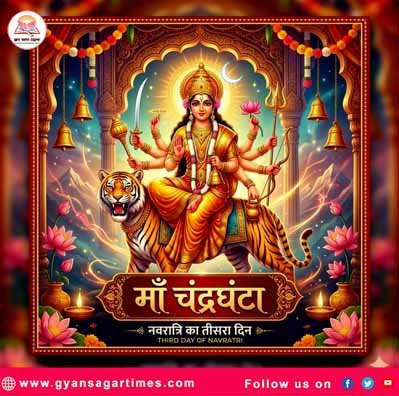
नवरात्रा के तीसरे दिन माँ चंद्रघंटा की पूजा होती है. आखिर माँ को “चंद्रघंटा” क्यों कहा जाता है? माँ का यह स्वरूप परम शांतिदायक और कल्याणकारी है और माँ के मस्तक में घंटे का आकार का अर्धचंद्र है, इसी कारण माँ को चंद्रघंटा देवी कहा जाता है. माँ का स्वरूप अत्यंत सौम्यता एवं शांति से परिपूर्ण रहता है, इनके शरीर का रंग स्वर्ण के समान चमकीला है और इनके दस हाथ में खड्ग आदि शस्त्र तथा बाण आदि अस्त्र विभूषित हैं. माँ सिंह पर सवार देवी की मुद्रा युद्ध के लिए उद्धत रहने की है.
माँ चन्द्रघंटा की आराधना करने से वीरता-निर्भयता के साथ ही सौम्यता एवं विनम्रता का विकास होकर मुख, नेत्र (आँख) तथा संपूर्ण काया में कांति-गुण की वृद्धि होती है, साथ ही स्वर में दिव्य, अलौकिक माधुर्य का भी समावेश हो जाता है. माँ चंद्रघंटा के उपासक जहाँ भी जाते हैं, उन्हें देखकर लोग शांति और सुख का अनुभव करते हैं. इनकी भक्ति से साधक को योग साधन और विशेष सिद्धि प्राप्त होती है. माँ चंद्रघंटा को नाद या स्वरों की देवी भी माना जाता है चुकिं, स्वर साधकों को इनकी उपासना से बहुत ही लाभ मिलता है.
मां चंद्रघंटा के आशीर्वाद से साधकों के समस्त पाप और बाधाएँ नष्ट हो जाते हैं साथ ही, साधक के कष्ट का निवारण शीघ्र ही कर देती हैं. इनकी उपासना से साधक सिंह की तरह पराक्रमी और निर्भय हो जाता है साथ ही, इनके घंटे की ध्वनि से सदा अपने भक्तों को प्रेतबाधा से भी रक्षा करती है. साधकों के शरीर से दिव्य प्रकाशयुक्त आभा का विकिरण होता रहता है.
पूजा के नियम: –
माँ चन्द्रघंटा की पूजा करते समय पीले या सफेद रंग के वस्त्र पहनें और माँ को सफेद वस्तुएं जैसे; सफ़ेद चंदन, अक्षत और सफ़ेद फूल, दूध, दही और शक्कर हीं अर्पित करें, साथ ही माँ को खीर का भोग लगायें. इसके बाद माँ का ध्यान करते हुए, उनके मन्त्रों का जाप करें और श्री दुर्गा सप्तशती का एक से तीन अध्याय पढना चाहिए.
========== ========= ===========
Ma Chandraghanta…
Ya Devi Sarvabhuteshu, Ma Chandraghanta Rupena Samsthita. ।
Namastasyai, Namastasyai, Namastasyai Namo Namah. ।।
On the third day of Navaratri, Ma Chandraghanta is worshipped. But why, exactly, is the Ma referred to as “Chandraghanta”? This manifestation of the Mais supremely peaceful and benevolent; furthermore, a crescent moon shaped like a bell adorns her forehead—it is for this very reason that she is known as Goddess Chandraghanta. The Ma’s form is imbued with immense gentleness and tranquility; her complexion glows with the brilliance of gold, and her ten hands are adorned with various weapons—including swords, arrows, and other arms. Seated upon a lion, the Goddess assumes a posture of readiness for battle.
Worshipping Ma Chandraghanta fosters the development of gentleness and humility alongside valor and fearlessness. It enhances the radiance—or kanti—of one’s face, eyes, and entire physique, while also infusing one’s voice with a divine, ethereal sweetness. Wherever devotees of Ma Chandraghanta go, those who behold them experience a profound sense of peace and happiness. Through devotion to her, a spiritual seeker attains proficiency in Yogic practices (Yoga Sadhana) and acquires special spiritual powers (Siddhis). Ma Chandraghanta is also revered as the Goddess of Naad (divine sound) or musical notes, as vocalists and musical practitioners derive immense benefit from worshipping her.
With the blessings of Ma Chandraghanta, all of a devotee’s sins and obstacles are eradicated; moreover, she swiftly alleviates their suffering and distress. Through her worship, a seeker becomes as mighty and fearless as a lion; furthermore, the resonant sound of her bell serves to constantly protect her devotees from ghostly apparitions and malevolent spirits. A divine, luminous aura continuously radiates from the bodies of her devotees.
Guidelines for Worship: –
When worshipping Ma Chandraghanta, one should wear yellow or white attire. Offerings presented to the Mother should consist of white items—such as white sandalwood paste, Akshat (unbroken rice grains), white flowers, milk, yogurt, and sugar. Additionally, one should offer Kheer (sweet rice pudding) as a sacred food offering (Bhog) to the Mother. Thereafter, while meditating upon the Mother, chant her mantras and recite Chapters 1 through 3 of the Shri Durga Saptashati.