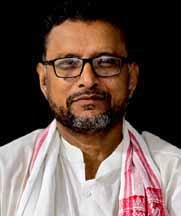
 भारतीय राजनीति के उन नेताओं में गिने जाते हैं जिन्होंने बिहार की राजनीति को दशकों तक दिशा दी है. उन्हें अक्सर “सुशासन बाबू” के नाम से जानते और पहचानते हैं. समाजवाद की नर्सरी से निकलकर रिकॉर्ड दशमी बार मुख्यमंत्री पद की शपथ लेने तक का उनका सफर दृढ़ इच्छाशक्ति और राजनीतिक कुशलता का उदाहरण है.
नीतीश कुमार का जन्म 1 मार्च 1951 को बिहार के बख्तियारपुर में हुआ था.उनके पिता का नाम कविराज राम लखन सिंह था जो कि, एक स्वतंत्रता सेनानी थे. उन्होंने बिहार कॉलेज ऑफ इंजीनियरिंग (अब NIT पटना) से इलेक्ट्रिकल इंजीनियरिंग में डिग्री हासिल की. नीतीश कुमार पर राम मनोहर लोहिया और जयप्रकाश नारायण के समाजवादी विचारों का गहरा प्रभाव पड़ा. उनकी राजनीती की नींव वर्ष 1974 में जयप्रकश (जेपी) आंदोलन के दौरान शुरू हुआ था. वर्ष 1974-75 में जेपी आंदोलन में सक्रिय भागीदार व आपातकाल के दौरान वो जेल भी गए थे.
वर्ष 1985 में नीतीश कुमार पहली बार हरनौत से विधायक चुने गए और वर्ष 1989 में वे पहली बार लोकसभा पहुंचे। इसके बाद भी वे कई बार संसद में पहुंचे। वर्ष 1990- 2004 में अटल बिहारी वाजपेयी की सरकार में उन्होंने रेल मंत्री और कृषि मंत्री के रूप में अपनी प्रशासनिक दक्षता साबित की. बताते चलें कि, तत्काल टिकट प्रणाली और रेलवे में सुरक्षा सुधारों का श्रेय उन्हीं को जाता है.
वर्ष 2000 में वे पहली बार बिहार के मुख्यमंत्री बने, हालांकि उनका कार्यकाल केवल सात दिनों का ही रहा था. वर्ष 2005- 14 तक लगातार मुख्यमंत्री रहे, बिहार में कानून-व्यवस्था और विकास की नई छवि गढ़ी। वर्ष 2015 से अबतक कई बार गठबंधन बदलते हुए भी मुख्यमंत्री पद पर बने रहे. वर्ष 2025 में वे 10वीं बार मुख्यमंत्री पद की शपथ ले चुके हैं.
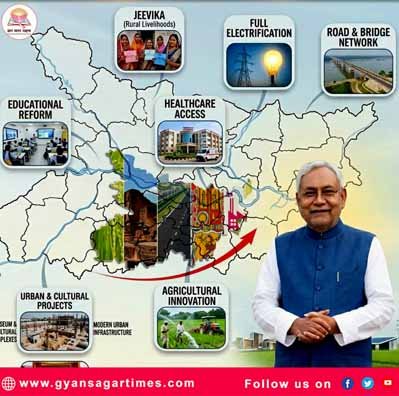
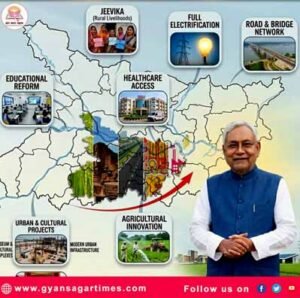
वर्ष 2005 का वो वर्ष जब बिहार के इतिहास में एक निर्णायक मोड़ आया और नीतीश कुमार ने लालू प्रसाद यादव के 15 वर्षों के शासन को समाप्त कर सत्ता संभाली थी. उन्होंने ग्रामीण इलाकों में सड़क और बिजली की स्थिति में काफी सुधर किया साथ ही लड़कियों की शिक्षा को बढ़ावा देने के लिए साइकिल योजना जैसी पहल की. उन्होंने अपराध दर में कमी लाने के लिए पुलिस सुधार और त्वरित कार्रवाई की साथ ही पिछड़े वर्गों और महिलाओं को राजनीति में अधिक प्रतिनिधित्व देने की भी कोशिश की.
वैसे तो देखा जाय तो नीतीश कुमार को भारतीय राजनीति में ‘गठबंधन का माहिर खिलाड़ी’ माने जाते हैं. अक्सर, उनकी राजनीति में ‘यू-टर्न’ या गठबंधन बदलने की चर्चा होती रहती है. आलोचक उन्हें अवसरवादी कहते हैं, जबकि समर्थक उन्हें व्यावहारिक और राज्यहित में निर्णय लेने वाला नेता मानते हैं. बीजेपी के साथ उनका रिश्ता दशकों पुराना है, जो विकास और हिंदुत्व के बीच एक संतुलन बनाकर चलते हैं.
नीतीश कुमार ने कई बार सामाजिक न्याय की राजनीति को धार देने के लिए वे आरजेडी के साथ भी जुड़े साथ ही उन्होंने वर्ष 2024 के लोकसभा चुनावों से पहले उन्होंने ‘INDIA’ गठबंधन की नींव रखने में महत्वपूर्ण भूमिका निभाई, हालांकि बाद में वे पुनः एनडीए में शामिल हो गए. इतने लंबे कार्यकाल के बावजूद नीतीश कुमार के सामने कुछ बड़ी चुनौतियां भी भी बनी हुई हैं. जिनमें बिहार से श्रम शक्ति का पलायन एक बड़ी गंभीर समस्या है वहीँ, निचले स्तर पर प्रशासनिक भ्रष्टाचार की खबरें उनकी ‘जीरो टॉलरेंस’ नीति पर सवाल उठाती हैं. साथ ही, बिहार के लिए विशेष दर्जे की उनकी मांग अभी भी लंबित है.
नीतीश कुमार ने बिहार को ‘जंगलराज’ की छवि से बाहर निकालकर ‘विकास’ की पटरी पर खड़ा किया है. उनका जीवन वृत्त भारतीय राजनीति का एक अनोखा अध्याय है. वे न केवल बिहार के सबसे लंबे समय तक मुख्यमंत्री रहे हैं, बल्कि उन्होंने यह दिखाया कि राजनीति में स्थायित्व केवल विचारधारा से नहीं, बल्कि परिस्थितियों के अनुसार निर्णय लेने की क्षमता से आता है. उनकी यात्रा संघर्ष, अवसर और नेतृत्व का मिश्रण है, जो उन्हें भारतीय राजनीति में एक विशिष्ट स्थान दिलाती है.
संजय कुमार सिंह,
राजनीतीक सम्पादक.
========== ========= ===========
Biography: Nitish Kumar
He is considered one of the leaders in Indian politics who has shaped Bihar politics for decades. He is often known and recognized as “Sushasan Babu.” His journey from the nursery of socialism to being sworn in as Chief Minister for a record tenth time is an example of strong will and political acumen.
Nitish Kumar was born on March 1, 1951, in Bakhtiyarpur, Bihar. His father, Kaviraj Ram Lakhan Singh, was a freedom fighter. He earned a degree in electrical engineering from the Bihar College of Engineering (now NIT Patna). Nitish Kumar was deeply influenced by the socialist ideas of Ram Manohar Lohia and Jayaprakash Narayan. The foundations of his political career were laid during the Jayaprakash (JP) movement in 1974. He was an active participant in the JP movement in 1974-75 and was also jailed during the Emergency.
Nitish Kumar was first elected as an MLA from Harnaut in 1985 and reached the Lok Sabha for the first time in 1989. He subsequently served in Parliament several times. He proved his administrative prowess as Railway Minister and Agriculture Minister in Atal Bihari Vajpayee’s government from 1990 to 2004. He is credited with the Tatkal ticketing system and security reforms in the railways.
In 2000, he became the Chief Minister of Bihar for the first time, although his tenure lasted only seven days. He served continuously from 2005 to 2014, creating a new image of law and order and development in Bihar. He has remained in the Chief Minister’s position despite several coalition changes since 2015. In 2025, he was sworn in as Chief Minister for the 10th time.
The year 2005 marked a decisive turning point in Bihar’s history, with Nitish Kumar taking power, ending Lalu Prasad Yadav’s 15-year rule. He significantly improved road and electricity conditions in rural areas and launched initiatives like the bicycle scheme to promote girls’ education. He implemented police reforms and prompt action to reduce crime rates, and also tried to give backward classes and women greater representation in politics.
Nitish Kumar is considered a “master coalition player” in Indian politics. His political U-turns or alliance changes are often discussed. Critics call him an opportunist, while supporters consider him a pragmatic leader who makes decisions in the state’s interest. His relationship with the BJP is decades-old, striking a balance between development and Hindutva.
Nitish Kumar has also repeatedly allied with the RJD to sharpen his social justice politics. He also played a key role in laying the foundation for the “INDIA” alliance ahead of the 2024 Lok Sabha elections, although he later rejoined the NDA. Despite his long tenure, Nitish Kumar still faces some significant challenges. While labor migration from Bihar is a serious problem, reports of corruption at the lower levels of administration raise questions about his “zero tolerance” policy. Furthermore, his demand for special status for Bihar remains pending.
Nitish Kumar has brought Bihar out of the “jungle raj” image and placed it on the path of “development.” His biography is a unique chapter in Indian politics. He has not only been Bihar’s longest-serving Chief Minister, but has also demonstrated that stability in politics comes not from ideology alone, but from the ability to make decisions based on the circumstances. His journey is a blend of struggle, opportunity, and leadership, which gives him a unique place in Indian politics.
Sanjay Kumar Singh,
Political Editor.