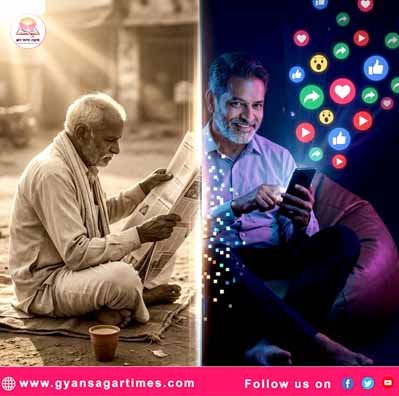
मानव सभ्यता के विकास में सूचना के आदान-प्रदान की भूमिका सर्वाधिक महत्वपूर्ण रही है. सूचना ने हमें जोड़ा है, जागरूक किया है और सामाजिक-राजनीतिक परिवर्तनों का मार्ग प्रशस्त किया है. यदि हम बीते तीन दशकों पर नज़र डालें, तो सूचना प्राप्त करने के हमारे स्रोत और तरीके में एक आमूलचूल परिवर्तन देखने को मिलता है. कल तक जहाँ घर की दहलीज़ पर पड़ने वाला अखबार सूचना, ज्ञान और मनोरंजन का प्रमुख जरिया था, वहीं आज एक स्मार्टफोन की स्क्रीन ने उसकी जगह ले ली है. यह परिवर्तन सिर्फ एक माध्यम का बदलाव नहीं, बल्कि हमारी सोच, समझ और दुनिया को देखने के नज़रिए में भारी बदलाव लेकर आया है.
कल का युग: अखबार का युग – अखबार सदियों तक सूचना का सबसे विश्वसनीय और प्रभावशाली माध्यम रहा। इसके अपने Distinct फायदे और विशेषताएँ थीं.
विश्वसनीयता और गहनता: – अखबारों में खबरें छपने से पहले संपादकीय परतों से गुजरती थीं. तथ्यों की जाँच (Fact-Checking) होती थी, भाषा पर ध्यान दिया जाता था और खबरों को संदर्भ (Context) के साथ प्रस्तुत किया जाता था. पाठक को एक पूरी, संपूर्ण और विश्लेषणात्मक जानकारी मिलती थी.
नियमितता और अनुशासन: – अखबार एक निश्चित समय पर (सुबह) आता था. इसने पाठकों में एक अनुशासन विकसित किया. सुबह की चाय के साथ अखबार पढ़ना एक रूटीन का हिस्सा था, जो दिनभर की खबरों से अवगत कराता था.
सीमित और नियंत्रित प्रतिक्रिया: – अखबार एक एकतरफा संचार का माध्यम था. पाठक ‘पाठक की कलम’ या ‘लेटर टू द एडिटर’ के जरिए अपनी प्रतिक्रिया दे सकते थे, लेकिन वह प्रकाशन के बाद होता था और उसे प्रकाशित भी करना होता था. इससे बहस की गति धीमी लेकिन विचारवान होती थी.
स्थानीयकरण: – हर क्षेत्र का अपना अखबार होता था, जो स्थानीय मुद्दों, खबरों और घटनाओं को कवर करता था, जिससे पाठकों को अपने आस-पास की दुनिया से जुड़े रहने में मदद मिलती थी.
वर्तमान का युग: – सोशल मीडिया का युग (The Era of Social Media).
इंटरनेट और स्मार्टफोन की क्रांति ने सोशल मीडिया को जन्म दिया, जिसने सूचना के पारंपरिक ढाँचे को completely बदल कर रख दिया.
तत्कालिकता और विस्फोटक प्रसार: – आज खबरें सेकंडों में दुनिया के एक कोने से दूसरे कोने में पहुँच जाती हैं। सोशल मीडिया 24×7 लाइव अपडेट देता है। #ट्रेंडिंग टॉपिक्स की खबरों ने गति को अभूतपूर्व बना दिया है.
सहभागिता और आवाज़ का लोकतंत्रीकरण: – यह सबसे बड़ा बदलाव है. सोशल मीडिया ने हर उपयोगकर्ता को एक संभावित ‘ब्रोडकास्टर’ बना दिया है. अब खबरें सिर्फ संवाददाता ही नहीं, बल्कि आम जनता भी बना और बाँट रही है. किसी भी घटना का एक साक्षी तुरंत वीडियो बना सकता है और उसे वायरल कर सकता है. इसने सत्ता और मीडिया संस्थानों के एकाधिकार को तोड़ा है.
एल्गोरिदमिक फ़िल्टर बबल: – सोशल मीडिया प्लेटफॉर्म एल्गोरिदम पर चलते हैं, जो उपयोगकर्ता को वही दिखाते हैं, जो उसे ‘पसंद’ आने की संभावना होती है. इससे व्यक्ति की राय को और मजबूत करने वाली सामग्री ही उसे दिखती है, जिससे “फ़िल्टर बबल” बनते हैं. व्यक्ति विपरीत विचारों से अनभिज्ञ रह जाता है, जिससे समाज में ध्रुवीकरण (Polarization) बढ़ता है.
विश्वसनीयता का संकट और फेक न्यूज: – सूचना की अतिशय तीव्रता और प्रसार में आसानी के कारण, फेक न्यूज, अफवाहें और प्रोपेगैंडा तेजी से फैलता है. तथ्यों की जाँच करने का समय नहीं मिलता. एक आकर्षक हेडलाइन या इमोशनल सामग्री वायरल हो जाती है, भले ही वह सच न हो। यह सोच के लिए सबसे बड़ा खतरा है.
संक्षिप्तता और सतहीपन: – सोशल मीडिया की दुनिया में ध्यान आकर्षित करना सबसे कठिन है. इसलिए, जटिल खबरों और विचारों को छोटे, आसान और अक्सर Sensationalized टुकड़ों में बाँटकर पेश किया जाता है. गहन विश्लेषण और संदर्भ की कमी होती है, जिससे सोच सतही होती जा रही है.
दोनों संसारों का सामंजस्य
यह कहना कि अखबार पूरी तरह अप्रासंगिक हो गया है, गलत होगा. आज भी गंभीर पाठकों और शोधकर्ताओं के लिए अखबार और उनके डिजिटल संस्करण गहन विश्लेषण और विश्वसनीय खबरों का स्रोत बने हुए हैं. वहीं, सोशल मीडिया लोकतंत्र में आवाज़ का एक शक्तिशाली माध्यम है.
वर्तमान समय की सोच की सबसे बड़ी चुनौती और जिम्मेदारी यह है कि हम इन दोनों दुनियाओं के सर्वश्रेष्ठ को कैसे आत्मसात करें. हमें सोशल मीडिया की तात्कालिकता और सहभागिता का लाभ लेते हुए भी, अखबारों वाली गहनता, तथ्य-जाँच और विश्लेषण की आदत नहीं छोड़नी चाहिए. एक जिम्मेदार डिजिटल नागरिक का कर्तव्य है कि वह किसी भी खबर को शेयर करने से पहले उसकी सत्यता की जाँच करे, विभिन्न स्रोतों से पढ़े और अपने एल्गोरिदमिक फ़िल्टर बबल से बाहर निकलकर विपरीत दृष्टिकोणों को भी समझने का प्रयास करे.
अंततः, माध्यम चाहे कागज का हो या डिजिटल, सूचना का उद्देश्य ज्ञानवर्धन और जागरूकता फैलाना ही होना चाहिए. वर्तमान समय की सोच को इसी संतुलन की आवश्यकता है.
=========== =========== ============
Yesterday it was newspapers, today its social media?

The role of information exchange has been paramount in the development of human civilization. Information has connected us, made us aware, and paved the way for socio-political changes. If we look at the last three decades, we see a radical transformation in our sources and methods of obtaining information. Until yesterday, the newspaper delivered to our doorstep was the primary source of information, knowledge, and entertainment, but today a smartphone screen has taken its place. This change is not just a shift in medium, but it has brought about a massive change in our thinking, understanding, and perspective on the world.
The Era of Yesterday: The Newspaper Era – Newspapers remained the most reliable and influential medium of information for centuries. They had their own distinct advantages and characteristics.
Reliability and Depth: – News in newspapers went through editorial layers before publication. Facts were checked, attention was paid to language, and news was presented with context. The reader received complete, comprehensive, and analytical information.
Regularity and Discipline: – The newspaper arrived at a fixed time (in the morning). This developed a sense of discipline among readers. Reading the newspaper with morning tea was part of a routine that kept them informed about the day’s news.
Limited and Controlled Feedback: – Newspapers were a one-way communication medium. Readers could give their feedback through ‘Letters to the Editor,’ but this happened after publication and required editorial approval for publication. This made the pace of debate slower but more thoughtful.
Localization: – Every region had its own newspaper, which covered local issues, news, and events, helping readers stay connected to the world around them.
The Present Era: – The Era of Social Media.
The internet and the smartphone revolution gave birth to social media, which completely transformed the traditional information structure.
Immediacy and Explosive Dissemination: – Today, news reaches from one corner of the world to another in seconds. Social media provides 24/7 live updates. News about #trending topics has made the pace unprecedented.
Democratization of Participation and Voice: – This is the biggest change. Social media has made every user a potential ‘broadcaster’. Now, news is not only created and shared by journalists, but also by the general public. A witness to any event can instantly record a video and make it go viral. This has broken the monopoly of power and media institutions.
Algorithmic Filter Bubbles: – Social media platforms run on algorithms that show users only what they are likely to ‘like’. This means individuals are only shown content that reinforces their existing opinions, creating “filter bubbles”. Individuals remain unaware of opposing viewpoints, leading to increased polarization in society.
Credibility Crisis and Fake News: – Due to the sheer volume of information and the ease of dissemination, fake news, rumors, and propaganda spread rapidly. There is no time for fact-checking. A catchy headline or emotional content goes viral, even if it’s not true. This is the biggest threat to critical thinking.
Brevity and Superficiality: – In the world of social media, grabbing attention is the hardest thing. Therefore, complex news and ideas are broken down into short, easy-to-digest, and often sensationalized pieces. There is a lack of in-depth analysis and context, leading to superficial thinking.
Harmonizing Both Worlds
It would be wrong to say that newspapers have become completely irrelevant. Even today, for serious readers and researchers, newspapers and their digital versions remain a source of in-depth analysis and reliable news. At the same time, social media is a powerful medium for voice in a democracy.
The biggest challenge and responsibility of contemporary thinking is how to integrate the best of both these worlds. While taking advantage of the immediacy and participation offered by social media, we should not abandon the habit of in-depth analysis, fact-checking, and critical thinking that newspapers provide. A responsible digital citizen has a duty to verify the accuracy of any news before sharing it, to read from various sources, and to step outside their algorithmic filter bubble to understand opposing viewpoints.
Ultimately, whether the medium is print or digital, the purpose of information should be to enlighten and spread awareness. This balance is what is needed in today’s information landscape.