कहा जाता है नजरिया अगर अच्छा हो नजर भी ठीक होती है वहीँ दूसरी तरफ, नजर वही है जो दुनिया बदल दे. पूंजीपति की नजर में दुनिया एक्सेल शीट है और गैर-पूंजीपति? बस “मानव संसाधन” नाम की एक पंक्ति. चलिए, इस “नजर” का ऑप्टिकल टेस्ट करते हुए लेंस बदले-बदले, धुंध साफ करते हुए…
पूंजीपति का दर्शन चश्मे में होता है वहीँ, गैर-पूंजीपति मनुष्य होते ही नहीं है, वे तो सिर्फ और सिर्फ संसाधन ही होते हैं… पूंजीपति की नजर में गैर-पूंजीपति व्यक्ति नहीं, “कॉस्ट-टू-कन्वर्ज़न” है. इसे दूसरे शब्दों में – जितना खर्च करोगे उतना ही लाभ मिलेगा. दूसरी तरफ सम्मान की बात की जाय तो, पूंजीपति की नजर में सम्मान का मापदंड स्किल नहीं, “मार्जिन” है और टैलेंट हमेशा रिस्क फ़ैक्टर ही होता है. सबसे अंत होता है धर्म की .. धर्म से बड़ा मार्जिन फैक्टर और कुछ नहीं होता है. पूंजीपति, जब किसी ग़रीब या गैर-पूंजीपति के लिए कोई भलाई का काम करता है, तो उसे ‘परोपकार कहते हैं. लेकिन, पूंजीपति की नजर से इसकी असलियत कुछ और ही बयान होती है. जैसे – जब कोई पूंजीपति या उद्योगपति किसी गाँव को गोद लेता है या स्कूल बनाता है, तो वह यह नहीं कह रहा होता है कि “मैं आपकी मदद कर रहा हूँ.” बल्कि, वह तो असल में कह रहा होता है कि, “मैं अपनी कॉर्पोरेट सामाजिक जिम्मेदारी पूरी कर रहा हूँ ताकि सरकार मुझ पर टैक्स कम कर दे, और मेरी कंपनी की छवि साफ़ दिखे.”
पूंजीपतियों के लिए ग़रीबी हटाना एक तरह का ‘ब्रांडिंग इवेंट’ है, जिसका मुख्य उद्देश्य होता है—’जनसंपर्क’ बनाना और भविष्य में अपने धंधे के लिए ज़मीन तैयार करना.
पूंजीपति अक्सर गैर-पूंजीपतियों के संघर्षों को ‘प्रेरक कहानियों’ की तरह देखतें हैं जैसे – जब कोई ग़रीब बच्चा पढ़कर आईएस बन जाता है, तो पूंजीपति यह नहीं सोचते कि “वाह! सिस्टम ने काम किया.” वे यही सोचते हैं: “आह, कितनी अच्छी विज्ञापन सामग्री! इसे हमारी नई एजुकेशन ऐप के प्रचार में इस्तेमाल किया जा सकता है. पूंजीपतियों की नजर में आम आदमी की मेहनत सिर्फ़ एक भावुक कहानी है, जिससे उनके महंगे उत्पादों को बेचा जा सके.
पूंजीपतियों की नजर में, देश की पूरी अर्थव्यवस्था केवल उनके अपने बड़े व्यापारिक साम्राज्य का विस्तार का हिस्सा होता है. जब देश में तरक्की की बात हो तो इसका सीधा अर्थ होता है—’हमारे व्यापार की तरक्की’ से. उनकी नजर में महंगाई तब तक कोई समस्या नहीं है, जब तक कि वह उनके उत्पादों की बिक्री को प्रभावित न करे. वहीँ दूसरी तरफ जब कोई ग़ैर-पूंजीपति हड़ताल करता है या अपने हकों की मांग करता है, तो पूंजीपतियों की नजर में, वह व्यक्ति ‘राक्षस’ दिखाई देता है, जो देश के ‘विकास’ (यानी पूंजीपतियों के मुनाफ़े) में रोड़ा अटका रहा हो.
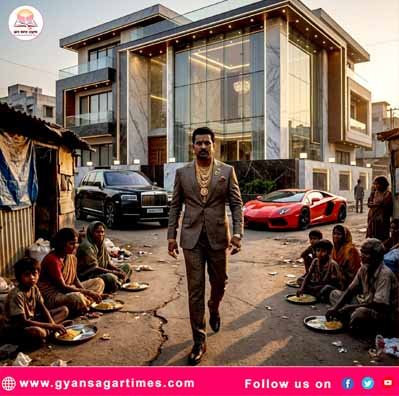
पूंजीपति की नज़र में गैर-पूंजीपति एक ऐसी अदृश्य ‘फुटपाथ’ है जिस पर चलकर पूंजीपति सफलता के शिखर तक पहुँचता है, और फिर ऊपर से उसी फुटपाथ की तस्वीर खींचकर दुनिया को बताता है कि देखिए, मैंने कितनी ‘कठिन यात्रा’ की है. सबसे बड़ी बात तो या यूँ कहें कि, अक्षरत: सत्य बात तो यह है कि, आम आदमी ‘सस्ता श्रम’ है, या ‘बिकने वाला ग्राहक’, या फिर ‘टैक्स बचाने वाला प्रोजेक्ट!
========== ========= ===========
Satire…
A Capitalist’s Binoculars!

It is said that if the perspective is good, the vision is also good. On the other hand, vision is what can change the world. In the eyes of a capitalist, the world is an Excel sheet, and the non-capitalist? Just a line labeled “human resources.” Let’s conduct an optical test of this “vision,” changing lenses and clearing the fog…
The capitalist’s vision is seen through glasses, whereas the non-capitalist are not human beings at all; they are merely resources… In the eyes of a capitalist, the non-capitalist is not a person, but a “cost-to-conversion.” In other words, the more you spend, the more you gain. On the other hand, when it comes to respect, in the eyes of a capitalist, the criterion for respect is not skill, but “margin,” and talent is always a risk factor. Last but not least is religion… There is nothing more margin-forming than religion. When a capitalist does something good for the poor or non-capitalist, it’s called “philanthropy.” However, from a capitalist’s perspective, the reality is something else. For example, when a capitalist or industrialist adopts a village or builds a school, they aren’t saying, “I’m helping you.” Rather, they’re actually saying, “I’m fulfilling my corporate social responsibility so that the government will reduce my taxes and my company’s image will be clean.”
For capitalists, eradicating poverty is a kind of “branding event,” the main purpose of which is to build public relations and prepare the ground for their future business.
Capitalists often view the struggles of non-capitalists as “inspirational stories.” For example, when a poor child studies and becomes an IAS officer, they don’t think, “Wow! The system worked.” They think: “Ah, what great advertising material! This could be used to promote our new education app.” In the eyes of capitalists, the hard work of the common man is merely a sentimental story to sell their expensive products.
In the eyes of capitalists, the entire economy of the country is merely a part of the expansion of their own vast business empire. When they talk about national progress, it simply means “the progress of our business.” In their eyes, inflation is not a problem unless it affects the sales of their products. On the other hand, when a non-capitalist goes on strike or demands their rights, they see that person as a “monster” who is obstructing the country’s “development” (i.e., the capitalists’ profits).
In the eyes of capitalists, non-capitalists are an invisible “footpath” on which the capitalists reach the pinnacle of success, and then they take a picture of that same footpath from above and show it to the world. Look, what a “hard journey” I’ve had. The biggest point, or rather, the absolute truth, is that the common man is “cheap labor,” or a “sellout customer,” or a “tax-saving project!”