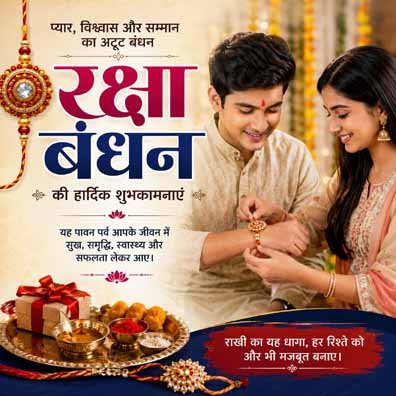
आज श्रावण पूर्णिमा है और पुरे देश में भाई-बहन के पवित्र प्रेम, अटूट विश्वास और सुरक्षा के संकल्प के प्रतीक का पर्व रक्षाबंधन मनाया जा रहा है. यह पर्व केवल एक धागे का बंधन नहीं है, बल्कि यह भारतीय संस्कृति की उस भावना को जीवंत करता है जहाँ रिश्तों की पवित्रता और एक-दूसरे की रक्षा का दायित्व सर्वोपरि माना गया है. भारतीय संस्कृति में पर्व केवल उत्सव नहीं होते, वे जीवन-मूल्यों, सामाजिक संबंधों और आध्यात्मिक चिंतन को अभिव्यक्त करने वाले सांस्कृतिक माध्यम भी हैं. भारतीय सांस्कृतिक चेतना में गहराई से रचा-बसा एक जटिल एवं बहुआयामी पर्व है, जो समय के साथ अपने अर्थ और स्वरूप में निरंतर विकसित होता रहा है.
‘रक्षा’ और ‘बंधन’—इन दो शब्दों में ही इस पर्व का मूल दर्शन निहित है: किसी व्यक्ति, संबंध, मूल्य या आदर्श की रक्षा के लिए प्रेम और उत्तरदायित्व के सूत्र में बंधना या यूँ कहें कि, ‘रक्षा’ (सुरक्षा) और ‘बंधन’ (बाँधना) से बने इस शब्द का शाब्दिक अर्थ है—”सुरक्षा का बंधन”. वहीं, वर्तमान समय में रक्षाबंधन एक बड़ा बाजार-आधारित त्योहार भी बन गया है. डिजाइनर राखियाँ, महँगे उपहार, ऑनलाइन खरीदारी, विशेष मिठाइयाँ और डिजिटल शुभकामनाएँ इसके आधुनिक स्वरूप का हिस्सा बन चुके हैं. राखी की वास्तविक शक्ति उसके मूल्य में नहीं, उसके भाव में है.
रक्षाबंधन की जड़ें अत्यंत प्राचीन व गहरी हैं. इसका इतिहास लगभग छह हजार वर्ष पूर्व सिंधु घाटी सभ्यता से जोड़ा जाता है. इसके ऐतिहासिक और पौराणिक उल्लेख कई रूपों में मिलते हैं. पौराणिक ग्रंथ भविष्य पुराण के अनुसार, देवताओं और राक्षसों के युद्ध में जब देवता संकट में थे, तब देवताओं की रक्षा के लिए गुरु बृहस्पति ने इंद्राणी (शची) को श्रावण पूर्णिमा के दिन इंद्र की कलाई पर रक्षा-सूत्र बांधने का विधान बताया था. एक और कथा के अनुसार, भगवान विष्णु ने दानवराज बलि को दिए वचन के अनुसार पाताल लोक का पहरा संभाला था. तब माता लक्ष्मी ने बलि को भाई बनाकर राखी बांधी और भगवान विष्णु को अपने साथ वैकुंठ वापस ले गईं थीं.
पौराणिक ग्रंथों के अनुसार, यमुना अपने भाई यम का स्नेहपूर्वक स्वागत करती हैं और रक्षा-सूत्र बाँधती हैं. यम उनके प्रेम से प्रसन्न होकर वरदान देते हैं. इस कथा में भाई-बहन के बीच स्नेह, पुनर्मिलन और दीर्घकालीन संबंध की भावना प्रमुख है. एक और कथा के अनुसार, कृष्ण और द्रौपदी का प्रसंग भी रक्षाबंधन की लोकप्रिय कथाओं में सम्मिलित किया जाता है. इस प्रसंग में रक्त-संबंध के स्थान पर आत्मीयता, विश्वास और संकट में साथ खड़े होने का भाव दिखाई देता है.वहीं, मध्यकाल में रानी कर्णवती ने मुग़ल सम्राट हुमायू को राखी भेजकर अपनी और अपने राज्य की रक्षा का वचन मांगा था, जिसे हुमायू ने एक भाई के रूप में पूरी निष्ठा से निभाया था. वर्ष 1905 में बंगाल के विभाजन के विरोध में रवींद्रनाथ टैगोर ने लोगों से एक-दूसरे को राखी बाँधने का आह्वान किया, जिससे यह त्योहार सांप्रदायिक सद्भाव का संदेशवाहक बना था. इन कथाओं के अनुसार, रक्षा का आधार शक्ति नहीं, है; बल्कि, इसका आधार अधिकार नहीं, विश्वास है.
वर्तमान समय में रक्षाबंधन के दिन बहनें अपने भाई के मस्तक पर तिलक लगाती है, आरती करती है, मिठाई खिलाती है और उसकी कलाई पर राखी बाँधती है. भाई बहन को उपहार देता है तथा उसके सुख-दुःख में साथ देने का आश्वासन देता है. इस प्रकार पूरा अनुष्ठान एक प्रकार का सांस्कृतिक संवाद है, जिसमें भावनाएँ प्रतीकों के माध्यम से व्यक्त होती हैं. उदहारण – तिलक का अर्थ होता है मंगल, सम्मान और शुभकामना, आरती का अर्थ होता है व्यक्ति के कल्याण और नकारात्मक शक्तियों से रक्षा की कामना, रक्षा-सूत्र का अर्थ होता है संबंध, विश्वास और रक्षा-संकल्प का प्रतीक, मिठाई का अर्थ होता है संबंध में मधुरता की कामना, उपहार का अर्थ होता है प्रेम और कृतज्ञता की अभिव्यक्ति और आशीर्वाद या संकल्प का अर्थ होता है संबंध को भविष्य में भी निभाने की जिम्मेदारी.
रक्षा-सूत्र (राखी) केवल सूत या रेशम का धागा नहीं है, बल्कि यह सकारात्मक ऊर्जा, संकल्प और प्रेम का प्रतीक है. वहीं, ‘रक्षा’ का अर्थ सुरक्षा और ‘बंधन’ का अर्थ जुड़ाव होता है. यह धागा भाई को यह स्मरण कराता है कि वह हर परिस्थिति में अपनी बहन की रक्षा और सम्मान की रक्षा करेगा. मध्यकालीन के भारत में, जहाँ महिलाएँ असुरक्षित महसूस करती थीं, वे उन पुरुषों को राखी बाँधती थीं जिन पर वे भरोसा कर सकती थीं, और उन्हें अपना भाई मान लेती थीं. वर्तमान समय में रक्षाबंधन का दायरा केवल भाई-बहन तक सीमित नहीं रहा है बल्कि, यह पर्व गुरु और शिष्य, मित्रों, सैनिकों और देशवासियों, तथा समाज के रक्षकों के प्रति सम्मान प्रकट करने का माध्यम बन चुका है. बताते चलें कि, भारतवर्ष के कई हिस्सों में भगवान को भी राखी बाँधने की परंपरा रही है विशेषकर शिव, विष्णु, गणेश और हनुमान को. यहाँ भक्त और ईश्वर के बीच भावनात्मक संबंध का प्रतीक माना जाता है, जहाँ भक्त ईश्वर से अपने जीवन की रक्षा की कामना करते हैं.
वर्तमान समय में रक्षाबंधन का अर्थ पारस्परिक देखभाल, भावनात्मक समर्थन और आजीवन जिम्मेदारी तक विस्तारित हो गया है. यह केवल भाई की बहन की रक्षा का पर्व नहीं, बल्कि आपसी सम्मान और साझेदारी का उत्सव बन गया है. पहले की तरह राखी अब केवल साधारण धागा नहीं रही; यह चाँदी, सोने, मोतियों, और यहाँ तक कि इको-फ्रेंडली सामग्री से भी बनाई जाती है. यह बदलाव परंपरा और आधुनिकता के सम्मिश्रण को दर्शाता है. राखी की वास्तविक शक्ति उसके मूल्य में नहीं, उसके भाव में है। साधारण सूती धागे से बनी राखी भी उतनी ही अर्थपूर्ण हो सकती है जितनी महँगी सजावटी राखी के पीछे स्नेह, सम्मान और जिम्मेदारी का भाव हो ?
वर्तमान समय में प्रकृति संरक्षण हेतु पेड़-पौधों को भी राखी बाँधने की परम्परा की शुरुआत हो चुकि है. बताते चलें कि, राष्ट्रीय स्वयंसेवक संघ के पुरुष सदस्य परस्पर भाईचारे के लिए एक-दुसरे को भगवा रंग की राखी बांधते हैं. हिन्दू धर्म के किसी भी धार्मिक अनुष्ठान में भी रक्षासूत्र बांधते हुए श्लोक का उच्चारण किया जाता है.
येन बद्धो बलिराजा दानवेन्द्रो महाबल:।
तेन त्वामपि बध्नामि रक्षे मा चल मा चल ॥
कभी हिंदी फिल्मों में एक दौर हुआ करता था जिसमें रक्षाबंधन के उपर भी गीत-संगीत हुआ करते थे. बताते चलें कि, वर्ष1950-60 के दशक में रक्षाबंधन के नाम से कई फ़िल्में बनाई गई थी.वर्ष 1962 में राखी पर दूसरी फिल्म आई थी जिसके बोल थे “राखी धागों का त्यौहार, बँधा हुआ इक-इक धागे में भाई-बहन का प्यार”.वर्ष छोटी बहन (1959) – भैया मेरे राखी के बंधन को निभाना, हरे रामा हरे कृष्णा (1971)- फूलों का तारों का सबका कहना है, एक हजारों में मेरी बहना है, रेशम की डोरी (1974)- बहना ने भाई की कलाई पे प्यार बांधा है, प्यार के दो तार से संसार, चम्बल की कसम (1980) – चंदा रे मेरे भईया से कहना, बहना याद करें,
रक्षा-सूत्र का यह सरल धागा आज भी प्रेम, विश्वास, जिम्मेदारी और आशा के उन जटिल तंतुओं को बुनता है, जो भारतीय समाज की सांस्कृतिक चेतना को एक सूत्र में पिरोए हुए हैं. रक्षाबंधन केवल एक उत्सव मात्र नहीं है, बल्कि यह मानवीय मूल्यों, नैतिक दायित्वों और रिश्तों की मिठास का उत्सव है. यह पर्व हमें सिखाता है कि समाज में परस्पर प्रेम, विश्वास और एक-दूसरे के प्रति उत्तरदायित्व की भावना ही एक सशक्त और सुंदर राष्ट्र की नींव रखती है.
========== ========= ===========
Raksha Bandhan / Raksha Sutra
Today is Shravan Purnima, and Raksha Bandhan, the festival symbolizing the sacred love, unbreakable trust, and pledge of protection between a brother and a sister, is being celebrated across the country. This festival is not just about the bonding of a thread; it brings to life the spirit of Indian culture, where the sanctity of relationships and the responsibility to protect each other are considered paramount. In Indian culture, festivals are not just celebrations; they are also cultural mediums that express life values, social relationships, and spiritual contemplation. Deeply embedded in the Indian cultural consciousness, this festival is a complex and multifaceted festival, one that has continuously evolved in its meaning and form over time.
The two words ‘Raksha’ and ‘Bandhan’—these two words—encapsulate the core philosophy of this festival: to be bound by a bond of love and responsibility to protect a person, relationship, value, or ideal. This word, derived from ‘Raksha’ (protection) and ‘Bandhan’ (to bind), literally means “a bond of protection.” At the same time, Raksha Bandhan has also become a major market-driven festival. Designer rakhis, expensive gifts, online shopping, special sweets, and digital greetings have become part of its modern form. The true power of the Rakhi lies not in its value, but in its sentiment.
Raksha Bandhan has ancient and deep roots. Its history is linked to the Indus Valley Civilization, approximately six thousand years ago. Historical and mythological references to it are found in many forms. According to the mythological text Bhavishya Purana, when the gods were in danger during the war between the gods and demons, Guru Brihaspati instructed Indrani (Shachi) to tie a Rakhi on Indra’s wrist on the day of Shravan Purnima to protect them. According to another legend, Lord Vishnu, as per his promise to the demon king Bali, took charge of the underworld. Goddess Lakshmi then made Bali her brother, tied a Rakhi on him, and took Lord Vishnu back to Vaikuntha with her.
According to mythological texts, Yamuna affectionately welcomes her brother Yama and ties a Rakhi. Pleased with their love, Yama grants a boon. This story highlights the spirit of affection, reunion, and a long-lasting bond between brother and sister. According to another legend, the story of Krishna and Draupadi is also included in popular Raksha Bandhan tales. This episode, rather than blood ties, reflects intimacy, trust, and standing together in times of crisis. In medieval times, Queen Karnavati sent a Rakhi to Mughal Emperor Humayun, seeking his promise to protect her and her kingdom, a promise Humayun fulfilled with complete devotion as a brother. In 1905, in protest against the Partition of Bengal, Rabindranath Tagore called on people to tie Rakhis to each other, making this festival a symbol of communal harmony. According to these tales, the basis of protection is not power; rather, it is trust, not authority.
Today, on Rakshabandhan, sisters apply a tilak (a mark of love) to their brother’s forehead, perform aarti (an arti), feed him sweets, and tie a rakhi (a sacred thread) on his wrist. The brother gives gifts to his sister and promises to support her through thick and thin. Thus, the entire ritual is a form of cultural communication, in which emotions are expressed through symbols. For example, tilak signifies good fortune, respect, and good wishes; aarti signifies well-being and protection from negative forces; raksha-sutra signifies connection, trust, and a pledge to protect; sweets signify a sweet relationship; gifts signify love and gratitude; and blessings or sankalp signify a commitment to maintain the relationship in the future.
Raksha-sutra (rakhi) is not just a cotton or silk thread, but a symbol of positive energy, resolve, and love. “Raksha” means protection, and “bandhan” means bonding. This thread reminds the brother that he will protect and uphold his sister’s honor under all circumstances. In medieval India, where women felt insecure, they tied Rakhis to men they could trust and considered their brothers. Today, Raksha Bandhan is no longer limited to just brother and sister; instead, it has become a means of expressing respect for guru and disciple, friends, soldiers and countrymen, and protectors of society. It is worth noting that in many parts of India, there is a tradition of tying Rakhis to deities, especially Shiva, Vishnu, Ganesha, and Hanuman. This is considered a symbol of the emotional bond between the devotee and the deity, where the devotee prays for their life’s protection.
In modern times, the meaning of Raksha Bandhan has expanded to encompass mutual care, emotional support, and lifelong responsibility. It is not just a festival of a brother’s protection of his sister, but a celebration of mutual respect and partnership. Unlike in the past, Rakhi is no longer just a simple thread; It is made from silver, gold, pearls, and even eco-friendly materials. This evolution reflects the blend of tradition and modernity. The true power of a Rakhi lies not in its price, but in its sentiment. Can a Rakhi made from simple cotton thread be as meaningful as an expensive, decorative Rakhi, filled with affection, respect, and responsibility?
Currently, a tradition of tying Rakhi to trees and plants has also begun to protect nature. It should be noted that male members of the Rashtriya Swayamsevak Sangh (RSS) tie saffron-colored Rakhis to each other to promote mutual brotherhood. A shloka is also recited while tying the Rakhi during any religious ritual in Hinduism.
Yen Baddho Baliraja Danavendro Mahabal: ।
Ten Tvaamapi Badhnami Rakshe Maa Chal Maa Chal ॥
There used to be a period in Hindi films where songs and music were also used on Raksha Bandhan. In 1950-60s, several films were made under the name of Raksha Bandhan. In 1962, another film on Rakhi was released with the lyrics “Rakhi is a festival of threads, tied in each thread of brother-sister love”. (1971)- Phoolon Ka Taaron Ka Sabka Kahna Hai, Ek Hazaron Mein Meri Bahna Hai, Resham Ki Dori (1974)- Bahna Ne Bhai Ki Kalai Pe Pyar Bandha Hai, Pyar Ke Do Tar Se Sansar, Chambal Ki Kasam (1980) – Chanda Re Mere Bhaiya Se Kahna, Bahna Yaad Karen,
This simple thread of the Raksha Sutra still weaves the complex threads of love, trust, responsibility and hope that have woven the cultural consciousness of Indian society together. Raksha Bandhan is not just a festival, but a celebration of human values, moral obligations and the sweetness of relationships. This festival teaches us that a sense of mutual love, trust and responsibility towards each other in society is the foundation of a strong and beautiful nation.