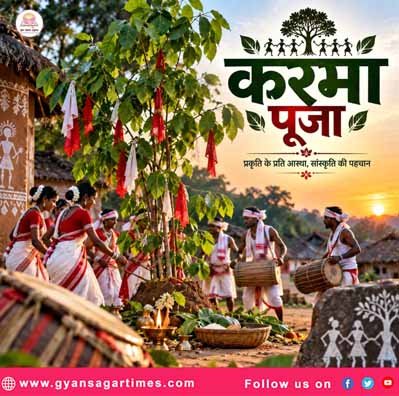
हिंदी पंचांग के अनुसार अभी कृष्ण का महीना भादों अपने अंतिम चरण की ओर चल रहा है. इस मास में बीते दिनों कई पर्व बड़े ही उल्लास से मनाया गया. आज की तारीख 22 सितंबर है और आज भादों महीने की एकादशी है. आज के दिन बाद ही विशेष है चूकिं, आज के दिन प्रकृति की आराधना और भाई-बहन के प्रेम का पर्व ‘करमा’ मनाया जा रहा है. यह पर्व भारत के आदिवासी और ग्रामीण समुदायों, विशेषकर झारखंड, छत्तीसगढ़, ओडिशा, पश्चिम बंगाल, बिहार और असम के क्षेत्रों में मनाया जाने वाल लोक पर्व है.
यह पर्व मुख्य रूप से मुंडा, उरांव (कुड़ुख), हो, संथाल, खड़िया, बैगा और अन्य आदिवासी समुदायों द्वारा मनाया जाता है. यह त्योहार प्रकृति की आराधना, भाई-बहन के प्रेम, और सामूहिक सांस्कृतिक चेतना का प्रतीक है. यह प्रकृति की पूजा का एक अभिन्न हिस्सा है, जहाँ करम वृक्ष (कदंब का पेड़) की पूजा की जाती है. करमा पूजा भादो मास (अगस्त-सितंबर) की शुक्ल पक्ष की एकादशी को मनाई जाती है. यह त्योहार मॉनसून के मौसम के अंत और खरीफ फसल की कटाई से पहले आता है, जिससे यह कृषि और प्रकृति से गहरा जुड़ाव रखता है. इस पर्व का मुख्य उद्देश्य प्रकृति का सम्मान करना, अच्छी फसल की कामना करना और भाई-बहन के अटूट प्रेम को दर्शाना है.
विधि: –
करमा पूजा मुख्य रूप से बहनें अपने भाइयों की लंबी उम्र, समृद्धि और सुरक्षा के लिए करती हैं. इस पूजा की तैयारी कुछ दिन पहले से ही शुरू हो जाती है. सर्वप्रथम महिलाएं सात प्रकार के अनाज—जैसे गेहूं, धान, चना, जौ, मकई, उरद आदि—बालू में बोती हैं. इसे ‘जावा’ कहा जाता है और यह जीवन की उपज और सृजन का प्रतीक है.
पूजा के मुख्य दिन, गाँव के लोग, विशेष रूप से बहनें, नाचते-गाते हुए जंगल से करम वृक्ष (कदंब का पेड़) की एक टहनी लेकर आती हैं. इस टहनी को पूजा स्थल पर स्थापित किया जाता है. यह टहनी करम देवता का प्रतीक मानी जाती है.
कथा: –
एक लोककथा के अनुसार, करमा और धरमा दो भाई थे। करमा ने प्रकृति और धर्म का पालन किया जबकि धरमा ने भौतिक सुखों की ओर झुकाव दिखाया. करमा की भक्ति और तप से देवता प्रसन्न हुए और उसे समृद्धि मिली. यह कथा हमें सिखाती है कि सच्चा कर्म और प्रकृति के प्रति श्रद्धा ही जीवन की सफलता का मार्ग है.
कथा सुनने के बाद, महिलाएँ और पुरुष पारंपरिक लोक गीतों पर रात भर नाचते-गाते हैं. इस दौरान मांदर, ढोल और नगाड़े जैसे वाद्य यंत्रों का प्रयोग होता है. यह नृत्य और संगीत पूरे गाँव में एक उल्लास का माहौल बना देता है. पूजा के अगले दिन, करम की टहनी और जावा को नदी या तालाब में विसर्जित कर दिया जाता है. इसके साथ ही उपवास तोड़कर प्रसाद का वितरण किया जाता है.
करमा पूजा सामूहिकता, सहयोग और सांस्कृतिक एकता को बढ़ावा देता है. यह पर्व गाँवों में सामूहिक नृत्य, गीत और उत्सव का रूप लेता है. इस पर्व में कुंवारी बालाएं विशेष भूमिका निभाती हैं, जो समाज में नारी की सृजनशीलता और शक्ति को दर्शाता है. करमा पूजा पर्यावरण संरक्षण और प्रकृति के प्रति संवेदनशीलता को बढ़ावा देती है. यह पर्व हमें याद दिलाता है कि वृक्ष, जल और भूमि हमारे जीवन के मूल आधार हैं.
वर्तमान समय के आधुनिक व डिजिटल युग में भी करमा पूजा बड़े उत्साह से शहरों और गाँवों में मनाई जाती है. यह केवल एक धार्मिक अनुष्ठान नहीं, बल्कि आदिवासी और गैर-आदिवासी समुदायों के लिए अपनी जड़ों और परंपराओं को बनाए रखने का एक तरीका है. यह त्योहार हमें बताता है कि प्रकृति की रक्षा और पारिवारिक मूल्यों को बनाए रखना कितना महत्वपूर्ण है. यह पर्व हमें सिखाता है कि सच्चा कर्म, प्रकृति के प्रति श्रद्धा और पारिवारिक प्रेम ही जीवन की सच्ची पूंजी है.
वर्तमान समय के बदलते सामाजिक और पर्यावरणीय परिदृश्य में करमा पूजा का महत्व और भी बढ़ जाता है. यह पर्व हमें यह समझने का अवसर देता है कि संस्कृति केवल अतीत की स्मृति नहीं, बल्कि वर्तमान समाज को प्रकृति, समुदाय और अपनी सांस्कृतिक जड़ों के साथ जोड़ने वाली जीवंत शक्ति भी है. करम वृक्ष के प्रति सम्मान मनुष्य और प्रकृति के पारंपरिक संबंध को सामने लाता है, जबकि सामूहिक गीत और नृत्य सामाजिक जीवन में सहभागिता और सांस्कृतिक निरंतर प्रवाह को व्यक्त करते हैं.
========== ========= ===========
Karma Puja…
According to the Hindi calendar, the month of Bhadon is currently in its final stages. Many festivals have been celebrated with great enthusiasm during this month. Today is September 22nd, and it is the Ekadashi of the month of Bhadon. This day is especially special because Karma, a festival of nature worship and brotherly love, is being celebrated on this day. This festival is a folk festival celebrated in tribal and rural communities of India, especially in the regions of Jharkhand, Chhattisgarh, Odisha, West Bengal, Bihar, and Assam.
This festival is celebrated primarily by the Munda, Oraon (Kurukh), Ho, Santhal, Kharia, Baiga, and other tribal communities. This festival symbolizes the worship of nature, brotherly love, and collective cultural consciousness. It is an integral part of nature worship, where the Karma tree (Kadamba tree) is worshipped. Karma Puja is celebrated on the Ekadashi of the Shukla Paksha (waxing phase of the bright fortnight) of Bhadon month (August-September). This festival marks the end of the monsoon season and the harvest of the Kharif crop, making it deeply connected to agriculture and nature. The main purpose of this festival is to honor nature, pray for a good harvest, and demonstrate the unwavering love between brothers and sisters.
Method: –
Karma Puja is primarily performed by sisters for the long life, prosperity, and safety of their brothers. Preparations for this puja begin a few days in advance. First, women sow seven types of grains—wheat, paddy, gram, barley, corn, black gram, etc.—in sand. This is called “java” and symbolizes the harvest and creation of life.
On the main day of the puja, villagers, especially sisters, bring a branch of the Karma tree (Kadamba tree) from the forest while dancing and singing. This branch is placed at the puja site. This branch is considered a symbol of the Karma deity.
Story: –
According to a folk tale, Karma and Dharma were two brothers. Karma followed nature and religion, while Dharma showed inclination towards material pleasures. Karma’s devotion and penance pleased the gods and brought him prosperity. This story teaches us that true action and reverence for nature are the path to success in life.
After listening to the story, women and men dance and sing to traditional folk songs throughout the night. Musical instruments like the Mandar, Dhol, and Nagada are used during this time. This dance and music create a joyous atmosphere throughout the village. The day after the puja, the Karma branch and Jawa are immersed in a river or pond. The fast is broken and Prasad is distributed.
Karma Puja promotes collectivism, cooperation, and cultural unity. This festival takes the form of group dance, song, and celebration in villages. Unmarried girls play a special role in this festival, reflecting the creativity and power of women in society. Karma Puja promotes environmental protection and sensitivity towards nature. This festival reminds us that trees, water, and land are the fundamental foundations of our lives.
Even in this modern and digital age, Karma Puja is celebrated with great enthusiasm in cities and villages. It is not just a religious ritual, but a way for tribal and non-tribal communities to maintain their roots and traditions. This festival teaches us how important it is to protect nature and uphold family values. It teaches us that true action, reverence for nature, and family love are the true wealth of life.
The importance of Karma Puja increases further in the current changing social and environmental landscape. This festival gives us an opportunity to understand that culture is not merely a memory of the past, but also a living force that connects present-day society with nature, community, and its cultural roots. Respect for the Karam tree evokes the traditional connection between humans and nature, while group songs and dances express the interconnectedness and continuous flow of culture in social life.