‘ॐ वृषभानुज्यै विद्महे, कृष्णप्रियायै धीमहि, तन्नो राधा प्रचोदयात्’।।
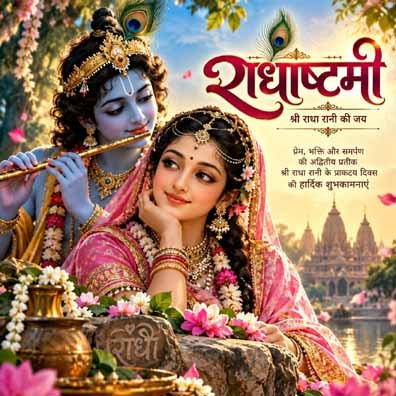
हिंदी पंचांग के अनुसार आज भादो शुक्ल पक्ष की अष्टमी को श्रीराधा का जन्मोत्सव मनाया जाता है. यह सिर्फ जन्मोत्सव नहीं है, बल्कि यह प्रेम, समर्पण और जीव तथा परमात्मा के मिलन का सर्वोच्च दार्शनिक प्रतीक भी है. यह पर्व विशेष रूप से ब्रज क्षेत्र, उत्तर भारत और वैष्णव समुदायों में श्रद्धापूर्वक मनाई जाती है. भादों कृष्ण पक्ष अष्टमी श्रीकृष्ण का जन्मोत्सव मनाया जाता है उसके 15 दिन बाद भादों शुक्ल पक्ष अष्टमी को राधाष्टमी या श्रीराधा रानी के प्राकट्य दिवस के रूप में जाना जाता है. श्रीराधा केवल कृष्ण की प्रियतमा नहीं, बल्कि उनकी ह्लादिनी शक्ति, भक्ति की पराकाष्ठा और निष्काम प्रेम की मूर्ति भी हैं.
पौराणिक ग्रंथों जैसे पद्म पुराण, ब्रह्मवैवर्त पुराण, स्कंद पुराण और गर्ग संहिता में श्रीराधा के प्राकट्य की कई कथाएँ मिलती हैं. एक कथा के अनुसार, श्रीराधा रानी राजा वृषभानु और रानी कीर्ति की पुत्री के रूप में बरसाना (या रावल) में प्रकट हुईं थी. वहीं, एक अन्य प्रसंग के अनुसार, राधा ने जन्म के कई महीनों तक अपनी आँखें नहीं खोलीं. वे केवल तभी खुलीं जब श्रीकृष्ण उनके सामने आए. एक अन्य प्रसंग के अनुसार, वृषभानु जी महाराज यज्ञ भूमि की सफाई कर रहे थे, तभी उन्हें एक स्वर्ण कमल के फूल पर एक अत्यंत तेजोमय और अलौकिक कन्या दिखाई दी तब वृषभानु जी और उनकी पत्नी कीर्ति ने इस कन्या को अपनी पुत्री के रूप में स्वीकार किया.
ब्रह्मवैवर्त पुराण के अनुसार, राधा का प्रकट्य बरसाना में वृषभानु और कीर्ति के घर हुआ था. माता कीर्ति ने अपने गर्भ में ‘वायु’ को धारण किया था और योगमाया की प्रेरणा से उन्होंने उस वायु को जन्म दिया था; उसी क्षण वहाँ राधा कन्या के रूप में प्रकट हुई जिसके कारण उन्हें ‘अयोनिजा’ भी कहा जाता है. भागवत पुराण में राधा का स्पष्ट नाम उल्लेख नहीं मिलता, परंतु गोपियों में उनकी प्रधानता स्कंद पुराण आदि में बताई गई है. वहीं, पद्म पुराण के भूमि खंड में विशेष रूप से मिलता है, जहाँ इस दिन के अनुष्ठान और महत्व का विशेष वर्णन भी मिलता है.
गौड़ीय वैष्णव परंपरा (चैतन्य महाप्रभु द्वारा प्रतिपादित) में राधा को कृष्ण की ह्लादिनी शक्ति माना जाता है. ह्लादिनी का अर्थ है आनंददात्री शक्ति. कृष्ण स्वयं आनंद स्वरूप हैं, परंतु वे अपनी ह्लादिनी शक्ति के माध्यम से ही आनंद का अनुभव करते हैं. चैतन्य चरितामृत में कहा गया है कि राधा-कृष्ण एक हैं, परंतु प्रेम की लीला के लिए दो रूप धारण करते हैं. राधा का प्रेम स्वार्थरहित, पूर्ण समर्पण वाला और सर्वोच्च माधुर्य रस से युक्त है. वे कृष्ण को आनंद देती हैं, स्वयं कुछ नहीं माँगतीं है. इसी कारण से वैष्णव परंपरा में “राधा-कृष्ण” कहा जाता है, “कृष्ण-राधा” नहीं.
आध्यात्मिक दृष्टि से राधा जीवात्मा और कृष्ण परमात्मा का प्रतीक हैं. उनका मिलन आत्मा-परमात्मा के दिव्य संघ का रूपक है. राधा का प्रेम माया से ऊपर उठकर शुद्ध भक्ति (प्रेमा भक्ति) का आदर्श प्रस्तुत करता है. यह भक्ति ज्ञान, कर्म या योग से भी ऊँची मानी जाती है क्योंकि इसमें अहंकार का पूर्ण विलय हो जाता है. स्वामी कृष्णानंद के अनुसार, राधा-कृष्ण का संबंध ‘दिव्य रहस्य’ है. यह वो अनुपम प्रेम है जो ईश्वर और जगत के बीच कार्य करता है ईश्वर का मूल तत्व प्रेम, आनंद और सौंदर्य है, और राधा उसी तत्व की मानवीय-दिव्य अभिव्यक्ति हैं. गौड़ीय वैष्णव संप्रदाय में, राधा को ‘ह्लादिनी शक्ति’ यानी कृष्ण की आंतरिक आनंद-ऊर्जा के रूप में प्रतिष्ठित किया गया है.
धार्मिक साहित्य और वैष्णव भक्ति-परंपराओं में राधा का स्वरूप अनेक स्तरों पर मिलता है. कृष्ण-भक्ति की परंपरा में राधा को कृष्ण की परम भक्त, प्रेम की आदर्श प्रतिमूर्ति और दिव्य शक्ति के रूप में देखा गया है. राधा का महत्व केवल इस बात में निहित नहीं है कि वे कृष्ण की प्रिय हैं, बल्कि भक्त और भगवान के बीच कैसा आत्मीय संबंध स्थापित हो सकता है. राधा का प्रेम अपेक्षा से मुक्त, पूर्ण समर्पण और विरह में भी आनंद की अनुभूति का प्रतीक माना जाता है.
भारतीय दर्शन में भक्ति के अनेक रूप बताए गए हैं. उदाहरण – दास्य, सख्य, वात्सल्य और माधुर्य आदि. वहीं, राधा-कृष्ण की भक्ति में माधुर्य भाव की विशेष अभिव्यक्ति दिखाई देती है. यहाँ प्रेम को केवल सांसारिक आकर्षण के अर्थ में नहीं समझा जाता है बल्कि, राधा और कृष्ण दो अलग सत्ताएँ नहीं हैं, बल्कि एक ही ऊर्जा के दो रूप हैं. अगर कृष्ण चेतना हैं, तो राधा उसकी आह्लादिनी शक्ति (आनंद) हैं. भक्तिकालीन साहित्य में प्रेम को ऐसा माध्यम माना गया जिसके द्वारा व्यक्ति अपने अहंकार, स्वार्थ और व्यक्तिगत सीमाओं से ऊपर उठकर परम सत्ता के प्रति समर्पित होता है. राधा इसी निष्काम और आत्मविस्मृत प्रेम की प्रतीक बनती हैं.
जबकि, आध्यात्मिक दृष्टि से राधा जीवात्मा और कृष्ण परमात्मा का प्रतीक हैं. उनका मिलन आत्मा-परमात्मा के दिव्य संघ का रूपक है. राधा का प्रेम माया से ऊपर उठकर शुद्ध भक्ति का आदर्श प्रस्तुत करता है. यह भक्ति ज्ञान, कर्म या योग से भी ऊँची मानी जाती है क्योंकि इसमें अहंकार का पूर्ण विलय हो जाता है. राधाष्टमी हमें याद दिलाती है कि ईश्वर तक पहुँचने का सबसे सुंदर मार्ग प्रेम और भक्ति है, न कि केवल विधि-विधान या बौद्धिक ज्ञान.
ब्रज क्षेत्र (बरसाना, वृंदावन, मथुरा, गोवर्धन) में राधाष्टमी का विशेष महत्व है. यहाँ यह केवल धार्मिक उत्सव नहीं, बल्कि लोक संस्कृति का अंग है। बरसाना के राधा रानी मंदिर और रावल की जन्मस्थली पर भव्य उत्सव होते हैं. फूलों से सजाए गए विग्रह, कीर्तन, झांकियाँ और भक्ति नृत्य इस पर्व की विशेषता हैं. अगर आपको श्रीराधा रानी के चरणों का दर्शन करना चाहते हैं तो राधाष्टमी ही सबसे अच्छा दिन है चूकिं, अन्य दिनों में उनके चरण ढके रहते हैं.
वर्तमान समय के आधुनिक व डिजिटल युग में श्रीराधा रानी का संदेश और भी प्रासंगिक हो जाता है. इस पर्व से हमें शिक्षा मिलती है कि प्रेम केवल भावना नहीं, बल्कि साधना है; समर्पण केवल आत्म-त्याग नहीं, बल्कि आत्म-साक्षात्कार का मार्ग है. राधा की भक्ति निष्काम है वे कृष्ण से कुछ माँगती नहीं, केवल उनकी सेवा में आनंद पाती हैं. यह ‘निष्काम भक्ति’ का आदर्श आज के भौतिकवादी युग में आंतरिक शांति और भावनात्मक स्थिरता का मार्ग प्रशस्त करता है. राधाष्टमी का पर्व हमें सिखाता है कि जीवन में प्रेम का अर्थ सिर्फ पाना नहीं, बल्कि संपूर्ण समर्पण भी है. चुकि, राधा रानी का कृष्ण के प्रति प्रेम किसी भौतिक स्वार्थ से परे, पूर्णतः निष्काम और पारलौकिक था.
राधा के बिना कृष्ण की पूजा अधूरी मानी जाती है. इस दिन को श्रीजी का जन्मोत्सव कहा जाता है, और यह विशेष रूप से गौड़ीय वैष्णव, राधावल्लभ, निम्बार्क, पुष्टिमार्ग और हरिदासी संप्रदायों में बड़े धूमधाम से मनाया जाता है. यह पर्व प्रेम और समर्पण की उस भावना को उजागर करता है, जिसमें राधा ने स्वयं को कृष्ण में विलीन कर दिया. राधाष्टमी के दिन व्रत रखने और पूजा-अर्चना करने से व्यक्ति को धन-धान्य, सुख-समृद्धि और सौभाग्य की प्राप्ति होती है. साथ ही यह भी माना जाता है कि राधा रानी की कृपा से व्यक्ति को मोक्ष और वैकुंठ लोक में स्थान मिलता है.
पूजा विधि: –
राधाष्टमी के दिन सुबह जल्दी उठकर स्नान करते हैं और व्रत का संकल्प लेते हैं. इस दिन राधा और कृष्ण की मूर्तियों को पंचामृत से स्नान कराया जाता है. मूर्तियों को नए वस्त्र और आभूषण पहनाए जाते हैं. इसके बाद, राधा रानी की विशेष रूप से पूजा की जाती है. इस पूजा में राधा मंत्र का जाप, आरती, और भजन-कीर्तन का विशेष महत्व है.
व्रत के दौरान, कई भक्त केवल फलाहार करते हैं, जबकि कुछ लोग निराहार रहकर व्रत रखते हैं. इस दिन मंदिरों को फूलों और रोशनी से सजाया जाता है. बरसाना और वृंदावन में विशेष रूप से भव्य आयोजन होते हैं. मंदिरों में रासलीला का मंचन किया जाता है, जिसमें राधा और कृष्ण के जीवन की कहानियों को दर्शाया जाता है.शाम को, भक्तजन कथा सुनते हैं और भजन गाते हैं. चंद्रोदय के बाद, राधा रानी की आरती की जाती है और व्रत का पारण होता है. इस दिन दान-पुण्य करना भी बहुत शुभ माना जाता है.
हरे कृष्ण हरे कृष्ण, कृष्ण कृष्ण हरे हरे।
हरे राम हरे राम, राम राम हरे हरे॥
भारतीय धार्मिक और सांस्कृतिक परंपरा में प्रेम तथा भक्ति की गहन अवधारणा का महापर्व है राधाष्टमी. यह सिर्फ जन्मोत्सव नहीं है बल्कि, यह भक्ति की सर्वोच्चता, निष्काम प्रेम की महिमा और दिव्य शक्ति के रूप में स्त्री तत्त्व की स्वीकृति का पर्व है. यह पर्व श्रीराधा रानी के चरित्र भक्त और भगवान के संबंध को आत्मीयता, समर्पण और प्रेम के माध्यम को भी समझने का अवसर देता है. चूकिं, राधा का प्रेम माया से ऊपर उठकर शुद्ध भक्ति का सजीव आदर्श भी प्रस्तुत करता है. राधा केवल एक देवी नहीं, बल्कि आत्मा की उस पुकार का नाम है जो परमात्मा से मिलन चाहती है. उनका प्रेम निस्वार्थ, निरपेक्ष और अद्वितीय है. वे कृष्ण के प्रेम की पराकाष्ठा हैं, और उनका नाम लेते ही भक्ति का सागर उमड़ पड़ता है.
========== ========= ===========
Radha Ashtami…
‘Om Vrushabhanujyai Vidmahe, Krushnapriyaye Dhimahi, Tanno Radha Prachodayat’ ।।
According to the Hindi calendar, today is the Ashtami of the Shukla Paksha (waxing moon phase) of Bhado month, which celebrates the birth anniversary of Shri Radha. It is not just a birth anniversary, but also a supreme philosophical symbol of love, devotion, and the union of the soul and the Supreme Being. This festival is especially celebrated with devotion in the Braj region, North India, and the Vaishnavite community. Fifteen days after the birth anniversary of Shri Krishna, Bhado month’s Krishna Paksha Ashtami is known as Radha Ashtami, or the appearance day of Shri Radha Rani. Shri Radha is not only Krishna’s beloved, but also his Hladini Shakti, the pinnacle of devotion, and the embodiment of selfless love.
Puranaic texts such as the Padma Purana, Brahmavaivarta Purana, Skanda Purana, and Garga Samhita contain numerous stories of Shri Radha’s appearance. According to one story, Shri Radha Rani appeared in Barsana (or Rawal) as the daughter of King Vrishbhanu and Queen Kirti. According to another account, Radha did not open her eyes for several months after her birth. They opened only when Lord Krishna appeared before her. According to another account, Vrishbhanu Maharaj was cleaning the sacrificial ground when he saw a very radiant and divine girl on a golden lotus flower. Vrishbhanu and his wife Kirti accepted this girl as their daughter.
According to the Brahmavaivarta Purana, Radha was born in Barsana to Vrishbhanu and Kirti. Mother Kirti conceived the air in her womb and, inspired by Yogamaya, gave birth to it. At that very moment, Radha appeared as a girl, which is why she is also known as Ayonija. Radha’s name is not explicitly mentioned in the Bhagavata Purana, but her prominence among the gopis is mentioned in the Skanda Purana and other scriptures. The Bhoomi section of the Padma Purana specifically describes the rituals and significance of this day.
In the Gaudiya Vaishnava tradition (propounded by Chaitanya Mahaprabhu), Radha is considered to be Krishna’s Hladini Shakti. Hladini means the bliss-giving power. Krishna himself is the embodiment of bliss, but he experiences bliss only through his Hladini Shakti. The Chaitanya Charitamrita states that Radha and Krishna are one, but they assume two forms for the play of love. Radha’s love is selfless, completely surrendering, and filled with supreme sweetness. She gives bliss to Krishna, asking for nothing herself. For this reason, in the Vaishnava tradition, they are called “Radha-Krishna,” not “Krishna-Radha.”
Spiritually, Radha symbolizes the soul and Krishna the Supreme Being. Their union is a metaphor for the divine union of the soul and the Supreme Being. Radha’s love transcends Maya and presents the ideal of pure devotion (Prema Bhakti). This devotion is considered higher than knowledge, action, or yoga because it completely dissolves the ego. According to Swami Krishnananda, the Radha-Krishna relationship is a “divine mystery.” It is the unique love that operates between God and the universe. The essence of God is love, bliss, and beauty, and Radha is the human-divine manifestation of that essence. In the Gaudiya Vaishnava sect, Radha is revered as “Hladini Shakti,” the inner blissful energy of Krishna.
Radha’s image is found on many levels in religious literature and Vaishnava devotional traditions. In the Krishna-bhakti tradition, Radha is seen as Krishna’s supreme devotee, the ideal embodiment of love, and a divine power. Radha’s significance lies not only in her being Krishna’s beloved, but also in the kind of intimate relationship that can be established between a devotee and God. Radha’s love is considered to be free from expectations, a symbol of complete surrender, and the experience of joy even in separation.
Indian philosophy describes many forms of devotion. Examples include dasya, sakhya, vatsalya, and madhurya. Meanwhile, the devotion of Radha and Krishna displays a special expression of the melody of love. Here, love is not understood merely in terms of worldly attraction; rather, Radha and Krishna are not two separate entities, but rather two manifestations of the same energy. If Krishna is consciousness, then Radha is his blissful energy (ananda). In the Bhakti period, love was considered a medium through which a person transcends ego, selfishness, and personal limitations and surrenders to the Supreme Being. Radha symbolizes this selfless and self-forgetful love.
Meaningfully, Radha symbolizes the soul, and Krishna the Supreme Being. Their union is a metaphor for the divine union of the soul and the Supreme Being. Radha’s love transcends illusion and presents the ideal of pure devotion. This devotion is considered higher than knowledge, action, or yoga because it completely dissolves the ego. Radha Ashtami reminds us that the most beautiful path to God is through love and devotion, not merely rituals or intellectual knowledge.
Radha Ashtami holds special significance in the Braj region (Barsana, Vrindavan, Mathura, and Govardhan). Here, it is not just a religious festival, but a part of folk culture. Grand celebrations take place at the Radha Rani temple in Barsana and at the birthplace of Rawal. Flower-decorated idols, kirtans, tableaux, and devotional dances are hallmarks of this festival. If you want to see the feet of Shri Radha Rani, Radha Ashtami is the best day, as her feet remain covered on other days.
In today’s modern and digital age, Shri Radha Rani’s message becomes even more relevant. This festival teaches us that love is not just a feeling, but a spiritual practice; surrender is not just self-sacrifice, but a path to self-realization. Radha’s devotion is selfless; she does not ask for anything from Krishna, but finds joy only in serving him. This ideal of ‘selfless devotion’ paves the way for inner peace and emotional stability in today’s materialistic era. The festival of Radha Ashtami teaches us that love in life means more than just possession, but also complete surrender. Radha Rani’s love for Krishna was beyond any material self-interest, completely selfless and transcendental.
Worship of Krishna is considered incomplete without Radha. This day is called Shriji’s Janmotsav, and it is celebrated with great pomp and show, especially in the Gaudiya Vaishnava, Radhavallabh, Nimbarka, Pushtimarg, and Haridasi sects. This festival highlights the feeling of love and devotion with which Radha merged herself with Krishna. Fasting and worshipping on Radha Ashtami brings wealth, prosperity, and good fortune. It is also believed that by Radha Rani’s grace, one attains salvation and a place in Vaikuntha.
Worship Method: –
On Radha Ashtami, people wake up early in the morning, take a bath, and take a vow to observe the fast. On this day, the idols of Radha and Krishna are bathed with Panchamrit. The idols are adorned with new clothes and jewelry. After this, Radha Rani is specially worshipped. Chanting the Radha Mantra, Aarti, and Bhajan-Kirtan are of particular importance in this puja.
During the fast, many devotees eat only fruits, while others observe a fast without food. Temples are decorated with flowers and lights on this day. Particularly grand celebrations are held in Barsana and Vrindavan. The Rasleela is enacted in temples, depicting stories from the lives of Radha and Krishna. In the evening, devotees listen to the Katha and sing hymns. After moonrise, Radha Rani’s Aarti is performed, and the fast is broken. Charity is also considered auspicious on this day.
Hare Krishna Hare Krishna, Krishna Krishna Hare Hare.
Hare Ram Hare Ram, Ram Ram Hare Hare.
Radha Ashtami is a grand festival celebrating the profound concept of love and devotion in Indian religious and cultural traditions. It is not merely a birth anniversary, but also a celebration of the supremacy of devotion, the glory of selfless love, and the acceptance of the feminine principle as a divine power. This festival also provides an opportunity to understand the character of Shri Radha Rani, the relationship between a devotee and God, through intimacy, devotion, and love. Radha’s love transcends illusion and presents a living example of pure devotion. Radha is not merely a goddess, but the name of the soul’s call to union with the Supreme Being. Her love is selfless, absolute, and unique. She is the culmination of Krishna’s love, and the mere mention of her name evokes an outpouring of devotion.