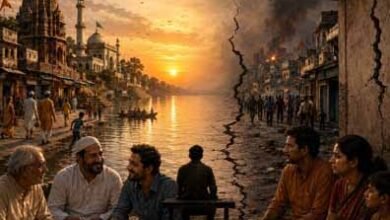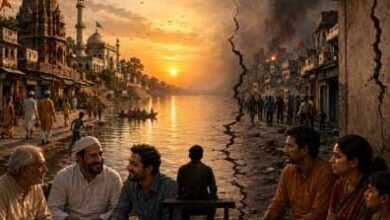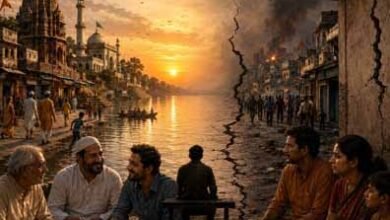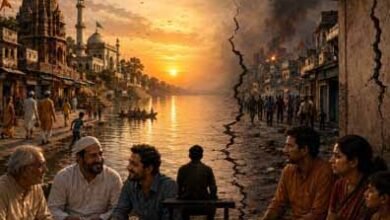
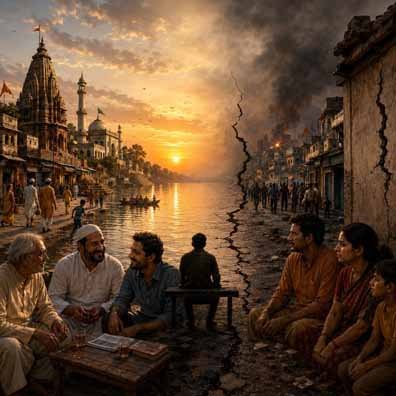
15 अगस्त की सुबह, सूरज निकला तो लाल था खूनी लाल. पुराने सरपुर में तिरंगा फहराया गया. नए सरपुर में भी. पर फिर कुछ हुआ एक झड़प. किसी ने किसी पर पत्थर फेंका. किसी ने किसी का झंडा उतारा.
शुरू में तो छोटी बात थी, पर फिर बढ़ी… एक के बाद एक गलियाँ बंद हो गईं, दुकानें बंद हुईं, पुलिस आई, पर वह भी रुकी जैसे देख रही हो कि क्या होता है.
श्यामलाल की दुकान के शीशे टूट गए. कोई चिल्लाया “ये हिन्दू की दुकान है.” और फिर किसी ने कहा “नहीं, ये मुस्लिम की है.” दोनों ने पत्थर फेंके.
श्यामलाल बीच में खड़ा हो गया “रुको! ये मेरी दुकान है, मैं हिन्दू हूँ और मेरा दोस्त अब्दुल रहमान मुस्लिम है. हम दोनों ने मिलकर इस शहर को बनाया है.”
उसकी बात सुनने वाला कोई नहीं था.
फिरोज़ की दुकान जला दी गई. उसकी मूर्तियाँ, हाथी, घोड़े, गणेश, दुर्गा सब राख हो गए. ज़रीना रो रही थी. फिरोज़ ने उसे गोद में उठाया और भागा – किधर? उसे नहीं पता था.
कैलाशनाथ अपने क्लिनिक में थे. एक घायल युवक को लाया गया वो हिन्दू था उन्होंने इलाज शुरू किया. इसी बीच दूसरा आया वो मुस्लिम था दोनों को बचाना था. राजीव ने कहा “पिताजी, पहले हमारे वाले को.” कैलाशनाथ ने कहा -“बेटा, डॉक्टर का काम बचाना है, चुनाव नहीं” और उन्होंने दोनों को बचाया.
वसंत की दुकान पर कोई नहीं आया बस एक बूढ़ी औरत आई, वही जो अपने बेटे को ढूँढ रही थी. वसंत ने उसे चाय दी. औरत ने कहा -“बेटा, तुम अच्छे हो.”
वसंत ने कहा -“मैं वही हूँ जो हमेशा था.”
रफ़ीक ने उस दिन को देखा था अपनी खिड़की से. उसने देखा कि कैसे एक शहर, जो कभी सरस्वतीपुर था, टुकड़ों में बँट रहा है. उसने डायरी में लिखा -“आज सरपुर मर गया.”
========== ========= ===========
Silent witness…
That morning
On the morning of August 15th, the sun rose and it was bloody red. The tricolor was hoisted in Old Sarpur. So was New Sarpur. But then something happened: a clash. Someone threw a stone at someone. Someone took down someone’s flag.
It was a small thing at first, but then it escalated… One by one, streets were blocked, shops were closed, the police arrived, but they too waited, as if to see what would happen.
The windows of Shyamlal’s shop were broken. Someone shouted, “This is a Hindu shop,” and then someone else said, “No, this is a Muslim shop.” Both threw stones.
Shyamlal stood in the middle, “Stop! This is my shop. I am a Hindu, and my friend Abdul Rahman is a Muslim. Together, we built this city.”
No one listened to him.
Firoz’s shop was burned. His statues—elephants, horses, Ganesha, and Durga—were all reduced to ashes. Zarina was crying. Firoz picked her up and ran—where? He didn’t know.
Kailashnath was in his clinic. An injured young man was brought in. He was Hindu. He began treatment. Meanwhile, another man arrived, a Muslim. Both had to be saved. Rajiv said, “Father, first ours.” Kailashnath replied, “Son, a doctor’s job is to save lives, not elections.” And he saved both of them.
No one came to Vasant’s shop. Only an old woman came, the one who was looking for her son. Vasant offered her tea. The woman said, “Son, you’re fine.”
Vasant replied, “I’m the same as I always was.”
Rafiq had watched that day from his window. He saw how a city, once Saraswatipur, was being torn to pieces. He wrote in his diary, “Today, Sarpur is dead.”