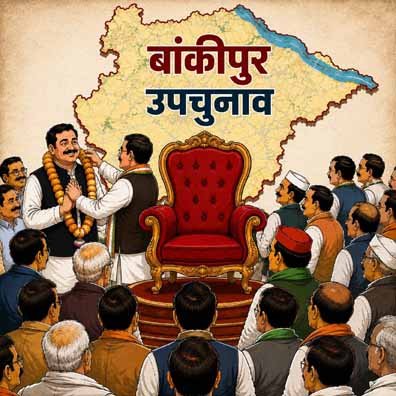
अभी हाल ही में बाँकीपुर उपचुनाव सम्पन्न हुआ था जिसके परिणाम श्रावण मास की पहली सोमवार को आया. आज के परिणाम को देखकर एक कहावत याद आ रहा है – “सौ सुनार की एक लोहार की”. वैसे तो भारतीय राजनीति में कई ऐसे चुनाव हुए हैं जिनका महत्व केवल एक सीट तक सीमित नहीं रहा बल्कि व्यापक राजनीतिक संदेश दिया है. बाँकीपुर उपचुनाव भी इसी दृष्टि से महत्वपूर्ण है चूकिं यह केवल एक विधानसभा सीट का चुनाव नहीं था, बल्कि राजनीतिक दलों की रणनीति, नेतृत्व की विश्वसनीयता, संगठनात्मक क्षमता और मतदाताओं के बदलते मनोविज्ञान की भी परीक्षा थी.
बाँकीपुर विधानसभा क्षेत्र बिहार की राजधानी पटना के मध्य स्थित एक प्रतिष्ठित शहरी निर्वाचन क्षेत्र है. राजधानी पटना के मध्य स्थित यह क्षेत्र शिक्षित मतदाताओं, व्यापारिक वर्ग, सरकारी कर्मचारियों, युवाओं और मध्यमवर्गीय परिवारों की बड़ी आबादी वाला इलाका होने के कारण यहाँ का जनादेश अक्सर राज्य की व्यापक राजनीतिक दिशा का संकेत भी माना जाता है. वैसे तो बाँकीपुर सीट को लंबे समय से भारतीय जनता पार्टी (भाजपा) का गढ़ माना जाता रहा है. इसीकारण जब भी यहाँ चुनाव होता है, राजनीतिक दल इसे प्रतिष्ठा का प्रश्न मानते हैं.
इस चुनाव में सत्तापक्ष ने विकास कार्यों, शहरी आधारभूत संरचना, सड़क, जलनिकासी, बिजली, सुरक्षा और प्रशासनिक स्थिरता को प्रमुख मुद्दा बनाया था वहीं, विपक्ष ने बेरोजगारी, महँगाई, स्थानीय समस्याओं और सरकार के प्रति असंतोष को चुनावी विमर्श का केंद्र बनाने का प्रयास किया. दोनों पक्षों ने अपनी पूरी ताकत झोंकी, लेकिन चुनाव परिणाम ने स्पष्ट कर दिया कि केवल मुद्दे उठाना ही पर्याप्त नहीं होता; उन्हें मतों में परिवर्तित करने के लिए संगठनात्मक क्षमता और विश्वसनीय नेतृत्व भी आवश्यक होता है.
वैसे तो बाँकीपुर का सामाजिक और राजनीतिक चरित्र पारंपरिक ग्रामीण सीटों से अलग है. यहाँ जातीय समीकरण प्रभावशाली अवश्य हैं, परंतु उनके साथ-साथ शहरी सुविधाएँ, विकास, प्रशासनिक दक्षता और प्रत्याशी की व्यक्तिगत स्वीकार्यता भी महत्वपूर्ण कारक बन जाते हैं. यही कारण है कि कई बार व्यापक राजनीतिक हवा के बावजूद यहाँ का परिणाम अलग संदेश देता है. यहीं “सौ सुनार की, एक लोहार की” कहावत पूरी तरह चरितार्थ होती दिखाई देती है. विपक्ष की अनेक सभाएँ, आरोप-प्रत्यारोप और चुनावी बयानबाज़ी उस समय फीकी पड़ जाती है, जब मतदाता एक निर्णायक जनादेश देकर स्पष्ट संदेश देता है. चुनाव परिणाम ने यह संदेश दिया कि मतदाता केवल नारों या आरोप-प्रत्यारोप से प्रभावित नहीं होते; वे नेतृत्व की विश्वसनीयता, कार्यक्षमता और भविष्य की संभावनाओं का भी आकलन करते हैं.
लोकतंत्र में प्रत्येक चुनाव अलग- अलग परिस्थितियों में लड़ा जाता है. उपचुनाव के निष्कर्षों को सीधे अगले विधानसभा चुनाव का पूर्वानुमान मानना उचित नहीं होगा. फिर भी यह परिणाम विपक्ष के लिए आत्ममंथन का अवसर अवश्य है. उसे संगठन को मजबूत करने, स्थानीय नेतृत्व को आगे बढ़ाने और सकारात्मक वैकल्पिक एजेंडा प्रस्तुत करने की आवश्यकता होगी. किसी भी दल के लिए जीत केवल उत्सव का विषय नहीं, बल्कि जिम्मेदारी का संदेश होता है. मतदाताओं ने यदि विश्वास जताया है तो उस विश्वास को विकास, सुशासन और जनसरोकारों के माध्यम से बनाए रखना होगा.
बाँकीपुर उपचुनाव यह सिद्ध करता है कि लोकतंत्र में संख्या से अधिक महत्व निर्णायक जनादेश का होता है. यही कारण है कि “सौ सुनार की, एक लोहार की” कहावत इस चुनाव पर सटीक बैठती है. राजनीतिक दलों के लिए यह परिणाम याद दिलाता है कि चुनाव केवल सोशल मीडिया, भाषणों या नारों से नहीं जीते जाते; जनता के बीच निरंतर उपस्थिति और भरोसा ही सबसे बड़ी पूँजी है. अंततः, बाँकीपुर उपचुनाव लोकतंत्र की उसी मूल भावना को पुष्ट करता है कि अंतिम निर्णय जनता का होता है.
यह उपचुनाव केवल एक विधानसभा सीट का परिणाम नहीं, बल्कि बिहार की बदलती राजनीतिक संस्कृति, शहरी मतदाताओं की प्राथमिकताओं, संगठनात्मक शक्ति और नेतृत्व की विश्वसनीयता का दर्पण है. इस दृष्टि से बाँकीपुर का जनादेश वास्तव में उस कहावत को सार्थक करता है—”सौ सुनार की, एक लोहार की.” भविष्य के चुनावों में भी बाँकीपुर का यह संदेश राजनीतिक दलों को याद दिलाता रहेगा कि लोकतंत्र में अंतिम और निर्णायक शक्ति जनता के मत में ही निहित होती है.
संजय कुमार सिंह
राजनितिक एडिटर.
============ =========== ============
Sau Sunar Ki Ek Lohar Ki…
The recent Bankipur by-election, the results of which were announced on the first Monday of the month of Shravan, reminds me of the proverb: “One blacksmith is worth a hundred goldsmiths.” However, there have been many elections in Indian politics whose significance was not limited to a single seat but rather conveyed a broader political message. The Bankipur by-election is significant in this respect, as it was not just a contest for a single assembly seat, but also a test of political parties’ strategies, leadership credibility, organizational capabilities, and the changing psychology of voters.
The Bankipur assembly constituency is a prestigious urban constituency located in the heart of Patna, the capital of Bihar. Located in the heart of Patna, this constituency boasts a large population of educated voters, business class, government employees, youth, and middle-class families, and the mandate here is often considered an indicator of the state’s broader political direction. The Bankipur seat has long been considered a stronghold of the Bharatiya Janata Party (BJP). Therefore, whenever elections are held here, political parties consider it a matter of prestige.
In this election, the ruling party focused on development projects, urban infrastructure, roads, drainage, electricity, security, and administrative stability, while the opposition attempted to center the electoral debate on unemployment, inflation, local problems, and dissatisfaction with the government. Both parties exerted their full strength, but the election results made it clear that merely raising issues is not enough; organizational capacity and credible leadership are also essential to convert them into votes.
While Bankipur social and political character differs from traditional rural constituencies. Caste equations are certainly influential here, urban amenities, development, administrative efficiency, and the candidate’s personal acceptability also become important factors. This is why, despite the prevailing political climate, the result often conveys a different message. Here, the saying “one blacksmith is worth a hundred goldsmiths” seems to be fully realized. The opposition’s numerous rallies, accusations, counter-accusations, and election rhetoric pale when the voters deliver a clear message with a decisive mandate. The election results sent a message that voters aren’t simply swayed by slogans or accusations; they also assess the leadership’s credibility, efficiency, and future prospects.
In a democracy, every election is fought under unique circumstances. It wouldn’t be fair to directly interpret the by-election results as a prediction for the next assembly election. Nevertheless, this result is certainly an opportunity for the opposition to introspect. It will need to strengthen its organization, promote local leadership, and present a positive alternative agenda. For any party, victory isn’t merely a cause for celebration, but a message of responsibility. If voters have expressed confidence, that trust must be maintained through development, good governance, and public concerns.
The Bankipur by-election proves that in a democracy, a decisive mandate is more important than numbers. This is why the saying “one blacksmith is worth a hundred goldsmiths” applies so aptly to this election. For political parties, this result is a reminder that elections aren’t won solely through social media, speeches, or slogans; a consistent presence and trust among the public is the greatest asset. Ultimately, the Bankipur by-election reinforces the fundamental principle of democracy: that the people have the final say.
This by-election is not merely the result of a single assembly seat, but a reflection of Bihar’s changing political culture, the priorities of urban voters, organizational strength, and leadership credibility. In this respect, the Bankipur mandate truly validates the adage: “One blacksmith is worth a hundred goldsmiths.” In future elections, this message from Bankipur will continue to remind political parties that the ultimate and decisive power in democracy lies in the public’s vote.
Sanjay Kumar Singh
Political Editor.