ऊं जयन्ती मंगला काली भद्रकाली कपालिनी।
दुर्गा क्षमा शिवा धात्री स्वाहा, स्वधा नामोस्तुते।।
नवरात्रा के चौथे दिन माँ कुष्मांडा की पूजा या आराधना की जाती है. संस्कृत भाषा में कूष्माण्ड को कूम्हडे भी कहा जाता है, और कूम्हडे की बलि इन्हें अतिप्रिय है, इस कारण से भी इन्हें कूष्माण्डा के नाम से जाना जाता है. तीन शब्दों से मिलकर बना है “कुष्माण्डा”, जिसमें कु (छोटा), ष्म (ऊर्जा/ऊष्मा), और अण्ड (ब्रह्मांड). माता अपनी मन्द हंसी से अपने उदर से अण्ड अर्थात ब्रह्माण्ड को उत्पन्न करने के कारंण हीं इन्हें माँ कूष्माण्डा कहा जाता है. जब सृष्टि की उत्पत्ति नहीं हुई थी और चारों ओर अंधकार ही अंधकार था, तब इन्होंने ही ब्रह्माण्ड की रचना की थी या यूँ कहें कि, इस जगत की आदिस्वरूपा और आदिशक्ति भी है और इनका निवास स्थान सूर्यमंडल के भीतर के लोक में स्थित है. कुष्मांडा देवी के शरीर की चमक भी सूर्य के समान ही है और कोई देवी देवता इनके तेज और प्रभाव की बराबरी नहीं कर सकता है.
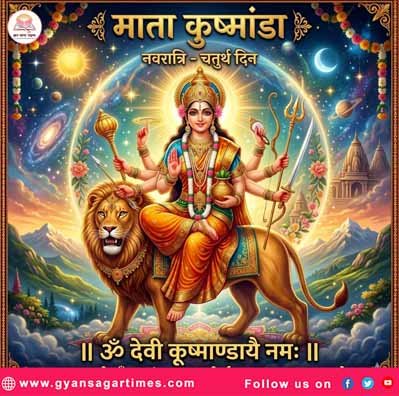
माता कुष्मांडा को तेज की देवी भी कहा जाता है चूँकि, इन्ही के तेज और प्रभाव से दसों दिशाओं को प्रकाश मिलता है. कहा जाता हैं कि, सारे ब्रह्माण्ड की सभी वस्तुओं और प्राणियों में जो तेज है वो देवी कुष्मांडा की ही देन है. माँ की आठ भुजाएँ हैं, इसीलिए इन्हें अष्टभुजा भी कहा जाता है. माता के सात हाथों में कमण्डल, धनुष, बाण, कमल पुष्प, अमृतपूर्ण कलश, चक्र तथा गदा है और आठवें हाथ में सभी सिध्दियों और निधियों को देने वाली जपमाला है.
माता कूष्मांडा की उपासना करने से साधकों के समस्त रोग व शोक नष्ट हो जाते हैं, इनकी आराधना से मनुष्य को त्रिविध ताप से भी मुक्ति मिलती है. माता कुष्माण्डा सदैव अपने भक्तों पर कृपा दृष्टि बनाये रखती है और इनकी आराधना करने से मन में शांति व लक्ष्मी की भी प्राप्ति होती हैं. अतः इस दिन साधक को अत्यंत पवित्र और मन से कूष्माण्डा देवी के स्वरूप को ध्यान करते हुए में पूजा/साधना करनी चाहिए. अगर
माता कूष्माण्डा को सभी प्रकार से विधिवत पूजा अर्चना करनी चाहिए, उसके बाद मन को ‘अनाहत चक्र’ में स्थापित करने हेतु मां का आशीर्वाद लेना चाहिए. इस प्रकार जो साधक प्रयास करते हैं उन्हें भगवती कूष्माण्डा सफलता प्रदान करती हैं, जिससे साधक सभी प्रकार के भय से मुक्त हो जाता है और मां का आशीर्वाद प्राप्त करता है. अतः साधक को चाहिए कि, इस दिन पवित्र मन से माँ के स्वरूप को ध्यान करते हुए पूजा करनी चाहिए. माँ की भक्ति से आयु, यश, बल और स्वास्थ्य की वृद्धि होती है. कहा जाता है कि, माँ कूष्माण्डा देवी की अल्पसेवा और भक्ति से ही प्रसन्न हो जाती हैं. साधक को चाहिए कि, सच्चे मन से शरणागत बन जाये तो उसे, अत्यन्त सुगमता से ही परम पद की प्राप्ति हो जाती है.
पूजा के नियम: –
माता कूष्मांडा की उपासना करते समय पीले या लाल रंग के वस्त्र पहने और माँ को लाल-पीले व नील फूलों से चंदन, अक्षत, दूध, दही, शक्कर और पंचामृत अर्पित करें, साथ ही माँ की मूर्ति का ध्यान करते हुए, उनके मन्त्रों का जाप करें.
या देवी सर्वभूतेषु माँ कूष्माण्डा रूपेण: संस्थिता।
नमस्तस्यै नमस्तस्यै नमस्तस्यै नमो नमः।।
========== ========= ===========
Mother Kushmanda…
Om Jayanti Mangala Kali Bhadrakali Kapalini।
Durga Kshama Shiva Dhatri Swaha, Swadha Namostute।।
On the fourth day of Navaratri, Mother Kushmanda is worshipped and adored. In Sanskrit, the word “Kushmanda” also refers to a pumpkin (Kumhda), and the offering of a pumpkin sacrifice is extremely dear to her; for this very reason, she is known by the name Kushmanda. The name “Kushmanda” is composed of three distinct words: Ku (meaning small), Ushma (meaning energy or heat), and Anda (meaning the cosmic egg or universe). She is called Mother Kushmanda because, through her gentle smile, she brought forth the Anda—that is, the universe—from within her own womb. At a time when creation had not yet begun, and absolute darkness prevailed everywhere, it was she who created the universe; or, to put it another way, she is the primordial form (Adiswarupa) and the primal power (Adishakti) of this world. Her abode is situated within the inner realms of the Sun Sphere. The radiance of Goddess Kushmanda’s body rivals that of the Sun itself, and no other deity—male or female—can equal her brilliance and power.
Mother Kushmanda is also revered as the Goddess of Radiance, for it is through her brilliance and power that light is bestowed upon all ten directions. It is said that the luminosity and vitality present in every object and living being throughout the entire universe are, in fact, a gift from Goddess Kushmanda. The Mother possesses eight arms, and for this reason, she is also known as Ashtabhuja (the Eight-Armed Goddess). In seven of her hands, she holds a water pot (Kamandalu), a bow, an arrow, a lotus flower, a pitcher filled with divine nectar (Amrita), a discus (Chakra), and a mace (Gada); in her eighth hand, she holds a rosary (Japamala) capable of bestowing all spiritual attainments (Siddhis) and material treasures (Nidhis).
Worshipping Mother Kushmanda eradicates all diseases and sorrows from the lives of her devotees; furthermore, her adoration grants human beings liberation from the “threefold afflictions” (Trividh Tapa) of existence. Mother Kushmanda constantly casts her benevolent gaze upon her devotees, and worshipping her brings about both inner peace and the attainment of wealth and prosperity (Lakshmi). Therefore, on this day, a spiritual seeker should perform worship and spiritual practice with a heart filled with utmost purity, meditating deeply upon the divine form of Goddess Kushmanda.
One should worship Mother Kushmanda in a completely ritualistic and prescribed manner; thereafter, one should seek the Mother’s blessings to help anchor the mind within the ‘Anahata Chakra’ (the Heart Chakra). Goddess Kushmanda grants success to those seekers who strive in this manner, thereby liberating them from all forms of fear and bestowing upon them the Mother’s divine blessings. Consequently, it is incumbent upon the seeker to perform worship on this day with a pure heart, while meditating upon the Mother’s divine form. Devotion to the Mother leads to an increase in longevity, fame, strength, and good health. It is said that Goddess Kushmanda is easily pleased even by a modest amount of service and devotion. If a seeker surrenders themselves to her with a sincere heart, they attain the Supreme State of Realization with the utmost ease.
Rules for Worship: –
While worshipping Mother Kushmanda, one should wear yellow or red garments. Offer red, yellow, and blue flowers to the Mother, along with sandalwood paste, *Akshat* (sacred rice grains), milk, yogurt, sugar, and *Panchamrit* (a sacred mixture of five ingredients). Simultaneously, while meditating upon the Mother’s divine image, one should chant her sacred mantras:
Ya Devi Sarvabhuteshu Ma Kushmanda Rupena Samsthita।
Namastasyai Namastasyai Namastasyai Namo Namah।।