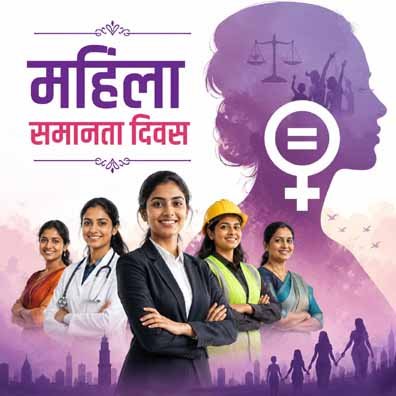
हर वर्ष 26 अगस्त को महिला समानता दिवस मनाया जाता है. महिला समानता दिवस दिवस का मुख्य उद्देश्य महिलाओं को समाज में पुरुषों के समान अधिकार, अवसर और सम्मान दिलाना. वर्तमान समय के डिजिटल युग में एक सवाल का जन्म होता है कि, “क्या महिलाओं को वास्तव में पुरुषों के समान अवसर, सम्मान, स्वतंत्रता और निर्णय लेने का अधिकार प्राप्त है”.
महिला समानता दिवस की पृष्ठभूमि महिलाओं के मताधिकार आंदोलन से जुड़ी है. बताते चलें कि, वर्ष 1920 से पहले अमेरिका में महिलाओं को मतदान करने का अधिकार नहीं था. मतदान का अधिकार पाने के लिए अमेरिका में महिला संगठनों ने काफी संघर्ष और आन्दोलन किया था. अंतत: अमेरिका ने 26 अगस्त 1920 को संविधान के 19वें संशोधन के बाद महिलाओं को संघीय स्तर पर मतदान का संवैधानिक अधिकार मिला. इसी ऐतिहासिक उपलब्धि की स्मृति में हर वर्ष 26 अगस्त को महिला समानता दिवस मनाया जाता है.
महिलाओं की समानता का अर्थ केवल पुरुषों और महिलाओं को एक जैसे अधिकार प्रदान कर देना नहीं है बल्कि, महिलाओं को शिक्षा, रोजगार, संपत्ति, स्वास्थ्य, राजनीतिक भागीदारी, निर्णय लेने और सार्वजनिक जीवन में आगे बढ़ने के लिए समान अवसर मिलें. वैसे तो समानता और समान अवसर के साथ सम्मान भी हर किसी के लिए आवश्यक होता है. यदि किसी लड़की को शिक्षा का अधिकार तो दिया जाए, लेकिन परिवार उसकी शिक्षा को बेटे की तुलना में कम महत्व दे, तो कानूनी समानता सामाजिक समानता में परिवर्तित नहीं हो पाती है. वहीँ दूसरी तरफ, महिलाओं को नौकरी करने की अनुमति देना पर्याप्त नहीं होता है बल्कि, उनके कार्यस्थल पर सुरक्षित वातावरण, समान वेतन, पदोन्नति के समान अवसर और नेतृत्व की भूमिकाओं तक पहुंच भी जरूरी होता है.
भारत के सन्दर्भ में भी महिला समानता का प्रश्न अत्यंत महत्वपूर्ण है. चूकिं, भारतीय संविधान ने कानून के समक्ष समानता, भेदभाव के विरुद्ध संरक्षण और महिलाओं के लिए समान अवसर के सिद्धांतों को स्वीकार किया है. इसके बावजूद संवैधानिक अधिकारों और वास्तविकता के बीच अभी भी अंतर दिखाई देता है.
महिला सशक्तीकरण का सबसे प्रभावी माध्यम शिक्षा है. शिक्षित महिला न केवल अपने अधिकारों और कर्तव्यों के प्रति जागरूक होती है, बल्कि वह अपने परिवार और अगली पीढ़ी के सामाजिक एवं आर्थिक विकास में भी महत्वपूर्ण भूमिका निभाती है. वर्तमान समय के परिदृश्य में लड़कियों की शिक्षा में सुधर हो रहा है परन्तु, ग्रामीण क्षेत्रों, आर्थिक रूप से कमजोर परिवारों और सामाजिक रूप से वंचित समुदायों के बीच आज भी अनेक चुनौतियां मौजूद हैं. वहीं, गरीबी, बाल विवाह, घरेलू जिम्मेदारियां, विद्यालयों की दूरी, सुरक्षित परिवहन का अभाव और सामाजिक रूढ़ियां कई बार लड़कियों की शिक्षा में बाधा बनती हैं.
दूसरा बड़ा सवाल आता है महिलाओं की आर्थिक आत्मनिर्भरता का. जिस महिला के पास अपनी आय और आर्थिक निर्णयों पर अधिकार होता है, उसकी पारिवारिक और सामाजिक स्थिति अधिक मजबूत होती है. इसके बावजूद महिलाओं की श्रम बल में भागीदारी, वेतन में समानता, औपचारिक रोजगार और नेतृत्वकारी पदों तक पहुंच के क्षेत्रों में भी वर्तमान समय तक कई असमानताएं बनी हुई हैं. वर्तमान समय में महिलाओं के काम को केवल वेतन वाले रोजगार तक सीमित करके देखना भी उचित नहीं होगा. अत: महिला समानता के लिए वर्तमान समय में ईएसआई नीति की आवश्यकता है जो समान कार्य के लिए समान वेतन, सुरक्षित कार्यस्थल, मातृत्व संबंधी सुविधाएं, देखभाल संबंधी अवसंरचना और महिलाओं के उद्यमिता अवसरों को बढ़ावा देने में सहयोग करें.
लोकतंत्र में महिलाओं की भागीदारी केवल मतदाता के रूप में नहीं, बल्कि नीति-निर्माता और नेतृत्व कर्ता के रूप में भी होनी चाहिए. महिलाओं की राजनीतिक भागीदारी बढ़ने से स्वास्थ्य, शिक्षा, पोषण, सुरक्षा, जल, स्वच्छता और सामाजिक कल्याण जैसे विषयों को नीति-निर्माण में अधिक प्रभावी स्थान मिल सकता है. कानून बदलना सबसे आसान कार्य है वहीं, सामाजिक सोच बदलना सबसे कठिन कार्य है. वर्तमान समय में भी कई रूढ़िवादी परिवार व समाज यह धारणा मौजूद हैं कि कुछ कार्य केवल पुरुषों के लिए हैं और कुछ भूमिकाएं केवल महिलाओं के लिए होती है. उदाहरण – घरेलू काम को केवल महिलाओं का दायित्व मानना, महिलाओं के पहनावे और व्यवहार को लेकर दोहरे मानदंड बनाना.
तीसरा बड़ा सवाल आता है सुरक्षा का – वर्तमान समय में महिलाएं अपने घर , कार्यस्थल, सड़क और डिजिटल दुनिया में स्वयं को सुरक्षित महसूस करें. वहीं, हिंसा, उत्पीड़न, घरेलू हिंसा, मानव तस्करी और ऑनलाइन दुर्व्यवहार जैसी समस्याएं महिलाओं की स्वतंत्रता को सीमित करती हैं. इन समस्याओं का समाधान सिर्फ कठोर कानून नहीं बल्कि, कानूनों का प्रभावी क्रियान्वयन, त्वरित न्याय, संवेदनशील पुलिस एवं प्रशासन, पीड़ितों के लिए सहायता-व्यवस्था और सामाजिक जागरूकता की आवश्यकता है.
महिला समानता दिवस केवल एक उत्सव नहीं, बल्कि आत्ममंथन के साथ-साथ सोचने पर मजबूर करता है कि, एक समता मूलक समाज के निर्माण के लिए अभी और कितना सफ़र तय करना बाकी है.
========== ========= ===========
Women’s Equality Day
Women’s Equality Day is celebrated every year on August 26th. The primary objective of Women’s Equality Day is to ensure women have equal rights, opportunities, and respect in society. In today’s digital age, the question arises: “Do women truly have the same opportunities, respect, freedom, and decision-making power as men?”
The background of Women’s Equality Day is linked to the women’s suffrage movement. Before 1920, women in the United States did not have the right to vote. Women’s organizations in the United States struggled and fought tirelessly to gain this right. Finally, on August 26th, 1920, women were granted the constitutional right to vote at the federal level following the 19th Amendment to the Constitution. Women’s Equality Day is celebrated every year on August 26th to commemorate this historic achievement.
Women’s equality does not simply mean equal rights for men and women, but also equal opportunities for women to pursue education, employment, property, health, political participation, decision-making, and advancement in public life. Although equality and equal opportunity are essential for everyone, respect is also essential. If a girl is granted the right to education, but her family prioritizes her education less than that of a son, legal equality does not translate into social equality. On the other hand, allowing women to work is not enough; they also need a safe workplace environment, equal pay, equal opportunities for promotion, and access to leadership roles.
The issue of women’s equality is also crucial in the Indian context. While the Indian Constitution recognizes the principles of equality before the law, protection against discrimination, and equal opportunity for women, a gap still exists between constitutional rights and reality.
Education is the most effective means of women’s empowerment. An educated woman is not only aware of her rights and duties, but also plays a vital role in the social and economic development of her family and the next generation. While girls’ education is improving in the current scenario, many challenges still exist in rural areas, economically weaker families, and socially disadvantaged communities. At the same time, poverty, child marriage, domestic responsibilities, distance from schools, lack of safe transportation, and social stereotypes often hinder girls’ education.
Another major issue is women’s economic independence. A woman who has control over her income and financial decisions has a stronger family and social status. Despite this, many inequalities persist even today in areas such as women’s participation in the workforce, wage equality, formal employment, and access to leadership positions. It would not be appropriate to limit women’s work solely to salaried employment. Therefore, for women’s equality, an ESI policy is needed today that supports equal pay for equal work, safe workplaces, maternity benefits, care infrastructure, and the promotion of women’s entrepreneurial opportunities.
Women’s participation in democracy should not only be as voters, but also as policymakers and leaders. Increasing women’s political participation can give a more effective role in policymaking to issues such as health, education, nutrition, security, water, sanitation, and social welfare. While changing laws is the easiest task, changing social perceptions is the most difficult. Even today, many conservative families and societies continue to hold the belief that certain tasks are exclusively for men and certain roles are exclusively for women. For example, considering household chores solely the responsibility of women and establishing double standards regarding women’s clothing and behavior.
The third major question is safety: women should feel safe in their homes, workplaces, streets, and the digital world. At the same time, problems like violence, harassment, domestic violence, human trafficking, and online abuse limit women’s freedom. The solution to these problems requires not just strict laws but effective enforcement of laws, speedy justice, sensitive police and administration, support systems for victims, and social awareness.
Women’s Equality Day is not just a celebration, but also a time for introspection and reflection on how much further remains to be covered to build an egalitarian society.