
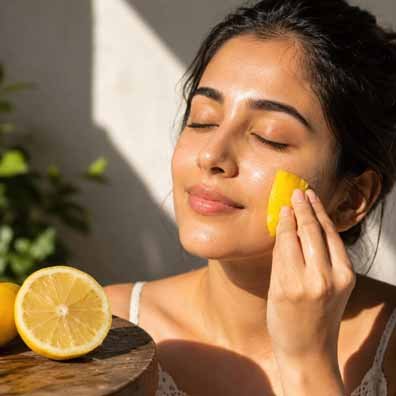
बुजुर्ग हमेशा ही कहते हैं हमलोगों के पास एक ऐसा पावरहाउस है जिसका इस्तेमाल हजारों वर्षों से शरीर की त्वचा और बालों के लिए किया जाता रहा है. वहीं, आधुनिक युग में रसायनों का. कृत्रिम रसायनों के प्रयोग करने से कई प्रकार बीमारियाँ होने की सम्भावना बनी रहती है. आज बात कर रहें हैं नींबू की. प्राय: लोग दिन की शुरुआत ही नींबू पानी से करते हैं. साधारण सा दिखने वाला फल के गुण त्वचा और बाल के लिए बेहद ही चमत्कारी हैं. हजारों सालों से इसका इस्तेमाल होता आ रहा है.
नींबू में मौजूद विटामिन सी, साइट्रिक एसिड और एंटी-ऑक्सीडेंट्स से भरपूर नींबू त्वचा की रंगत निखारने से लेकर बालों की डैंड्रफ दूर करने तक में इस्तेमाल किया जाता है. आमतौर पर जिस तरह से लोग नींबू के बारे में जो बाते करते हैं उनमें कितनी सच्चाई और उसके पीछे के विज्ञान के बारे में जानते हैं
नींबू की कई किस्में होती हैं जिनमें – कागजी नीबू, कागजी कलाँ, गलगल तथा लाइम सिलहट. आमतौर पर ज्यादा प्रयोग कागजी नींबू का होता है. इसमें मुख्यत: विटामिन C (एस्कॉर्बिक एसिड) , साइट्रिक एसिड , फ्लेवोनोइड्स , विटामिन B6, पोटैशियम, मैग्नीशियम पाया जाता है. इसमें पाया जाने वाला साइट्रिक एसिड और एस्कॉर्बिक एसिड का प्रयोग दाग-धब्बे कम करने में किया जाता है.
एस्कॉर्बिक एसिड त्वचा में मौजूद मेलेनिन के उत्पादन को नियंत्रित करने में सहायक होता है. इसके नियमित उपयोग से पिंपल्स के निशान, उम्र के धब्बे और सन टैन हल्के हो सकते हैं. विटामिन सी एक बेहतरीन एंटी-ऑक्सीडेंट है. यह त्वचा को फ्री रेडिकल्स (फ्री रेडिकल्स त्वचा को बूढ़ा बनाते हैं) से बचाता है और कोलाजन के उत्पादन को बढ़ावा देता है, जिससे त्वचा चमकदार और कसी हुई दिखती है
साइट्रिक एसिड डेड स्किन सेल्स को हटाकर त्वचा को हटाने में मदद करता है, जिससे बंद रोमछिद्र खुलते हैं और त्वचा मुलायम होती है. नींबू का एसिडिक स्वभाव सीबम उत्पादन को संतुलित करता है, जिससे चेहरे पर चिपचिपाहट कम होती है. साथ ही यह त्वचा के अतिरिक्त तेल (सीबम) को सोखने और पोर्स को छोटा करने में मदद करता है.
बालों को स्वस्थ रखने के लिए भी नींबू का उपयोग किया जाता है. खासकर गर्मी के मौसम में नींबू का रस लगाकर धूप में बैठने से बालों के प्राकृतिक रंग में हल्का बदलाव आता है. यह प्रकृतिक हैयर लाइटनर है. अक्सर लोग डैंड्रफ (रूसी) से परेशान होते हैं. डैंड्रफ अक्सर ‘मैलेसेजिया’ नामक फंगस के कारण होती है. नींबू में एंटी-फंगल गुण होते हैं, जो इस फंगस को पनपने से रोकते हैं. वहीं, नींबू का रस बालों के क्यूटिकल्स को सिकोड़कर उन्हें समतल बनाता है, जिससे बालों पर रोशनी बेहतर तरीके से रिफ्लेक्ट होती है और बाल चमकदार दिखते हैं. एक तरफ जहाँ विटामिन C और एंटीऑक्सीडेंट्स बालों के क्यूटिकल्स को रिपेयर करते हैं, जिससे बाल चमकदार और स्मूथ दिखते हैं. वहीं, नींबू की अत्यधिक मात्रा बालों की नमी सोख लेती है, जिससे बाल रूखे, बेजान और भंगुर हो सकते हैं.
नुक्सान: –
नींबू जितना फायदेमंद है, उतना ही इसका गलत इस्तेमाल त्वचा और बालों को गंभीर नुकसान पहुंचा सकता है. अक्सर त्वचा विशेषज्ञ चेहरे पर सीधे नींबू लगाने से मना करते हैं चूकिं, हमारी त्वचा का प्राकृतिक pH लगभग 4.7 से 5.5 के बीच होता है, जबकि नींबू के रस का pH बेहद कम यानी 2 से 3 के बीच (अत्यधिक एसिडिक) होता है. नींबू लगाने के बाद धूप में जाने से त्वचा पर जलन, लालिमा या रैशेज हो सकते हैं.
नींबू का सबसे खतरनाक साइड इफेक्ट है फाइटोफोटोडर्माटाइटिस. चूकिं, नींबू में ‘सोरालेन्स’ नामक रसायन पाया जाता है. अगर आप अपने त्वचा पर नींबू लगाकर धूप में जाते हैं, तो सूरज की यूवी किरणें इस रसायन के साथ मिलकर त्वचा को बुरी तरह जला सकती हैं. जससे त्वचा पर फफोले पड़ सकते हैं या वह हिस्सा गहरा काला हो सकता है. संवेदनशील त्वचा पर सीधे नींबू लगाने से जलन या एलर्जिक रिएक्शन हो सकता है.
नोट: – नींबू त्वचा के लिए फायदेमंद है, लेकिन इसे हमेशा पानी, शहद या एलोवेरा के साथ पतला करके लगाएं व धूप में निकलने से पहले धो लें.
नींबू का प्रयोग करने से पूर्व किसी चिकित्सक से परामर्श करें. चूकिं, नींबू जितना फायदेमंद है यह उतना ही खतरनाक…
========== ========= ===========
A natural powerhouse…
Elders have always maintained that we possess a powerhouse a remedy that has been used for the skin and hair for thousands of years. In contrast, the modern era relies on chemicals; the use of artificial chemicals carries the risk of various illnesses.Today, we’re talking about lemons. People often start their day with lemon water. This seemingly simple fruit has miraculous properties for skin and hair. It has been used for thousands of years.
Rich in vitamin C, citric acid, and antioxidants, lemons are used for everything from improving skin tone to removing dandruff. How much truth is there in the stories people often talk about lemons, and how much do they know about the science behind them?
There are several varieties of lemons, including Kagzi lemon, Kagzi Kalan, Galgal, and Sylhet lime. Kagzi lemons are the most commonly used. They contain vitamin C (ascorbic acid), citric acid, flavonoids, vitamin B6, potassium, and magnesium. The citric acid and ascorbic acid found in lemon are used to reduce blemishes.
Ascorbic acid helps regulate the production of melanin in the skin. Regular use can lighten pimple marks, age spots, and suntan. Vitamin C is a great antioxidant. It protects the skin from free radicals (free radicals cause skin aging) and promotes collagen production, leaving skin looking radiant and firm.
Citric acid helps exfoliate dead skin cells, opening clogged pores and softening the skin. The acidic nature of lemon balances sebum production, reducing oiliness on the face. It also helps absorb excess sebum and shrink pores.
Lemon is also used to maintain healthy hair. Applying lemon juice and sitting in the sun, especially during the summer, can slightly alter the natural color of hair. It’s a natural hair lightener. People often suffer from dandruff, which is caused by a fungus called Malassezia. Lemon has anti-fungal properties that prevent this fungus from growing. Lemon juice also shrinks and flattens the hair cuticles, allowing light to reflect better and leaving hair shiny. While vitamin C and antioxidants repair hair cuticles, leaving hair shiny and smooth. Excessive lemon juice can strip away moisture, leaving hair dry, lifeless, and brittle.
Constraints: –
As beneficial as lemon is, its misuse can cause serious damage to the skin and hair. Dermatologists often advise against applying lemon directly to the face, as our skin’s natural pH is between 4.7 and 5.5, while lemon juice has a very low pH (highly acidic), between 2 and 3. Applying lemon juice after sun exposure can cause skin irritation, redness, or rashes.
The most dangerous side effect of lemon is phytophotodermatitis, as lemon contains a chemical called psoralens. If you apply lemon to your skin and go out into the sun, the sun’s UV rays can combine with this chemical and cause severe skin burns, leading to blisters or darkening of the affected area. Applying lemon directly to sensitive skin can cause irritation or an allergic reaction.
Note: – Lemon is beneficial for the skin, but always dilute it with water, honey, or aloevera before applying it and wash it off before sun exposure.
Consult a doctor before using lemon. Because, as beneficial as lemon is, it is equally dangerous.