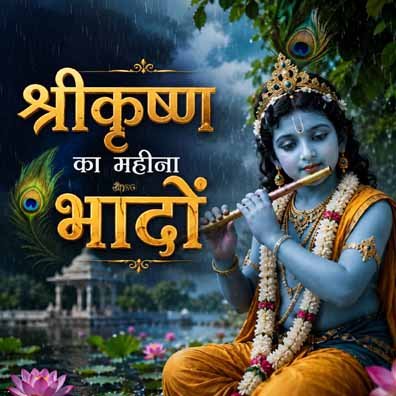
हिंदू कैलेंडर के अनुसार, साल के छठे महीने को भाद्रपद या भादों महीना कहा जाता है, जो श्रावण महीने के बाद और आश्विन महीने से पहले आता है. भादों महीना वर्षा ऋतु के अंत का संकेत देता है और इस समय मानसून का प्रभाव अपने अंतिम चरण में होता है. चूंकि सावन भगवान भोलेनाथ का महीना है, इसलिए भादों भगवान कृष्ण का महीना माना जाता है. इसी मास के कृष्ण पक्ष की अष्टमी तिथि को रोहिणी नक्षत्र में कारागार के अंधकार को चीरकर योगेश्वर कृष्ण का प्राकट्य हुआ था. भादों का महीना भक्तों के लिए उत्सव, उल्लास, संयम और आत्म-मंथन का अद्भुत संगम लेकर आता है.
भादों का महीना अपने चरम पर बादलों की सघनता और झमाझम वर्षा के लिए जाना जाता है. जब आसमान बादलों से पूरी तरह घिरा रहता है और चारों तरफ गहन अंधकार छाया होता है, तब कृष्ण का जन्म होता है. यह इस बात का द्योतक है कि अज्ञान और अन्याय का अंधकार कितना भी घना क्यों न हो, ईश्वर का प्रकाश उसे भेदकर प्रकट होता है. भगवद्गीता में भगवान कृष्ण स्वयं धर्म की पुनर्स्थापना के लिए अवतार लेने की बात कहते हैं—
“यदा यदा हि धर्मस्य ग्लानिर्भवति भारत।
अभ्युत्थानमधर्मस्य तदात्मानं सृजाम्यहम्॥”
भादों भगवान कृष्ण के प्रकटोत्सव का महीना भी है, इस दिन भगवान विष्णु के 8वें अवतार के रूप में श्री कृष्ण का जन्म भादों महीने के कृष्ण पक्ष में रोहिणी नक्षत्र में हर्षण योग वृषभ लग्न में हुआ था. श्री कृष्ण की पूजा को समर्पित भादों महीना विशेष फलदायी बताया गया है. “भाद” का अर्थ है कल्याण देने वाला और कृष्ण पक्ष का संबंध स्वयं श्री कृष्ण से है. भादों का महीना भी सावन की तरह पवित्र माना जाता है, इस महीने में कुछ खास त्यौहार आते हैं जिनका अपना महत्व होता है.
“नंद के घर आनंद भयो, जय कन्हैया लाल की।”
भादों का सबसे आकर्षक पक्ष श्रीकृष्ण का बाल रूप है. जन्माष्टमी पर भगवान को बाल गोपाल, लड्डू गोपाल या नंदलाल के रूप में सजाया जाता है. भक्त उन्हें पालने में झुलाते हैं, माखन-मिश्री का भोग लगाते हैं और बालक के रूप में उनकी लीलाओं का स्मरण करते हैं. श्रीकृष्ण का बाल रूप भारतीय भक्ति परंपरा में इसलिए अद्वितीय है क्योंकि इसमें ईश्वर और भक्त के संबंध में औपचारिक दूरी कम हो जाती है. वहीं, यशोदा के लिए कृष्ण भगवान नहीं, उनका कन्हैया हैं. वे नंद के पुत्र हैं. गोपियों के लिए वे प्रेम के केंद्र हैं तो ग्वालबालों के वे सखा हैं.
अगर कृष्ण के लीलाओं की कल्पना वृंदावन के वन, यमुना का तट, गोकुल की गलियाँ, गोचारण और वर्षा से भीगे ब्रज के दृश्य कृष्ण की स्मृति को और अधिक सजीव बना देते हैं. इसलिए भादों की वर्षा केवल मौसम नहीं रह जाती बल्कि, बादलों की गर्जना में भक्त को मानो मुरली की प्रतिध्वनि सुनाई देती है, हरियाली में वृंदावन का सौंदर्य दिखाई देता है और वर्षा की फुहारों में कृष्ण की बाल-लीलाओं की सहजता अनुभव होती है. “कृष्ण” शब्द के अनेक दार्शनिक और भाषिक अर्थ बताए गए हैं. वैष्णव भक्ति परंपरा में कृष्ण को आकर्षण के केंद्र, परम आनंद और पूर्ण पुरुषोत्तम के रूप में देखा जाता है.
भारतीय भक्ति साहित्य में कृष्ण प्रेम के सबसे बड़े प्रतीकों में से एक हैं. सूरदास, मीराबाई, रसखान, विद्यापति और अनेक संत-कवियों ने कृष्ण को अपने-अपने भावलोक में अनुभव किया है. कृष्ण-भक्ति की सबसे बड़ी विशेषता यह है कि इसमें ईश्वर तक पहुँचने का मार्ग केवल ज्ञान या कर्म नहीं, बल्कि प्रेम भी है. बादलों की शीतलता की तरह कृष्ण का प्रेम और उनकी गीता का संदेश मानव जीवन की हर उलझन को शांत करने की क्षमता रखता है. भादों का महीना हमें याद दिलाता है कि कठिनाइयों और बाधाओं के बीच भी जीवन उत्सव बन सकता है, बशर्ते मन में भक्ति और कर्म के प्रति निष्ठा अडिग रहे.
वर्तमान समय के आधुनिक और डिजिटल युग में तनाव, अकेलेपन, प्रतिस्पर्धा, भय और मानसिक अशांति से जूझ रहा है. ऐसे समय में कृष्ण का संदेश पहले से अधिक प्रासंगिक दिखाई देता है. एक तरफ गीता का कर्मयोग मनुष्य को परिणाम की चिंता से ऊपर उठकर अपने कर्तव्य पर ध्यान केंद्रित करने की प्रेरणा देता है. वहीँ, दूसरी तरफ कृष्ण की मुस्कान कठिन परिस्थितियों में धैर्य का प्रतीक बनती है. इस महीने में श्रीकृष्ण जन्माष्टमी के अतिरिक्त कई अन्य महत्वपूर्ण व्रत मनाये जाते है. उदाहरण –
कजरी तीज (बड़ी तीज): – भादों मास के कृष्ण पक्ष की तृतीया तिथि को मनाई जाने वाली यह तीज सुहागिन महिलाओं के लिए अखंड सौभाग्य और सुखी दांपत्य जीवन का बड़ा पर्व है. इस दिन महिलाएं निर्जला व्रत रखती हैं और चंद्रमा को अर्घ्य देकर व्रत खोलती हैं.
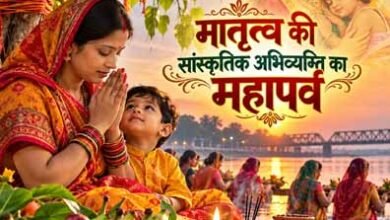
हल षष्ठी: – भादों मास के कृष्ण पक्ष की षष्ठी को महिलाएं अपनी संतान की लंबी आयु और आरोग्यता के लिए यह व्रत रखती हैं. इस दिन हल से जुती हुई चीजों के सेवन की मनाही होती है. महुआ तथा पसई के चावल का विशेष महत्व होता है.
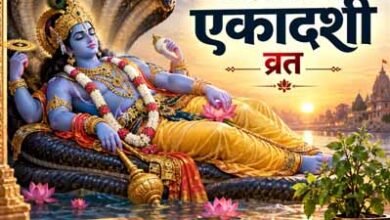
अजा एकादशी: – भादों मास के कृष्ण पक्ष की एकादशी को भगवान विष्णु के आराधन के लिए यह व्रत रखा जाता है. मान्यता है कि यह व्रत समस्त पापों का नाश कर मोक्ष प्रदान करता है.
हरतालिका तीज: – भादों मास के शुक्ल पक्ष की तृतीया को आने वाला यह व्रत बहुत कठिन और पवित्र माना जाता है. महिलाएं पति की दीर्घायु के लिए निर्जला उपवास रखकर भगवान शिव और माता पार्वती की विधि-विधान से पूजा करती हैं.
गणेश चतुर्थी और गणेशोत्सव: – भादों मास के शुक्ल पक्ष की चतुर्थी से दस दिवसीय गणेश महोत्सव काारंभ होता है. जगह-जगह विघ्नहर्ता भगवान गणेश की मूर्तियां स्थापित की जाती हैं और पूरा देश बप्पा की भक्ति में सराबोर हो जाता है.
ऋषि पंचमी: – भादों मास के शुक्ल पक्ष की चतुर्थी के अगले दिन सप्त ऋषियों (सात ऋषियों) को समर्पित यह व्रत मुख्य रूप से महिलाओं द्वारा मानसिक और शारीरिक शुद्धि के लिए रखा जाता है.
राधा अष्टमी: – भादों मास के शुक्ल पक्ष की अष्टमी के दिन श्री राधा रानी का जन्मोत्सव बहुत धूमधाम से मनाया जाता है. मान्यता है कि राधा जी की पूजा के बिना कृष्ण भक्ति अधूरी मानी जाती है.
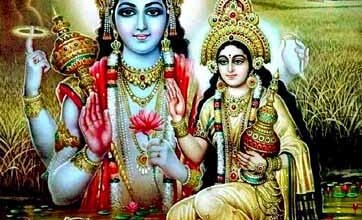
परिवर्तिनी एकादशी: – भादों मास के शुक्ल पक्ष की एकादशी को भगवान विष्णु क्षीरसागर में करवट बदलते हैं, इसलिए इसे परिवर्तिनी एकादशी कहा जाता है. इस दिन भगवान विष्णु के वामन रूप की पूजा की जाती है.
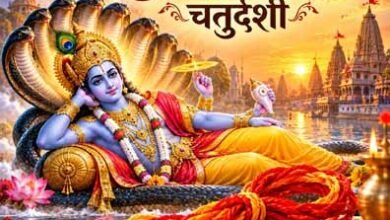
अनन्त चतुर्दशी और गणेश विसर्जन: – भादों मास के शुक्ल पक्ष की चतुर्दशी को भगवान विष्णु के अनंत रूप की पूजा की जाती है और कलाई पर अनंत सूत्र बांधा जाता है. इसी दिन 10 दिनों तक चलने वाले गणेशोत्सव का समापन गणेश विसर्जन के साथ होता है.
विश्वकर्मा पूजा: – भाद्रपद माह में आने वाले पर्वों की श्रृंखला में अगला पर्व विश्वकर्मा पूजा के नाम से प्रसिद्ध है.
पौराणिक धर्मग्रन्थों के अनुसार ब्रह्मा जी के पुत्र धर्म के सातवे संतान जिनका नाम वास्तु था और वो शिल्पकार थे. वास्तु के पुत्र का नाम विश्वकर्मा था जो पिता की भांति शिल्पकार थे. ऋग्वेद में विश्वकर्मा सूक्त नाम से 11ऋचाएं लिखी गई हैं यही, सूक्त यजुर्वेद में 17 सूक्त मन्त्र 16 से 31 तक करीब 16 मन्त्र आया है. स्कन्द पुराण में एक श्लोक मिलता है जो उपर लिखा है. इस श्लोक का अर्थ है कि, महर्षि अंगिरा के ज्येष्ठ पुत्र की बहन भुवना जो ब्रह्मविद्या की जानकार थी. जो अष्टम वसु महर्षि प्रभास की पत्नी बनी और उससे सम्पूर्ण शिल्प विद्या के ज्ञाता प्रजापति विश्वकर्मा का जन्म हुआ.
बिहार के औरंगबाद स्थित देव सूर्य मंदिर व देवघर स्थित बैद्यनाथ मंदिर का भी निर्माण भगवान विश्वकर्मा ने किया था. भारतीय संस्कृति के अंतर्गत भी शिल्प संकायो, कारखानो, उद्योगों में भगवान विशवकर्मा की पूजा- अराधना 17 सितम्बर को हर्षोल्लास के साथ मनाते हैं.
========== ========= ===========
“Bhadon,” the month of Lord Krishna.
According to the Hindu calendar, the sixth month of the year is called Bhadrapada or Bhadon, which comes after Shravan and before Ashwin. Bhadon marks the end of the rainy season, marking the end of the monsoon season. Since Shravan is the month of Lord Shiva, Bhadon is also considered the month of Lord Krishna. On the eighth day of the dark fortnight of this month, during the Rohini Nakshatra, Lord Krishna appeared, breaking through the darkness of prison. Bhadon brings a wonderful combination of celebration, joy, restraint, and introspection for devotees.
Bhadon is known for its peak cloud cover and heavy rainfall. Krishna’s birth occurs when the sky is completely overcast and darkness looms large. This signifies that no matter how dense the darkness of ignorance and injustice, God’s light pierces through it. In the Bhagavad Gita, Lord Krishna himself speaks of incarnating to restore righteousness—
“Yada yada hi dharmasya glanirbhavati bharat।
Abhyutthanamadharmasya tadatmanam srijamyaham॥”
Bhadon is also the month of Lord Krishna’s appearance. On this day, Lord Krishna was born as the eighth incarnation of Lord Vishnu in the Krishna Paksha of the month of Bhadon, under the Rohini Nakshatra, in the Harshana Yoga (Vrishabh Lagna) of the Taurus ascendant. The month of Bhadon, dedicated to the worship of Lord Krishna, is said to be especially fruitful. “Bhad” means “bringer of well-being,” and the Krishna Paksha is associated with Lord Krishna himself. The month of Bhadon is considered sacred, like the month of Sawan. Certain special festivals fall during this month, each with its own significance.
“Nand ke ghar anand bhayo, jai kanhaiya lal ki.”
The most attractive aspect of Bhadon is the childhood form of Lord Krishna. On Janmashtami, the Lord is decorated as Bal Gopal, Laddu Gopal, or Nandlal. Devotees rock him in a cradle, offer him Makhan-Mishri, and reminisce about his childhood exploits. The childhood form of Lord Krishna is unique in the Indian devotional tradition because it reduces the formal distance between God and devotee. For Yashoda, Krishna is not God, but her Kanhaiya. He is Nanda’s son. For the Gopis, he is the center of love, and for the cowherds, he is their friend.
If one imagines Krishna’s pastimes, the forests of Vrindavan, the banks of the Yamuna, the streets of Gokul, the cow herding, and the rain-soaked scenes of Braj make the memory of Krishna even more vivid. Therefore, the rains of Bhadon are not just a season; instead, devotees hear the echo of the flute in the roar of the clouds, see the beauty of Vrindavan in the greenery, and experience the spontaneity of Krishna’s childhood pastimes in the showers of rain. The word “Krishna” has many philosophical and linguistic meanings. In the Vaishnava bhakti tradition, Krishna is seen as the center of attraction, supreme bliss, and the perfect Purushottama.
In Indian devotional literature, Krishna is one of the greatest symbols of love. Surdas, Mirabai, Raskhan, Vidyapati, and numerous saint-poets have experienced Krishna in their own emotional realms. The most significant characteristic of Krishna bhakti is that the path to God is not just knowledge or action, but also love. Like the coolness of the clouds, Krishna’s love and the message of his Gita have the power to calm every dilemma in human life. The month of Badha reminds us that life can be a celebration even amidst difficulties and obstacles, provided devotion and dedication to action remain unwavering.
In this modern and digital age, we are grappling with stress, loneliness, competition, fear, and mental unrest. In such times, Krishna’s message appears more relevant than ever. On the one hand, the Karmayoga of the Gita inspires people to rise above the concern for results and focus on their duty. On the other hand, Krishna’s smile symbolizes patience in difficult circumstances. In addition to Shri Krishna Janmashtami, several other important fasts are observed during this month. For example:
Kajari Teej (Badi Teej): – Celebrated on the third day of the dark fortnight of the Bhadon month, this Teej is a significant festival for married women, symbolizing unbroken good fortune and a happy married life. On this day, women observe a waterless fast and break the fast by offering prayers to the moon.
Hala Shashthi: – On the sixth day of the dark fortnight of Bhadon month, women observe this fast for the long life and health of their children. Consumption of food ploughed with a plough is prohibited on this day. Mahua and Pasai rice hold special significance.
Aja Ekadashi: – This fast is observed on the Ekadashi of the Krishna Paksha (dark fortnight) of the Bhadon month to worship Lord Vishnu. It is believed that this fast cleanses all sins and grants salvation.
Hartalika Teej: – This fast, which falls on the third day of the Shukla Paksha (waxing moon) of the Bhadon month, is considered very difficult and sacred. Women observe a waterless fast and worship Lord Shiva and Goddess Parvati with rituals for the long life of their husbands.
Ganesh Chaturthi and Ganeshotsav: – The ten-day Ganesh festival begins on the Chaturthi of the bright fortnight of the Bhadon month. Idols of Lord Ganesha, the remover of obstacles, are installed everywhere, and the entire country is immersed in devotion to Bappa.
Rishi Panchami: – This fast, dedicated to the Sapta Rishis (seven sages), is observed on the day after the Chaturthi of the bright fortnight of the Bhadon month, primarily by women, for mental and physical purification.
Radha Ashtami: – The birth anniversary of Shri Radha Rani is celebrated with great pomp and show on the eighth day of the bright fortnight of the Bhadon month. It is believed that devotion to Krishna is incomplete without worshipping Radha.
Parivartini Ekadashi: – On the Ekadashi of the bright fortnight of the Bhadon month, Lord Vishnu turns over in the Kshirsagar (ocean of milk), hence the name Parivartini Ekadashi. On this day, Lord Vishnu’s Vamana form is worshipped.
Anant Chaturdashi and Ganesh Visarjan: – On the Chaturdashi of the Shukla Paksha (waxing moon) of the Bhadon month, the Anant form of Lord Vishnu is worshipped and the Anant Sutra (the infinite thread) is tied on the wrist. The 10-day long Ganeshotsav concludes with Ganesh Visarjan on this day.
Vishwakarma Puja: – The next festival in the series of festivals coming in the month of Bhadrapada is famous by the name of Vishwakarma Puja.
According to ancient scriptures, the seventh child of Brahma’s son, Dharma, was named Vastu, and he was a craftsman. Vastu’s son, Vishwakarma, was also a craftsman like his father. The Rigveda contains 11 hymns called the Vishwakarma Sukta. The Yajurveda contains 17 hymns, with approximately 16 mantras from Sukta 16 to 31. A verse is found in the Skanda Purana, which is mentioned above. The meaning of this verse is that Bhuvana, the sister of Maharishi Angira’s eldest son, was an expert in the science of Brahman. She became the wife of Maharishi Prabhas, the eighth Vasu, and from her was born Prajapati Vishwakarma, a master of all craftsmanship.
The Dev Surya Temple in Aurangabad, Bihar, and the Baidyanath Temple in Deoghar were also built by Lord Vishwakarma. In Indian culture also, the worship of Lord Vishwakarma is celebrated with great joy on 17th September in craft departments, factories and industries.