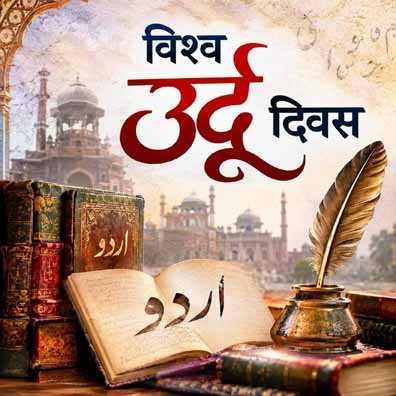
एक ऐसी भाषा के बारे में बात कर रहें हैं जो पूरी दुनिया के खूबसूरत, मधुर और असरदार जुबानों में गिनी जाती है. जिसे ‘मोहब्बत की जबान’ भी कहा जाता है. भारत की सरज़मीं पर जन्मी और पली-बढ़ी यह जुबान वर्तमान समय में पूरी दुनिया में अपनी शायरी, अदब (साहित्य) और नज़ाकत के लिए जानी जाती है. इस भाषा को हम सभी “उर्दू ” के नाम से जानते हैं. हर वर्ष 09 नवंबर को विश्व उर्दू दिवस मनाया जाता है. यह दिवस उर्दू भाषा के प्रति जागरूकता फैलाने और इसे संरक्षित करने के लिए मनाया जाता है.
महान शायर और दार्शनिक शायर मुहम्मद इक़बाल की जयंती के अवसर पर उर्दू दिवस मनाया जाता है. मुहम्मद इक़बाल का जन्म 09 नवंबर 1877 को ब्रिटिश भारत के पंजाब राज्य के सियालकोट में हुआ था. मुहम्मद इक़बाल ने एक अमर रचना “सारे जहां से अच्छा हिन्दुस्तान हमारा” की थी. उनकी शायरी ने उर्दू को एक नई वैचारिक गहराई भी दी थी.
उर्दू की सबसे बड़ी ताकत है इसकी फ्लेक्सिबिलिटी (लचक). इसमें जहाँ एक ओर संस्कृत और प्राकृत से निकले कोमल शब्द शामिल हैं, वहीं फारसी और अरबी के मधुर और वजनदार लफ्ज भी इसे गहराई देते हैं. जहाँ उर्दू बोलते समय लहजे में जो तहजीब और आदाब झलकता है जो दूसरे भषाओं से इसे अलग करता है. जब भी बात उर्दू साहित्य की आती है, तो इसका फलक बहुत बड़ा होता है.
गजल, नज़्म, रुबाई, मर्सिया, दास्तान और अफसाना (कहानी)—उर्दू साहित्य की इन विधाओं ने भारतीय साहित्य को वैश्विक स्तर पर एक नई पहचान भी दी है. वर्तमान समय में उर्दू को लोकप्रिय बनाए रखने में भारतीय सिनेमा और संगीत का बहुत बड़ा हाथ है. उदाहरण – “चलते-चलते यूं ही कोई मिल गया था…”, “संदेशे आते हैं…” या “कभी किसी को मुकम्मल जहां नहीं मिलता”.
उर्दू भारत की साझा विरासत का एक चमकदार नगीना है जिसे किसी मजहब में बांधा नहीं जा सकता है. विश्व उर्दू दिवस हमें याद दिलाता है कि वैश्वीकरण के इस दौर में जहां भाषाएं छोटी हो रही हैं वहीं, उर्दू की खूबसूरत ज़बान, शायरी और तहजीब को आने वाली पीढ़ियां याद रखेगी.
========== ========= ===========
World Urdu Day
We are talking about a language that is counted among the most beautiful, melodious, and impactful languages in the world—a language often referred to as the “language of love.” Born and nurtured on the soil of India, it is now recognized globally for its poetry, literature, and refinement. We know this language as “Urdu.” World Urdu Day is celebrated annually on November 9th, with the aim of raising awareness about the Urdu language and ensuring its preservation.
Urdu Day is observed on the birth anniversary of the great poet and philosopher, Muhammad Iqbal. He was born on November 9, 1877, in Sialkot, in the Punjab province of British India. Muhammad Iqbal penned the immortal composition, “Saare Jahan Se Achha Hindustan Hamara.” His poetry also imbued the Urdu language with a new, profound intellectual depth.
One of Urdu’s greatest strengths is its flexibility. It incorporates gentle words derived from Sanskrit and Prakrit, while also drawing depth from the melodious and weighty vocabulary of Persian and Arabic. The sense of etiquette and grace (tehzeeb and adaab) reflected in the tone of those who speak Urdu sets it apart from other languages. Furthermore, the scope of Urdu literature is vast.
Literary forms such as the ‘ghazal’, ‘nazm’, ‘rubai’, ‘marsiya’, ‘dastan’, and ‘afsana’ (short story) have given Indian literature a distinct identity on the global stage. In contemporary times, Indian cinema and music have played a significant role in keeping Urdu popular—for instance, in songs and lines like “Chalte-chalte yun hi koi mil gaya tha…”, “Sandeshe aate hain…”, or “Kabhi kisi ko mukammal jahan nahi milta.” Urdu is a shining gem of India’s shared heritage—one that cannot be confined to any single religion. World Urdu Day reminds us that in this era of globalization, where languages are increasingly marginalized, the beautiful language, poetry, and cultural refinement (tehzeeb) of Urdu will continue to be remembered by future generations.