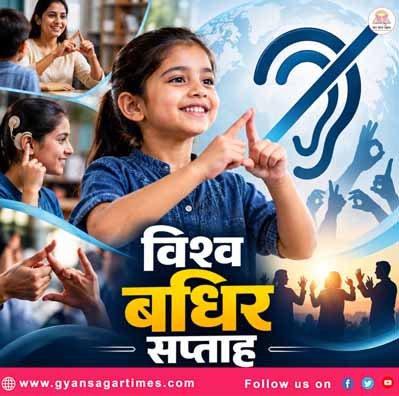
रंग-बिरंगे परिवेश अगर कोई देखना, बोलना या सुनने में कठिनाई हो तो उसका जीवन नीरस हो जाता है. ऐसे व्यक्तियों के लिए एक ख़ास प्रकार के सांकेतिक भाषा का प्रयोग किया जाता है. हर वर्ष सितंबर के आखिरी रविवार को विश्व बधिर सप्ताह मनाया जाता है. यह दिवस बधिर समुदाय के अधिकारों, उनके योगदान और उनकी चुनौतियों के प्रति जागरूकता बढ़ाने का एक महत्वपूर्ण अवसर है.
विश्व बधिर महासंघ की स्थापना 23 सितंबर 1951 को रोम में हुई थी. विश्व बधिर दिवस की शुरुआत वर्ष 1958 में विश्व बधिर महासंघ (World Federation of the Deaf) द्वारा की गई थी. इसका उद्देश्य बधिर लोगों के लिए बेहतर जीवन परिस्थितियों और उनके अधिकारों को मान्यता देने के लिए जागरूकता फैलाना है. सितंबर का यह आखिरी रविवार दुनिया भर के बधिर समुदायों, उनके संगठनों और सहयोगियों को एक मंच प्रदान करता है.
विश्व बधिर सप्ताह का सबसे महत्वपूर्ण मुद्दा सांकेतिक भाषा के अधिकार का है. ज्ञात है कि, हर वर्ष 23 सितंबर को अंतर्राष्ट्रीय सांकेतिक भाषा दिवस मनाया जाता है. सांकेतिक भाषा को केवल इशारों की भाषा समझना गलत होगा चूकिं, यह एक स्वतंत्र प्राकृतिक भाषा है. जिसकी अपनी व्याकरण, शब्दावली, वाक्य-विन्यास और अभिव्यक्ति के नियम होते हैं. इस भाषा में हाथों की गति और स्थिति के साथ चेहरे के भाव, शरीर की मुद्रा और स्थान का भी अर्थ-निर्माण में योगदान होता है. बताते चलें कि, पूरी दुनिया में केवल एक ही सांकेतिक भाषा नहीं है. विभिन्न देशों और समुदायों में अलग-अलग सांकेतिक भाषाएँ विकसित हुई हैं. उदाहरण- अमेरिकन साइन लैंग्वेज, ब्रिटिश साइन लैंग्वेज और भारतीय सांकेतिक भाषा.
संयुक्त राष्ट्र के CRPD के अनुच्छेद 24 में विकलांग व्यक्तियों के शिक्षा के अधिकार के साथ-साथ बधिर विद्यार्थियों के लिए सांकेतिक भाषा सीखने, बधिर समुदाय की भाषाई पहचान को बढ़ावा देने और उनकी जरूरतों के अनुरूप भाषा एवं संचार माध्यम में शिक्षा उपलब्ध कराने पर बल दिया है. वर्ष 2025 के अंतरराष्ट्रीय सप्ताह के दौरान भी WFD ने “Deaf Rights in Crises” के माध्यम से आपदा और संकट के समय बधिर समुदाय की सूचना तक पहुंच पर विशेष जोर दिया था. विश्व बधिर संघ ने वर्ष 2026 के कार्यक्रम में इसे CRPD के अनुच्छेद 4(3) और 33 से जोड़ते हुए बधिर-नेतृत्व वाली संस्थाओं की भूमिका पर बल दिया है.
भारत की बात करें तो भाषायी विविधता वाले देश में सांकेतिक भाषा की भूमिका और भी महत्वपूर्ण हो जाती है. वहीं, भारत में बधिर समुदाय की भाषायी आवश्यकताओं के संदर्भ में भारतीय सांकेतिक भाषा का विशेष महत्व है. भारतीय सांकेतिक भाषा अनुसंधान एवं प्रशिक्षण केंद्र का मुख्य उद्देश्य भारतीय सांकेतिक भाषा से संबंधित अनुसंधान, प्रशिक्षण और संसाधन विकास को बढ़ावा देना. सांकेतिक भाषा बधिर व्यक्तियों को अपने विचार स्वतंत्र रूप से व्यक्त करने और समाज के साथ जुड़ने का अधिकार देती है.
सांकेतिक भाषा को औपचारिक और अनौपचारिक शिक्षा प्रणालियों में बढ़ावा देना, ताकि इसे एक समान्य भाषा के रूप में स्वीकार किया जाए. यह दिन बधिर समुदाय के अधिकारों के समर्थन और उनकी सामाजिक, आर्थिक, और सांस्कृतिक भागीदारी सुनिश्चित करने का भी प्रतीक है. सांकेतिक भाषा विश्वभर में विभिन्न रूपों में मौजूद है, और यह विविधता का सम्मान करने का भी एक अवसर है. बताते चलें कि, दुनिया भर में लगभग 300 से अधिक विभिन्न सांकेतिक भाषाएँ उपयोग की जाती हैं, जो सांस्कृतिक और भाषाई विविधता का अनूठा उदाहरण हैं. चूकिं, हर देश और समुदाय की अपनी सांकेतिक भाषा होती है, जो उनकी संस्कृति और भाषा का हिस्सा होती है.
हर वर्ष एक नई थीम के साथ विश्व बधिर सप्ताह मनाया जाता है. वर्ष 2026 का थीम है “Declaring Deaf People’s Human Rights” (बधिर लोगों के मानवाधिकारों की घोषणा). यह थीम बधिर व्यक्तियों के अधिकारों को सिर्फ मान्यता देने से आगे बढ़कर उन्हें वास्तविक जीवन में लागू करने की भी अपील करती है. वर्ष 2026 की थीम हमें याद दिलाती है कि बधिर लोगों के अधिकार मानवाधिकार हैं। सांकेतिक भाषा उनकी पहचान, संस्कृति और पूर्ण भागीदारी की कुंजी है.
विश्व बधिर दिवस न केवल बधिर लोगों के अधिकारों की रक्षा करता है, बल्कि यह इस बात की याद दिलाता है कि हर व्यक्ति को समान सम्मान और अवसर मिलना चाहिए, चाहे उनकी सुनने की क्षमता कोई भी हो. यह दिन बधिर समुदाय के योगदान को मान्यता देता है और समाज में उनकी महत्वपूर्ण भूमिका को उजागर करता है.
========== ========= ===========
World Deaf Day
If a person faces difficulties in seeing, speaking, or hearing, their life can become devoid of vibrancy. A special form of sign language is used for such individuals. World Deaf Week is observed annually on the last Sunday of September. This occasion serves as a vital opportunity to raise awareness about the rights, contributions, and challenges of the deaf community.
The World Federation of the Deaf was established in Rome on September 23, 1951. World Deaf Day was initiated by the World Federation of the Deaf in 1958. Its objective is to spread awareness regarding better living conditions for deaf people and to advocate for the recognition of their rights. This final Sunday of September provides a platform for deaf communities, their organizations, and their allies across the globe.
A key issue highlighted during World Deaf Week is the right to sign language. It is worth noting that the International Day of Sign Languages is observed annually on September 23. It would be incorrect to view sign language merely as a system of gestures; it is a distinct, natural language with its own grammar, vocabulary, syntax, and rules of expression. In this language, facial expressions, body posture, and spatial positioning contribute to conveying meaning alongside hand movements and positioning. It is also important to note that there is no single universal sign language; distinct sign languages have evolved across different countries and communities—examples include American Sign Language, British Sign Language, and Indian Sign Language.
Article 24 of the UN Convention on the Rights of Persons with Disabilities (CRPD) emphasizes the right to education for persons with disabilities. It specifically highlights the importance of deaf students learning sign language, promoting the linguistic identity of the deaf community, and providing education through language and communication mediums tailored to their specific needs. During the 2025 International Week, the World Federation of the Deaf (WFD) placed special emphasis on the deaf community’s access to information during disasters and crises through the theme “Deaf Rights in Crises.” For the 2026 program, the WFD has highlighted the role of deaf-led organizations, linking this to Articles 4(3) and 33 of the CRPD.
In the context of India—a country characterized by linguistic diversity—the role of sign language becomes even more significant. Indian Sign Language holds particular importance regarding the linguistic needs of the deaf community in the country. The primary objective of the Indian Sign Language Research and Training Centre is to promote research, training, and resource development related to Indian Sign Language. Sign language empowers deaf individuals to express their thoughts freely and engage with society.
Promoting sign language within formal and informal education systems is essential so that it is accepted as a mainstream language. This day also symbolizes support for the rights of the deaf community and ensures their social, economic, and cultural participation. Sign language exists in various forms worldwide, offering an opportunity to celebrate this diversity. It is worth noting that more than 300 different sign languages are used globally, serving as unique examples of cultural and linguistic diversity; indeed, every country and community possesses its own sign language, which forms an integral part of its culture and language.
World Deaf Week is observed annually with a new theme. The theme for 2026 is “Declaring Deaf People’s Human Rights.” This theme calls for moving beyond mere recognition of the rights of deaf individuals to ensuring their actual implementation in real life. The theme for 2026 reminds us that the rights of deaf people are human rights. Sign language is the key to their identity, culture, and full participation.
World Deaf Day not only advocates for the rights of deaf people but also serves as a reminder that every individual deserves equal respect and opportunity, regardless of their hearing ability. This day acknowledges the contributions of the deaf community and highlights the vital role they play in society.