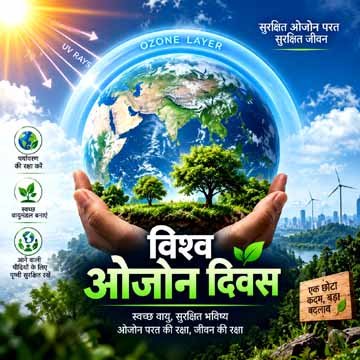
आज पुरे विश्व में ओजोन दिवस मनाया जा रहा है. इसी ओजोन के कारण पृथ्वी पर जीवन फल-फूल रहा है. वायुमंडल में उपस्थित विभिन्न गैसों में ओजोन का विशेष स्थान है चुकि, यह संताप मंडल में पाया जाता है. सूर्य से निकलने वाली हानिकारक पराबैंगनी किरणों, विशेषकर UV-B तथा UV-C विकिरण, का एक बड़ा भाग ओजोन परत अवशोषित कर पृथ्वी पर जीवन की रक्षा करती है. ओजोन परत के महत्व और इसके संरक्षण के प्रति वैश्विक जागरूकता बढ़ाने के उद्देश्य से हर वर्ष आज ही के दिन विश्व ओजोन दिवस मनाया जाता है. यह दिन ओजोन परत की सुरक्षा के महत्व को रेखांकित करते हुए वर्ष 1987 की मॉन्ट्रियल प्रोटोकॉल पर हस्ताक्षर की भी याद दिलाता है.
ओजोन (O₃) ऑक्सीजन के तीन परमाणुओं से बनी एक गैस है. यह वायुमंडल की समताप मंडल (Stratosphere) में लगभग 10 से 50 किलोमीटर की ऊंचाई पर स्थित होती है. यह परत सूर्य से आने वाली 97% तक UV किरणों को अवशोषित कर लेती है. बताते चलें कि, वर्ष 1970 के दशक में वैज्ञानिकों ने चेतावनी दी थी कि क्लोरोफ्लोरोकार्बन, हैलोन और अन्य ओजोन-हानिकारक पदार्थ स्ट्रेटोस्फियर में क्लोरीन और ब्रोमीन परमाणु छोड़कर ओजोन अणुओं को नष्ट कर रहे हैं. उसके बाद वर्ष 1985 में ब्रिटिश अंटार्कटिक सर्वेक्षण के वैज्ञानिकों ने अंटार्कटिका के ऊपर “ओजोन होल” की खोज कर वैश्विक चिंता बढ़ा दी.
वर्ष 1985 में वियना कन्वेंशन अपनाया गया, जिसने ढाँचा प्रदान किया, जिसके बाद वर्ष 1987 में मॉन्ट्रियल प्रोटोकॉल पर हस्ताक्षर हुए. यह वर्ष 1989 में प्रभावी हुआ जिसके बाद वर्ष 2008 तक यह दुनिया का एकमात्र पर्यावरण समझौता बन गया. मॉन्ट्रियल प्रोटोकॉल की असाधारण सफलता के पीछे चार स्तंभ हैं. पहला, वैज्ञानिक आधार पर नीति निर्माण, दूसरा, सार्वभौमिक भागीदारी, तीसरा, अनुपालन तंत्र और चौथा, बहुपक्षीय कोष. इन तंत्रों के परिणामस्वरूप, नियंत्रित ओजोन-क्षयकारी पदार्थों के उत्पादन और खपत का 99 प्रतिशत से अधिक चरणबद्ध रूप से समाप्त कर दिया गया है. नासा और एनओएए के आकलन के अनुसार, 2025 का अंटार्कटिक ओजोन छिद्र 1992 के बाद से पाँचवाँ सबसे छोटा दर्ज किया गया है. हालाँकि, चुनौतियाँ बनी हुई हैं. चूकिं, अंटार्कटिका के ऊपर ओजोन छिद्र अभी भी संयुक्त राज्य अमेरिका के महाद्वीपीय क्षेत्र से दोगुना है, और इसके पूर्ण बहाल होने में चार दशक से अधिक का समय लगेगा.
ओजोन परत का महत्व केवल मानव स्वास्थ्य तक सीमित नहीं है. अत्यधिक UV विकिरण फसलों और अन्य वनस्पतियों की वृद्धि को प्रभावित कर सकता है तथा समुद्री पारिस्थितिकी में सूक्ष्म जीवों और प्लवकों को नुकसान पहुँचा सकता है. ये जीव समुद्री खाद्य-श्रृंखला और कार्बन चक्र में महत्त्वपूर्ण भूमिका निभाते हैं. इस प्रकार ओजोन परत का संरक्षण खाद्य सुरक्षा, जैव विविधता और पारिस्थितिक संतुलन से भी जुड़ा हुआ है. सूर्य से आने वाली पराबैंगनी किरणों की अधिकता मानव स्वास्थ्य के लिए गंभीर खतरा उत्पन्न कर सकती है. इसके कारण त्वचा कैंसर, मोतियाबिंद और प्रतिरक्षा प्रणाली से संबंधित समस्याओं का जोखिम बढ़ सकता है.
वर्ष 970 के दशक में वैज्ञानिकों ने पाया कि कुछ क्लोरोफ्लोरोकार्बन (CFCs) और अन्य मानव-निर्मित रसायन ओजोन परत को नुकसान पहुँचा रहे हैं. ये रसायन रेफ्रिजरेटर, एयर कंडीशनर और एयरोसोल स्प्रे में इस्तेमाल होते थे. जब ये रसायन वायुमंडल में पहुँचते हैं, तो वे ओजोन अणुओं को तोड़ देते हैं, जिससे ओजोन परत पतली हो जाती है. ज्वालामुखी उद्गार, सौर क्रिया, और वृक्षों की कटाई भी प्राकृतिक रूप से नुकसान पहुंचाते हैं. अंटार्कटिका के ऊपर ओजोन परत में एक बड़ा छेद इसका सबसे बड़ा उदाहरण है.
विश्व ओजोन दिवस हमें यह याद दिलाता है कि पर्यावरण की रक्षा के लिए हमें मिलकर काम करना होगा. हम सभी छोटे-छोटे कदम उठाकर योगदान कर सकते हैं जैसे – पुराने रेफ्रिजरेटर और एयर कंडीशनर को सही तरीके से डिस्पोज करें, जिनमें ओजोन-क्षयकारी रसायन हो सकते हैं. ऐसे उत्पादों का उपयोग करें जिन पर ‘ओजोन-फ्रेंडली’ या ‘CFC-फ्री’ का लेबल लगा हो. सार्वजनिक परिवहन का उपयोग करें या साइकिल चलाएँ ताकि वायु प्रदूषण कम हो.
भारत भी वर्ष 1992 से मॉन्ट्रियल प्रोटोकॉल का पक्षकार है और उसने न केवल सभी प्रतिबद्धताओं को पूरा किया है, बल्कि कई मामलों में लक्ष्यों से आगे भी निकला है. ज्ञात है कि, 1 जनवरी 2025 तक, भारत ने एचसीएफसी के उत्पादन और खपत में 67.5 प्रतिशत की कमी का लक्ष्य हासिल कर लिया है, और नए उपकरणों के निर्माण में एचसीएफसी का उपयोग पूरी तरह बंद कर दिया है. वहीं, वर्ष 2021 में किगाली संशोधन का भारत ने समर्थन नहीं दिया है बल्कि, भारत ने एचएफसी के उत्पादन में कमी का कार्यक्रम अपनाया है. इस योजना के तहत वर्ष 2032 तक 10 प्रतिशत और वर्ष 2047 तक 85 प्रतिशत की कमी का लक्ष्य है.
ओजोन परत का संरक्षण केवल सरकार की जिम्मेदारी नहीं है बल्कि, आम नागरिक भी इसमें योगदान दे सकते हैं. उदाहरण – पर्यावरण-अनुकूल शीतलन तकनीकों को प्राथमिकता देना, पुराने रेफ्रिजरेटर और एयर-कंडीशनर का निपटान अधिकृत माध्यम से कराना, अनावश्यक ऊर्जा खपत को कम करना, बच्चों और युवाओं में पर्यावरण संरक्षण की भावना विकसित करना साथ ही पर्यावरण संबंधी वैज्ञानिक जानकारी के प्रति जागरूक रहना.
विश्व ओजोन दिवस हमें उस अदृश्य सुरक्षा-कवच की याद दिलाता है, जिसके बिना पृथ्वी पर जीवन कहीं अधिक असुरक्षित हो सकता है. मॉन्ट्रियल प्रोटोकॉल की सफलता यह सिद्ध करती है कि वैश्विक सहयोग, वैज्ञानिक शोध और राजनीतिक इच्छाशक्ति के माध्यम से पर्यावरणीय संकटों पर प्रभावी नियंत्रण पाया जा सकता है. विश्व ओजोन दिवस केवल एक पर्यावरणीय आयोजन नहीं, बल्कि एक वैश्विक चेतावनी है कि यदि हम आज नहीं जागे, तो कल बहुत देर हो जाएगी. यह दिवस हमें सिखाता है कि विज्ञान और नीति के समन्वय से हम पृथ्वी को बचा सकते हैं.
========== ========= ===========
World Ozone Day

Ozone Day is being celebrated across the world today. Ozone is the source of life on Earth’s flourishing. Among the various gases in the atmosphere, ozone holds a special place, as it is found in the stratosphere. The ozone layer protects life on Earth by absorbing a large portion of the sun’s harmful ultraviolet rays, especially UV-B and UV-C radiation. World Ozone Day is celebrated annually on this day to raise global awareness about the importance of the ozone layer and its conservation. This day also commemorates the signing of the Montreal Protocol in 1987, highlighting the importance of protecting the ozone layer.
Ozone (O₃) is a gas composed of three atoms of oxygen. It exists in the stratosphere, at altitudes of approximately 10 to 50 kilometers. This layer absorbs up to 97% of the sun’s UV rays. It should be noted that in the 1970s, scientists warned that chlorofluorocarbons, halons, and other ozone-depleting substances were destroying ozone molecules by releasing chlorine and bromine atoms into the stratosphere. Subsequently, in 1985, scientists from the British Antarctic Survey discovered an ozone hole over Antarctica, raising global concern.
The Vienna Convention was adopted in 1985, providing the framework, followed by the signing of the Montreal Protocol in 1987. It entered into force in 1989, becoming the world’s sole environmental agreement until 2008. Four pillars underpin the Montreal Protocol’s extraordinary success: first, scientifically based policymaking; second, universal participation; third, a compliance mechanism; and fourth, a multilateral fund. As a result of these mechanisms, more than 99 percent of the production and consumption of regulated ozone-depleting substances has been phased out. According to NASA and NOAA estimates, the 2025 Antarctic ozone hole is the fifth smallest recorded since 1992. However, challenges remain. The ozone hole over Antarctica is still twice the size of the continental United States, and its full restoration will take more than four decades.
The importance of the ozone layer is not limited to human health. Excessive UV radiation can affect the growth of crops and other vegetation and harm microorganisms and plankton in the marine ecosystem. These organisms play a vital role in the marine food chain and carbon cycle. Thus, preserving the ozone layer is also linked to food security, biodiversity, and ecological balance. Excessive exposure to ultraviolet rays from the sun can pose a serious threat to human health, increasing the risk of skin cancer, cataracts, and immune system problems.
In the 1970s, scientists discovered that certain chlorofluorocarbons (CFCs) and other man-made chemicals were damaging the ozone layer. These chemicals were used in refrigerators, air conditioners, and aerosol sprays. When these chemicals reach the atmosphere, they break down ozone molecules, thinning the ozone layer. Volcanic eruptions, solar activity, and deforestation also contribute to natural degradation. A large hole in the ozone layer over Antarctica is a prime example.
World Ozone Day reminds us that we must work together to protect the environment. We can all contribute by taking small steps, such as properly disposing of old refrigerators and air conditioners, which may contain ozone-depleting chemicals. Use products labeled “ozone-friendly” or “CFC-free.” Use public transportation or ride a bicycle to reduce air pollution.
India has been a party to the Montreal Protocol since 1992 and has not only fulfilled all commitments but also exceeded them in many cases. It is known that by January 1, 2025, India has achieved the target of reducing HCFC production and consumption by 67.5 percent and has completely phased out the use of HCFCs in the manufacture of new equipment. However, in 2021, India did not support the Kigali Amendment, but instead adopted a program to reduce HFC production. This plan aims to reduce emissions by 10 percent by 2032 and 85 percent by 2047.
Protecting the ozone layer is not only the government’s responsibility; ordinary citizens can also contribute. Examples include prioritizing environmentally friendly cooling technologies, disposing of old refrigerators and air conditioners through authorized channels, reducing unnecessary energy consumption, and fostering a sense of environmental protection among children and youth, as well as maintaining awareness of environmental scientific information.
World Ozone Day reminds us of that invisible protective shield, without which life on Earth would be far more vulnerable. The success of the Montreal Protocol proves that environmental crises can be effectively controlled through global cooperation, scientific research, and political will. World Ozone Day is not just an environmental event, but a global reminder that if we don’t wake up today, tomorrow will be too late. This day teaches us that by harmonizing science and policy, we can save the Earth.