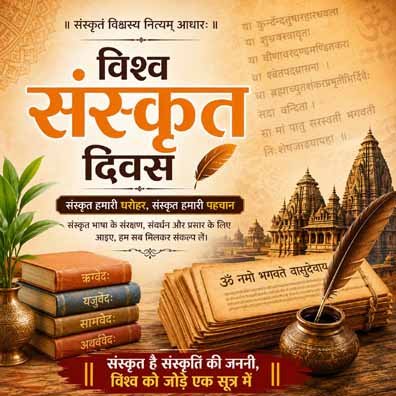
हर वर्ष श्रावण पूर्णिमा के दिन विश्व संस्कृत दिवस मनाया जाता है. विश्व संस्कृत दिवस केवल एक भाषा का उत्सव नहीं है, बल्कि यह मानव सभ्यता के उस मूल चिंतन, विज्ञान, और दर्शन का सम्मान है जिससे विश्व की कई आधुनिक भाषाएं और संस्कृतियां प्रवाहित हुई हैं. वहीं, संस्कृत ने भारतीय बौद्धिक परंपरा को अभिव्यक्ति देने के साथ-साथ दर्शन, व्याकरण, काव्य, नाटक, गणित, खगोल, आयुर्वेद, राजनीति, धर्म और अध्यात्म जैसे अनेक क्षेत्रों के ज्ञान को संरक्षित किया है. यह दिन विश्व की प्राचीनतम भाषाओं में से एक, संस्कृत, के प्रति कृतज्ञता और सम्मान प्रकट करने तथा इसके पुनरुद्धार और प्रचार-प्रसार को प्रोत्साहित करने के लिए समर्पित है.
भारतीय सभ्यता का इतिहास केवल राजाओं, युद्धों और राजनीतिक परिवर्तनों का इतिहास नहीं रहा है बल्कि, यह ज्ञान, दर्शन, साहित्य, विज्ञान और भाषायी परंपराओं के निरंतर विकास का भी इतिहास है. संस्कृत को देववाणी, गीर्वाणवाणी और अमर्त्यभारती भी कहा जाता है. वर्तमान समय के आधुनिक या डिजिटल युग में एक धारणा बन गई है कि, यह मुख्यतः धार्मिक ग्रंथों, मंत्रों और पूजा-पद्धतियों की भाषा है. यह ऐतिहासिक सत्य है चूकिं, वैदिक और धार्मिक साहित्य का विशाल भाग संस्कृत में ही है. वहीं, संस्कृत को केवल धार्मिक भाषा मान लेना उसके साहित्यिक और बौद्धिक योगदान को अत्यंत सीमित कर देता है.
किसी भाषा के लिए दिवस मनाने का अर्थ केवल उसके गौरव का स्मरण करना नहीं है. इसका उद्देश्य उस भाषा से जुड़े ज्ञान, साहित्य, संस्कृति और भविष्य की संभावनाओं पर विचार करना भी है. ज्ञात है कि, भारत सरकार के शिक्षा मंत्रालय के आदेशानुसार वर्ष 1969 से श्रावण पूर्णिमा को ‘संस्कृत दिवस’ के रूप में मनाने का निर्णय लिया गया था, वर्तमान समय में श्रावण पूर्णिमा के दिन वैश्विक स्तर पर ‘विश्व संस्कृत दिवस’ मनाया जाता है. नासा के वैज्ञानिक रिक ब्रिग्स ने वर्ष 1985 में अपने एक शोध पत्र में यह सिद्ध किया था कि संस्कृत व्याकरण के नियम इतने सटीक और गणितीय हैं कि यह आर्टिफिशियल इंटेलिजेंस और नेचुरल लैंग्वेज प्रोसेसिंग के लिए दुनिया की सबसे उपयुक्त भाषा है.
वहीं, पाणिनि का ‘अष्टाध्यायी’ संस्कृत व्याकरण का ऐसा अद्वितीय ग्रंथ है, जो मानव मुख से निकलने वाली ध्वनियों का वैज्ञानिक विश्लेषण प्रस्तुत करता है. वर्ष 2025 में प्रधानमंत्री की ओर से विश्व संस्कृत दिवस के अवसर पर यह रेखांकित किया गया कि विश्वभर में संस्कृत सीखने और उसे लोकप्रिय बनाने वाले विद्यार्थियों, विद्वानों और उत्साही लोगों के प्रयासों की सराहना की जानी चाहिए. संस्कृत की महत्ता केवल उसके प्राचीन होने में नहीं है. कोई भी भाषा केवल इसलिए महत्त्वपूर्ण नहीं हो जाती कि वह हजारों वर्ष पुरानी है बल्कि, उसकी वास्तविक शक्ति उसके द्वारा निर्मित और संरक्षित ज्ञान में होती है.
भारतीय दर्शन की छह प्रमुख आस्तिक परंपराओं में न्याय, वैशेषिक, सांख्य, योग, पूर्वमीमांसा और वेदांत का विशाल साहित्य संस्कृत में विकसित हुआ वहीं, बौद्ध और जैन परंपराओं ने भी संस्कृत में कई महत्वपूर्ण साहित्य रचा है. वैसे तो संस्कृत की चर्चा व्याकरण के बिना अधूरी मानी जाती है. इसकी व्याकरणिक परंपरा ने भारतीय भाषाशास्त्र को अत्यंत गहराई प्रदान की है. शब्द, धातु, प्रत्यय, संधि, समास, वाक्य और अर्थ के संबंध में विकसित विचार भारतीय बौद्धिक परंपरा की विशिष्ट उपलब्धियाँ प्राप्त की है. यही कारण है कि, संस्कृत का अध्ययन आधुनिक भाषाविज्ञान, भाषा-दर्शन और भारतीय ज्ञान-परंपरा के विद्यार्थियों के लिए उपयोगी हो सकता है.
अगर संस्कृत को केवल धार्मिक भाषा समझा जाए तो उसका विशाल साहित्यिक संसार अदृश्य हो जाता है. उदाहरण – वाल्मीकि का रामायण, व्यास परंपरा का महाभारत, कालिदास का अभिज्ञानशाकुंतलम्, मेघदूत और रघुवंश, भवभूति के नाटक, बाणभट्ट की गद्य रचनाएँ और अनेक कवियों की कृतियाँ संस्कृत साहित्य की विविधता को प्रदर्शित करती हैं. वहीं, संस्कृत साहित्य में वीरता और शृंगार के साथ-साथ करुणा, हास्य, प्रकृति, प्रेम, राजनीति, धर्म, नैतिकता और मनुष्य के अस्तित्व से जुड़े प्रश्न भी मिलते हैं. संस्कृत में गणित, आयुर्वेद, खगोल, चिकित्सा और अन्य ज्ञानक्षेत्रों से संबंधित अनेक ग्रंथ रचे गए. आर्यभट, वराहमिहिर, सुश्रुत, चरक आदि की परंपराएँ भारतीय ज्ञान-इतिहास का महत्त्वपूर्ण हिस्सा हैं जो संस्क्रत में लिखी गई है. संस्कृत में वैज्ञानिक और गणितीय ज्ञान उपलब्ध होने का अर्थ यह नहीं कि आधुनिक विज्ञान की हर उपलब्धि पहले से संस्कृत ग्रंथों में मौजूद थी.
संस्कृत का भारतीय भाषाओं पर प्रभाव अत्यंत गहरा व व्यापक है उदहारण – हिंदी, मराठी, बंगाली, नेपाली, असमिया, ओड़िया, गुजराती और अनेक अन्य भारतीय भाषाओं की शब्द-संपदा में संस्कृत के तत्सम और तद्भव शब्दों की बड़ी भूमिका है. वहीं, ‘ज्ञान’, ‘समाज’, ‘स्वतंत्रता’, ‘संस्कृति’, ‘विद्यालय’, ‘परिवार’, ‘प्रकृति’, ‘विज्ञान’, ‘न्याय’ जैसे अनेक शब्द आधुनिक भारतीय भाषाओं के सामान्य प्रयोग का हिस्सा हैं. इसलिए संस्कृत को केवल एक अलग, प्राचीन भाषा मानना पर्याप्त नहीं होगा. वर्तमान समय में संस्कृत के सामने सबसे बड़ी चुनौती यह है कि नई पीढ़ी उसे किस रूप में देखती है. यदि विद्यार्थी को संस्कृत केवल कठिन व्याकरण, परीक्षा और अनुवाद के विषय के रूप में पढ़ाई जाएगी, तो उसमें स्वाभाविक रूप से रुचि उत्पन्न होगा.
विश्व संस्कृत दिवस केवल एक भाषा का उत्सव नहीं है, बल्कि भारत की सांस्कृतिक चेतना, वैज्ञानिक दृष्टि और दार्शनिक गहराई का प्रतीक है. यह हमें याद दिलाता है कि, हमारी जड़ें कितनी गहरी और समृद्ध हैं. “अमृतं संस्कृतं मित्रं, सरसं सरलं वचः; एकतामूलकं राष्ट्रं, ज्ञान-विज्ञान-पोषकम्” – अर्थात संस्कृत अपनी सरलता और सुंदरता के लिए जानी जाती है; इसके गहन विचार और साहित्य ज्ञान का विस्तार करते हैं, विज्ञान का पोषण करते हैं और राष्ट्रीय एकता को बढ़ावा देते हैं.
========== ========= ===========
World Sanskrit Day
World Sanskrit Day is celebrated every year on the full moon day of Shravan. World Sanskrit Day is not just a celebration of a language, but a tribute to the fundamental thought, science, and philosophy of human civilization, from which many of the world’s modern languages and cultures have flowed. Sanskrit has given expression to the Indian intellectual tradition and preserved knowledge in numerous fields, including philosophy, grammar, poetry, drama, mathematics, astronomy, Ayurveda, politics, religion, and spirituality. This day is dedicated to expressing gratitude and respect for Sanskrit, one of the world’s oldest languages, and to encouraging its revival and propagation.
The history of Indian civilization is not only a history of kings, wars, and political changes; it is also a history of the continuous development of knowledge, philosophy, literature, science, and linguistic traditions. Sanskrit is also known as Devine, Girvanvani, and Amartya Bharati. In the modern or digital age, there is a perception that Sanskrit is primarily the language of religious texts, mantras, and worship practices. This is a historical truth, as a large portion of Vedic and religious literature is in Sanskrit. However, considering Sanskrit solely a religious language greatly limits its literary and intellectual contributions.
Celebrating a day for a language isn’t merely about commemorating its glory. It also aims to reflect on the knowledge, literature, culture, and future prospects associated with that language. It is worth noting that, as per the order of the Ministry of Education of the Government of India, the decision was made to celebrate Shravan Purnima as ‘Sanskrit Day’ in 1969. Currently, ‘World Sanskrit Day’ is celebrated globally on Shravan Purnima. In a 1985 research paper, NASA scientist Rick Briggs proved that the rules of Sanskrit grammar are so precise and mathematical that it is the most suitable language in the world for artificial intelligence and natural language processing.
Pāṇini’s ‘Aṣṭādhyāyī’ is a unique treatise on Sanskrit grammar, presenting a scientific analysis of the sounds uttered by the human mouth. On the occasion of World Sanskrit Day in 2025, the Prime Minister underlined that the efforts of students, scholars, and enthusiasts worldwide who are learning and popularizing Sanskrit should be appreciated. The importance of Sanskrit lies not only in its antiquity. A language does not become important simply because it is thousands of years old; its true strength lies in the knowledge it creates and preserves.
The vast literature of the six major theistic traditions of Indian philosophy—Nyaya, Vaisheshika, Sankhya, Yoga, Purva Mimamsa, and Vedanta—was developed in Sanskrit, while the Buddhist and Jain traditions have also produced significant literature in Sanskrit. A discussion of Sanskrit is considered incomplete without grammar. Its grammatical tradition has given immense depth to Indian linguistics. The ideas developed regarding words, roots, suffixes, sandhi, samaas, sentences, and meanings are unique achievements of the Indian intellectual tradition. Therefore, the study of Sanskrit can be useful for students of modern linguistics, philosophy of language, and the Indian knowledge tradition.
If Sanskrit is considered solely a religious language, its vast literary world becomes invisible. Examples include Valmiki’s Ramayana, the Vyasa tradition’s Mahabharata, Kalidasa’s Abhijnanashakuntalam, Meghadoot and Raghuvansh, Bhavabhuti’s plays, Banabhatta’s prose works, and the works of numerous poets, demonstrating the diversity of Sanskrit literature. Along with heroism and romance, Sanskrit literature also explores compassion, humor, nature, love, politics, religion, morality, and questions related to human existence. Numerous texts on mathematics, Ayurveda, astronomy, medicine, and other fields of knowledge were written in Sanskrit. The traditions of Aryabhata, Varahamihira, Sushruta, and Charaka, among others, form an important part of Indian knowledge history, written in Sanskrit. The availability of scientific and mathematical knowledge in Sanskrit does not mean that every achievement of modern science was already present in Sanskrit texts. Sanskrit’s influence on Indian languages is profound and pervasive. For example, Sanskrit’s Tatsama and Tadbhava words play a significant role in the vocabulary of Hindi, Marathi, Bengali, Nepali, Assamese, Odia, Gujarati, and many other Indian languages. Meanwhile, many words like “knowledge,” “society,” “freedom,” “culture,” “school,” “family,” “nature,” “science,” and “justice” are part of common usage in modern Indian languages. Therefore, it is not enough to consider Sanskrit merely a separate, ancient language. The biggest challenge facing Sanskrit today is how the new generation perceives it. If students are taught Sanskrit only as a subject of rigorous grammar, examinations, and translation, interest in it will naturally develop.
World Sanskrit Day is not just a celebration of a language, but a symbol of India’s cultural consciousness, scientific vision, and philosophical depth. It reminds us how deep and rich our roots are. “Amritam sanskritam mitram, sarsam sarlam vachah; ektamulakam rashtram, jnana-vigyan-poshakam” – i.e. Sanskrit is known for its simplicity and beauty; Its profound thoughts and literature expand knowledge, nurture science and promote national unity.