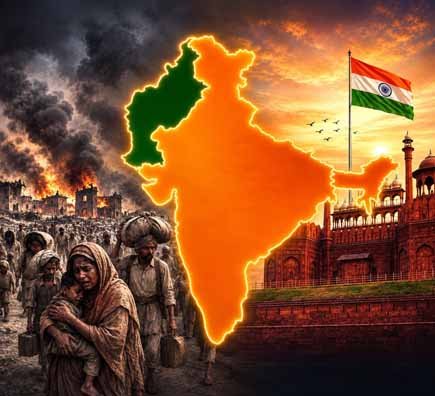
एक तरफ देश आजादी का जश्न मना रहा था तो दूसरी ओर लाखों लोग अपने घर-बार छोड़ने को विवश थे. एक ओर सदियों की पराधीनता के बाद स्वतंत्रता का उल्लास था. विदेशी सत्ता का औपचारिक अंत हो चुका था और तिरंगा स्वतंत्र आकाश में फहरा रहा था. 15 अगस्त 1947 की मध्यरात्रि को जवाहरलाल नेहरू ने जब अपना ऐतिहासिक भाषण दिया, तो एक ओर पूरा देश आज़ादी का जश्न मना रहा था तो दूसरी तरफ विभाजन की आग में झुलसते लोगों की चीखें भी गूंज रही थीं.
16 अगस्त 1947 केवल स्वतंत्र भारत का दूसरा दिन नहीं था बल्कि उत्सव और अनिश्चितता के बीच खड़ी एक ऐतिहासिक तारीख भी थी. भारत स्वतंत्र हो चुका था, लेकिन पंजाब और बंगाल के करोड़ों लोगों को अभी यह निश्चित रूप से पता तक नहीं था कि अगले दिन वे जिस जमीन पर उठेंगे, वह भारत में होगी या पाकिस्तान में. ज्ञात है कि, स्वतंत्रता का उत्सव पहले मनाया गया उसके बाद सीमा रेखा (17 अगस्त 1947) सार्वजनिक की गई थी.
आज़ादी का यह दौर विरोधाभासों से भरा हुआ था. एक तरफ उन लोगों की खुशी थी जो सदियों की गुलामी की बेड़ियों से आज़ाद होने का जश्न मना रहे थे, और दूसरी तरफ उन करोड़ों लोगों को गम था जो अपनी ही ज़मीन पर अब शरणार्थी बन चुके थे. 16 अगस्त वह तारीख है जो भारत के विभाजन की उस क्रूर वास्तविकता को सामने लाती है, जहाँ एक तरफ आजादी का उल्लास था, तो दूसरी तरफ इतिहास का सबसे बड़ा विस्थापन और नरसंहार जारी था.
दिल्ली और बड़े शहरों में लोग सड़कों पर गाते-बजाते घूम रहे थे ठीक उसी समय पंजाब और बंगाल के गाँवों में आग की लपटें उठ रही थीं. कल तक लोग साथ मिलकर अंग्रेजों के खिलाफ लड़ाई लड़ी थी, वे आज एक-दूसरे के खून के प्यासे हो चुके थे. विभाजन की यह त्रासदी केवल धार्मिक वैमनस्य का परिणाम नहीं थी, बल्कि इसके पीछे ब्रितानी हुकूमत की एक सोची-समझी कूटनीति थी.
अंग्रेजों की नीति “फूट डालो और शासन करो लेकिन, वर्ष 1857 के गदर के बाद से ही अंग्रेजों ने हिंदू और मुस्लिम समुदायों के बीच खाई खोदना शुरू कर दिया था. बताते चलें कि, द्वितीय विश्व युद्ध के बाद ब्रिटेन की आर्थिक हालत खराब हो गई थी जिसके कारण जून 1948 में होने वाले हस्तांतरण को लॉर्ड माउंटबेटन ने रातों-रात अगस्त 1947 में खींच दिया था. महज 72 दिनों के भीतर पूरे उप महाद्वीप का बंटवारा करने का निर्णय लिया गया जो प्रशासनिक दृष्टिकोण से अधिक आपराधिक लापरवाही थी.
ज्ञात है कि, उप महाद्वीप को बाँटने का कार्य ब्रिटिश वकील सिरिल रेडक्लिफ को दिया गया. एक ऐसा ब्रिटिश वकील जिसे भारत का कोई अनुभव नहीं था और न ही वह कभी यहाँ आया था उसे पंजाब और बंगाल के बँटवारे की रेखा खींचने का काम सौंपा गया. रेडक्लिफ द्वारा खींची गई सीमा रेखा कोई साधारण सीमा नहीं थी, वह लाखों परिवारों के जिस्म पर खींचा गया एक गहरा घाव था. बताते चलें कि, रेडक्लिफ ने महज़ 5-6 हफ़्तों में शिमला के एक कमरे में बैठकर नक्शे पर पेंसिल से भारत की तकदीर काट दी थी. एक ऐसी काली रेखा जिसने इतिहास की सबसे बड़ी त्रासदियों को जन्म दिया था. करीब 01-02 करोड़ लोगों को एक ही झटके में खेत, खलिहान, पुश्तैनी मकान और ज़मीनें पराई हो गईं और लोग अपना घर छोड़कर पलायन किये. इस दौरान करीब 15 लाख लोगों ने अपनी जानें गँवाईं. इस विभाजन का सबसे क्रूर दंश महिलाओं ने झेला. इस दौर की काली सच्चाई से आज भी मन सिहर जाता है.
विभाजन की काली सच्चाई और जल्दबाजी में सत्ता हस्तांतरण व राजनीतिक शक्ति के बँटवारे की होड़ में आम जनता की सुरक्षा का खाका तैयार ही नहीं किया गया था. कल तक जो किसान खेत जोत रहा था उसे यह समझ ही नहीं आया कि उसकी सदियों पुरानी पहचान एक रात में कैसे बदल गई. प्रशासनिक विफलता का सबसे बड़ा कारण यह था कि, पुलिस और सेना, जो शांति व्यवस्था बनाए रख सकती थीं, वे भी संप्रदाय के आधार पर बँट चुकी थीं और सिर्फ मूक दर्शक बनी रहीं.
आजादी की चमक जितनी उज्ज्वल थी, विभाजन का अंधकार उतना ही गहरा था. यह दिन केवल जश्न मनाने का नहीं, बल्कि उन लाखों गुमनाम लोगों को याद करने का भी है जिन्होंने अपनी जड़ों से उखड़कर एक नए भारत की नींव में अपने प्राणों की आहुति दी थी. कल की काली रेखा भले ही आज भौगोलिक सीमाओं में तब्दील हो चुकी हो, पर उसका दंश इतिहास के पन्नों में हमेशा दर्ज रहेगा.
बताते चलें कि, ब्रिटिश कूटनीति का पतन वर्ष 1946 में ही हो गया था जब ब्रिटिश कैबिनेट ने भारत में सत्ता-हस्तांतरण की योजना बनाई, लेकिन कांग्रेस और मुस्लिम लीग के बीच असहमति ने सब कुछ बिगाड़ दिया था. जुलाई 1946 में नेहरू के एक बयान ने मुस्लिम लीग को आक्रांत कर दिया जिसके बाद मुहम्मद अली जिन्ना ने 16 अगस्त 1946 को “ डायरेक्ट एक्शन डे” घोषित किया. इसी घटना के बाद ही भारत विभाजन की नींव रखी गई थी.
भारत के अंतिम वायसराय लॉर्ड माउंटबेटन ने 2 जून 1947 को विभाजन की योजना पर भारतीय नेताओं के साथ चर्चा की. 15 अगस्त को माउंटबेटन ने भारत के पहले गवर्नर-जनरल के रूप में शपथ ली थीं. कूटनीति के इस खेल में ब्रिटिश साम्राज्य ने अपनी पराकाष्ठा दिखाते हुये… एक ओर आज़ादी का वादा, तो दूसरी ओर एक ऐसा विभाजन जिसमें करीब 15 मिलियन से अधिक लोगों को विस्थापित कर दिया था.
लाल किले पर झंडारोहण एक कूटनीति की विजय थी वहीं, दूसरी ओर पंजाब और बंगाल में बहता खून विफलता की नई कहानी गढ़ रहा था. एक तरफ, नेता कूटनीति के दाँव-पेंच खेल रहे थे वहीं, दूसरी तरफ आम-आवाम अपनी ही तक़दीर का साक्षी बन रह था. एक तरफ आवाम आजादी के जश्न में झूम रहे थे वहीं, दूसरी तरफ दिल्ली शहर की गलियों से लेकर बाज़ार व मंडी में सांप्रदायिक हिंसा भड़क रही थी. सड़कों पर लाशें बिछी थी तो दूसरी तरफ मुसलमान पुराने किलों के शरणार्थी शिविर में शरण ले रहे थे. वहीं, कुछ मुसलमान विशेष ट्रेनों से पाकिस्तान जा रहे थे लेकिन इन ट्रेनों पर भी हमले हो रहे थे.
कल तक जो ना कूटनीति की मेज पर बैठे थे वे ना तो विभाजन की रेखा खींचने वालों में शामिल थे वे महज दर्शक थे जो अपने घरों को जलते, अपने परिजनों से बिछड़ते और अपने देश को बँटते देखने वाले मूक दर्शक थे.
एक काली रेखा जो विभाजन की सीमा रेखा है जो 15 अगस्त 1947 की मध्यरात्रि को भारत और पाकिस्तान के बीच खिंच गई थी. यह केवल मानचित्र पर खिंची एक रेखा नहीं थी बल्कि यह एक ऐसी रेखा थी जिसने करोड़ों लोगों के जीवन को दो हिस्सों में काट दिया था. यह वो काली रेखा का दंश था. एक ऐसी पीड़ा जो सिर्फ आँकड़ों में नहीं, बल्कि हर उस परिवार की यादों में ज़िंदा है जो इस रेखा के दोनों ओर बिखर गया. वर्ष 1947 की यह काली रेखा सिर्फ भौगोलिक सीमा नहीं रही बल्कि, यह सांप्रदायिक तनाव, अविश्वास और दुश्मनी की वह दीवार बन गई जो वर्तमान समय तक दोनों देशों के बीच खड़ी है.
आजादी की चमक जितनी उज्ज्वल थी, विभाजन का अंधकार उतना ही गहरा था. चुकिं, 16 अगस्त 1947 का दिन हमें याद दिलाता रहेगा कि, राजनीतिक फैसलों की कीमत अक्सर देश की बेगुनाह जनता को चुकानी पड़ती है. यह दिन केवल जश्न मनाने का नहीं, बल्कि उन लाखों गुमनाम लोगों को याद करने का भी है जिन्होंने अपनी जड़ों से उखड़कर एक नए भारत की नींव में अपने प्राणों की आहुति दी थी.
16 अगस्त 1947 को रेडक्लिफ आयोग द्वारा खींची गई सीमा रेखा केवल कागज पर खींची गई लकीर नहीं थी, बल्कि यह भारत की आत्मा पर खींचा गया एक गहरा घाव था. इस रेखा ने गांवों, खेतों, बाजारों और यहाँ तक कि घरों को भी दो हिस्सों में बांट दिया था. चुकिं, यह रेखा दिलों पर खींची गई थी. इसने न केवल भूगोल बदला, बल्कि आपसी विश्वास, सांझी संस्कृति, लोकगीतों और भाईचारे की सदियों पुरानी विरासत को हमेशा के लिए खंडित कर दिया था जिसका दंश वर्तमान समय तक दोनों देशों की पीढ़ियां भुगत रही है.
संजय कुमार सिंह,
राजनीतिक संपादक.
========== ========= ===========
Joy or Sorrow: The Year 1947
On one hand, the country was celebrating independence, while on the other, millions were forced to leave their homes. On the one hand, there was the joy of freedom after centuries of subjugation. Foreign rule had formally ended, and the Tricolour was flying high in the open sky. When Jawaharlal Nehru delivered his historic speech at midnight on August 15, 1947, the entire country was celebrating independence, while on the other, the cries of those burning in the fires of Partition echoed.
August 16, 1947, was not only the second day of independent India but also a historic date, standing between celebration and uncertainty. India had become independent, but millions of people in Punjab and Bengal still did not know for sure whether the land they would rise on the next day would be in India or Pakistan. It is known that the celebration of independence came first, and then the demarcation line was made public (August 17, 1947).
This period of independence was full of contradictions. On one side, there was the joy of those who celebrated their freedom from centuries of slavery, and on the other, there was the grief of millions who were now refugees on their own land. August 16th is the date that reveals the brutal reality of India’s Partition. While on one hand there was the joy of independence, on the other, the biggest displacement and genocide in history was underway.
In Delhi and other major cities, people were roaming the streets singing and dancing, while at the same time, flames were rising in the villages of Punjab and Bengal. Until yesterday, people had fought together against the British, but today they were thirsty for each other’s blood. This tragedy of Partition was not merely the result of religious animosity; behind it was a deliberate strategy of the British government.
The British policy of “divide and rule” had begun driving a wedge between Hindu and Muslim communities since the 1857 rebellion. It’s worth noting that Britain’s economic condition deteriorated after World War II, leading Lord Mountbatten to delay the transfer of power, scheduled for June 1948, overnight to August 1947. The decision to partition the entire subcontinent within just 72 days was more criminal than administrative negligence.
It is known that the task of dividing the subcontinent was entrusted to British lawyer Cyril Radcliffe. A British lawyer with no experience in India and no history of his time there, he was tasked with drawing the dividing line between Punjab and Bengal. The boundary drawn by Radcliffe was no ordinary border; it was a deep wound inflicted on millions of families. In just 5-6 weeks, sitting in a room in Shimla, Radcliffe carved India’s destiny with a pencil on a map. A dark line that gave rise to one of the greatest tragedies in history. In a single stroke, approximately 10-20 million people lost their farms, barns, ancestral homes, and lands, and people fled their homes. During this period, approximately 1.5 million people lost their lives. Women bore the most brutal brunt of this partition. The dark truth of this period still chills the heart. The dark reality of Partition, coupled with the rush to transfer power and divide political power, meant no roadmap for the safety of the common people. The farmer tilling his fields yesterday couldn’t comprehend how his centuries-old identity had changed overnight. The biggest reason for administrative failure was that the police and army, which could have maintained law and order, were also divided along sectarian lines and remained mere bystanders.
As bright as the radiance of independence was, the darkness of Partition was equally profound. This day is not just a day of celebration, but also a day to remember the millions of unsung souls who, uprooted from their roots, sacrificed their lives to build a new India. The dark lines of yesterday may have been transformed into geographical boundaries today, but their sting will forever be etched in the pages of history.
It’s worth noting that the decline of British diplomacy began in 1946 when the British Cabinet planned the transfer of power in India, but disagreements between the Congress and the Muslim League disrupted everything. A statement by Nehru in July 1946 infuriated the Muslim League, prompting Muhammad Ali Jinnah to declare August 16, 1946, “Direct Action Day.” This event laid the foundation for India’s partition.
Lord Mountbatten, India’s last Viceroy, discussed the partition plan with Indian leaders on June 2, 1947. On August 15, Mountbatten was sworn in as India’s first Governor-General. In this game of diplomacy, the British Empire displayed its ultimate valour… on one hand, the promise of independence, and on the other, a partition that displaced over 15 million people.
The flag hoisting at the Red Fort was a diplomatic triumph, while the bloodshed in Punjab and Bengal was creating a new story of failure. While leaders were playing diplomatic tricks, the common people were witnessing their own fate. While the people were rejoicing in the celebration of independence, communal violence was raging across the streets of Delhi, from its markets to its mandis. Bodies littered the streets, while Muslims sought refuge in the Old Fort refugee camp. Some Muslims were traveling to Pakistan on special trains, but these trains were also being attacked.
Until yesterday, those who were neither at the diplomatic table nor among those who drew the Partition Line were mere spectators, mute spectators watching their homes burn, their families be separated, and their country be divided.
A black line, the boundary line of Partition, was drawn between India and Pakistan at midnight on August 15, 1947. It was not merely a line drawn on a map; it was a line that divided the lives of millions. This was the sting of that black line, a pain that lives on not just in statistics but in the memories of every family scattered on either side of it. This black line of 1947 was not just a geographical boundary; it became a wall of communal tension, distrust, and hostility that stands between the two countries to this day.
As bright as the glow of independence was, the darkness of Partition was equally deep. Because August 16, 1947, will always remind us that the price of political decisions is often paid by the innocent people of the country. This day is not just for celebration, but also for remembering the millions of unsung people who, uprooted from their roots, sacrificed their lives for the foundation of a new India.
The border line drawn by the Radcliffe Commission on August 16, 1947, was not just a line drawn on paper, but a deep wound inflicted on the soul of India. This line divided villages, fields, markets, and even homes into two parts. Because this line was drawn on hearts, it not only changed the geography but also forever shattered the centuries-old legacy of mutual trust, shared culture, folk songs, and brotherhood, the pain of which continues to be felt by generations of both countries to this day.
Sanjay Kumar Singh,
Political Editor.