
वर्तमान समय के बिहार में एक तारा विकास की भर है तो दूसरी तरफ टैक्स के बोझ से कराहती आवाम. वर्तमान समय की स्थिति व परिस्थित को देखकर एक लोकक्ति याद आ रहा है “गन्ने की सिठ्ठी से रस निकलने की तैयारी”. वैसे तो देखा जाय तो राज्य बिहार की अर्थव्यवस्था लंबे समय से एक विरोधाभास से जूझ रही है एक तरफ कागजों पर विकास दर और इंफ्रास्ट्रक्चर की ऊंची इमारतें दिखाई देती हैं, तो दूसरी तरफ जमीन पर उद्योग-धंधों का अभाव और व्यापक बेरोजगारी पसरी है। राज्य की एक बड़ी आबादी आज भी आजीविका के लिए दूसरे राज्यों (दिल्ली, मुंबई, गुजरात) में पलायन करने को मजबूर है.
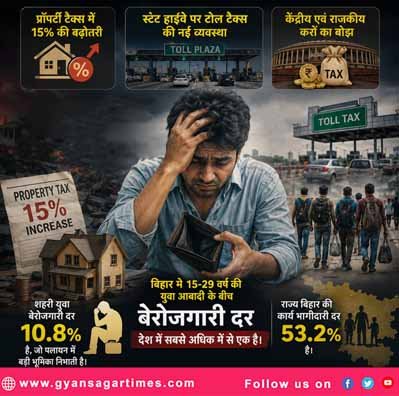
वर्तमान समय में राज्य बिहार की आवाम के मन में एक सवाल गूंज रहा है. एक तरफ राज्य में रोजगार के अवसर सिमटते जा रहे हैं, वहीं दूसरी ओर सत्ताधारी वर्ग विकास के नाम पर करों का बोझ लगातार बढ़ा रहें हैं. प्रॉपर्टी टैक्स में 15 प्रतिशत की बढ़ोतरी, स्टेट हाईवे पर टोल टैक्स की नई व्यवस्था, और पहले से ही केंद्रीय एवं राजकीय करों के बोझ तले दबी आवाम. इस तस्वीर को देखकर ऐसा लगता है कि, अब आम आदमी की ही जेब को निशाना बनाते हुए उनके जख्मों पर नमक छिड़का जा रहा है.
बताते चलें कि, राज्य बिहार उन राज्यों में से एक ऐसा राज्य है जहाँ की आवाम रोजगार की तलाश में बड़ी संख्या में लोग अन्य राज्यों का रुख करते हैं. वर्तमान समय तक राज्य बिहार की आजीविका का मुख्य श्रोत कृषि है, लेकिन कृषि से होने वाली आय सीमित है. औद्योगिक निवेश अपेक्षाकृत कम होने और संगठित क्षेत्र में रोजगार के अवसर सीमित रहने के कारण बड़ी संख्या में युवा पलायन को मजबूर हो रहें हैं. वहीं, दूसरी तरफ बिहार में 15-29 वर्ष की युवा आबादी के बीच बेरोजगारी दर देश में सबसे अधिक में से एक है. शहरी युवा बेरोजगारी दर 10.8 प्रतिशत है, जो पलायन में बड़ी भूमिका निभाती है. वहीं, राज्य बिहार की कार्य भागीदारी दर करीब 53.2 प्रतिशत है, जो राष्ट्रीय औसत 62.1 प्रतिशत से काफी कम है. राज्य बिहार के युवाओं में वर्तमान समय तक सरकारी नौकरियां का ही सबसे अधिक आकर्षक हैं लेकिन वे भी सीमित हैं, वहीँ दूसरी तरफ निजी क्षेत्र में रोजगार का आभाव लगातार बना हुआ है.
करीब 30 वर्षों के बाद पटना नगर निगम की कुंभकर्णी नींद खुली और वर्ष 1995 के बाद पहली बार पटना नगर निगम ने वित्तीय वर्ष 2026-27 के लिए सभी श्रेणियों की संपत्तियों के वार्षिक किराया मूल्य में 15 प्रतिशत की बढ़ोतरी की. नई दरें 24 जून 2026 से पूरे नगर निगम क्षेत्र में लागू हो गई हैं. बिहार नगरपालिका अधिनियम, 2007 की धारा 127 के तहत विभिन्न श्रेणियों की होल्डिंग्स के प्रति वर्ग फुट निर्मित क्षेत्र के किराया मूल्य में प्रत्येक पांच वर्ष पर न्यूनतम 15 प्रतिशत वृद्धि का प्रावधान है. साथ ही, राज्य सरकार की पूर्व स्वीकृति से नगर निकाय किसी भी समय किराया मूल्य और दरों में संशोधन कर सकता है. हालांकि, पिछले 13 वर्षों से संपत्ति कर का वार्षिक मूल्यांकन नहीं हो सका था, जबकि नियमानुसार प्रत्येक पांच वर्ष पर यह होना चाहिए था.
नगर विकास एवं आवास विभाग के अनुसार, वर्ष 2025-26 में शहरी निकायों से 908 करोड़ रुपये से अधिक का राजस्व संग्रह हुआ है. इसमें अकेले होल्डिंग टैक्स मद में 565 करोड़ रुपये से अधिक की वसूली हुई है. राज्य के कुल 19 नगर निगम, 89 नगर परिषद एवं 156 नगर पंचायतों से यह राजस्व वसूला गया है. होल्डिंग टैक्स वसूली का लक्ष्य 533 करोड़ रुपये था, जबकि 565 करोड़ रुपये से अधिक की वसूली की गई है. वहीँ दूसरी ओर नगर निगम का दावा है कि बढ़े हुए राजस्व का उपयोग सड़क, जल निकासी और अन्य बुनियादी सुविधाओं के विकास में किया जाएगा, लेकिन जनता के सामने सवाल यह है कि आखिर इस बढ़े हुए टैक्स का लाभ उन्हें कब और कैसे मिलेगा?
केंद्रीय नेशनल हाईवे (NH) पर पहले से ही भारी-भरकम टोल टैक्स चुका रही जनता को अब बिहार सरकार ने एक और झटका देते हुए स्टेट हाईवे टैक्स लगाया है. प्रॉपर्टी टैक्स के बाद सरकार ने स्टेट हाईवे, बड़े पुलों और बाईपास पर भी टोल टैक्स लागू करने की मंजूरी दे दी है. कैबिनेट ने ‘पथ उपयोगकर्ता शुल्क नियमावली-2026’ को मंजूरी दी, जो केंद्रीय टोल टैक्स की तर्ज पर राज्य की सड़कों पर वसूला जाएगा. नई दरों के अनुसार – कार, जीप जैसे चौपहिया वाहनों को प्रति 100 किलोमीटर की यात्रा के लिए 125 रुपये टोल टैक्स देना होगा वहीं, बस और ट्रक से इतनी ही दूरी के लिए 425 रुपये वसूले जाएंगे.
इस टैक्स के कारण फल, सब्जियां और अनाज जैसी बुनियादी चीजें और महंगी हो जाएंगी. चुकि, एक जिले से दूसरे जिले या अनुमंडल तक जाने वाले छोटे वाहनों, किसानों के ट्रैक्टरों और लोकल ट्रांसपोर्ट पर इसका सीधा असर पड़ेगा. वहीँ, सरकार का कहना है कि, इससे सड़क निर्माण और रखरखाव के लिए धन उपलब्ध होगा. यदि करों से प्राप्त राशि का उपयोग पारदर्शी ढंग से सार्वजनिक सेवाओं में किया जाए और नागरिकों को उसके स्पष्ट परिणाम दिखाई दें, तो करों की स्वीकार्यता बढ़ सकती है.
सरकार विकास के नाम पर नए-नए टैक्स लगा रही है, लेकिन आंकड़े बताते हैं कि बिहार का विकास दर राष्ट्रीय औसत से नीचे रहा है. वर्ष 2012-13 से वर्ष 2021-22 के बीच बिहार की वास्तविक GSDP वृद्धि दर औसतन 5 प्रतिशत रही, जबकि राष्ट्रीय औसत 5.6 प्रतिशत थी. इससे भी चिंताजनक बात यह है कि बिहार की भारत की GDP में हिस्सेदारी 1990-91 के 3.6 प्रतिशत से घटकर 2021-22 में 2.8 प्रतिशत रह गई. प्रति व्यक्ति आय की स्थिति और भी खराब है. वर्ष 2021-22 में बिहार की प्रति व्यक्ति आय राष्ट्रीय औसत का मात्र 30 प्रतिशत थी. इसके अलावा, बिहार का कर्ज-से-GSDP अनुपात 2025-26 में 37 प्रतिशत रहने का अनुमान है, जो समान राज्यों की तुलना में अधिक है. ज्ञात है कि, ब्याज भुगतान अकेले राजस्व प्राप्तियों का 9 प्रतिशत से अधिक है वहीं, वेतन, पेंशन और ब्याज राजस्व प्राप्तियों का लगभग 42 प्रतिशत हिस्सा ले लेते हैं, जिससे विकासात्मक खर्च के लिए बहुत कम गुंजाइश बचती है.
किसी भी लोकतांत्रिक व्यवस्था में कर विकास का महत्वपूर्ण माध्यम होते हैं, लेकिन उनकी सफलता इस बात पर निर्भर करती है कि नागरिकों को उसके बदले क्या सुविधाएँ और अवसर प्राप्त होते हैं. यदि जनता को रोजगार, बेहतर आधारभूत संरचना और गुणवत्तापूर्ण सार्वजनिक सेवाएँ मिलती हैं, तो करों की स्वीकार्यता बढ़ती है. वर्तमान समय में राज्य बिहार की आवाम का यह सवाल आज बेहद प्रासंगिक है. एक तरफ बेरोजगारी और पलायन की विवशता, दूसरी तरफ प्रॉपर्टी टैक्स, स्टेट हाईवे टोल, और केंद्रीय-राजकीय करों का बढ़ता बोझ – जनता के पास अब और क्या बचा है?
राज्य बिहार में प्रॉपर्टी टैक्स में 15 प्रतिशत की वृद्धि व स्टेट हाईवे टैक्स “गन्ने की सिठ्ठी से रस निकालने” जैसी ही है. पहले से ही केंद्रीय करों (GST, आयकर, उत्पाद शुल्क) और राज्य करों (VAT, स्टांप ड्यूटी, रजिस्ट्री शुल्क) के बोझ से दबी जनता पर यह एक और आर्थिक भार है. हालांकि सरकार का कहना है कि यह 31 वर्षों में पहली वृद्धि है और नियमानुसार इससे अधिक होनी चाहिए थी, लेकिन यह भी सत्य है कि इस अवधि में जनता की आय में उस अनुपात में वृद्धि नहीं हुई है जितनी महंगाई और अन्य करों में हुई है.
वर्तमान समय में राज्य बिहार के हर आवाम की नियति बन चुकी है “नंगा नहायेगा क्या, निचोड़ेगा क्या?”. सुशासन और विकास के दावों के शोर में राज्य बिहार के आवाम की हर सुबह नए टैक्स के बोझ तले ही जागना पड़ रहा है. उपर लिखी गई लोकक्ति “गन्ने की सिठ्ठी से रस निकलने की तैयारी” जैसा यह कदम यह दिखाता है कि जब सरकारी खजाने खाली होते हैं, तो नीतियां जन-कल्याणकारी होने के बजाय केवल राजस्व दोहन का जरिया बन जाती हैं.
संजय कुमार सिंह,
पोलिटिकल एडिटर.
========== ========= ===========
Preparing to extract juice from the sugarcane stalk?
In present-day Bihar, on one hand, there is a wave of development, while on the other, the people are groaning under the burden of taxes. The current situation and circumstances remind me of the proverb, “Preparing to extract juice from the sugarcane stalk.” Indeed, the economy of Bihar has long been grappling with a paradox. On one hand, there is a growth rate and tall buildings of infrastructure on paper, while on the other hand, there is a lack of industries and widespread unemployment. A large population of the state is still forced to migrate to other states (Delhi, Mumbai, Gujarat) for livelihood.
Currently, a question resonates in the minds of the people of Bihar. On one hand, employment opportunities in the state are shrinking, while on the other, the ruling class is continuously increasing the tax burden in the name of development. A 15 percent increase in property tax, a new system of toll tax on state highways, and a population already burdened by central and state taxes. Looking at this picture, it seems that the common man’s pockets are being targeted, adding salt to his wounds.
It should be noted that Bihar is one of those states where a large number of people migrate to other states in search of employment. Currently, agriculture is the main source of livelihood for Bihar, but income from agriculture is limited. Relatively low industrial investment and limited employment opportunities in the organized sector are forcing a large number of youth to migrate. Meanwhile, Bihar’s unemployment rate among the youth aged 15-29 is one of the highest in the country. The urban youth unemployment rate is 10.8 percent, which plays a major role in migration. Meanwhile, Bihar’s work participation rate is approximately 53.2 percent, significantly lower than the national average of 62.1 percent. Currently, government jobs are the most attractive option for Bihar’s youth, but even these are limited. Meanwhile, private sector employment remains a persistent shortage.
After nearly 30 years, the Patna Municipal Corporation has awakened from its slumber. For the first time since 1995, it has increased the annual rental value of all categories of properties by 15 percent for the financial year 2026-27. The new rates have come into effect across the entire municipal corporation area from June 24, 2026. Section 127 of the Bihar Municipal Act, 2007, provides for a minimum 15 percent increase in the rental value per square foot of built-up area for various categories of holdings every five years. Furthermore, the municipal body can revise the rental value and rates at any time with prior approval from the state government. However, annual property tax assessments have not been conducted for the past 13 years, as required by law, every five years.
According to the Urban Development and Housing Department, revenue collections from urban bodies in 2025-26 exceeded ₹908 crore, with over ₹565 crore collected from holding tax alone. This revenue has been collected from a total of 19 municipal corporations, 89 municipal councils, and 156 town panchayats in the state. The target for holding tax collection was ₹533 crore, but over ₹565 crore has been collected. Meanwhile, the municipal corporations claim that the increased revenue will be used for the development of roads, drainage, and other infrastructure. However, the question facing the public is when and how will they benefit from this increased tax?
The Bihar government has dealt another blow to the public already paying hefty toll taxes on central National Highways (NHs) by imposing a state highway tax. Following the property tax, the government has also approved the imposition of toll taxes on state highways, major bridges, and bypasses. The cabinet approved the “Road User Fee Rules-2026,” which will be levied on state roads in a manner similar to the central toll tax. According to the new rates, four-wheelers like cars and jeeps will have to pay Rs 125 as toll tax for every 100 km of travel, while buses and trucks will be charged Rs 425 for the same distance.
This tax will make basic commodities like fruits, vegetables, and grains more expensive. This will directly impact small vehicles, farmers’ tractors, and local transport traveling between districts or subdivisions. The government claims this will provide funds for road construction and maintenance. If tax revenue is used transparently for public services and citizens see clear results, the acceptability of taxes may increase.
The government is imposing new taxes in the name of development, but data shows that Bihar’s growth rate has remained below the national average. Between 2012-13 and 2021-22, Bihar’s real GSDP growth rate averaged 5 percent, compared to the national average of 5.6 percent. Even more worrying is that Bihar’s share of India’s GDP has declined from 3.6 percent in 1990-91 to 2.8 percent in 2021-22. The per capita income situation is even worse. In 2021-22, Bihar’s per capita income was only 30 percent of the national average. Furthermore, Bihar’s debt-to-GSDP ratio is projected to be 37 percent in 2025-26, higher than comparable states. Interest payments alone account for more than 9 percent of revenue receipts, while salaries, pensions, and interest account for approximately 42 percent of revenue receipts, leaving little room for developmental spending.
Taxes are a crucial tool for development in any democratic system, but their success depends on the benefits and opportunities citizens receive in return. Access to employment, improved infrastructure, and quality public services increases the acceptability of taxes. This question facing the people of Bihar is extremely relevant today. With unemployment and the pressure to migrate on the one hand, and the increasing burden of property taxes, state highway tolls, and central and state taxes on the other—what more are the people left with? In Bihar, the 15 percent increase in property tax and state highway tax is like “extracting juice from a cane.” This is another financial burden on a population already burdened by central taxes (GST, income tax, excise duty) and state taxes (VAT, stamp duty, and registry fees). Although the government claims this is the first increase in 31 years and should have been higher, it’s also true that public income has not increased in proportion to the rise in inflation and other taxes during this period.
Currently, “Will you bathe naked, will you squeeze anything?” has become the fate of every citizen of Bihar. Amidst the noise of claims of good governance and development, the people of Bihar are waking up every morning under the burden of new taxes. Like the aforementioned proverb, “Preparing to extract juice from a cane,” this move demonstrates that when government coffers are empty, policies become mere revenue generators rather than public welfare initiatives.
Sanjay Kumar Singh,
Political Editor.