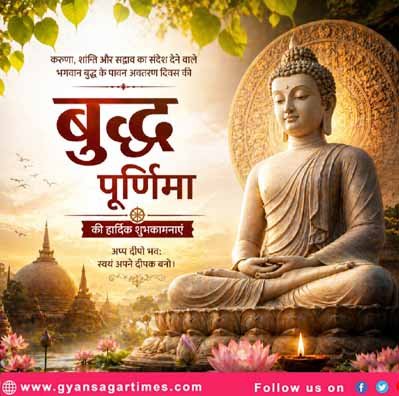
‘बुद्धं शरणं गच्छामि, धर्मं शरणं गच्छामि, संघं शरणं गच्छामि.’
बैशाखी पूर्णिमा जिसे बुद्ध पूर्णिमा के रूप में भी जाना जाता है. यह केवल हिन्दू और बौद्ध अनुयायियों के लिए ही नहीं, बल्कि संपूर्ण मानवता के लिए एक आध्यात्मिक प्रकाश स्तंभ है. यह पवित्र दिन भगवान बुद्ध के जन्म, ज्ञानोदय (निर्वाण) और मृत्यु (परिनिर्वाण) तीनों की स्मृति में मनाया जाता है. यह अद्भुत संयोग इसे बौद्ध धर्म में अत्यंत पवित्र और महत्वपूर्ण बनाता है. यह पर्व हमें बुद्ध के उपदेशों की प्रासंगिकता को समकालीन संदर्भों में समझने का अवसर प्रदान करता है.
बुद्ध का वास्तविक नाम सिद्धार्थ गौतम है जिनका जन्म लुम्बिनी (नेपाल) में एक राजकुमार के रूप में हुआ था. जिन्होंने संसार की पीड़ा को समझा और कठोर तपस्या के पश्चात पीपल के वृक्ष के नीचे उन्हें ‘बुद्धत्व’ की प्राप्ति हुई थी. उन्होंने करीब 80 वर्ष की आयु में कुशीनगर, उत्तर प्रदेश में अपना अंतिम उपदेश देते हुए संसार से विदा ली थी. वर्तमान समय में बुद्ध पूर्णिमा पर्व का आयोजन भारत और पूरे एशिया (श्रीलंका, म्यांमार, थाईलैंड, तिब्बत, जापान, चीन) में श्रद्धा से मनाया जाता है वहीं, भारत में भी विशेष रूप से सारनाथ, बोधगया, कुशीनगर और लुंबिनी में विशाल आयोजन किया जाता हैं.
वर्तमान समय के युद्धग्रस्त और संघर्षशील विश्व में बुद्ध के ‘अहिंसा परमो धर्मः’ का सूत्र प्रासंगिक नजर आता है. जहां बुद्ध ने अंधविश्वासों, कर्मकांडों और ईश्वरीय हस्तक्षेप के सिद्धांत को नकारकर प्रत्यक्ष, अनुमान, उपमान और आगम को ही प्रमाण माना है. वहीं, मध्यम मार्ग में अति भोगविलास और अति कठोर तपस्या के बीच सन्तुलन का मार्ग आज के उपभोक्तावादी और तनावग्रस्त समाज के लिए सबसे कारगर उपाय माना जाता है. बुद्ध पूर्णिमा के दिन लोग भोग-विलास के बजाय गहन अध्यात्म, ध्यान और शील-समाधि-प्रज्ञा पर ध्यान केंद्रित करते हैं. बुद्ध पूर्णिमा का पर्व हमें चार आर्य सत्य (दुख, दुख समुदय, दुख निरोध, मार्ग) और अष्टांगिक मार्ग (सम्यक दृष्टि, संकल्प, वाणी, कर्म, आजीविका, व्यायाम, स्मृति, समाधि) को अपनाने का भी संदेश देता है.
बुद्ध ने जाति-पाति, ऊँच-नीच और वर्ण-व्यवस्था का विरोध किया साथ ही उन्होंने अपने संघ में भी क्षत्रिय, ब्राह्मण, वैश्य, शूद्र, स्त्री और पुरुष थे. वहीं, वर्तमान समय के भारतवर्ष में आज भी जातिगत भेद जीवित हैं. वर्तमान समय के भागदौड़ भरे और तनावपूर्ण युग में बुद्ध के विचार पहले से कहीं अधिक प्रासंगिक माने जाते है. बुद्ध के ‘विपश्यना ध्यान’ को वैश्विक स्तर पर मानसिक शांति और तनाव प्रबंधन की तकनीक के रूप में मान्यता मिली है. साथ ही युद्ध और संघर्षों के बीच बुद्ध का ‘अहिंसा परमो धर्म:’ का संदेश ही विश्व शांति का एकमात्र विकल्प है. उन्होंने वृक्षों (बोधिवृक्ष), जल, पशु-पक्षी और प्रकृति के प्रति अहिंसा और प्रेम का उपदेश दिया। बुद्ध पूर्णिमा पर पेड़-पौधे लगाना, पशुओं को दाना-पानी देना, और पर्यावरण संरक्षण का संकल्प लेना पर्व का आधुनिक और आवश्यक परिवर्तन है.
बताते चलें कि, वर्तमान समय में बुद्ध पूर्णिमा का आयोजन कहीं-न-कहीं कर्मकांडों और दिखावे की भेंट चढ़ता जा रहा है. कई स्थानों पर केवल मूर्ति-पूजा, फूल-चढ़ाना और प्रसाद वितरण तक ही सीमित हो गया है। वहां, सार्थक ध्यान और शील-पाठ का अभाव देखा जा रहा है. एक तरफ राजनीतिक दलों द्वारा बुद्ध के प्रतीकों (जैसे धर्मचक्र, अशोक स्तंभ) का उपयोग वोट बैंक के लिए किया जाता है वहीं, दूसरी तरफ बौद्ध धर्म में व्यावसायिकता बढ़ रही है.
बैशाखी पूर्णिमा केवल एक धार्मिक त्योहार ही नहीं है, बल्कि यह शांति, करुणा और सहिष्णुता के मूल्यों का प्रतीक भी है. यह दिन हमें आत्मनिरीक्षण करने और भगवान बुद्ध की शिक्षाओं को अपने जीवन में उतारने के लिए प्रेरित करता है. बैशाखी पूर्णिमा हमें याद दिलाती है कि सच्ची खुशी भौतिक सुखों में नहीं, बल्कि आध्यात्मिक जागृति और दूसरों के प्रति सेवा भाव में निहित है.
========== ========= ===========
Buddha Purnima…
‘Buddham Sharanam Gacchami, Dhammam Sharanam Gacchami, Sangham Sharanam Gacchami.’
Vaishakhi Purnima—also known as Buddha Purnima—serves as a spiritual beacon not only for Hindu and Buddhist followers but for all of humanity. This sacred day is celebrated to commemorate three pivotal events in the life of Lord Buddha: his birth, his enlightenment (Nirvana), and his passing (Parinirvana). This remarkable coincidence renders the day profoundly sacred and significant within the Buddhist tradition. This festival offers us an opportunity to appreciate the enduring relevance of Buddha’s teachings in a contemporary context.
Buddha’s birth name was Siddhartha Gautama; he was born as a prince in Lumbini, Nepal. He came to comprehend the suffering inherent in the world and, following a period of rigorous asceticism, attained ‘Buddhahood’ while meditating beneath a Peepal tree. He departed from this world at the age of approximately 80, having delivered his final discourse in Kushinagar, Uttar Pradesh. Today, Buddha Purnima is celebrated with deep reverence across India and throughout Asia—including Sri Lanka, Myanmar, Thailand, Tibet, Japan, and China. Within India itself, grand celebrations are organized, particularly in the pilgrimage sites of Sarnath, Bodh Gaya, Kushinagar, and Lumbini.
In our current world—plagued by war and conflict—Buddha’s maxim, ‘Ahimsa Paramo Dharma’ (Non-violence is the supreme duty), appears more relevant than ever. Buddha rejected superstition, ritualism, and the doctrine of divine intervention, instead accepting only direct perception, inference, analogy, and scriptural testimony as valid means of knowledge. Furthermore, his ‘Middle Path’—which advocates a balance between excessive indulgence in worldly pleasures and extreme asceticism—is regarded as the most effective remedy for today’s consumerist and stress-ridden society. On the day of Buddha Purnima, people turn their focus away from material indulgence and toward deep spirituality, meditation, and the cultivation of virtue, concentration, and wisdom. The festival of Buddha Purnima conveys to us the message of embracing the Four Noble Truths (Suffering, the Origin of Suffering, the Cessation of Suffering, and the Path) and the Noble Eightfold Path (Right View, Right Intention, Right Speech, Right Action, Right Livelihood, Right Effort, Right Mindfulness, and Right Concentration).
Buddha opposed the caste system, social hierarchies, and the Varna order; moreover, his Sangha (monastic community) comprised individuals from all backgrounds—Kshatriyas, Brahmins, Vaishyas, and Shudras—as well as both men and women. In contrast, caste-based discrimination remains a persistent reality in contemporary India. In today’s fast-paced and stressful era, Buddha’s teachings are considered more relevant than ever before. Buddha’s practice of ‘Vipassana meditation’ has gained global recognition as a technique for achieving mental peace and managing stress. Furthermore, amidst wars and conflicts, Buddha’s message of ‘Ahimsa Paramo Dharma’ (Non-violence is the Supreme Duty) stands as the sole path to global peace. He preached non-violence and love towards trees (such as the Bodhi tree), water bodies, animals, birds, and nature itself. On Buddha Purnima, the acts of planting trees, providing food and water to animals, and pledging to protect the environment represent a modern and essential evolution of the festival’s observance.
It is worth noting that, in present times, the observance of Buddha Purnima is increasingly falling prey to mere rituals and ostentation. In many places, the celebration has become confined solely to idol worship, offering flowers, and distributing Prasad (sacred food offerings). Consequently, a noticeable absence of meaningful meditation and the study of ethical precepts (Sheel) is being observed. On one hand, political parties utilize Buddhist symbols (such as the Dharmachakra and the Ashoka Pillar) to consolidate their vote banks; on the other hand, commercialism is on the rise within the realm of Buddhism itself.
Vaishakhi Purnima is not merely a religious festival; it also serves as a symbol of the values of peace, compassion, and tolerance. This day inspires us to engage in self-introspection and to integrate the teachings of Lord Buddha into our daily lives. Vaishakhi Purnima reminds us that true happiness lies not in material comforts, but in spiritual awakening and in cultivating a spirit of service towards others.