सिंहासनगता नित्यं पद्माश्रितकरद्वया|
शुभदास्तु सदा देवी स्कन्दमाता यशस्विनी||
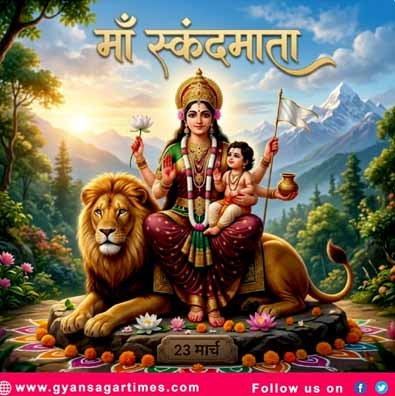
नवरात्रि के पांचवें दिन मां स्कंदमाता की उपासना की जाती है. भगवान स्कंद की माता होने के कारण से ही माँ अम्बे को स्कंदमाता, पार्वती और उमा के नाम से भी जाना जाता है. चुकिं, भगवान ‘कुमार कार्तिकेय’ का ही दूसरा नाम “स्कंद” भी है. भगवान कार्तिकेय प्रसिद्ध देवासुर संग्राम में देवताओं के सेनापति भी बने थे. माँ स्कंदमाता की चार भुजाएं हैं, इनके हाथों में कमल पुष्प और वरमुद्रा है. इनका वर्ण पूर्णतः सफेद हैं और ये कमल के आसन पर विराजमान है इसीलिए इन्हें पद्मासना देवी भी कहा जाता है, और इनका भी वाहन सिंह है. माँ अपने भक्तों की समस्त मनोकामनाओं की पूर्ति करती हैं, साथ ही मोक्ष के द्वार खोलने वाली माता परम सुखदायी हैं.
नवरात्रि के पांचवे दिन स्कंदमाता की अलसी (तीसी) से औषधी के रूप में पूजा होती है चुकिं, अलसी एक औषधि होती है जिससे वात, पित्त, कफ जैसी मौसमी बीमारियों का इलाज होता है. इस औषधि को नवरात्रि में माँ स्कंदमाता को चढ़ाने से मौसमी रोगों से मुक्ति मिल जाती है. शास्त्रों के अनुसार नवरात्रि के पाँचवें दिन का महत्व पुष्कल बताया गया है. इस चक्र में अवस्थित मन वाले साधक की समस्त बाह्य क्रियाओं एवं चित्तवृत्तियों का लोप हो जाता है. स्कंद माता को पार्वती एवं उमा के नाम से भी जाना जाता है. स्कंदमाता की आराधना के फल स्वरूप चित्त (मन) को शांति मिलती है.
साधक का मन समस्त लौकिक, सांसारिक, मायिक बंधनों से विमुक्त होकर पद्मासना माँ स्कंदमाता के स्वरूप में पूर्णतः तल्लीन होता है, और इस समय साधक को पूर्ण सावधानी के साथ उपासना की ओर आगे बढना चाहिए. माँ स्कंदमाता की उपासना से साधक की समस्त इच्छाएँ पूर्ण हो जाती हैं, और इस मृत्युलोक में ही उसे परम शांति और सुख का अनुभव होने लगता है साथ ही मोक्ष का द्वार भी सुलभ हो जाता है. स्कंदमाता की उपासना से बालरूप स्कंद भगवान की उपासना भी हो जाती है.
मन्त्र: –
या देवी सर्वभूतेषु माँ स्कंदमाता रूपेण संस्थिता।
नमस्तस्यै नमस्तस्यै नमस्तस्यै नमो नमः।।
पूजा के नियम: –
माँ स्कंदमाता की उपासना करते समय पीले या लाल रंग के वस्त्र पहने और माँ को लाल-पीले व नील फूलों से चंदन, अक्षत, दूध, दही, शक्कर और पंचामृत अर्पित करें, साथ ही माँ की मूर्ति का ध्यान करते हुए, उनके मन्त्रों का जाप करें.
======== ============ ===========
Mother Skandamata…
Simhasanagata nityam padmashritakaradvaya |
Shubhadasthu sada Devi Skandamata Yashasvini ||
On the fifth day of Navaratri, Mother Skandamata is worshipped. Since she is the mother of Lord Skanda, Mother Ambe is also known by the names Skandamata, Parvati, and Uma. This is because “Skanda” is another name for Lord ‘Kumar Kartikeya.’ Lord Kartikeya also served as the commander-in-chief of the Devas (gods) during the famous war between the gods and the demons (Devasura Sangram). Mother Skandamata possesses four arms; her hands hold lotus flowers and display the Varamudra (the gesture of granting boons). Her complexion is pure white, and she is seated upon a lotus throne; for this reason, she is also referred to as Padmasana Devi (the Goddess seated on a lotus). Her mount is the lion. The Mother fulfills all the desires of her devotees; furthermore, as the opener of the gates to Moksha (salvation), she is the bestower of supreme bliss.
On the fifth day of Navaratri, Skandamata is worshipped using flaxseeds (Alsi or Tisi) as a medicinal offering. This is because flaxseed is a medicinal remedy used to treat seasonal ailments associated with imbalances of Vata, Pitta, and Kapha. Offering this medicinal herb to Mother Skandamata during Navaratri is believed to grant relief from seasonal illnesses. According to the scriptures, the fifth day of Navaratri holds immense significance. For a spiritual seeker (Sadhak) whose mind is centered in this specific spiritual chakra, all external activities and mental fluctuations (Chittavrittis) dissolve away. Skandamata is also known by the names Parvati and Uma. As a result of worshipping Skandamata, the mind (Chitta) attains profound peace.
The seeker’s mind becomes liberated from all worldly, material, and illusory (Mayic) bonds, becoming completely absorbed in the divine form of Padmasana Mother Skandamata. During this phase, the seeker must proceed with their worship with utmost caution and mindfulness. Through the worship of Mother Skandamata, all of a seeker’s desires are fulfilled; furthermore, while still in this mortal realm, they begin to experience supreme peace and happiness, and the path to Moksha becomes easily accessible to them. Worship of Skandamata is tantamount to worshipping Lord Skanda in his child form.
Mantra: –
Ya Devi Sarvabhuteshu Ma Skandamata Rupena Samsthita.
Namastasyai Namastasyai Namastasyai Namo Namah.
Worship Guidelines: –
While worshipping Mother Skandamata, one should wear yellow or red attire. Offer red, yellow, and blue flowers to the Mother, along with sandalwood paste, Akshat (unbroken rice grains), milk, yogurt, sugar, and Panchamrit. Simultaneously, while meditating upon the image of the Mother, chant her sacred mantras.