
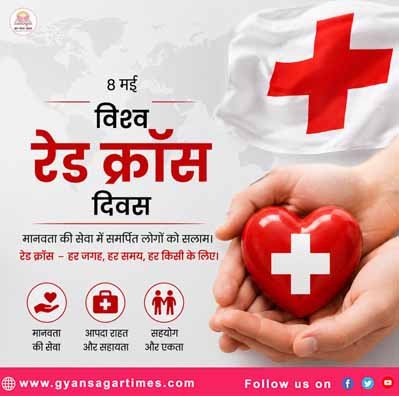
हर वर्ष 08 मई को विश्व रेड क्रॉस दिवस मनाया जाता है. यह दिन मानवता, करुणा और सेवा की उस परंपरा को सम्मानित करता है जिसे हेनरी ड्यूनां ने वर्ष 1863 में रेड क्रॉस आंदोलन की स्थापना करके शुरू किया था. इस दिवस का मुख्य उद्देश्य अंतरराष्ट्रीय रेड क्रॉस और रेड क्रीसेंट सोसाइटी के मानवीय कार्यों के प्रति जागरूकता बढ़ाना और उनके योगदान को सम्मानित करना है.
रेड क्रॉस की स्थापना का विचार सर्वप्रथम वर्ष 1859 के सोलफेरिनो युद्ध के दौरान घायल सैनिकों की दुर्दशा देखकर स्विस व्यवसायी सर हेनरी ड्यूनेंट को आया था. उन्होंने स्थानीय महिलाओं को संगठित कर बिना किसी भेदभाव के घायल सैनिकों सेवा शुरू की. इस अनुभव के बाद ड्यूनेंट ने ‘सोलफेरिनो की स्मृति’ नामक पुस्तक लिखी. जिसमें उन्होंने दो प्रस्ताव रखें. इन्हीं प्रस्तावों के परिणामस्वरूप वर्ष 1864 में जिनेवा कन्वेंशन का जन्म हुआ और रेड क्रॉस की स्थापना हुई थी.
हेनरी ड्यूनेंट का जन्म 8 मई 1828 को जिनेवा, स्विट्जरलैंड में हुआ था और उनका निधन 30 अक्टूबर 1910 को हाइडेन, स्विट्जरलैंड में हुआ. हेनरी ड्यूनेंट को को उनके योगदान के लिए 1901 में नोबेल शांति पुरस्कार से सम्मानित किया गया था. बताते चलें कि, रेड क्रॉस आंदोलन सात मूलभूत सिद्धांतों पर टिका है, जो इसे विश्व के किसी अन्य संगठन से अद्वितीय बनता है. इसके मुख्य सिद्धांत हैं – मानवता, निष्पक्षता, तटस्थता, स्वतंत्रता, स्वैच्छिक सेवा, एकता और सार्वभौमिकता. बताते चलें कि, भारत में रेड क्रॉस सोसाइटी की स्थापना वर्ष 1920 में हुई थी. रेड क्रॉस सोसाइटी ने स्वतंत्रता आंदोलन के दौरान और उसके बाद आपदा प्रबंधन व स्वास्थ्य सेवाओं में महत्वपूर्ण भूमिका निभाई है.
वर्तमान समय में पूरी दुनिया में युद्धों, आतंकवाद, प्राकृतिक आपदाओं (भूकंप, बाढ़, सुनामी), महामारियों (कोविड-19) और जलवायु परिवर्तन जैसे संकटों का सामना कर रही है. ऐसे में रेड क्रॉस की प्रासंगिकता पहले से कहीं अधिक बढ़ गई है. वहीं, दूसरी तरफ कई चुनौतियां भी है उदाहरण – कई बार युद्धग्रस्त क्षेत्रों में निष्पक्षता बनाए रखना कठिन हो जाता है. बढ़ती आपदाओं और महामारी के बीच सीमित संसाधनों से काम करना साथ ही राहत कार्यों में लगे कार्यकर्ताओं को अक्सर जान का जोखिम भी उठाना पड़ता है.
दुनिया के कई देशों में रेड क्रॉस की आलोचनाएं भी हुई है. उदाहरण – रेड क्रॉस पर मानवीय त्रासदी के प्रति ‘मूक दर्शक’ बने रहने का आरोप लगता रहा है. द्वितीय विश्व युद्ध के दौरान यहूदी नरसंहार के प्रति अपनी चुप्पी के लिए संगठन की आलोचना हुई थी. वहीं, संघर्ष क्षेत्रों में रेड क्रॉस शिशु शांतिरक्षक बल के प्रतीक (रेड क्रॉस का चिन्ह) का अनादर होता है, जिसमें कई कर्मी भी शहीद हुए थे.
विश्व रेड क्रॉस दिवस मात्र समारोह का दिन नहीं है, बल्कि यह आत्मनिरीक्षण का अवसर है कि हमने हेनरी ड्यूनेंट के सपने को कितना साकार किया है? यह मानवता की उस लौ को जीवित रखने का संकल्प है जो हर संकट में हमें राह दिखाती है.
========== ========= ===========
World Red Cross Day…
World Red Cross Day is observed every year on May 8th. This day honors the tradition of humanity, compassion, and service that Henry Dunant initiated in 1863 by founding the Red Cross movement. The primary objective of this day is to raise awareness regarding the humanitarian work of the International Red Cross and Red Crescent Societies and to pay tribute to their contributions.
The idea to establish the Red Cross first occurred to the Swiss businessman Sir Henry Dunant in 1859, after witnessing the plight of wounded soldiers during the Battle of Solferino. He organized local women to provide care to the wounded soldiers without any discrimination. Following this experience, Dunant authored a book titled A Memory of Solferino, in which he put forward two proposals. It was as a result of these very proposals that the Geneva Convention came into existence in 1864, leading to the establishment of the Red Cross.
Henry Dunant was born on May 8, 1828, in Geneva, Switzerland, and passed away on October 30, 1910, in Heiden, Switzerland. For his contributions, Henry Dunant was awarded the Nobel Peace Prize in 1901. It is worth noting that the Red Cross movement is anchored in seven fundamental principles, which distinguish it as unique among organizations worldwide. Its core principles are: Humanity, Impartiality, Neutrality, Independence, Voluntary Service, Unity, and Universality. Furthermore, the Red Cross Society was established in India in 1920. The Red Cross Society has played a pivotal role in disaster management and healthcare services—both during the freedom struggle and in the years that followed.
In the present era, the entire world is grappling with crises such as wars, terrorism, natural disasters (earthquakes, floods, and tsunamis), pandemics (COVID-19), and climate change. In such a context, the relevance of the Red Cross has become greater than ever before. On the other hand, there are also numerous challenges; for instance, maintaining impartiality in war-torn regions often proves difficult. Amidst escalating disasters and pandemics, operations must be conducted with limited resources, and relief workers engaged in these efforts frequently face grave risks to their own lives.
The Red Cross has also faced criticism in various countries around the world. For example, the organization has frequently been accused of remaining a “silent spectator” in the face of humanitarian tragedies. During the Second World War, the organization drew criticism for its silence regarding the Holocaust. Furthermore, in conflict zones, the Red Cross symbol—a universal emblem of peace and protection—is often desecrated, a violation that has resulted in the loss of life of many personnel.
World Red Cross Day is not merely a day for celebration, but rather an occasion for introspection: to reflect on the extent to which we have realized the vision of Henry Dunant. It serves as a pledge to keep alive that flame of humanity which guides us through every crisis.