|
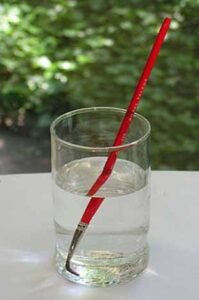
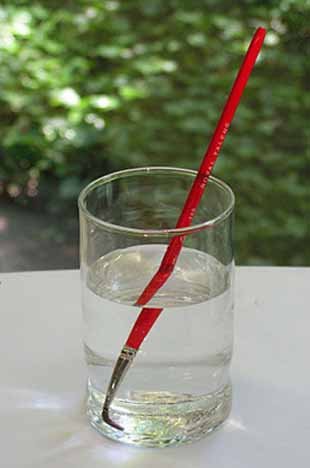
1. What is the triple point of water? = 273.16° Kelvin. 2. The sun appears red when it sets. = Due to scattering. 3. What is the speed of a stationary wave? = When two waves of equal amplitude and same frequency travel in the same line in opposite directions with the same speed in the medium, the resultant wave resulting from their superposition does not progress with time. 4. On what principle does optical fibre work? = Total internal reflection. 5. Why does a pencil placed in water appear bent? = Due to refraction of light. 6. Which is the best conductor of electricity? = Silver. 7. What is used as the core of an electromagnet? = Soft Iron. 8. What type of energy is contained in a dry cell? = Chemical energy. 9. Where is a nuclear pile used? = To initiate and control the chain reaction of nuclear fission. 10. Where is a nuclear pile used? = To initiate and control the chain reaction of nuclear fission. 11. Where do stars get their energy from? = Nuclear fusion. 12. Who discovered the principle of ‘Law of Floating’? = Archimedes. 13. What is the Hindi meaning of dynamo? = electric generator, electric generator. 14. Which instrument is used to measure the angular distance between two objects? = Sextant instrument. 15. Who propounded the quantum theory? = Max Planck. 16. Who gave the theory that roofs of houses are blown off in a storm? = Daniel Bernoulli. 17. What does the needle of a magnetic compass point to? = Points to the Earth’s north and south (magnetic north-south) direction. 18. The formation of bright colours in thin soap foam is a result of which phenomenon? = It is a result of the phenomenon of interference and reflection of light. 19. What type of lens is used in a camera? = Convex lens. 20. In which medium is the maximum speed of light? = In vacuum. 21. Why is a fuse wire used? = To prevent excess current from flowing through a circuit. 22. The unit of angular velocity is? = radian per second. 23. What is inertia? = It is the natural property of an object due to which it resists any change in its state of rest or state of uniform motion. 24. What is momentum? = The product of an object’s mass and its velocity is called momentum. 25. Who discovered the theory of relativity? = Physicist Albert Einstein. 26. On which principle does an electric motor work? = It works on the principle of the magnetic effect of electric current. 27. Transformer is used to? = step up or down the alternating voltage. 28. Which physical quantity is obtained from the ratio of momentum and velocity of matter? = Mass. 29. What is the nature of sound waves? = Longitudinal and mechanical. 30. Light is made up of tiny particles called? = photons. ========== ========= =========== भौतिकी से संबंधित – 247.
1. पानी का त्रिगुणात्मक बिंदु कितना होता है? = 273.16° केल्विन. 2. अस्त होते समय सूर्य लाल दिखाई देता है? = प्रकीर्णन के कारण. 3. अप्रगामी तरंग की चाल क्या होती है? = जब समान आयाम तथा सामान आवृति वाली दो तरंगे माध्यम में एक ही चाल से एक ही रेखा में विपरीत दिशा में गमन करती है तो उनके अध्यारोपण के फलस्वरूप परिणामी तरंग समय के साथ आगे नहीं बढ़ती है. 4. प्रकाशीय फाइबर किस सिद्धांत पर कार्य करता है? = पूर्ण आंतरिक परावर्तन. 5. पानी में रखी पेन्सिल मुड़ी हुई दिखाई क्यों देती है? = प्रकाश के अपवर्तन के कारण. 6. विद्युत का सबसे अच्छा सुचालक कौन सा है? = चांदी. 7. विद्युत चुम्बक में क्रोड के रूप में किसका इस्तेमाल होता है? = नर्म लोहे. 8. शुष्क सेल में किस तरह की ऊर्जा निहित होती है? = रासायनिक ऊर्जा. 9. देहली आवृत्ति से आप क्या समझते हैं? = वह न्यूनतम आवृत्ति है जिससे कम आवृत्ति के प्रकाश से धातु सतह से प्रकाश इलेक्ट्रॉन उत्सर्जित नहीं हो सकते, चाहे प्रकाश की तीव्रता कितनी भी क्यों न हो. 10. परमाणु पाइल का प्रयोग कहां होता है? = नाभिकीय विखंडन की श्रृंखला अभिक्रिया को शुरू करने और नियंत्रित करने के लिए किया जाता है. 11. तारे अपनी ऊर्जा कहां से प्राप्त करते हैं? = नाभिकीय संलयन से. 12. ‘लॉ ऑफ फ्लोटिंग ‘ सिद्धांत की खोज किसने की? = आर्किमिडीज. 13. डायनेमो का हिंदी अर्थ क्या है? = विद्युत जनित्र, बिजली पैदा करने का यंत्र या विद्युत जनरेटर. 14. दो वस्तुओं के मध्य कोणीय दूरी मापन के लिए कौन-सा यंत्र प्रयुक्त होता है? = सेक्सटेंट (Sextant) यंत्र. 15. क्वांटम सिद्धांत का प्रतिपादन किसने किया? = मैक्स प्लैंक. 16. तूफान में घरों की छतें उड़ जाती है यह सिद्धांत किसने दिया था? = डैनियल बर्नोली. 17. चुंबकीय कंपास की सुई किस ओर इंगित करती हैं? = पृथ्वी की उत्तर और दक्षिण (चुंबकीय उत्तर-दक्षिण) दिशा की ओर संकेत करती है. 18. साबुन के पतले झाग में चमकदार रंगों का बनना किस परिघटन का परिणाम होता है? = प्रकाश के व्यतिकरण और परावर्तन की परिघटना का परिणाम होता है. 19. कैमरे में किस प्रकार का लेंस उपयोग में लाया जाता है? = उत्तल लेंस (Convex Lens). 20. प्रकाश की अधिकतम गति किस माध्यम में होती है? = निर्वात में. 21. फ्यूज तार का प्रयोग क्यों किया जाता है? = सर्किट में प्रवाहित होने वाले अधिक विद्युत को रोकने के लिए. 22. कोणीय वेग का मात्रक होता है? = रेडियन/से. 23. जड़त्व किसे कहते हैं? = किसी वस्तु का वह प्राकृतिक गुण है जिसके कारण वह अपनी विराम अवस्था या एक समान गति की अवस्था में होने वाले परिवर्तन का विरोध करती है. 24. संवेग किसे कहते हैं? = किसी वस्तु के द्रव्यमान और उसके वेग के गुणन फल को संवेग कहते हैं. 25. सापेक्षता का सिद्धांत’ किसने खोजा था? = भौतिक वैज्ञानिक अल्बर्ट आइंस्टीन. 26. विद्युत मोटर किस सिद्धान्त के अनुसार कार्य करती है? = विद्युत धारा के चुंबकीय प्रभाव के सिद्धांत पर कार्य करती है. 27. ट्रान्सफार्मर का प्रयोग किया जाता है? = प्रत्यावर्ती वोल्टेज को उच्च-निम्न करने के लिए. 28. पदार्थ के संवेग और वेग के अनुपात से कौन-सी भौतिक राशि प्राप्त की जाती है? = द्रव्यमान प्राप्त होता है. 29. ध्वनि तरंगों की प्रकृति कैसी होती है? = अनुदैर्ध्य और यांत्रिक होती है. 30. प्रकाश छोटे-छोटे कणों से मिलकर बना है, जिसे कहते हैं? = फोटॉन.
|