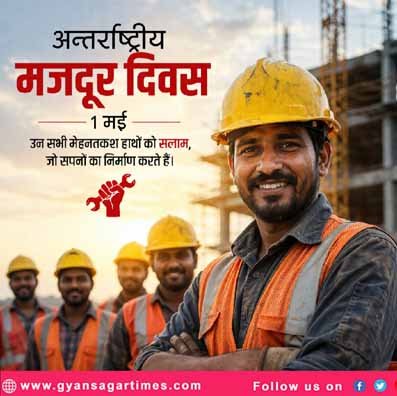
अंतर्राष्ट्रीय मजदूर दिवस, जिसे श्रमिक दिवस या मई दिवस भी कहा जाता है, हर वर्ष एक मई को दुनिया भर में मनाया जाता है. यह दिन श्रमिकों के अधिकारों, बेहतर काम करने की परिस्थितियों और सामाजिक न्याय के लिए चल रहे संघर्ष का भी प्रतीक है.
बताते चलें कि, मजदूर दिवस की शुरुआत 19वीं शताब्दी में अमेरिका के औद्योगिक शहर शिकागो से शुरू हुई थी. उस दौर में श्रमिकों को 10 से 16 घंटे, कभी-कभी इससे भी अधिक, प्रतिदिन काम करना आम बात थी. उनकी हालत अमानवीय के साथ -साथ मजदूरी कम, कार्य स्थितियाँ जोखिम भरी हुई व बाल मजदूरी बड़े पैमाने पर हुआ करती थी. आज ही के दिन वर्ष 1886 को करीब चौंतीस हजार श्रमिकों ने पुरे अमेरिका में हड़ताल किया और विशाल रैली निकाली। उनका मुख्य नारा था ” आठ घंटे काम, आठ घंटे आराम, आठ घंटे मनोरंजन”.
शिकागो में हेमार्केट स्क्वायर पर 3 मई को पुलिस और मजदूरों के बीच झड़प हुई, जिसमें कई मजदूर मारे गए. अगले दिन 4 मई को एक शांतिपूर्ण सभा के दौरान अज्ञात व्यक्ति ने पुलिस पर एक बम फेंका, जिसके बाद पुलिस ने अंधाधुंध गोलियाँ चलाईं और इस घटना में दर्जनों लोग मारे गए और सैकड़ों घायल हुए. उसके बाद न्यायिक प्रक्रिया में कोई प्रत्यक्ष सबूत न होने के बावजूद, आठ मजदूर नेताओं को षड्यंत्र के आरोप में फाँसी की सजा सुनाई गई. उन्हें इतिहास में शिकागो के “शहीद” के रूप में याद किया जाता है. वर्ष 1889 में पेरिस में आयोजित द्वितीय इंटरनेशनल (समाजवादी अंतर्राष्ट्रीय) के सम्मेलन में इन शहीदों के सम्मान में 1 मई को ‘अन्तर्राष्ट्रीय मजदूर दिवस’ घोषित किया गया.
बताते चलें कि, भारत में सबसे पहले मजदूर दिवस की शुरुआत चेन्नई में लेबर किसान पार्टी ऑफ हिंदुस्तातन ने 1 मई 1923 को चेन्नई में हुई थी. उस वक्त इसे मद्रास दिवस के तौर पर मनाया जाता था. वहीँ, वर्तमान समय के भारतवर्ष के राज्यों में 01 मई को राजकीय अवकाश के रूप में भी मनाते हैं.
वर्तमान समय में 8 घंटे का कार्य दिवस विश्व के अधिकांश हिस्सों में कानूनी अधिकार हुआ करता था लेकिन क्या यह समस्या वर्तमान में समाप्त हो गई है? वर्तमान समय में गिग इकॉनमी का उदय हुआ है. इस इकॉनमी में काम करने वाले अरबपति नहीं, बल्कि ‘पार्टनर’ बताए जाते हैं जिन्हें न्यूनतम मजदूरी, सामूहिक सौदेबाजी और सामाजिक सुरक्षा का कोई अधिकार नहीं होता है वहीं, पश्चिमी देशों में यह प्रथा है जहाँ मालिक मजदूर को बिना किसी गारंटी के बुला सकता है और कोई काम न हो तो बिना वेतन भेज सकता है. कोविड-19 महामारी ने विश्वभर में प्रवासी मजदूरों की असुरक्षा को उजागर किया वहीं भारत में पलायन करते मजदूरों ने दिखाया कि ‘विकास’ की चकाचौंध में मानवीय अधिकार कहाँ दरकिनार हो जाते हैं. इस नई इकनॉमी ने एक नए कल्चर को जन्म दिया जो शोषण का नया स्वरूप है. इस शोषण में सैलरी क्लास के लोग पिसे जा रहे हैं क्योंकि काम तो ‘वर्क फ्रॉम होम’ होता है. ‘वर्क फ्रॉम होम’ ने काम और जीवन की सीमा तोड़ दी है, जिससे ‘साइलेंट स्ट्रेस’ और बिना ओवरटाइम के अतिरिक्त घंटे काम करना मजबूरी बन गया है.
वर्तमान समय में पूँजीवाद के बदलते स्वरूप के साथ श्रमिकों के शोषण के तरीके भी बदल गए हैं. आज हमें सार्वभौमिक न्यूनतम आय, सामाजिक सुरक्षा, सुरक्षित कार्यस्थल और सभी श्रमिकों (चाहे संगठित हों या असंगठित) के लिए सम्मान की लड़ाई लड़नी अभी बाकी है. ‘अन्तर्राष्ट्रीय मजदूर दिवस’ केवल पुरानी जीत का जश्न नहीं है, बल्कि भविष्य की लड़ाइयों का भी संकल्प है. मई दिवस की सच्ची सार्थकता केवल झंडा लहराने में नहीं, बल्कि हर मेहनतकश के चेहरे पर खुशी लाने वाली नीतियों और ठोस कार्यों में है. बताते चलें कि, एक मई के दिन सभी श्रमिकों की छुट्टी होती है या यूँ कहें कि, पब्लिक हालीडे होता है लेकिन जितना महत्व पहले होता था उसके अनुरूप वर्तमान समय में महत्व नगण्य प्राय: हो गया है.
========== ========= ===========
International Workers’ Day…

International Workers’ Day—also known as Labour Day or May Day—is celebrated annually on May 1st across the globe. This day symbolizes the ongoing struggle for workers’ rights, improved working conditions, and social justice.
It is worth noting that the origins of Labour Day trace back to the 19th century in the industrial city of Chicago, USA. During that era, it was common for workers to toil for 10 to 16 hours—and sometimes even longer—each day. Their plight was inhumane; wages were meager, working conditions were hazardous, and child labour was rampant. On this very day in 1886, approximately 34,000 workers across the United States went on strike and organized massive rallies. Their primary slogan was: “Eight hours for work, eight hours for rest, eight hours for recreation.”
On May 3rd, a clash erupted between police and workers at Haymarket Square in Chicago, resulting in the deaths of several workers. The following day, May 4th, during a peaceful assembly, an unidentified individual threw a bomb at the police; in the ensuing chaos, the police opened fire indiscriminately, leaving dozens dead and hundreds injured. Subsequently, despite the absence of any direct evidence during the judicial proceedings, eight labour leaders were sentenced to death on charges of conspiracy. They are remembered in history as the “Martyrs of Chicago.” In 1889, during the conference of the Second International (Socialist International) held in Paris, May 1st was officially declared ‘International Workers’ Day’ in honour of these martyrs.
It is also noteworthy that in India, Labour Day was first observed in Chennai on May 1, 1923, under the initiative of the Labour Kisan Party of Hindustan. At that time, it was celebrated as ‘Madras Day.’ Today, May 1st, is observed as a public holiday in various states across India. In the modern era, the eight-hour workday has become a legal right in most parts of the world; however, has this issue truly been resolved today? The present age has witnessed the rise of the ‘gig economy.’ In this economic model, those who perform the work are not termed ’employees,’ but rather ‘partners’—individuals who possess no rights regarding minimum wages, collective bargaining, or social security. This practice is particularly prevalent in Western nations, where employers can summon workers without any guarantee of employment and, should no work be available, send them home without pay. The COVID-19 pandemic exposed the precarious vulnerability of migrant workers across the globe, while in India, the mass exodus of migrant laborers starkly demonstrated how human rights are often cast aside amidst the dazzling allure of ‘development.’ This new economic paradigm has given birth to a new culture—one that represents a novel form of exploitation. Within this exploitative framework, members of the salaried class are increasingly being ground down, largely because work has shifted to a ‘Work from Home’ model. ‘Work from Home’ has blurred the boundaries between work and personal life, making ‘silent stress’ and the compulsion to work extra hours—often without overtime compensation—an unavoidable reality.
With the evolving nature of capitalism in the contemporary world, the methods of worker exploitation have also transformed. Today, we still have battles left to fight—for a universal basic income, social security, safe workplaces, and dignity for all workers, whether they belong to the organized or unorganized sectors. ‘International Workers’ Day’ is not merely a celebration of past victories; it is also a reaffirmation of our resolve for the struggles that lie ahead. The true significance of May Day lies not merely in the waving of flags, but in the implementation of policies and concrete actions that bring joy to the faces of every working person. It is worth noting that May 1st is designated as a holiday for all workers—or, more precisely, a public holiday; however, compared to the immense significance it once held, its importance in the present day has become almost negligible.