वर्तमान समय में हर इंसान को जीने के लिए ऊर्जा की जरूरत होती है. अगर ऊर्जा प्राक्रतिक होगी तो पर्यावरण भी बचेगा. वर्तमान समय के भारत में आर्थिक, राजनीतिक और पर्यावरणीय परिदृश्य में एक अत्यंत संवेदनशील और चर्चा का विषय बना हुआ है इथेनॉल मिश्रण (Ethanol Blending). भारत सरकार ने इथेनॉल मिश्रण नीति (E20) ने जहाँ एक ओर आयातित जीवाश्म ईंधन पर निर्भरता कम करने और किसानों की आय बढ़ाने का वादा किया है. एक तरफ सरकार इसे देश के विदेशी मुद्रा भंडार को बचाने और किसानों की आय दोगुनी करने वाले क्रांतिकारी कदम के रूप में पेश कर रही है, वहीं दूसरी तरफ विपक्ष, आलोचक और जनता का एक बड़ा वर्ग इसे “पॉकेट से निजी हितों पर डाका” और क्रोनी कैपिटलिज्म (मित्रवाद) का बड़ा उदाहरण बता रहा है.
ज्ञात है कि इथेनॉल मिश्रण नीति के सबसे मुखर समर्थक बनकर उभर रहें हैं केंद्रीय सड़क परिवहन और राजमार्ग मंत्री नितिन गडकरी. वहीँ, कांग्रेस ने आरोप लगाया है कि “पिता सरकार में बैठकर नीतियाँ बनाते हैं, जबकि बेटे पैसा कमाते हैं”. दुसरे ने कहा कि, अपने विभागीय दायरे से बाहर जाकर किसी नीति के लिए इस प्रकार लॉबिंग करना असामान्य है, खासकर जब वह नीति सीधे तौर पर उनके परिवार के व्यावसायिक हितों से जुड़ी हो! गडकरी ने भी स्वयं स्वीकार किया है कि उनके परिवार के पास शुगर फैक्ट्रियाँ हैं. उनके पुत्र निखिल गडकरी सियान एग्रो इंडस्ट्रीज इंफ्रास्ट्रक्चर लिमिटेड के मालिक हैं, जो एक प्रमुख इथेनॉल आपूर्तिकर्ता है, जबकि दूसरे पुत्र सारंग गडकरी मानस एग्रो इंडस्ट्रीज के निदेशक हैं, जो इथेनॉल उत्पादन में संलिप्त है. यह वही सरकार है जो इथेनॉल की खरीद के लिए निविदाएँ जारी करती है और कीमतें तय करती है.
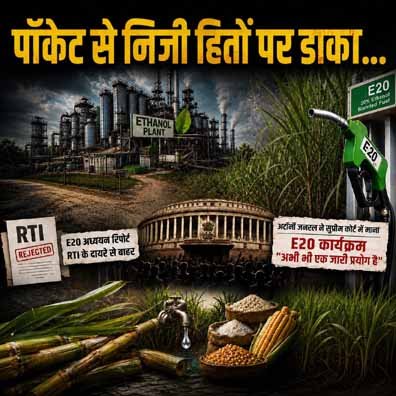
सबसे बड़ी बात तो ये है कि सरकार ने E20 ईंधन के प्रभावों पर किए गए वैज्ञानिक अध्ययनों को RTI के दायरे से बाहर रखा है. एआरएआई (ऑटोमोटिव रिसर्च एसोसिएशन ऑफ इंडिया) और इंडियन ऑयल कॉर्पोरेशन और SIAM (Society of Indian Automobile Manufacturers) द्वारा E20 के दुष्प्रभावों पर किए गए अध्ययनों की कॉपी मांगी थी लेकिन, पेट्रोलियम मंत्रालय ने इन दस्तावेज़ों को “गोपनीय” घोषित करते हुए RTI आवेदन खारिज कर दिया. सबसे बड़ी विडंबना यह है कि सरकार स्वयं E20 को “सुरक्षित” और “लाभकारी” बताती है परन्तु, उसी सरकार के वैज्ञानिक संस्थान इसके प्रभावों पर किए गए अध्ययनों को “गोपनीय” कहकर जनता से छिपा रही हैं. अटॉर्नी जनरल ने स्वयं सुप्रीम कोर्ट में स्वीकार किया कि E20 कार्यक्रम “अभी भी एक जारी प्रयोग है”.
इस देश की एक और विडंबना यह है कि, सरकार के पास संसद में भारी बहुमत है जिसके कारण विपक्ष की आवाज़ दब जाती है. क्या इस जनादेश का मतलब यह है कि सरकार जनता की चिंताओं को नज़रअंदाज़ कर सकती है? कांग्रेस ने आरोप लगाया है कि “यह पहली बार है कि किसी नीति ने अपना लक्ष्य समय से पहले हासिल किया है” और यह कोई संयोग नहीं है कि यह नीति सीधे तौर पर नीति-निर्माता के परिवार को लाभ पहुँचा रही है. वहीँ,आलोचकों का कहना है कि इथेनॉल नीति का ढांचा इस तरह तैयार किया गया है जिससे आम जनता की जेब कट रही है और इसका सीधा फायदा चुनिंदा उद्योगपतियों, राजनेताओं और उनके परिवारों को मिल रहा है. एक तरफ चीनी मिलों और डिस्टिलरीज के मालिकाना हक को लेकर अक्सर यह सवाल उठते हैं कि क्या देश की ऊर्जा नीति का रुख जनता के हित में है या कुछ खास परिवारों के व्यापारिक साम्राज्य को चमकाने के लिए…?
विपक्ष का तर्क है कि संसद में भारी बहुमत का उपयोग जनहित के फैसलों के बजाय ऐसे कानून और नीतियां थोपने के लिए किया जा रहा है, जिन पर न तो संसद में पर्याप्त बहस होती है और न ही संसदीय समितियों में समीक्षा कर नीतियाँ लागु होती थी अब बिना व्यापक विचार-विमर्श के नीतियां लागू होती हैं. इसे देखकर ऐसा महसूस होता है कि सरकार अब “जनादेश का दुरुपयोग” कर रही है. वर्तमान समय की भारत सरकार आज पुरे देश की आवाम को प्रयोगशाला की आग में झोंक दिया है ऐसा लगता है मानो “मैकाले के वास्तविक चेलें यहीं है”. एक तरफ आरोप लग रहा है कि, सरकार जनता को “प्रयोगशाला” का विषय बना रही है यह निराधार नहीं है. सुप्रीम कोर्ट में अटॉर्नी जनरल ने स्वयं स्वीकार किया कि “20 प्रतिशत इथेनॉल मिश्रण कार्यक्रम अभी भी एक जारी प्रयोग है” जब सरकार स्वयं इसे “प्रयोग” कह रही है, तो सवाल उठता है कि क्या पूरे देश की जनता को बिना उनकी सहमति के इस प्रयोग का हिस्सा बनाया जाना चाहिए?
सड़क परिवहन मंत्री गडकरी का कहना कि “ई20 से किसी भी वाहन को कोई नुकसान नहीं हुआ है”, परन्तु दूसरी तरफ यह आम जनता के अनुभवों के विपरीत है. कार समीक्षक के अनुसार, इथेनॉल एक सूखा और संक्षारक ईंधन है. यह इंजन को ईंधन आपूर्ति करने वाले कई हिस्सों को नुकसान पहुँचा सकता है”. सरकार एक तरफ ‘आत्मनिर्भर भारत’, ‘पर्यावरण संरक्षण’ और ‘किसानों के कल्याण’ का नारा देती है, लेकिन दूसरी तरफ इथेनॉल नीति से जुड़े महत्वपूर्ण दस्तावेजों, प्रभाव आकलनों और मूल्य निर्धारण के फॉर्मूलों को सार्वजनिक करने से भी बचते हुए “मुँह में राम बगल में छुरी” वाली कहावत को चिर्तार्थ करने में लगी हुई है.
आखिर इथेनॉल से फायदा व नुक्सान किसको होगा-?
बताते चलें कि, इथेनॉल एक “स्वच्छ ईंधन” है और भारत सरकार इसे “आत्मनिर्भर भारत” का साधन बताती है. इथेनॉल एक अल्कोहल आधारित जैव-ईंधन है, जिसे मुख्यतः गन्ने के शीरे (मोलासेस), गन्ने के रस, मक्का और अन्य कृषि उत्पादों से बनाया जाता है. भारत सरकार ने पेट्रोल में इथेनॉल मिलाने का लक्ष्य पहले 20% वर्ष 2030 तक रखा था, जिसे बाद में वर्ष 2025-26 तक प्राप्त करने का लक्ष्य घोषित किया है.
इथेनॉल की ऊर्जा क्षमता पेट्रोल से कम होती है, जिससे माइलेज 10-15% घट जाता है. यानी जनता को उतने ही पैसे में कम माइलेज मिल रहा है. पुराने इंजनों में जंग लगने और खराबी का खतरा अलग से है. वहीं, सरकार ने भी माना है कि ई20 ईंधन से माइलेज में नई कारों में 1-2 प्रतिशत और पुरानी कारों में 6 प्रतिशत तक की कमी आ सकती है.सबसे बड़ा कारण यह है कि, भारत में पेट्रोल की कीमत केवल कच्चे तेल पर निर्भर नहीं करती, बल्कि इसमें केंद्र और राज्य सरकारों के कर, डीलर कमीशन तथा अन्य लागतें भी शामिल होती हैं. इसलिए आयात में बचत का लाभ सीधे उपभोक्ता तक पहुँचेगा, यह निश्चित नहीं है.
सरकार का कहना है कि, इससे – कच्चे तेल के आयात में कमी आएगी, किसानों को अतिरिक्त बाजार मिलेगा, चीनी उद्योग की अतिरिक्त उत्पादन समस्या कम होगी, कार्बन उत्सर्जन में कमी आएगी. सबाल यह है कि – क्या वास्तव में आम जनता को लाभ मिलेगा?
फायदा: –
सरकार के अनुसार इथेनॉल नीति का सबसे अधिक लाभ गन्ना व मक्का किसानों, चीनी मीलों और डिस्टिलरी उद्योग को मिलेगा. विडंबना ये कि, गन्ना व मक्का किसानों का भुक्तान महीनों तक लम्बित होता है चुकि चीनी मिल मालिक समय पर भुक्तान नहीं करते हैं. अगर चीनी मिलें समय पर भुगतान करें तो गन्ना किसानों को लाभ मिल सकता है. बताते चलें कि, कई वर्षों से चीनी उद्योग आर्थिक संकट से जूझ रहा था अब इथेनॉल के उत्पादन ने चीनी मिलों को नया बाजार मिल रहा है. ज्ञात है कि, हाल के वर्षों में मक्का आधारित इथेनॉल उत्पादन तेजी से बढ़ा है जिससे मक्का की मांग बढ़ी है वहीं, मक्का का प्रयोग सबसे अधिक खाद्य और पशु आहार उद्योग में किया जाता है जिससे मक्का और महंगा हो सकता है.
नुक्सान: –
ज्ञात है कि, भारत का अधिकांश इथेनॉल गन्ने से बनता है. चुकि गन्ने कि खेती के लिए अत्यधिक जल की आवश्यकता होती है. विशेषज्ञों के अनुसार, जल संकट वाले क्षेत्रों में गन्ने का विस्तार भविष्य में गंभीर समस्या बन सकता है. दूसरी तरफ, इथेनॉल उत्पादन के लिए खाद्यान्न का अधिक उपयोग होने लगे तो खाद्य वस्तुओं की कीमतों पर दबाव पड़ सकता है. वर्तमान समय के भारत में चलने वाली गाड़ियाँ इथेनॉल मिश्रण के लिए नहीं बनी हुई है. इसके प्रयोग से माइलेज कम हो सकता है, रबर एवं प्लास्टिक पार्ट्स पर प्रभाव पड़ सकता है साथ ही रखरखाव की लागत बढ़ सकती है.
हालांकि, सरकार का दावा है कि, नए “फ्लेक्स-फ्यूल” इंजनों को इन परिस्थितियों के अनुसार विकसित किया जा रहा है. साथ ही सरकार यह भी दावा करती है कि, इथेनॉल हरित ईंधन है. परन्तु ये आंशिक रूप से सही है. अगर, इथेनॉल कृषि पद्धतियों से बने तो कार्बन उत्सर्जन कम हो सकता है वहीं, इसके लिए अत्यधिक भूजल, रासायनिक उर्वरकों और ऊर्जा का उपयोग हो तो पर्यावरणीय लाभ काफी कम हो जाते हैं.
इथेनॉल नीति को लेकर कई विशेषज्ञ और नागरिक समाज संगठन कुछ महत्वपूर्ण सवाल उठा रहें हैं परन्तु , सरकार इथेनॉल नीति से जुड़े सभी लागत-लाभ, विभिन्न फीडस्टॉक (गन्ना, मक्का, चावल आदि) के पर्यावरणीय प्रभावों का विस्तृत डेटा, उपभोक्ता पर पड़ने वाले प्रभाव का स्वतंत्र अध्ययन की रिपोर्ट देने से भाग रही है. वहीं, दुसरी ओर यह आरोप लगाया जाता है कि इथेनॉल नीति से कुछ विशेष उद्योग समूहों को अधिक लाभ पहुंचाया जा रहा है. यदि ऐसे आरोप लगाए जाते हैं, तो उन्हें विश्वसनीय साक्ष्यों, आधिकारिक दस्तावेज़ों, वित्तीय आँकड़ों या स्वतंत्र जाँच के आधार पर ही परखा जाना चाहिए.
एक तरफ सार्वजनिक चर्चा में यह कहा जाता है कि सड़क परिवहन मंत्री ने इथेनॉल और वैकल्पिक ईंधनों के प्रचार में प्रमुख भूमिका निभाई है. यह सही है कि उन्होंने लंबे समय से जैव-ईंधन और फ्लेक्स-फ्यूल वाहनों का समर्थन किया है. हालांकि, इसे “पेट्रोलियम मंत्रालय का काम करना” कहना एक राजनीतिक टिप्पणी है, तथ्यात्मक निष्कर्ष नहीं है. अगर स्वतंत्र विशेषज्ञ समितियों की रिपोर्ट तैयार किया गया है तो उन्हें व्यापक रूप से सार्वजनिक करना नीति की विश्वसनीयता और लोकतांत्रिक जवाबदेही को मजबूत कर सकता है.
वैसे तो देखा जाय तो, इथेनॉल नीति अपने आप में बुरी नहीं है, लेकिन इसके लागू करने के तरीके, पारदर्शिता की कमी और चुनिंदा कॉर्पोरेट घरानों को मिलने वाले अत्यधिक लाभ ने इसे संदेह के घेरे में ला खड़ा किया है. किसी भी लोकतांत्रिक नीति की वास्तविक सफलता केवल उसके घोषित उद्देश्यों से नहीं, बल्कि इस बात से तय होती है कि उसका लाभ समाज के सभी वर्गों तक कितना पहुँचता है, उसके दुष्प्रभावों का कितना ईमानदारी से आकलन किया जाता है, और सरकार अपने निर्णयों के आधार तथा प्रभावों को जनता के सामने कितनी पारदर्शिता से रखती है.
एक तरफ ₹22 लाख करोड़ के आयात बिल को कम करने की बात है, तो दूसरी तरफ आम जनता को प्रयोगशाला का विषय बनाया जा रहा है. एक तरफ “आत्मनिर्भर भारत” का नारा है, तो दूसरी तरफ मंत्री के बेटों की कंपनियों को अरबों का फायदा पहुँच रहा है. “पहले दोस्त, परिवार… अब बेटा” — यह सवाल आज पूरे देश की जनता पूछ रही है. जब संसद में 830/540 सीटों का जनादेश निजी स्वार्थों की पूर्ति के लिए इस्तेमाल हो रहा है, तो “क्या समझे आवाम?”. जब तक ऐसा नहीं होता, “पॉकेट से निजी हितों पर डाका” और “स्वार्थ की बलि चढ़ती आवाम” ये आरोप केवल राजनीतिक बयान नहीं, बल्कि कड़वी सच्चाई हैं.
Bhsa@
========== ========= ===========
Robbing private interests from the pocket… A comprehensive analysis of the ethanol policy
Nowadays, every human being needs energy to survive. If energy is natural, the environment will also be saved. Ethanol blending has become a highly sensitive and debated topic in the economic, political, and environmental landscape of India. While the Indian government’s Ethanol Blending Policy (E20) promises to reduce dependence on imported fossil fuels and increase farmers’ incomes, the government is presenting it as a revolutionary step that will save the country’s foreign exchange reserves and double farmers’ incomes, while the opposition, critics, and a large section of the public are calling it a “robbing of private interests from their pockets” and a prime example of crony capitalism.
It is known that Union Minister for Road Transport and Highways Nitin Gadkari has emerged as the most vocal supporter of the ethanol blending policy. Meanwhile, the Congress has alleged that “fathers sit in the government and make policies, while sons make money.” Another said that lobbying for a policy outside one’s departmental purview is unusual, especially when it directly relates to one’s family’s business interests! Gadkari himself has acknowledged that his family owns sugar factories. His son, Nikhil Gadkari, owns Cyan Agro Industries Infrastructure Limited, a major ethanol supplier, while another son, Sarang Gadkari, is a director of Manas Agro Industries, which is involved in ethanol production. It is the government that issues tenders for ethanol procurement and sets prices.
More importantly, the government has excluded scientific studies on the effects of E20 fuel from the scope of RTI. ARAI (Automotive Research Association of India) and Indian Oil Corporation and SIAM (Society of Indian Automobile Manufacturers) had sought copies of studies on the side effects of E20, but the Petroleum Ministry rejected the RTI application, declaring these documents “confidential.” The biggest irony is that the government itself calls E20 “safe” and “beneficial,” but the same government’s scientific institutions are hiding studies on its effects from the public, calling them “confidential.” The Attorney General himself admitted in the Supreme Court that the E20 program is “still an ongoing experiment.”
Another irony of this country is that the government enjoys a massive majority in Parliament, which silences the opposition. Does this mandate mean the government can ignore public concerns? Congress has alleged that “this is the first time a policy has achieved its goal ahead of schedule,” and it’s no coincidence that this policy is directly benefiting the policymaker’s family. Meanwhile, critics say the ethanol policy is structured in a way that cuts into the pockets of the general public, directly benefiting select industrialists, politicians, and their families. On the other hand, the ownership of sugar mills and distilleries often raises questions about whether the country’s energy policy is in the public interest or to enhance the business empires of a few select families…
The opposition argues that the overwhelming majority in Parliament, instead of making decisions in the public interest, is being used to impose laws and policies that are neither adequately debated in Parliament nor reviewed by parliamentary committees. Policies that used to be implemented without extensive discussion are now being implemented without extensive consultation. This suggests that the government is now “misusing the mandate.” The current Indian government has thrown the entire country’s population into the fire of a laboratory. It seems as if “Macaulay’s true disciples are here.” On the one hand, the accusation that the government is making the public a “laboratory” subject is not unfounded. The Attorney General himself admitted in the Supreme Court that the “20 percent ethanol blending program is still an ongoing experiment.” When the government itself is calling it an “experiment,” the question arises: should the entire country’s population be made a part of this experiment without their consent?
Road Transport Minister Gadkari claims that “E20 has not caused any damage to any vehicle,” but this contradicts the public’s experience. According to car reviewers, ethanol is a dry and corrosive fuel. It can damage many parts that supply fuel to the engine. While the government champions “self-reliant India,” “environmental protection,” and “farmer welfare,” it is simultaneously living up to the adage of “Ram in the mouth and a knife in the armpit” by avoiding public disclosure of crucial ethanol policy documents, impact assessments, and pricing formulas.
Who will benefit and who will suffer from ethanol?
It should be noted that ethanol is a “clean fuel” and the Indian government touts it as a means to a “self-reliant India.” Ethanol is an alcohol-based biofuel primarily produced from sugarcane molasses, sugarcane juice, corn, and other agricultural products. The Indian government initially set a target of 20% ethanol blending in petrol by 2030, which it later announced would be achieved by 2025-26.
Ethanol’s energy efficiency is lower than that of petrol, resulting in a 10-15% reduction in fuel mileage. This means the public is getting less fuel for the same amount of money. Older engines are also at risk of corrosion and failure. At the same time, the government has also admitted that E20 fuel could reduce mileage by 1-2 percent in new cars and up to 6 percent in old cars. The biggest reason is that the price of petrol in India does not depend solely on crude oil, but also includes central and state government taxes, dealer commissions, and other costs. Therefore, it is not certain that the benefits of import savings will reach the consumer directly.
The government says that this will reduce crude oil imports, provide additional markets to farmers, alleviate the sugar industry’s overproduction problem, and reduce carbon emissions. The question is: will the general public actually benefit?
Benefits: –
According to the government, the ethanol policy will most benefit sugarcane and maize farmers, sugar mills, and the distillery industry. Ironically, sugarcane and maize farmers’ payments are often delayed for months because sugar mill owners don’t make timely payments. If sugar mills make timely payments, sugarcane farmers could benefit. The sugar industry has been struggling with financial crisis for many years, but now ethanol production is providing sugar mills with a new market. It’s known that corn-based ethanol production has increased rapidly in recent years, boosting demand for corn. Corn is used extensively in the food and animal feed industries, which could make it more expensive.
Disadvantages: –
It’s known that most of India’s ethanol is produced from sugarcane. Sugarcane cultivation requires a lot of water. According to experts, expanding sugarcane cultivation in water-stressed areas could pose a serious problem in the future. On the other hand, increased use of food grains for ethanol production could put pressure on food prices. Current vehicles in India are not designed for ethanol blending. Its use could reduce fuel mileage, impact rubber and plastic parts, and increase maintenance costs.
However, the government claims that new “flex-fuel” engines are being developed to address these conditions. The government also claims that ethanol is a green fuel. However, this is only partially true. While ethanol produced through agricultural practices can reduce carbon emissions, the environmental benefits are significantly diminished by the excessive use of groundwater, chemical fertilizers, and energy.
Many experts and civil society organizations are raising significant questions about the ethanol policy, but the government is shying away from providing a comprehensive cost-benefit analysis, detailed data on the environmental impacts of various feedstocks (sugarcane, corn, rice, etc.), and independent consumer impact studies. Meanwhile, allegations are made that the ethanol policy disproportionately benefits certain industry groups. If such allegations are made, they should be verified based on credible evidence, official documents, financial data, or independent investigations.
On the one hand, public discourse claims that the Road Transport Minister has played a key role in promoting ethanol and alternative fuels. It’s true that he has long supported biofuels and flex-fuel vehicles. However, calling this “the Petroleum Ministry’s job” is a political comment, not a factual conclusion. If independent expert committees have prepared reports, widely disseminating them could strengthen the policy’s credibility and democratic accountability.
While the ethanol policy itself is not bad, its implementation, lack of transparency, and excessive benefits to select corporate houses have cast it under scrutiny. The true success of any democratic policy is determined not merely by its stated objectives, but by the extent to which its benefits reach all sections of society, how honestly its adverse effects are assessed, and how transparently the government communicates the basis and impacts of its decisions to the public.
On one hand, there’s talk of reducing the ₹22 lakh crore import bill, while on the other, the common public is being used as a test subject. On one hand, there’s the slogan of “self-reliant India,” while on the other, the minister’s sons’ companies are reaping billions in profits. “First friends, then family… now son”—this is the question the entire country is asking today. When the mandate of 830/540 seats in Parliament is being used to fulfill personal interests, then “what should the public understand?” Until this happens, the allegations of “robbing personal interests from pockets” and “people being sacrificed for selfishness” are not mere political statements, but the harsh truth.
Bhsa@