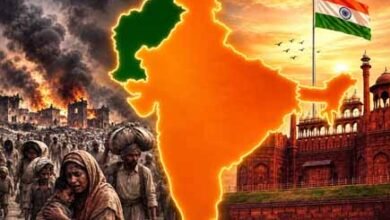
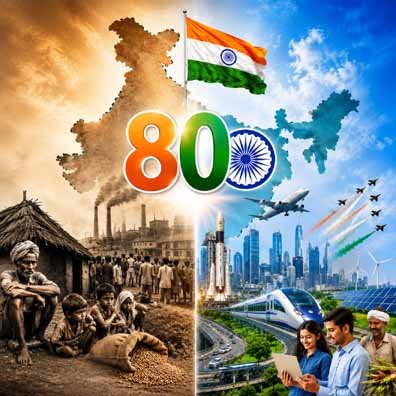
गुलामी के बाद आजादी तो मिली लेकिन,वो आजादी… विभाजन के रक्तरंजित अध्याय के साथ मिली जहाँ, लाखों लोगों को विस्थापन, हिंसा और असुरक्षा का सामना करना पड़ा. विभाजन की वो काली स्मृति आज भी भारतीय उपमहाद्वीप के सामाजिक और राजनीतिक मानस में मौजूद है. इससे सीख मिलती है कि, राष्ट्र की एकता केवल भौगोलिक सीमाओं से नहीं, बल्कि नागरिकों के बीच विश्वास, समानता और सामाजिक सद्भाव से बनती है.
वर्तमान समय से 80 वर्ष पूर्व आज ही के दिन भारत ने आज़ादी की पहली साँस ली. एक ऐसे राष्ट्र के पुनर्निर्माण की शुरुआत थी, जो विभाजन की त्रासदी, गरीबी, अशिक्षा, बेरोजगारी, खाद्यान्न संकट, कमजोर औद्योगिक आधार और सामाजिक विषमताओं से जूझ रहा था. उस वक्त के विचारकों और राजनीतिक विश्लेषकों का मानना था कि विविधता, गरीबी और निरक्षरता से भरा यह देश लंबे समय तक एक साथ नहीं रह पाएगा. लेकिन, आठ दशक के इस ऐतिहासिक सफर के बाद, भारत ने न केवल अपनी संप्रभुता और लोकतंत्र को अक्षुण्ण रखा है, बल्कि वैश्विक पटल पर एक सशक्त महाशक्ति के रूप में अपनी उपस्थिति भी दर्ज कराई है.
बताते चलें कि, 15 अगस्त 2026 को स्वतंत्रता के 79 वर्ष पूरे होंगे और भारत स्वतंत्रता के 80वें वर्ष में प्रवेश करेगा तो यह प्रश्न अनिवार्य हो जाता है कि, आखिर हमने इन आठ दशकों में क्या खोया और क्या पाया? आज़ादी के इस लंबे सफर का आज हम मूल्यांकन करते है कि एक ओर जहाँ अभूतपूर्व उपलब्धियाँ हैं, तो दूसरी ओर गंभीर चुनौतियाँ भी, जो हमें याद दिलाती हैं कि आज़ादी का सफर क्या अभी पूरा हुआ है या नहीं …
वर्तमान समय की तुलना में अगर वर्ष 1947 की बात करें तो एक परिवर्तन दिखाई देता है. जिस वक्त देश आजाद हुआ था उस वक्त देश आर्थिक रूप से अत्यंत कमजोर था, औद्योगिक ढाँचा सीमित था, कृषि मुख्यतः मानसून पर निर्भर थी, स्वास्थ्य सुविधाएँ नगण्य थीं, शिक्षा का प्रसार बहुत कम था साथ जीवन का स्तर बेहद निम्न थी. दूसरी तरफ विभाजन और करोड़ों लोगों के विस्थापन व सांप्रदायिक हिंसा ने इस संकट को और गहरा कर दिया था. वहीँ, भारत की सबसे बड़ी उपलब्धि यह रही कि उसने इन परिस्थितियों के बीच लोकतांत्रिक और संवैधानिक रास्ता चुना. संविधान ने नागरिकों को समानता, स्वतंत्रता, न्याय और लोकतांत्रिक भागीदारी का आधार भी दिया.
भारत ने लोकतंत्र को केवल शासन प्रणाली के रूप में नहीं, बल्कि जीवन-मूल्य के रूप में भी स्वीकार किया. वयस्क मताधिकार के आधार पर चुनाव कराना उस समय एक साहसिक प्रयोग था. यह प्रयोग वर्तमान समय के भारत का सबसे बड़ा लोकतांत्रिक निर्वाचन तंत्र है. लोकतंत्र की यह यात्रा हमेशा निर्विघ्न नहीं रही. वर्ष 1975-77 का आपातकाल भारतीय लोकतंत्र के इतिहास का एक गंभीर अध्याय रहा, लेकिन उसके बाद सत्ता परिवर्तन ने यह भी सिद्ध किया कि भारतीय मतदाता लोकतांत्रिक व्यवस्था में अपनी निर्णायक भूमिका निभा सकता है. वर्तमान समय में भी चुनावी प्रतिस्पर्धा और सत्ता का शांतिपूर्ण हस्तांतरण भारतीय लोकतंत्र की महत्वपूर्ण ताकत हैं.
स्वतंत्रता के शुरुआती दशकों की तुलना में भारत ने गरीबी कम करने में उल्लेखनीय प्रगति की है. हाल के आर्थिक सर्वेक्षण के अनुसार 2025-26 में भारत की वास्तविक GDP वृद्धि का अनुमान 7.4 प्रतिशत रहा और 2026-27 के लिए 6.8-7.2 प्रतिशत की वृद्धि का अनुमान रखा गया है. वर्ष 2013-14 से 2022-23 के बीच बहुआयामी गरीबी 29.17 प्रतिशत से घटकर 11.28 प्रतिशत हुई. सरकार ने कई योजनाएं चलाई जिनमें, बैंक खाते, प्रत्यक्ष लाभ हस्तांतरण, ग्रामीण आवास, स्वच्छ ईंधन, पेयजल, स्वच्छता और खाद्य सुरक्षा जैसी योजनाएं. सबसे बड़ी बात तो यह है कि, उनकी गुणवत्ता, पारदर्शिता और अंतिम व्यक्ति तक वास्तविक पहुँच सुनिश्चित हो.
स्वतंत्रता के समय शिक्षा की पहुँच अत्यंत सीमित थी; परन्तु वर्तमान समय में करोड़ों बच्चे विद्यालयों और उच्च शिक्षा संस्थानों तक पहुँच रहे हैं. विशेष रूप से लड़कियों की शिक्षा में महत्वपूर्ण परिवर्तन आया है. सरकारी आँकड़ों के अनुसार प्राथमिक स्तर पर लड़कियों की ड्रॉपआउट दर वर्ष 2013-14 के 4.6 प्रतिशत से घटकर वर्ष 2024-25 में 0.3 प्रतिशत रह गई है. वहीँ, दूसरी तरफ विद्यालय में नामांकन पर विशेष जोर के वजाय गुणवत्तापूर्ण शिक्षा, वैज्ञानिक सोच, रोजगारपरक कौशल, शोध और उच्च शिक्षा की वैश्विक प्रतिस्पर्धा में सुधार की जरूरत है.
विज्ञान और तकनीक के क्षेत्र में उल्लेखनीय आत्मविश्वास अर्जित किया है भारत ने. परमाणु ऊर्जा से लेकर अंतरिक्ष अनुसंधान, डिजिटल भुगतान, जैव-प्रौद्योगिकी और सूचना प्रौद्योगिकी तक भारत ने अपनी क्षमता स्थापित की है. एक तरफ डिजिटल क्रांति ने आम नागरिक के जीवन को भी बदल दिया है. मोबाइल इंटरनेट, डिजिटल बैंकिंग और त्वरित भुगतान प्रणालियों ने आर्थिक गतिविधियों को नई गति दी है. यह परिवर्तन केवल तकनीकी उपलब्धि नहीं, बल्कि सामाजिक और आर्थिक परिवर्तन का माध्यम भी है.
80 वर्ष पूर्व का भारत जो कभी सीमित सड़कों, बिजली, रेल व सिंचाई की सुविधाओं वाला देश था वर्तमान समय में राजमार्गों, रेलवे, मेट्रो, हवाई अड्डों, ग्रामीण विद्युतीकरण, डिजिटल कनेक्टिविटी और शहरी आधारभूत ढाँचे का व्यापक विस्तार हुआ है जिससे, देश के विभिन्न हिस्सों के बीच आर्थिक और सामाजिक संपर्क मजबूत हुआ है. आजादी के बाद महिलाओं की सामाजिक, राजनीतिक और आर्थिक भूमिका में बड़ा परिवर्तन हुआ है. शिक्षा, प्रशासन, सेना, विज्ञान, खेल, राजनीति, उद्योग और अंतरिक्ष अनुसंधान तक महिलाओं की उपस्थिति बढ़ी है साथ ही साथ महिला स्वयं सहायता समूहों ने ग्रामीण अर्थव्यवस्था में महिलाओं की भागीदारी को एक नया आयाम दिया है. वर्ष 2026 के राष्ट्रपति के संबोधन में भी महिलाओं की शिक्षा, आर्थिक सशक्तीकरण और विभिन्न क्षेत्रों में बढ़ती भागीदारी को राष्ट्रीय विकास का महत्वपूर्ण आधार माना था.
गुलामी के बाद आजादी तो मिली लेकिन,वो आजादी… विभाजन के रक्तरंजित अध्याय के साथ मिली जहाँ, लाखों लोगों को विस्थापन, हिंसा और असुरक्षा का सामना करना पड़ा. विभाजन की वो काली स्मृति आज भी भारतीय उपमहाद्वीप के सामाजिक और राजनीतिक मानस में मौजूद है. इससे सीख मिलती है कि, राष्ट्र की एकता केवल भौगोलिक सीमाओं से नहीं, बल्कि नागरिकों के बीच विश्वास, समानता और सामाजिक सद्भाव से बनती है. आर्थिक विकास के बावजूद भारत में आय, संपत्ति, शिक्षा, स्वास्थ्य और अवसरों की असमानता बनी हुई है चूकिं, विकास का लाभ समाज के सभी वर्गों तक समान गति से नहीं पहुँचा है.
अर्थव्यवस्था के विस्तार के साथ रोजगार की गुणवत्ता और आय-वितरण का प्रश्न इसलिए महत्वपूर्ण हो गया है. चुकि, एक तरफ,आधुनिक महानगर और वैश्विक स्तर की तकनीकी कंपनियाँ हैं, तो दूसरी ओर ऐसे ग्रामीण और शहरी समुदाय भी हैं जिन्हें गुणवत्तापूर्ण शिक्षा, स्वास्थ्य और स्थायी रोजगार के लिए संघर्ष करना पड़ता है. वर्तमान समय में रोजगार और कृषि क्षेत्र में गंभीर चुनौतियाँ बनी हुई हैं.
80 वर्ष पूर्व जब भारत आजाद हुआ था तब भारत एक कृषि प्रधान देश था. वर्तमान समय के भारत ने खाद्य उत्पादन में आत्मनिर्भरता हासिल की, लेकिन किसान की आर्थिक सुरक्षा का प्रश्न पूरी तरह हल नहीं हुआ है. छोटे और सीमांत किसानों की आय, कृषि लागत, सिंचाई, बाजार, भंडारण, मौसम और जलवायु परिवर्तन जैसी समस्याएँ वर्तमान समय में और गंभीर व गहरी हो गई है. चुकि, जिस देश की बड़ी आबादी कृषि पर निर्भर हो, वहाँ किसान की समृद्धि को केवल कृषि उत्पादन बढ़ने से नहीं मापा जा सकता है.
वर्तमान समय का भारत विकसित देशों में शामिल हो गया है ल्व्किन, विकास की इस अंधी दौर में हमने नदियों के प्रदूषण, वायु प्रदूषण, भूजल के दोहन, वनों की कमी, जैव-विविधता के संकट और जलवायु परिवर्तन जैसी समस्याओं को बढ़ने दिया जिससे अनेक शहरों में स्वच्छ हवा एक गंभीर चुनौती बनी हुई है. ज्ञात है कि, विकास का मॉडल प्रकृति को नष्ट करके आगे बढ़ता है तो उसे दीर्घकालिक विकास नहीं कहा जा सकता है. आने वाले दशकों में आर्थिक विकास और पर्यावरण संरक्षण के बीच संतुलन भारत की सबसे बड़ी चुनौतियों में से एक होगा.
वर्तमान समय का भारत एक लोकतांत्रिक देश है. लोकतंत्र का स्वभाव है मतभेद लेकिन जब राजनीतिक प्रतिस्पर्धा सामाजिक विभाजन में बदलने लगे तो लोकतांत्रिक संस्कृति कमजोर होती है. भारत की शक्ति उसकी विविधता में है. इसलिए लोकतंत्र की सफलता केवल चुनाव कराने में नहीं, बल्कि असहमति का सम्मान करने, संस्थाओं की स्वतंत्रता बनाए रखने और नागरिक अधिकारों की रक्षा करने में निहित होती है. वहीँ, वर्तमान समय के भारत में लोकतांत्रिक संस्थाओं, संसदीय विमर्श और संस्थागत संतुलन को लेकर चिंताएँ भी व्यक्त की जा रही है.
आजादी का अर्थ सिर्फ विदेशी शासन से मुक्ति नहीं बल्कि, वास्तविक आजादी का मतलब होता है प्रत्येक नागरिक भय, भूख, अशिक्षा, बीमारी, भेदभाव और अवसरों की कमी से मुक्त होकर सम्मान के साथ जीवन जी सके. यदि किसी बच्चे को गुणवत्तापूर्ण शिक्षा नहीं मिलती, किसी युवा को अपनी योग्यता के अनुरूप रोजगार नहीं मिलता, किसी किसान को अपनी उपज का उचित मूल्य नहीं मिलता, किसी महिला को सुरक्षा और समान अवसर नहीं मिलता या किसी गरीब परिवार को बेहतर स्वास्थ्य सुविधा के लिए अपनी आर्थिक क्षमता से अधिक खर्च करना पड़ता है, तो हमारी आजादी अभी अधूरी है.
वर्तमान समय के भारत की युवा आबादी उसकी सबसे बड़ी शक्ति है, लेकिन यही शक्ति चुनौती भी बन सकती है यदि पर्याप्त गुणवत्तापूर्ण रोजगार न मिले. वही, दूसरी तरफ भारत को केवल अधिक विद्यालय और अस्पताल नहीं, बल्कि बेहतर विद्यालय और बेहतर स्वास्थ्य व्यवस्था भी चाहिए. धर्म, जाति, भाषा और क्षेत्र से ऊपर उठकर संवैधानिक नागरिकता की भावना को मजबूत करना आवश्यक है. मजबूत लोकतंत्र का अर्थ केवल बहुमत की सरकार नहीं, बल्कि स्वतंत्र न्यायपालिका, प्रभावी संसद, निष्पक्ष चुनाव, स्वतंत्र मीडिया, सक्रिय समाज और जवाबदेह प्रशासन भी है. वर्तमान समय के भारत को एक ऐसा विकास मॉडल चाहिए जिसमें आर्थिक प्रगति के साथ जल, जंगल, जमीन और जैव-विविधता की रक्षा हो साथ ही स्वच्छ ऊर्जा, सार्वजनिक परिवहन, जल संरक्षण और टिकाऊ कृषि भविष्य के विकास की अनिवार्य शर्तें भी हो?
आज़ादी का 80वाँ वर्ष हमसे एक गंभीर आत्मचिंतन की माँग करता है. अगली पीढ़ी को हम कैसा भारत सौंपेंगे? यही वह सवाल है जो इस अवसर पर हर भारतीय को खुद से पूछना चाहिए. हमें अपनी जड़ों को बचाते हुए आधुनिकता की ओर कदम बढ़ाना होगा, ताकि भारत एक समृद्ध ही नहीं, बल्कि एक संवेदनशील और संतुलित राष्ट्र बन सके.
ज्ञानसागरटाइम्स परिवार की ओर से समस्त देश व राज्यवासियों को स्वतंत्रता दिवस की हार्दिक शुभकामनाएँ.
संजय कुमार सिंह,
राजनितिक संपादक.
========== ========= ===========
What Was Lost, What Was Gained…
Independence arrived after a period of subjugation, yet it came accompanied by the blood-stained chapter of Partition—a time when millions faced displacement, violence, and insecurity. The dark memory of Partition remains etched in the social and political consciousness of the Indian subcontinent to this day. It teaches us that national unity is forged not merely by geographical boundaries, but by trust, equality, and social harmony among citizens.
Eighty years ago, on this very day, India breathed its first breath of freedom. It marked the beginning of the reconstruction of a nation grappling with the tragedy of Partition, poverty, illiteracy, unemployment, food crises, a weak industrial base, and social inequalities. At the time, thinkers and political analysts believed that a country characterized by such diversity, poverty, and illiteracy could not remain united for long. Yet, after this historic eight-decade journey, India has not only preserved its sovereignty and democracy intact but has also established itself as a formidable global power.
As we approach August 15, 2026—marking the completion of 79 years of independence and the entry into the 80th year—the question inevitably arises: what have we lost and what have we gained over these eight decades? As we evaluate this long journey of freedom, we see both unprecedented achievements and serious challenges, prompting us to reflect on whether the journey of independence is truly complete…
A comparison between the present day and the year 1947 reveals a striking transformation. At the time of independence, the country was economically extremely weak; the industrial infrastructure was limited, agriculture relied heavily on the monsoon, healthcare facilities were negligible, educational reach was minimal, and the standard of living was abysmally low. Furthermore, the crisis was compounded by Partition, the displacement of millions, and widespread communal violence. India’s greatest achievement amidst these circumstances was its decision to pursue a democratic and constitutional path. The Constitution provided citizens with the foundations of equality, liberty, justice, and democratic participation.
India embraced democracy not merely as a system of governance but as a core value of life. Conducting elections based on universal adult suffrage was a bold experiment at the time; today, that experiment has evolved into the world’s largest democratic electoral system. This democratic journey has not always been smooth. The Emergency of 1975–77 marked a critical chapter in the history of Indian democracy, yet the subsequent change of power demonstrated that the Indian voter plays a decisive role in the democratic system. Even today, electoral competition and the peaceful transfer of power remain vital strengths of Indian democracy.
Compared to the early decades of independence, India has made remarkable progress in poverty reduction. According to a recent Economic Survey, India’s real GDP growth is projected at 7.4 percent for 2025–26, with a forecast of 6.8–7.2 percent for 2026–27. Between 2013–14 and 2022–23, multidimensional poverty declined from 29.17 percent to 11.28 percent. The government implemented various schemes covering areas such as bank accounts, direct benefit transfers, rural housing, clean fuel, drinking water, sanitation, and food security. Crucially, the focus has been on ensuring quality, transparency, and genuine access for the last person in the line.
At the time of independence, access to education was extremely limited; today, however, crores of children have access to schools and higher education institutions. Significant strides have been made, particularly in girls’ education. Government data indicates that the dropout rate for girls at the primary level fell from 4.6 percent in 2013–14 to 0.3 percent in 2024–25. On the other hand, rather than placing special emphasis merely on school enrollment, there is a need to focus on quality education, scientific temper, employability skills, research, and enhancing competitiveness in global higher education.
India has gained remarkable confidence in the fields of science and technology. It has demonstrated its capabilities across diverse sectors—ranging from nuclear energy and space research to digital payments, biotechnology, and information technology. The digital revolution, in particular, has transformed the lives of ordinary citizens; mobile internet, digital banking, and instant payment systems have imparted new momentum to economic activities. This transformation represents not only a technological achievement but also a catalyst for social and economic change.
India, which 80 years ago had limited infrastructure regarding roads, electricity, railways, and irrigation, has since witnessed a massive expansion in highways, railways, metro networks, airports, rural electrification, digital connectivity, and urban infrastructure; this has strengthened economic and social ties across different parts of the country. Since independence, there has been a significant transformation in the social, political, and economic roles played by women. Women’s presence has grown across sectors such as education, administration, the armed forces, science, sports, politics, industry, and space research; simultaneously, women’s self-help groups have added a new dimension to women’s participation in the rural economy. The Presidential address in 2026 also recognized women’s education, economic empowerment, and their increasing participation across various sectors as vital pillars of national development.
Independence from colonial rule arrived, but it came accompanied by the bloody chapter of Partition, forcing millions to endure displacement, violence, and insecurity. The dark memory of Partition remains etched in the social and political psyche of the Indian subcontinent to this day. It teaches us that national unity is forged not merely by geographical boundaries, but by trust, equality, and social harmony among citizens. Despite economic growth, inequalities in income, wealth, education, health, and opportunities persist in India, as the benefits of development have not reached all sections of society at an equal pace.
With the expansion of the economy, the issues of employment quality and income distribution have gained critical importance. On one hand, there are modern metropolises and global-scale technology companies, while on the other, there are rural and urban communities that struggle to access quality education, healthcare, and stable employment. Significant challenges continue to persist in the employment and agricultural sectors.
When India gained independence 80 years ago, it was primarily an agrarian nation. While modern India has achieved self-sufficiency in food production, the issue of the farmer’s economic security remains unresolved. Challenges facing small and marginal farmers—such as income levels, agricultural input costs, irrigation, market access, storage facilities, weather patterns, and climate change—have become increasingly severe and complex. In a country where a large population depends on agriculture, the prosperity of farmers cannot be measured solely by increased agricultural output.
Modern India has joined the ranks of developed nations; however, in this blind race for development, we have allowed issues such as river and air pollution, groundwater depletion, deforestation, threats to biodiversity, and climate change to escalate, making access to clean air a serious challenge in many cities. It is a known fact that a development model which advances by destroying nature cannot be termed sustainable development. Striking a balance between economic growth and environmental conservation will be one of India’s greatest challenges in the coming decades.
India is a democratic nation. While differences of opinion are inherent to democracy, the democratic culture weakens when political rivalry transforms into social division. India’s strength lies in its diversity; therefore, the success of democracy lies not merely in conducting elections, but in respecting dissent, upholding the independence of institutions, and protecting citizens’ rights. At the same time, concerns are being raised regarding the state of democratic institutions, parliamentary discourse, and institutional checks and balances in contemporary India.
Independence means more than just freedom from foreign rule; true freedom implies that every citizen can live a dignified life, free from fear, hunger, illiteracy, disease, discrimination, and a lack of opportunities. If a child is denied quality education, a young person cannot find employment commensurate with their qualifications, a farmer does not receive a fair price for their produce, a woman lacks safety and equal opportunities, or a poor family is forced to spend beyond its means for healthcare, then our independence remains incomplete.
India’s youth population is its greatest asset, yet this very strength could become a challenge if adequate, quality employment is not generated. Furthermore, India requires not just more schools and hospitals, but better schools and a superior healthcare system. It is essential to rise above religion, caste, language, and region to strengthen the spirit of constitutional citizenship. A robust democracy signifies not merely a majority government but also an independent judiciary, an effective parliament, fair elections, a free media, an active civil society, and an accountable administration. India today requires a development model that ensures economic progress alongside the protection of water, forests, land, and biodiversity; furthermore, clean energy, public transport, water conservation, and sustainable agriculture must be made essential prerequisites for future development.
The approach of the 80th year of independence calls for serious introspection. What kind of India will we bequeath to the next generation? This is the question every Indian should ask themselves on this occasion. We must advance towards modernity while preserving our roots, ensuring that India emerges not only as a prosperous nation but also as a compassionate and balanced one.
Heartfelt Independence Day greetings to all citizens of the country and the state from the ‘Gyansagar Times’ family.
Sanjay Kumar Singh,
Political Editor.