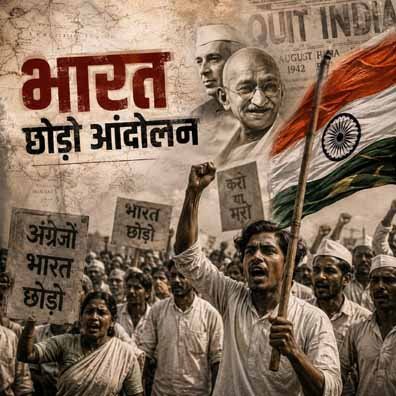
भारतीय स्वतंत्रता संग्राम का सबसे व्यापक, निर्णायक और जन-आधारित आंदोलन था भारत छोड़ो आंदोलन. इसे अगस्त क्रांति के नाम से भी जाना जाता है. इस आंदोलन ने भारतीय जनता की राजनीतिक चेतना को नई ऊँचाई प्रदान की. इस आंदोलन का उद्देश्य ब्रिटिश शासन को भारत से तत्काल हटने के लिए विवश करना था. 8 अगस्त 1942 को बंबई (अब मुंबई) के ग्वालिया टैंक मैदान में अखिल भारतीय कांग्रेस समिति के सत्र में महात्मा गांधी द्वारा ब्रिटिश साम्राज्य को समाप्त करने के लिए इसका आह्वान किया गया था. था। महात्मा गांधी ने इस अवसर पर देशवासियों को “करो या मरो” का अमर संदेश दिया, जिसने पूरे राष्ट्र में स्वतंत्रता की नई चेतना का संचार किया.
भारत छोड़ो आंदोलन का प्रारंभ द्वितीय विश्व युद्ध के दौरान हुआ था जब ब्रिटेन ने भारतीय नेताओं की सहमति के बिना युद्ध में शामिल कर लिया था, जिससे भारतियों में असंतोष बढ़ा. साथ ही नागरिक स्वतंत्रताओं पर प्रतिबंध और राजनीतिक नेताओं की गिरफ्तारी से जनता में रोष था, ब्रिटिश सरकार द्वारा भेजे गए क्रिप्स मिशन के प्रस्ताव भारतीय नेताओं को स्वीकार्य नहीं थे. दूसरी तरफ, युद्ध के कारण महँगाई, बेरोज़गारी और खाद्यान्न संकट उत्पन्न हो गया था. भारतीय नेताओं ने स्वतंत्रता के लिए तत्काल और पूर्ण समर्थन की मांग की,इस आंदोलन का नेतृत्व भारतीय राष्ट्रीय कांग्रेस द्वारा किया गया था, और इसके प्रमुख नेता महात्मा गांधी थे. गांधीजी ने इस आंदोलन को “भारत छोड़ो” के नारे के तहत शुरू किया, जिसमें ब्रिटिश सरकार से भारत छोड़ने की मांग की गई.
8 अगस्त 1942 को, मुंबई में भारतीय राष्ट्रीय कांग्रेस के अखिल भारतीय अधिवेशन में महात्मा गांधी ने “भारत छोड़ो” प्रस्ताव पेश किया. इस प्रस्ताव में ब्रिटिश शासन को तत्काल समाप्त करने की मांग की गई और भारतीयों से पूर्ण स्वतंत्रता की अपील की गई.
गांधीजी ने आंदोलन के लिए एक शांतिपूर्ण और सत्याग्रह (अहिंसात्मक विरोध) की रणनीति अपनाई. उन्होंने ब्रिटिश शासन के खिलाफ व्यापक और संगठित विरोध का आह्वान किया. आंदोलन के प्रारंभिक दिनों में, व्यापक जन समर्थन और विरोध प्रदर्शनों की लहर दौड़ गई. कई शहरों और गांवों में विरोध प्रदर्शन, हड़तालें और धरने आयोजित किए गए.
ब्रिटिश सरकार ने आंदोलन को कुचलने के लिए कठोर कदम उठाए. गांधीजी और कांग्रेस के अन्य नेताओं को गिरफ्तार कर लिया गया और कई जगहों पर पुलिस और सैन्य बलों द्वारा दमन किया गया. आंदोलन के दौरान कई प्रमुख नेताओं की गिरफ्तारी और दमन के बावजूद, सामान्य जनता ने आंदोलन को समर्थन प्रदान किया और कई जगहों पर उपद्रव और विद्रोह की घटनाएँ हुईं.
भारत छोड़ो आंदोलन के दमन के बावजूद, इसने भारतीय स्वतंत्रता संग्राम को एक नई दिशा दी. यह आंदोलन ब्रिटिश सरकार पर भारतीय जनता के असंतोष और दबाव को स्पष्ट करने में सफल रहा. वर्ष 1947 में, भारत को स्वतंत्रता मिली और ब्रिटिश शासन का अंत हुआ. भारत छोड़ो आंदोलन ने स्वतंत्रता संग्राम की गति को तेज किया और भारतीय स्वतंत्रता की दिशा में एक महत्वपूर्ण कदम साबित हुआ.
भारत छोड़ो आंदोलन ने भारतीय स्वतंत्रता संग्राम को एक नई दिशा दी और महात्मा गांधी के नेतृत्व में अहिंसात्मक विरोध की शक्ति को साबित किया. इस आंदोलन ने भारतीय जनता के बीच एक नया जागरूकता और आत्म-निर्भरता का संचार किया, जो स्वतंत्रता प्राप्ति की दिशा में एक महत्वपूर्ण प्रेरणा बना.
========== ========= ===========
Quit India Movement
The Quit India Movement was the most widespread, decisive, and mass-based movement of the Indian freedom struggle. It is also known as the August Revolution. This movement elevated the political consciousness of the Indian people to new heights. Its objective was to force British rule to withdraw from India immediately. It was called for by Mahatma Gandhi to end the British Empire at the All India Congress Committee session held at the Gowalia Tank Maidan in Bombay (now Mumbai) on August 8, 1942. On this occasion, Mahatma Gandhi delivered the immortal message of “Do or Die” to his countrymen, which instilled a new sense of independence throughout the nation.
The Quit India Movement began during World War II when Britain entered the war without the consent of Indian leaders, fueling discontent among Indians. The restrictions on civil liberties and the arrest of political leaders were also a source of public anger. The proposals of the Cripps Mission sent by the British government were unacceptable to Indian leaders. Furthermore, the war had led to inflation, unemployment, and a food crisis. Indian leaders demanded immediate and complete support for independence. The movement was led by the Indian National Congress, and its main leader was Mahatma Gandhi. Gandhi launched the movement under the slogan “Quit India,” demanding the British government leave India.
On August 8, 1942, at the All India Session of the Indian National Congress in Mumbai, Mahatma Gandhi introduced the “Quit India” resolution. This resolution demanded the immediate end of British rule and appealed to Indians for complete independence.
Gandhi adopted a peaceful and Satyagraha (non-violent protest) strategy for the movement. He called for widespread and organized opposition against British rule. In the early days of the movement, widespread public support and protests swept the country. Protests, strikes, and sit-ins were held in many cities and villages.
The British government took harsh measures to crush the movement. Gandhi and other Congress leaders were arrested, and in many places, police and military forces resorted to repression. Despite the arrest and repression of several prominent leaders during the movement, the general public supported the movement, and incidents of riots and rebellion occurred in many places.
Despite the suppression of the Quit India Movement, it gave a new direction to the Indian freedom struggle. This movement was successful in voicing the discontent and pressure of the Indian people on the British government. In 1947, India gained independence, ending British rule. The Quit India Movement accelerated the pace of the freedom struggle and proved a significant step towards Indian independence.
The Quit India Movement gave a new direction to the Indian freedom struggle and proved the power of non-violent protest under the leadership of Mahatma Gandhi. This movement instilled a new awareness and self-reliance among the Indian people, which became a significant impetus towards achieving independence.