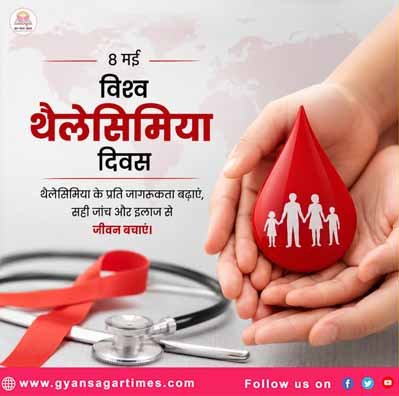
विश्व थैलेसीमिया दिवस हर वर्ष 8 मई को मनाया जाता है. यह दिन थैलेसिमिया के प्रति जागरूकता बढ़ाने और इस बीमारी से प्रभावित लोगों के प्रति समर्थन और सहानुभूति दिखाने के लिए समर्पित है. थैलेसीमिया एक ऐसी बीमारी है जो शरीर की हीमोग्लोबिन बनाने की क्षमता को प्रभावित करती है, जिससे एनीमिया (खून की कमी) हो जाती है.
थैलेसिमिया एक आनुवंशिक रक्त विकार है, जिसमें शरीर में हीमोग्लोबिन का उत्पादन ठीक से नहीं हो पाता. यह माता-पिता से बच्चों में आनुवंशिक रूप से स्थानांतरित होता है और इसके कारण एनीमिया जैसी स्थिति उत्पन्न होती है, जिससे रोगी को बार-बार रक्त चढ़ाने की आवश्यकता होती है.
थैलेसीमिया मुख्य रूप से दो प्रकार का होता है. a. अल्फा थैलेसीमिया, b. बीटा थैलेसीमिया. थैलेसीमिया के लक्षण रोग की गंभीरता के आधार पर भिन्न हो सकते हैं. कुछ सामान्य लक्षणों में – थकान और कमजोरी, पीली त्वचा (पीलिया), सांस लेने में तकलीफ, हड्डियों की विकृति (विशेषकर चेहरे और खोपड़ी में), धीमी वृद्धि और विकास, पेट फूलना (बढ़ा हुआ प्लीहा या यकृत) और बार-बार संक्रमण होना.
विश्व स्वास्थ्य संगठन के अनुसार, विश्व की लगभग 7% जनसंख्या किसी न किसी प्रकार के हीमोग्लोबिन विकार की वाहक है. थैलेसिमिया मुख्यतः भूमध्यसागरीय क्षेत्र, मध्य पूर्व, दक्षिण एशिया, दक्षिण-पूर्व एशिया और अफ्रीका के कुछ हिस्सों में अधिक पाया जाता है. भारत, पाकिस्तान, बांग्लादेश, थाईलैंड और ईरान जैसे देशों में यह एक गंभीर सार्वजनिक स्वास्थ्य समस्या है.
भारत में 40 मिलियन लोग थैलेसिमिया वाहक हैं और 1,00,000 से अधिक लोग थैलेसिमिया मेजर से ग्रस्त हैं. हर वर्ष 10,000 बच्चे इस बीमारी के साथ जन्म लेते हैं. देश में गंभीर रूप से थैलेसिमिया रोगियों की संख्यां करीब एक लाख तक है. वहीं, देश में कुछ ऐसे समुदाय हैं जैसे- गुजराती, सिंधी, पंजाबी, बंगाली और मारवाड़ी समुदायों में थैलेसिमिया के रोगियों की संख्यां काफी अधिक है.
विश्व थैलेसिमिया दिवस का उद्देश्य थैलेसिमिया के प्रबंधन और उपचार की बेहतर तकनीकों के लिए अनुसंधान को बढ़ावा देना, साथ ही साथ प्रभावित व्यक्तियों और उनके परिवारों को सहायता और संसाधन प्रदान करना है. विश्व भर में स्वास्थ्य संगठन, अस्पताल और समुदाय संगठन इस दिन विभिन्न गतिविधियाँ और कार्यक्रम आयोजित करते हैं जैसे कि शिक्षण सत्र, स्वास्थ्य शिविर.
========== ========= ===========
World Thalassemia Day….
World Thalassemia Day is observed annually on May 8th. This day is dedicated to raising awareness about thalassemia and demonstrating support and empathy toward those affected by this disease. Thalassemia is a condition that impairs the body’s ability to produce hemoglobin, leading to anemia (a deficiency of red blood cells).
Thalassemia is a genetic blood disorder characterized by the body’s inability to produce hemoglobin properly. It is genetically transmitted from parents to their children and results in a state of anemia, often necessitating frequent blood transfusions for the patient.
Thalassemia primarily manifests in two forms: (a) Alpha Thalassemia and (b) Beta Thalassemia. The symptoms of thalassemia can vary depending on the severity of the disease. Some common symptoms include fatigue and weakness, pale skin (jaundice), difficulty breathing, bone deformities (particularly in the face and skull), delayed growth and development, abdominal swelling (due to an enlarged spleen or liver), and recurrent infections.
According to the World Health Organization (WHO), approximately 7% of the global population carries some form of hemoglobin disorder. Thalassemia is predominantly prevalent in the Mediterranean region, the Middle East, South Asia, Southeast Asia, and certain parts of Africa. In countries such as India, Pakistan, Bangladesh, Thailand, and Iran, it constitutes a significant public health challenge.
In India, 40 million people are carriers of thalassemia, and over 100,000 individuals suffer from Thalassemia Major. Every year, 10,000 children are born with this disease. The number of patients suffering from severe forms of thalassemia in the country stands at approximately 100,000. Furthermore, certain communities within the country—such as the Gujarati, Sindhi, Punjabi, Bengali, and Marwari communities—exhibit a significantly higher incidence of thalassemia cases. The objective of World Thalassemia Day is to promote research into improved techniques for the management and treatment of thalassemia, as well as to provide support and resources to affected individuals and their families. Health organizations, hospitals, and community groups worldwide organize various activities and programs on this day, such as educational sessions and health camps.