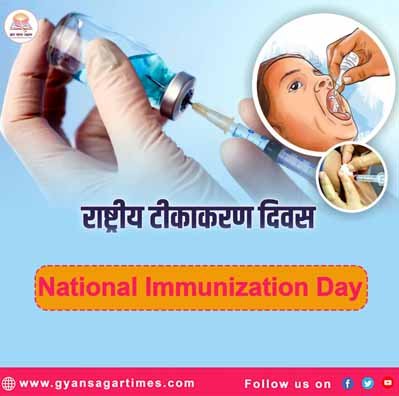
हर वर्ष 16 मार्च को भारत में राष्ट्रीय टीकाकरण दिवस मनाया जाता है. टीकाकरण दिवस विशेष रूप से स्वास्थ्य क्षेत्र में मनाए जाने वाले विशेष दिन होते हैं, जिनका उद्देश्य लोगों को विभिन्न रोगों के खिलाफ टीकाकरण के महत्व के बारे में जागरूक करना और उन्हें टीकाकरण के लिए प्रोत्साहित करना होता है.
बताते चलें कि, भारत सरकार ने विश्व स्वास्थ्य संगठन और यूनिसेफ जैसी वैश्विक संस्थाओं के सहयोग से पल्स पोलियो प्रतिरक्षण कार्यक्रम की शुरुआत आज ही के दिन वर्ष 1995 में हुई थी. उस समय भारत दुनिया के कुल पोलियो मामलों में 60% का योगदान दे रहा था. एक ऐसे जन-ऐतिहासिक आंदोलन की शुरुआत हुई जिसका नारा था “दो बूंद जिंदगी की”. इस नारा के माध्यम से हर पांच साल से कम उम्र के बच्चे को ओरल पोलियो वैक्सीन पिलाने की मुहीम शुरू हुई थी. कई वर्षों के निरंतर प्रयास के फलस्वरूप 27 मार्च 2014 को विश्व स्वास्थ्य संगठन ने भारत को पोलियो मुक्त घोषित किया.
हर वर्ष एक थीम के माध्यम से राष्ट्रीय टीकाकरण दिवस मनाया जाता है. और वर्ष 2026 का थीम है “इम्यूनाइज़ेशन फॉर ऑल इज़ ह्यूमनली पॉसिबल”.” विगत वर्षों की अपेक्षा इस वर्ष 2026 में भारत में टीकाकरण के नए रूप आ गए हैं अब टीकाकरण केवल बच्चों तक सीमित न रहकर, अब जीवनभर के टीकाकरण की अवधारणा पर बल दिया जा रहा है.
बताते चलें कि, भारत में गर्भाशय ग्रीवा के कैंसर से बचाव के लिए पहली स्वदेशी एचपीवी वैक्सीन ‘सर्वावैक’ की शुरुआत हुई है जो एक क्रांतिकारी कदम है वहीं , वर्ष 2026 में डेंगू से बचाव की वैक्सीन ‘क्यूडेंगा’ है जिसे जापानी कंपनी टेकेडा द्वारा विकसित और भारत की बायोलॉजिकल ई द्वारा निर्मित है. इस टीका के माध्यम से डेंगू जैसी बीमारी को समाप्त किया जा सकता है.
राष्ट्रीय टीकाकरण दिवस हमें याद दिलाता है कि टीके केवल बीमारी से नहीं बल्कि, कम लागत और कम समय में बीमारी से बचने का सर्वोत्तम उपाय है.
========== ========= ===========
National Vaccination Day…
National Vaccination Day is observed in India every year on March 16th. Vaccination Days are special occasions celebrated specifically within the healthcare sector, aimed at raising public awareness regarding the importance of immunization against various diseases and encouraging people to get vaccinated.
It is worth noting that the Government of India, in collaboration with global organizations such as the World Health Organization (WHO) and UNICEF, launched the Pulse Polio Immunization Program on this very day in 1995. At that time, India accounted for 60% of the total polio cases worldwide. This marked the beginning of a historic mass movement, championed by the slogan: “Do Boond Zindagi Ki” (Two Drops of Life). Through this slogan, a nationwide campaign was initiated to administer the oral polio vaccine to every child under the age of five. As a result of many years of sustained effort, the World Health Organization declared India polio-free on March 27, 2014.
National Vaccination Day is celebrated annually around a specific theme. The theme for the year 2026 is “Immunization for All is Humanly Possible.” Compared to previous years, 2026 has witnessed the emergence of new dimensions in India’s vaccination landscape; immunization is no longer confined solely to children, but rather, emphasis is now being placed on the concept of lifelong vaccination.
Furthermore, India has introduced ‘Cervavac’—the country’s first indigenously developed HPV vaccine for the prevention of cervical cancer—marking a revolutionary stride in public health. Additionally, 2026 saw the introduction of ‘Qdenga,’ a vaccine designed to prevent Dengue fever, which was developed by the Japanese company Takeda and manufactured by India’s Biological E. Through the use of this vaccine, diseases like Dengue can potentially be eradicated.
National Vaccination Day serves as a reminder that vaccines are not merely a means of protection against disease; they represent the most effective strategy for preventing illness—one that is both cost-efficient and time-saving.