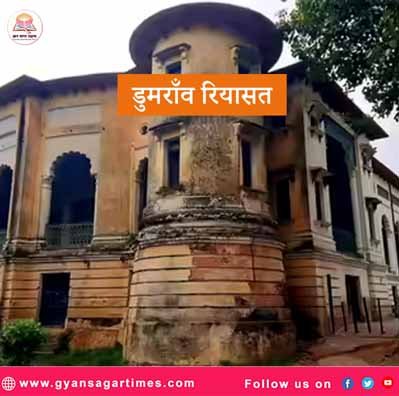
वर्तमान समय से पूर्व जब अंग्रेजों का शासन हुआ करता था तब हमारे देश में रियासतें हुआ करती थी. आज हम उन्हीं रियासतों में से एक रियासत की बात करते हैं. वो रियासत है डुमराँव रियासत.
डुमराँव रियासत, जो कभी भोजपुर रियासत का एक महत्वपूर्ण हिस्सा थी, बिहार के बक्सर जिले में स्थित एक गौरवशाली और ऐतिहासिक रियासत रही है. उज्जैनिया राजपूतों द्वारा शासित यह रियासत मुगल काल से लेकर ब्रिटिश काल तक अपनी पहचान और प्रभाव बनाए रखने में सफल रही. यह रियासत बिहार के ऐतिहासिक, आर्थिक और सांस्कृतिक परिदृश्य में एक अहम इकाई रही है. इसकी कहानी केवल सामंती शासन की नहीं, बल्कि पहले लोक-गठनों, फिर औपनिवेशिक संरचनाओं, और अंततः लोकतांत्रिक परिवर्तन के बीच एक निरंतर रूपांतरण की है.
डुमराँव क्षेत्र, भोजपुर-संस्कृति की विस्तृत रेखा में आते हुए, 17वीं सदी से औपचारिक रूप में राजसत्ता के अधीन संगठित रहा; रियासत का नामकरण और इसकी संरचना उस दौर की क्षेत्रीय स्थिरता से जुड़ी बताई जाती है. डुमराँव राज के संस्थापक उज्जैनिया राजपूत थे, जो मालवा के परमार शासकों के वंशज माने जाते हैं. 14वीं शताब्दी में ये पश्चिमी बिहार के भोजपुर क्षेत्र में आकर बसे थे.
17वीं शताब्दी के अंत में या 18वीं शताब्दी की शुरुआत में, भोजपुर के राजा नारायण मल के वंशज राजा होरिल सिंह ने खुद को अलग स्थापित कर लिया. उन्होंने वर्ष 1709 में डुमराँव शहर को अपनी राजधानी बनाया, और इस प्रकार डुमराँव रियासत अस्तित्व में आई. डुमराँव का पुराना नाम ‘होरिलनगर’ भी था.
ब्रिटिश काल के दौरान यह एक महत्वपूर्ण जमींदारी रियासत थी, जिसका विस्तार पश्चिमी बिहार के बक्सर जिले से लेकर उत्तर प्रदेश के पूर्वांचल क्षेत्र (जैसे बलिया जिले के गंगा किनारे के 70 से अधिक गाँव) तक था. इसका क्षेत्रफल लगभग 2,330 वर्ग किलोमीटर था.
भारतीय इतिहास के निर्णायक युद्धों में से एक, बक्सर की लड़ाई के दौरान, डुमराँव के राजाओं को पुरानी निष्ठा और ब्रिटिश ईस्ट इंडिया कंपनी की बढ़ती शक्ति के बीच संतुलन बनाना पड़ा. इस लड़ाई के नतीजों का डुमराँव के इतिहास पर भी गहरा प्रभाव पड़ा. डुमराँव राज ने अक्सर ब्रिटिश सत्ता के साथ अनुकूल संबंध बनाए रखे, जिसका फायदा उन्हें मिला. वर्ष 1857 के विद्रोह (First War of Indian Independence) के बाद अंग्रेजों ने कुंवर सिंह के वारिसों से जगदीशपुर की जमींदारी छीन ली, जिसका एक बड़ा हिस्सा डुमराँव रियासत में मिला दिया गया, जिससे उनकी जमींदारी और बड़ी हो गई.
डुमराँव राज न केवल एक राजनीतिक शक्ति थी, बल्कि कला, शिक्षा और समाज कल्याण का भी एक महत्वपूर्ण केंद्र थी. हिन्दुस्तानी शास्त्रीय परंपराओं के संरक्षण और प्रोत्साहन के लिए जाना जाता था. विशेष रूप से ध्रुपद, खयाल और ठुमरी के लिए डुमराँव घराने की प्रसिद्धि रही है.
बताते चलें कि, भारत रत्न उस्ताद बिस्मिल्ला ख़ाँ, जो विश्व प्रसिद्ध शहनाई वादक थे, का जन्म इसी शहर के ठठेरी बाजार में हुआ था. उनके पिता भी महाराजा केशव प्रसाद सिंह के दरबार में संगीतकार थे.
डुमराँव राज परिवार ने आधुनिक शिक्षा की नींव रखी. 10वें महाराज राधा प्रसाद सिंह ने वर्ष 1881 में राज हाई स्कूल की स्थापना की. 14वें महाराज राम रणविजय प्रसाद सिंह ने आरा में एचडी जैन कॉलेज की स्थापना के लिए जमीन दान दी और बिहार वेटनरी कॉलेज के संस्थापक सदस्यों में भी शामिल रहे. आरा में एक कॉलेज का नाम उनके नाम पर है. जनस्वास्थ्य सेवाओं के लिए डुमराँव और विक्रमगंज में राज अस्पताल स्थापित किए गए. राज परिवार ने कई तालाब खुदवाकर जल संरक्षण में योगदान दिया.
महाराजा राम रणविजय प्रसाद सिंह ने वर्ष 1941 में बिहार की पहली लालटेन फैक्ट्री की शुरुआत की, साथ ही टेक्सटाइल्स मिल्स जैसी अन्य फैक्टरियाँ भी रियासत की उपलब्धियों में शामिल थीं.
वर्ष 1952 में जमींदारी उन्मूलन के बाद डुमराँव रियासत औपचारिक रूप से समाप्त हो गई. राज परिवार के अंतिम औपचारिक महाराजा, महाराजा बहादुर कमल सिंह, ने स्वतंत्र भारत की राजनीति में कदम रखा. वह वर्ष 1952 और वर्ष 1957 में दो बार बक्सर से लोकसभा के लिए चुने गए, और वह पहली लोकसभा के सबसे युवा सांसदों में से एक थे. उन्होंने परिवार की दान-पुण्य की परंपरा को जारी रखा.
डुमराँव में स्थित राजगढ़, बांके बिहारी मंदिर और काली जी का मंदिर आज भी रियासत की समृद्ध विरासत के प्रतीक हैं.
डुमराँव रियासत भारतीय इतिहास में उज्जैनिया राजपूतों की शक्ति और सांस्कृतिक संरक्षण की एक अनूठी कहानी प्रस्तुत करती है. राजनीतिक चुनौतियों के बावजूद, इसने शिक्षा, कला और जनकल्याण के माध्यम से अपने क्षेत्र के विकास में महत्वपूर्ण योगदान दिया. आज भी, बक्सर जिले में डुमराँव राज का नाम एक सम्मानित और प्रतिष्ठित शाही घराने के रूप में लिया जाता है.
========== ========= ===========
Dumraon Princely State…
Before the present time, when the British ruled, there were princely states in our country. Today we talk about one of those princely states: the Dumraon Princely State.
The Dumraon Princely State, which was once an important part of the Bhojpur princely state, has been a glorious and historical princely state located in the Buxar district of Bihar. Ruled by the Ujjainiya Rajputs, this princely state successfully maintained its identity and influence from the Mughal period to the British period. This princely state has been a crucial entity in the historical, economic, and cultural landscape of Bihar. Its story is not just one of feudal rule, but of a continuous transformation between earlier local formations, then colonial structures, and finally democratic change.
The Dumraon region, falling within the broader Bhojpur cultural sphere, was formally organized under princely rule from the 17th century; the naming of the princely state and its structure are said to be linked to the regional stability of that era. The founders of the Dumraon Raj were Ujjainiya Rajputs, who are considered descendants of the Parmar rulers of Malwa. They settled in the Bhojpur region of western Bihar in the 14th century.
At the end of the 17th century or the beginning of the 18th century, Raja Horil Singh, a descendant of Raja Narayan Mal of Bhojpur, established himself independently. He made the city of Dumraon his capital in 1709, and thus the Dumraon princely state came into existence. Dumraon was also formerly known as ‘Horilnagar’.
During the British period, it was an important zamindari (landlord) princely state, extending from the Buxar district of western Bihar to the Purvanchal region of Uttar Pradesh (such as more than 70 villages along the Ganges in Ballia district). Its area was approximately 2,330 square kilometers.
During the Battle of Buxar, one of the decisive battles of Indian history, the kings of Dumraon had to strike a balance between their old loyalties and the growing power of the British East India Company. The results of this battle had a profound impact on the history of Dumraon. The Dumraon princely state often maintained favorable relations with the British authorities, which benefited them. After the 1857 rebellion (First War of Indian Independence), the British confiscated the Jagdishpur zamindari from Kunwar Singh’s heirs, a large part of which was merged into the Dumraon princely state, thus increasing their landholdings.
The Dumraon princely state was not only a political power but also an important center of art, education, and social welfare. It was known for the preservation and promotion of Hindustani classical traditions. The Dumraon gharana (school of music) was particularly famous for Dhrupad, Khayal, and Thumri.
It is worth mentioning that Bharat Ratna Ustad Bismillah Khan, the world-renowned shehnai player, was born in Thatheri Bazaar in this city. His father was also a musician in the court of Maharaja Keshav Prasad Singh.
The Dumraon royal family laid the foundation of modern education. The 10th Maharaja Radha Prasad Singh established Raj High School in 1881. The 14th Maharaja Ram Ranvijay Prasad Singh donated land for the establishment of HD Jain College in Ara and was also among the founding members of Bihar Veterinary College. A college in Ara is named after him. Raj hospitals were established in Dumraon and Vikramganj for public health services. The royal family contributed to water conservation by constructing several ponds.
Maharaja Ram Ranvijay Prasad Singh started Bihar’s first lantern factory in 1941, and other factories like textile mills were also among the achievements of the princely state.
After the abolition of zamindari in 1952, the Dumraon princely state formally ceased to exist. The last formal Maharaja of the royal family, Maharaja Bahadur Kamal Singh, entered the politics of independent India. He was elected to the Lok Sabha from Buxar twice, in 1952 and 1957, and was one of the youngest Members of Parliament in the first Lok Sabha. They continued the family’s tradition of philanthropy.
Rajgarh, the Banke Bihari Temple, and the Kali Ji Temple located in Dumraon still stand today as symbols of the princely state’s rich heritage.
The Dumraon princely state presents a unique story of the power and cultural patronage of the Ujjainiya Rajputs in Indian history. Despite political challenges, it made significant contributions to the development of its region through education, art, and public welfare. Even today, the name of the Dumraon royal family is held in high esteem and respect in Buxar district.