
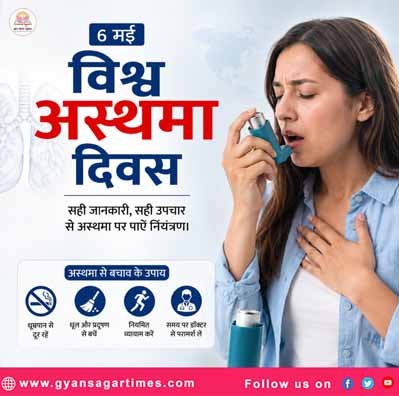
विश्व अस्थमा दिवस हर साल मई माह के पहले मंगलवार को मनाया जाता है. इस दिन का उद्देश्य अस्थमा के प्रति जागरूकता बढ़ाना और इस बीमारी के प्रबंधन, रोकथाम और उपचार पर ध्यान केंद्रित करना है. चूकिं,अस्थमा एक दीर्घकालिक रोग है, जो लाखों लोगों के जीवन की गुणवत्ता को प्रभावित करता है. विश्व स्वास्थ्य संगठन (WHO) के अनुसार, दुनिया भर में लगभग 26 करोड़ (260 मिलियन) से अधिक लोग अस्थमा से पीड़ित हैं, और प्रतिवर्ष 4.5 लाख से अधिक मौतें इसी के कारण होती हैं.
अस्थमा : – एक दीर्घकालिक सूजन संबंधी बीमारी है, जो वायुमार्ग (ब्रोंकियल ट्यूब्स) को प्रभावित करती है. इस सूजन के कारण वायुमार्ग अत्यधिक संवेदनशील हो जाते हैं और विभिन्न ट्रिगर्स (जैसे धूल, परागकण, धुआं, ठंडी हवा, व्यायाम या तनाव) के संपर्क में आने पर ये सिकुड़ने लगते हैं, जिससे सांस लेने में कठिनाई होती है. उदाहरण: सांस फूलना, सीने में जकड़न, खांसी और सांस लेते समय सीटी जैसी आवाज निकलना. यह रोग बच्चों से लेकर बुजुर्गों तक सभी आयु वर्ग को प्रभावित करता है.
अस्थमा दिवस की शुरुआत वर्ष 1998 में ‘ग्लोबल इनिशिएटिव फॉर अस्थमा’ ने की थी. उसके बाद से यह क वैश्विक अभियान बन गया है, जिसमें 35 से अधिक देशों के स्वास्थ्य संगठन, चिकित्सक और अस्थमा रोगी एकजुट होते हैं. अस्थमा दिवस का उद्देश्य है कि, अस्थमा रोगियों को उनके लक्षणों, ट्रिगर्स और बचाव के उपायों के बारे जानकारी देना साथ ही स्वास्थ्य नीतियों में बदलाव लाना, ताकि सस्ती और प्रभावी दवाइयाँ (जैसे इनहेलर) सबकी पहुँच में हों. आम लोगों को अस्थमा से जुड़ी भ्रांतियों और गलत अवधारणाओं को तोड़ते हुए सही जानकारी से अवगत करना. क्योंकि अस्थमा एक संक्रामक रोग है और यह रोग आनुवंशिक और पर्यावरणीय कारणों से होता है.
बताते चलें कि ग्रामीण और पिछड़े क्षेत्रों में लोग अस्थमा को सामान्य खांसी-ज़ुकाम समझ लेते हैं. इनहेलर और आधुनिक दवाइयाँ शहरी क्षेत्रों में उपलब्ध हैं, लेकिन ग्रामीण इलाकों में इनकी कमी है, साथ ही प्रदूषण, धूल, धुआँ और एलर्जी अस्थमा को और गंभीर बनाते हैं. अक्सर रोगी को “कमज़ोर” या “बीमार” मानकर सामाजिक दूरी बना ली जाती है.
बताते चलें कि, विकसित देशों (जैसे ऑस्ट्रेलिया, यूके, अमेरिका) में अस्थमा की दर अधिक है परन्तु,वहाँ निदान और उपचार की सुविधाएँ बेहतर हैं. ठीक इसके विपरीत, विकासशील देशों (भारत, अफ्रीका, दक्षिण-पूर्व एशिया) में न केवल जागरूकता की कमी है, बल्कि इनहेलर जैसी बुनियादी दवाओं की उपलब्धता और वहन क्षमता भी एक बड़ी चुनौती है. विश्व स्वास्थ संगठन की रिपोर्ट के अनुसार, अस्थमा से होने वाली 80% से अधिक मौतें निम्न और मध्यम आय वाले देशों में होती हैं, जहाँ उचित उपचार नहीं मिल पाता है.
भारत में अस्थमा रोगियों की संख्यां करीब तीन करोड़ है. अस्थमा रोगियों के बढ़ने का कारण वायु प्रदूषण है और भारतवर्ष में वायु प्रदूषण के बढ़ते (PM 2.5) स्तर के कारण अस्थमा रोगियों की संख्या में लगातार इजाफा हो रहा है. खासकर महानगरों में यह समस्या अति गंभीर है. ग्रामीण क्षेत्रों में पल्मोनोलॉजिस्ट (फेफड़े के विशेषज्ञ) की भारी कमी है जबकि भारत सरकार ने आयुष्मान योजना के तहत अस्थमा रोगियों का ईलाज किया जा रहा है.
विश्व अस्थमा दिवस केवल एक जागरूकता कार्यक्रम नहीं, बल्कि एक आंदोलन है. जो हमे याद दिलाता है कि, अस्थमा को पूरी तरह से ठीक नहीं किया जा सकता, लेकिन सही जानकारी, समय पर इलाज और स्वस्थ जीवनशैली से इसे पूरी तरह नियंत्रित किया जा सकता है. यह दिवस हमें यह सोचने पर मजबूर करता है कि क्या हम सांस लेने की सहजता को हल्के में लेते हैं वहीं, अस्थमा रोगियों के लिए हर सांस एक संघर्ष ही होता है.
========== ========= ===========
Asthma Day…
World Asthma Day is observed every year on the first Tuesday of May. The objective of this day is to raise awareness about asthma and to focus on the management, prevention, and treatment of this disease. Asthma is a chronic condition that impacts the quality of life for millions of people. According to the World Health Organization (WHO), more than 260 million people worldwide suffer from asthma, and over 450,000 deaths occur annually due to this condition.
Asthma: – It is a chronic inflammatory disease that affects the airways (bronchial tubes). Due to this inflammation, the airways become hypersensitive; upon exposure to various triggers (such as dust, pollen, smoke, cold air, exercise, or stress), they begin to constrict, making breathing difficult. Symptoms include shortness of breath, chest tightness, coughing, and a whistling sound (wheezing) while breathing. This disease affects people of all age groups, ranging from children to the elderly.
Asthma Day was initiated in 1998 by the ‘Global Initiative for Asthma’ (GINA). Since then, it has evolved into a global campaign in which health organizations, medical professionals, and asthma patients from over 35 countries come together. Asthma Day aims to educate asthma patients about their symptoms, triggers, and preventive measures, as well as to advocate for changes in health policies to ensure that affordable and effective medications (such as inhalers) are accessible to everyone. It also seeks to provide the general public with accurate information, thereby dispelling common myths and misconceptions associated with asthma. It is important to note that asthma is a non-communicable disease, and it is caused by a combination of genetic and environmental factors.
It is worth noting that in rural and underdeveloped regions, people often mistake asthma for a common cough or cold. While inhalers and modern medications are available in urban areas, they remain scarce in rural regions; moreover, factors such as pollution, dust, smoke, and allergens exacerbate the severity of asthma. Patients are often socially ostracized or kept at a distance, being perceived as “weak” or “sick.”
It is worth noting that while asthma prevalence rates are higher in developed nations (such as Australia, the UK, and the US), diagnostic and treatment facilities there are significantly superior. In stark contrast, developing nations (including India, Africa, and Southeast Asia) face not only a lack of awareness but also major challenges regarding the availability and affordability of basic medications, such as inhalers. According to a World Health Organization report, over 80% of asthma-related deaths occur in low- and middle-income countries, where access to appropriate medical treatment remains elusive.
In India, the number of asthma patients stands at approximately 30 million. The primary driver behind this rising patient count is air pollution; indeed, the continuously escalating levels of air pollution—specifically PM 2.5—across India are leading to a steady increase in the number of asthma sufferers. This issue is particularly acute in major metropolitan areas. Furthermore, there is a severe shortage of pulmonologists (lung specialists) in rural regions, even as the Government of India continues to provide treatment for asthma patients under the Ayushman Bharat scheme.
World Asthma Day is not merely an awareness campaign; it is a movement. It serves as a poignant reminder that while asthma cannot be completely cured, it can be fully controlled through accurate information, timely medical intervention, and a healthy lifestyle. This day compels us to reflect on whether we take the simple act of breathing for granted—an act that, for those living with asthma, constitutes a struggle with every single breath.