
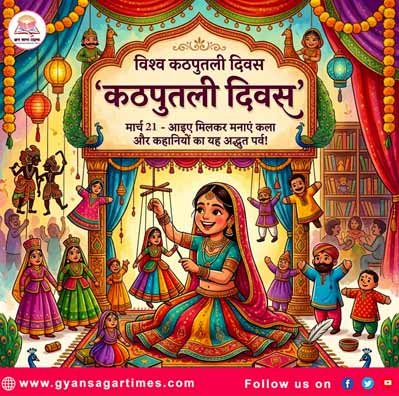
कठपुतली का इतिहास बहुत ही पुराना है यह रंगमंच पर खेले जाने वाले प्राचीनऔर जीवंत कलाओं में से एक है. यह केवल मनोरंजन का साधन नहीं, बल्कि सभ्यता के विकास की वह कड़ी है जिसने सदियों से शिक्षा, सामाजिक परिवर्तन और सांस्कृतिक विरासत को सहेजने का कार्य किया है. हर वर्ष 21 मार्च को विश्व कठपुतली दिवस मनाया जाता है.
बताते चलें कि, विश्व कठपुतली दिवस मानाने का विचार सबसे पहले ईरानी कठपुतली कलाकार जवाद जोलपाघरी को आया. उन्होंने वर्ष 2000 में यूनियन इंटरनेशनेल डे ला मैरियनेट (यूनिमा) के 18वें सम्मेलन में रखा था. वर्ष 2002 में अटलांटा में यूनिमा परिषद ने इसे मंजूरी दी. विश्व कठपुतली दिवस की शुरुआत वर्ष 2003 में फ्रांस से हुई थी. उसके बाद हर वर्ष 21 मार्च को विश्वभर में विश्व कठपुतली दिवस मनाया जाता है.
विश्व कठपुतली दिवस का मुख्य उद्देश्य कठपुतली कला के प्रति वैश्विक जागरूकता बढ़ाना साथ ही विलुप्त हो रही पारंपरिक कठपुतली शैलियों का संरक्षण करना और कलाकारों को एक साझा मंच भी प्रदान करना.
बताते चलें कि, कठपुतली कला लगभग 4000 वर्ष पुरानी है और मिस्र, भारत, चीन, ग्रीस जैसी सभ्यताओं में इसका प्रयोग हुआ है. इस कला की सबसे बड़ी विशेषता इसकी ‘मूक अभिव्यक्ति’ और ‘निर्जीव में सजीवता’ का संचार है. मनोवैज्ञानिक दृष्टि से, मनुष्य अक्सर जीवित कलाकारों की तुलना में कठपुतलियों के संदेश को अधिक सहजता और बिना किसी रक्षात्मक रवैये के स्वीकार करता है.
यह बच्चों को नैतिक शिक्षा देने, लोककथाओं को जीवित रखने और सामाजिक संदेश पहुँचाने का सशक्त माध्यम भी है. कठपुतली प्रदर्शन भाषा की सीमाओं को पार कर कल्पना और भावनाओं से सीधे जुड़ते हैं. उदाहरण – दहेज प्रथा, स्वच्छता और टीकाकरण जैसे विषयों पर जनमानस को जागरूक करने में यह कला ‘नुक्कड़ नाटकों’ का अहम हिस्सा रही है.
भारत में कठपुतली कला का इतिहास ‘शिल्पशास्त्र’ और ‘नाट्यशास्त्र’ जितना ही पुराना है. राजस्थान से लेकर तमिलनाडु तक, हर राज्य की अपनी अनूठी शैली है. वहीं, डिजिटल दुनिया के बढ़ते प्रभाव के कारण यह कला अब ग्रामीण क्षेत्रों तक ही सिमट गई है.
विश्व कठपुतली दिवस केवल एक कला का उत्सव नहीं है, बल्कि यह मानव कल्पना, सांस्कृतिक विविधता और सामाजिक संवाद का प्रतीक है. तकनीक के क्षेत्र में दुनिया में कितनी भी आगे बढ़ जाए, मानवीय स्पर्श और कल्पनाशीलता का जो संगम है वो एक कठपुतली कलाकार अपने हाथों से ही पैदा करता है.
========== ========= ===========
World Puppetry Day…
The history of puppetry is ancient; it stands as one of the most enduring and vibrant art forms performed on the stage. It is not merely a means of entertainment, but a vital link in the evolution of civilization—one that has, for centuries, served to educate, drive social change, and preserve cultural heritage. World Puppetry Day is celebrated annually on March 21st.
It is worth noting that the concept of celebrating World Puppetry Day was first conceived by the Iranian puppeteer Javad Zolfaghari. He proposed the idea during the 18th Congress of the *Union International de la Mari World Puppetry Day…
The history of puppetry is ancient; it stands as one of the most enduring and vibrant art forms performed on the stage. It is not merely a means of entertainment, but a vital link in the evolution of civilization—one that has, for centuries, served to educate, drive social change, and preserve cultural heritage. World Puppetry Day is celebrated annually on March 21st.
It is worth noting that the concept of celebrating World Puppetry Day was first conceived by the Iranian puppeteer Javad Zolfaghari. He proposed the idea during the 18th Congress of the *Union International de la Marionette (UNIMA) in the year 2000. In 2002, the UNIMA Council officially approved the proposal during its meeting in Atlanta. World Puppetry Day was inaugurated in 2003 in France. Since then, World Puppetry Day has been celebrated globally every year on March 21st.
The primary objective of World Puppetry Day is to foster global awareness regarding the art of puppetry, to preserve traditional puppetry styles that are at risk of extinction, and to provide a shared platform for artists.
Notably, the art of puppetry dates back approximately 4,000 years and has been practiced across various civilizations, including those of Egypt, India, China, and Greece. The most distinctive characteristics of this art form are its “silent expression” and its ability to infuse “lifelikeness into inanimate objects.” From a psychological perspective, human beings often accept messages conveyed through puppets with greater ease—and without adopting a defensive stance—compared to messages delivered by live performers.
It also serves as a powerful medium for imparting moral education to children, keeping folklore alive, and disseminating social messages. Puppetry performances transcend linguistic barriers, connecting directly with the imagination and emotions of the audience. For instance, this art form has played a pivotal role—often as an integral part of “street plays” (Nukkad Nataks)—in raising public awareness regarding critical issues such as the dowry system, sanitation, and vaccination. In India, the history of puppetry is as ancient as the Shilpashastra and the Natya Shastra*. From Rajasthan to Tamil Nadu, every state possesses its own unique style. However, due to the growing influence of the digital world, this art form has now largely become confined to rural areas.
World Puppetry Day is not merely a celebration of an art form; it is a symbol of human imagination, cultural diversity, and social dialogue. No matter how far the world advances in the realm of technology, the unique blend of the human touch and imagination is something that a puppeteer brings to life solely through the work of their own hands. onnette (UNIMA) in the year 2000. In 2002, the UNIMA Council officially approved the proposal during its meeting in Atlanta. World Puppetry Day was inaugurated in 2003 in France. Since then, World Puppetry Day has been celebrated globally every year on March 21st.
The primary objective of World Puppetry Day is to foster global awareness regarding the art of puppetry, to preserve traditional puppetry styles that are at risk of extinction, and to provide a shared platform for artists.
Notably, the art of puppetry dates back approximately 4,000 years and has been practiced across various civilizations, including those of Egypt, India, China, and Greece. The most distinctive characteristics of this art form are its “silent expression” and its ability to infuse “lifelikeness into inanimate objects.” From a psychological perspective, human beings often accept messages conveyed through puppets with greater ease—and without adopting a defensive stance—compared to messages delivered by live performers.
It also serves as a powerful medium for imparting moral education to children, keeping folklore alive, and disseminating social messages. Puppetry performances transcend linguistic barriers, connecting directly with the audience’s imagination and emotions. For instance, this art form has played a pivotal role—often as an integral part of “street plays” (Nukkad Nataks)—in raising public awareness regarding critical issues such as the dowry system, sanitation, and vaccination. In India, the history of puppetry is as ancient as the Shilpashastra and the Natya Shastra. From Rajasthan to Tamil Nadu, every state possesses its own unique style. However, due to the growing influence of the digital world, this art form has now largely become confined to rural areas.
World Puppetry Day is not merely a celebration of an art form; it is a symbol of human imagination, cultural diversity, and social dialogue. No matter how far the world advances in the realm of technology, the unique blend of the human touch and imagination is something that a puppeteer brings to life solely through the work of their own hands.