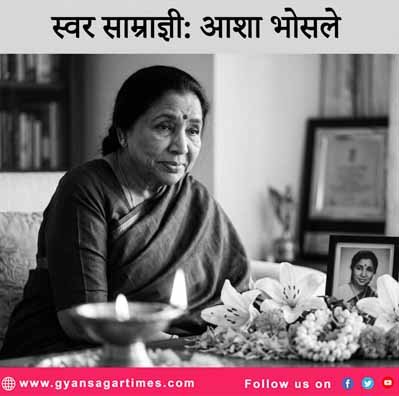
भारतीय संस्कृति में संगीत का अहम योगदान है. वहीं, संगीत जगत में कुछ ऐसे नाम हैं जो समय की सीमाओं को पार कर जाते हैं. आशा भोसले भी उन्हीं महान हस्तियों में से एक हैं जो लगभग आठ दशकों तक फैले अपने कैरियर में उन्होंने हजारों गीत गाए, सैकड़ों फिल्मों में अपनी आवाज़ का जादू बिखेरा और संगीत की विभिन्न विधाओं में महारत हासिल की. 12 अप्रैल 2026 को 92 वर्ष की आयु में आशा भोसले का निधन हुआ. आशा भोसले न केवल एक पार्श्वगायिका हैं, बल्कि एक संगीत विरासत की भी प्रतीक हैं.
आशा भोसले के पिता दीनानाथ मंगेशकर एक प्रसिद्ध नाटकीय अभिनेता और शास्त्रीय गायक थे. आशा का जन्म 8 सितंबर 1933 को महाराष्ट्र के सांगली में हुआ था. करीब पांच साल की छोटी उम्र में ही उनके पिता का देहांत हो गया. इसके बाद परिवार ने अत्यधिक कठिनाइयों का सामना किया। उसके बाद उनकी बड़ी बहन लता मंगेशकर ने परिवार की कमान संभाली और आशा ने भी बचपन से ही संगीत सीखना शुरू कर दिया था, लेकिन उनका रास्ता लता जी की तुलना में अधिक कठिन था. शुरुआती दिनों में उन्हें फिल्म इंडस्ट्री में अपनी जगह बनाने के लिए काफी संघर्ष करना पड़ा।
आशा भोसले की सबसे बड़ी विशेषता उनकी अद्भुत बहुमुखी प्रतिभा है. उनकी आवाज़ में वह क्षमता है जो भारी-भरकम शास्त्रीय रागों से लेकर सिहरन भरे कैबरे गीतों तक, दिल को छू लेने वाले शोकगीतों से लेकर जोश भरे देशभक्ति गीतों तक हर रंग में रंग सकती है. उन्होंने ‘राग मालकौंस’, ‘राग दरबारी’ जैसे दुर्लभ रागों में भी गाया है. फिल्म ‘देवदास’ (2002) का गीत “मारा पिया घर आए” उनके शास्त्रीय ज्ञान का उत्कृष्ट उदाहरण है. वहीं, आशा ताई ने ठुमरी शैली को आधुनिक ढांचे में पिरोकर फिल्म: अब के बरस का गाना “अब के बरस भेजो” को अमर कर दिया।
आशा ताई ने वर्ष 1960-70 के दशक में कैबरे गीतों को नई परिभाषा देते हुए “मेरा नाम चिन चिन चू” (हाउस नंबर 44), “पिया तू अब तो आजा” (कारवां), “ये मेरा दिल” (डॉन) गाने गा कर एक नई मिसाल पेश की और उन्हें ‘कैबरे क्वीन’ का दर्जा मिला। बताते चलें कि, इन गीतों में उनकी आवाज़ में एक विशेष तरह का ठसक, बेपरवाही और शरारत है, जो उस समय की नायिकाओं के लिए बिल्कुल नया था. वहीं, उनके गाये भावनात्मक गीतों में एक अलग गहराई थी. उदाहरण – फिल्म ‘आनंद’ का “कहीं दूर जब दिन ढल जाए” या ‘उमराव जान’ का “दिल चीज़ क्या है” जैसे गीतों में उनकी आवाज़ में करुणा और संवेदनशीलता का अद्भुत मेल देखने को मिलता है.
बताते चलें कि, आशा भोसले ने लगभग सभी महान संगीतकारों के साथ काम किया है. उदाहरण – ओ.पी. नैयर, एस.डी. बर्मन, आर.डी. बर्मन, कल्याणजी-आनंदजी, शंकर-जयकिशन, लक्ष्मीकांत-प्यारेलाल और नौशाद से लेकर आज के ए.आर. रहमान और विशाल-शेखर तक, इन सभी ने उनकी प्रतिभा का लोहा माना है.
आशा भोसले ने दो विवाह किया था. पहला विवाह उन्होंने गणपत राव भोसले से की जो पूरी तरह से असफल रही. इस दौरान उन्होंने मानसिक व शारीरिक संघर्ष से भी दो-चार होना पड़ा था. उसके बाद उन्होंने दूसरा विवाह संगीतकार आर.डी. बर्मन से किया. और उनका यह साझा सफर सबसे चर्चित रहा. बताते चलें कि, पति-पत्नी होने के साथ-साथ, वे एक अद्भुत संगीत जोड़ी थे. पंचम के प्रयोगशील और पश्चिमी संगीत से प्रभावित धुनों को आशा जी ने अपनी दमदार और अनुशासित आवाज़ से जीवंत किया। उदाहरण – “दम मारो दम”, “मेहबूबा मेहबूबा”, “छुरा लिया है तुमने”.
ज्ञात है कि, लंबे समय तक संगीत जगत में लता मंगेशकर की उपस्थिति इतनी मजबूत थी कि आशा जी को हमेशा उनकी “छोटी बहन” के रूप में देखा जाता था. लेकिन आशा भोसले ने धीरे-धीरे एक ऐसी पहचान बनाई जो बिल्कुल अलग थी. जहाँ लता जी का गायन शुद्धता, मधुरता और संयम का प्रतीक है, वहीं आशा ताई का गायन साहसिकता, प्रयोगशीलता और अप्रत्याशितता था. एक तरफ लता जी के लिए ‘सरलता’ जितनी ज़रूरी थी, वहीं,दूसरी तरफ आशा ताई के लिए ‘विविधता’ उतनी ही महत्वपूर्ण थी. सी अंतर ने आशा जी को एक स्वतंत्र और अनोखी पहचान मिली.
आशा भोसले सिर्फ भारत तक सीमित नहीं रहीं वहीं, पश्चिमी दुनिया ने भी उनकी आवाज़ को सराहा गया. कॉर्नर शॉप के “ब्रिट अवार्ड्स” में उनके गीत “मेहबूबा” का सैंपल, ब्रिटिश बैंड ‘स्टीरियो टोटल’ के साथ सहयोग, और हॉलीवुड फिल्मों में उनके गीतों के प्रयोग ने उन्हें एक वैश्विक आइकन बना दिया. उन्हें लिम्का बुक ऑफ रिकॉर्ड्स में दुनिया की सबसे ज्यादा रिकॉर्डेड गायिकाओं में से एक का भी दर्जा मिला है.
आशा भोसले ने पारंपरिक शास्त्रीय से लेकर आधुनिक पॉप तक हर शैली में अपनी पहचान बनाई. उनकी आवाज़ ने भारतीय समाज में स्त्री की बदलती छवि को भी दर्शाया. उन्होंने ‘प्लेबैक सिंगिंग’ को पुनर्परिभाषित किया, यह दिखाते हुए कि गायिका केवल पर्दे के पीछे की आवाज़ नहीं, बल्कि सांस्कृतिक प्रतीक भी हो सकती है.
आशा भोसले का जीवन संघर्ष और सफलता का संगम था. उन्होंने साबित किया कि कला केवल मनोरंजन नहीं, बल्कि सामाजिक परिवर्तन का माध्यम भी है. उनकी आवाज़ आज भी पीढ़ियों को जोड़ती है—ग़ज़लों की नज़ाकत से लेकर फिल्मी गीतों की चंचलता तक…
गीत: – “पिया तू अब तो आजा”, “ओ हसीना ज़ुल्फ़ों वाली”, “दम मारो दम”, “चुरा लिया है तुमने जो दिल को”, “दिल चीज़ क्या है”, “मेरा कुछ सामान”, “रंगीला रे” “हंगामा हो गया”….
आशा भोसले ने अपने कैरियर में कभी पीछे मुड़कर नहीं देखा. करीब 92 वर्ष की की आयु के बाद भी जब उन्होंने ‘फुगली’ (2019) में “कुछ खास है” गीत गाया, तो उनकी आवाज़ में वही ऊर्जा और ताज़गी थी. आशा भोसले सिर्फ एक गायिका नहीं हैं बल्कि, वे भारतीय महिला सशक्तिकरण की एक अनकही मिसाल हैं, जिन्होंने कठिन परिस्थितियों में अपनी धुन बनाई और पूरी दुनिया को थिरकना सिखाया. उनकी विरासत यह है कि उन्होंने संगीत की किसी एक शैली को अपना घर नहीं बनाया, बल्कि हर शैली में खुद को ढाला और हर शैली को अपना बना लिया.
========== ========= ===========
The Empress of Melody: Asha Bhosle
Music holds a pivotal place in Indian culture. Within the realm of music, certain names transcend the boundaries of time. Asha Bhosle is one such legendary figure; over a career spanning nearly eight decades, she sang thousands of songs, wove the magic of her voice across hundreds of films, and mastered various genres of music. Asha Bhosle passed away on April 12, 2026, at the age of 92. Asha Bhosle was not merely a playback singer; she was, and remains, a symbol of a rich musical legacy.
Asha Bhosle’s father, Dinanath Mangeshkar, was a renowned stage actor and classical vocalist. Asha was born on September 8, 1933, in Sangli, Maharashtra. Her father passed away when she was just a young child, barely five years old. Following this tragedy, the family faced immense hardships. Subsequently, her elder sister, Lata Mangeshkar, took the reins of the family’s responsibilities. Asha, too, began learning music in her childhood; however, her path proved to be far more arduous than that of Lata ji. In her early days, she had to struggle significantly to carve out a niche for herself within the film industry.
Asha Bhosle’s most defining characteristic is her extraordinary versatility. Her voice possesses the remarkable capacity to adapt to every conceivable mood—ranging from complex classical ragas to scintillating cabaret numbers, from poignant melancholic ballads to spirited patriotic anthems. She has even performed in rare classical ragas such as Raga Malkauns and Raga Darbari. The song “Maar Daala” from the film Devdas (2002) stands as a magnificent testament to her command over classical music. Furthermore, Asha Tai immortalized the song “Ab Ke Baras Bhejo” from the film Ab Ke Baras by seamlessly weaving the traditional Thumri style into a modern musical framework. During the 1960s and 70s, Asha Tai redefined the cabaret genre, setting a new benchmark with songs such as “Mera Naam Chin Chin Chu” (House No. 44), “Piya Tu Ab To Aaja” (Caravan), and “Yeh Mera Dil” (Don), thereby earning the title of the ‘Cabaret Queen.’ Notably, her voice in these songs possessed a unique blend of sass, nonchalance, and playfulness—qualities that were entirely novel for the leading ladies of that era. Conversely, her renditions of emotional songs were imbued with a distinct depth. For instance, in tracks like “Kahin Door Jab Din Dhal Jaaye” from the film Anand or “Dil Cheez Kya Hai” from Umrao Jaan, her voice displays a remarkable fusion of pathos and sensitivity.
It is worth mentioning that Asha Bhosle has collaborated with nearly all the legendary music composers. From O.P. Nayyar, S.D. Burman, R.D. Burman, Kalyanji-Anandji, Shankar-Jaikishan, Laxmikant-Pyarelal, and Naushad, to contemporary composers like A.R. Rahman and Vishal-Shekhar, all have acknowledged and revered her immense talent.
Asha Bhosle was married twice. Her first marriage, to Ganpatrao Bhosle, proved to be a complete failure; during this period, she had to endure significant mental and physical hardships. Subsequently, she entered into a second marriage with the music composer R.D. Burman. Their shared journey together became one of the most celebrated partnerships in the industry. Beyond being husband and wife, they formed an extraordinary musical duo; Asha *ji* breathed life into Pancham’s experimental, Western-influenced melodies through the sheer power and discipline of her voice. Notable examples include “Dum Maro Dum,” “Mehbooba Mehbooba,” and “Chura Liya Hai Tumne.” It is well known that, for a long time, Lata Mangeshkar’s presence in the music world was so dominant that Asha-ji was invariably viewed merely as her “younger sister.” However, Asha Bhosle gradually carved out an identity for herself that was entirely distinct. While Lata-ji’s singing epitomized purity, melody, and restraint, Asha-tai’s style was characterized by boldness, experimentation, and unpredictability. On one hand, just as “simplicity” was paramount for Lata-ji, on the other, “versatility” held equal significance for Asha-tai. It was this very distinction that enabled Asha-ji to forge an independent and unique identity of her own.
Asha Bhosle’s influence was not confined solely to India; the Western world, too, embraced and appreciated her voice. The sampling of her song “Mehbooba” by The Corner Shop—which earned a nomination at the Brit Awards—her collaboration with the British band Stereo Total, and the inclusion of her songs in Hollywood films, transformed her into a global icon. She has also been recognized by the Limca Book of Records as one of the most recorded singers in the world.
Asha Bhosle left her indelible mark on every musical genre, ranging from traditional classical music to modern pop. Her voice also reflected the evolving image of women in Indian society. She redefined the concept of “playback singing,” demonstrating that a female vocalist is not merely a voice behind the screen, but can also emerge as a powerful cultural icon.
Asha Bhosle’s life stands as a confluence of struggle and success. She proved that art is not merely a form of entertainment, but also a potent vehicle for social change. To this day, her voice continues to bridge generations—spanning the delicate nuances of ghazals to the playful vivacity of film songs.
Songs: – “Piya Tu Ab To Aaja,” “O Haseena Zulfon Wali,” “Dum Maro Dum,” “Chura Liya Hai Tumne Jo Dil Ko,” “Dil Cheez Kya Hai,” “Mera Kuch Saaman,” “Rangeela Re,” “Hungama Ho Gaya,” and many more.
Throughout her illustrious career, Asha Bhosle never once looked back. Even at nearly 92, when she sang “Kuch Khaas Hai” in Fugly (2019), her voice retained the same energy and freshness. Asha Bhosle is not merely a singer; she stands as an unspoken icon of Indian women’s empowerment—a woman who, amidst challenging circumstances, charted her own musical path and taught the entire world to dance. Her legacy lies in the fact that she did not confine herself to a single musical genre; rather, she adapted herself to every style, making each one her very own.