भारतवर्ष एक कृषि प्रधान देश है और यहाँ की परम्पराये भी संस्कृति से मिली हुई हुई है. भारतीय पांचांग अनुसार वर्ष की शुरुआत चैत माह से होती है जो अंग्रेजी पंचांग अनुसार मार्च-अप्रैल का महीना होता है. फिलहाल फाल्गुन महीने का एक पक्ष बीत रहा है और इस पक्ष में रंगों व उमंगों का त्यौहार होली मनाई जा रहे है.
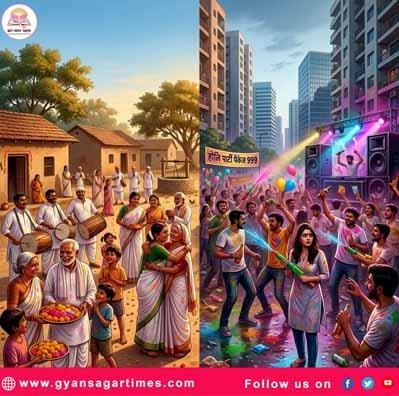
भारतीय समाज में होली का पर्व जो सदियों से सामाजिक समरसता, भाईचारे और उल्लास का प्रतीक रहा है. परंतु जब यह पर्व गाँवों से निकलकर महानगरों और कस्बों की गलियों में आता है, तो उसका स्वरूप बदल जाता है. शहरी होली केवल रंगों का उत्सव नहीं रह जाती, बल्कि सामाजिक, आर्थिक और सांस्कृतिक विरोधाभासों का आईना भी बन जाती है.
भारतवर्ष के शहरों में होली का सबसे बड़ा परिवर्तन ‘खुले आकाश’ से ‘बंद कमरे’ में मनाई जाती है जबकि, गाँव की गलियों में बहने वाली रंगीन नदियाँ अब आवासीय सोसायटियों के क्लब हाउसों और पार्किंग स्थलों में सिमट कर रह गई हैं. शहरों में आवासीय परिसर होते हैं जहाँ होली खेलने की योजना महीनों पहले शुरू हो जाती है. आरडब्ल्यूए की बैठकों में तय होता है कि होली कब, कहाँ और कैसे मनाई जाएगी। यहाँ त्योहार की सहजता ‘बुकिंग’ और ‘अनुमति’ के औपचारिक ढाँचे में ढल जाती है. यह परिवर्तन केवल भौगोलिक नहीं, बल्कि सामाजिक संरचना का पुनर्निर्धारण है.
पहले गुलाल और फूलों से रंग खेला जाता था, अब बाजार में मिलने वाले रासायनिक रंग और पानी की बर्बादी शहरी होली की पहचान बन गए हैं साथ ही होली अब केवल धार्मिक या सांस्कृतिक रस्म नहीं, बल्कि डीजे, शराब और “होलिका पार्टी पैकेज” का हिस्सा बन चुकी है. शहरी जीवन की सबसे बड़ी व्यथा है समय की. वर्तमान समय के दौर में शहरी होली अब कैलेंडर की तारीख पर नहीं, बल्कि सुविधा की तारीख पर मनाई जाती है. उदाहरण – यदि होली बुधवार को पड़ती है, तो शहरी व्यक्ति उसे अगले शनिवार को मनाएगा। यह परिवर्तन गहरा संकेत है. त्योहार अब ‘उस दिन’ का इंतजार नहीं रहा, बल्कि ‘एक दिन’ निकालकर मनाने का आयोजन बन गया है.
शहरों की होली का व्यावसायीकरण होना – वर्तमान समय के बाजार में ‘प्रीमियम हर्बल रंग’ के नाम से सौ-हजार रुपयों की डिब्बियाँ बिकती हैं, जिनमें रंग से अधिक पैकेजिंग का मूल्य होता है. विडंबना यह है कि, शहरी उपभोक्ता ‘सुरक्षित रंग’ के नाम पर अधिक भुगतान करते हैं. साथ ही पाँच सितारा होटलों और फार्म हाउसों में हजारों रूपये प्रति व्यक्ति की होली पार्टियाँ आयोजित होती हैं. होटलों और फार्म हाउसों की ‘होली’ एक थीम मात्र रह जाती है, जहाँ पश्चिमी संगीत पर नृत्य और मदिरा का प्रवाह मुख्य आकर्षण होता है. आज भी गांवों में पकवान रसोई की शान होती थी वहीँ, शहरों में हल्दीराम, बिकानेरवाला या बंगाली स्वीट्स के पैकेट में आते हैं.
शहरों में महिलाएँ अक्सर असुरक्षित महसूस करती हैं। “बुरा न मानो होली है” का बहाना छेड़खानी और हिंसा को ढक देता है. दूसरी तरफ, महानगरों में पानी संकट गहराता जा रहा है, लेकिन होली के दिन टैंकरों का पानी रंगों में बहा दिया जाता है. गाँवों में होली जाति और वर्ग की दीवारें कुछ समय के लिए टूटती हैं वहीँ, शहरों में यह विभाजन और भी गहरा हो जाता है. जहाँ क्लबों की होली और झुग्गियों की होली दो अलग-अलग दुनिया होती हैं.
वर्तमान समय के दौर में शहरी होली पर प्रौद्योगिकी का प्रभाव इतना गहरा है कि अब त्योहार का एक बड़ा हिस्सा डिजिटल दुनिया में बीतता है. गली-मोहल्लों में घूमकर रंग लगाने की परम्परा अब व्हाट्सएप ग्रुप पर ‘हैप्पी होली’ के स्टिकर्स भेजने में सिमट गई है. दूर के रिश्तेदारों को रंग लगाने के लिए अब वीडियो कॉल ही काफी है साथ ही वर्तमान समय में होली का असली उत्सव अब कैमरे के सामने ही होता है. त्योहार की सहजता ‘कंटेंट क्रिएशन’ की भेंट चढ़ गई है.
शहरी होली में ‘सुरक्षा’ सबसे बड़ा मंत्र बन गया है. शहरी व्यक्ति अब केमिकल युक्त रंगों से बचता है. त्वचा विशेषज्ञों की सलाह और मीडिया में आने वाली आँखों की जलन की खबरों ने उसे सचेत कर दिया है. शहरों में होली अब पूर्व-निर्धारित क्षेत्रों तक सीमित हो गई है वहीँ, अनजान लोगों को रंग लगाना ‘उत्पीड़न’ माना जाने लगा है, जो सामाजिक जागरूकता का प्रतीक है, लेकिन त्योहार की सहजता को भी सीमित करता है.
शहरी जीवन की सबसे बड़ी विडंबना है – भीड़ में अकेलापन. चूकिं, शहर के फ्लैटों में रहने वाले लोग अपने पड़ोसियों को भी नहीं जानते हैं. होली पर दरवाजा खटखटाने की हिम्मत भी नहीं होती, क्योंकि पता नहीं सामने वाला रंग खेलना चाहता है या नहीं. शहरी होली में दोस्तों को रंग लगाने के लिए उनके घर जाने की बजाय, बालकनी से नीचे गुजरते लोगों पर पानी फेंकना ही पर्याप्त माना जाता है.
शहरी होली महँगी होती है. डिजाइनर कपड़े, प्रीमियम रंग, ब्रांडेड पकवान और पार्टी का आयोजन. वहीँ, गाँव की सादगी और शहर की चकाचौंध में यही मूल अंतर है. एक तरफ शहरी जीवन में रिश्ते भी ‘निवेश’ बन गए हैं. होली पर किसको न्योता दें, किसको न दें… इसका भी लेखा जोखा रखना पड़ता है.
शहरी होली रंगों का उत्सव होते हुए भी सामाजिक असमानताओं, आर्थिक उपभोक्तावाद और सांस्कृतिक बदलावों का भी दर्पण है. शहरी होली को केवल ‘गिरावट’ की कहानी के रूप में नहीं देखा जाना चाहिए. चूकिं, शहरी होली का असली रंग शायद इन्हीं विरोधाभासों में बिखरा है जहाँ, एक ओर इंस्टाग्राम रील्स हैं, वहीं दूसरी ओर बचपन की यादों की तलाश है.
========== ========= ===========
Urban Holi…
India is an agricultural country, and its traditions are deeply ingrained in its culture. According to the Indian calendar, the year begins with the month of Chaitra, which corresponds to March-April according to the English calendar. Currently, the first phase of the month of Phalgun is passing, and Holi, the festival of colors and joy, is being celebrated in this fortnight.
For centuries, the festival of Holi has been a symbol of social harmony, brotherhood, and joy in Indian society. However, when this festival moves from villages to the streets of cities and towns, its form changes. Urban Holi is no longer just a celebration of colors, but also becomes a mirror of social, economic, and cultural contradictions.
The biggest change in Holi in Indian cities is that it is celebrated from the “open sky” to the “closed room,” while the colorful rivers that used to flow through village streets are now confined to the clubhouses and parking lots of residential societies. Cities have residential complexes where planning for Holi begins months in advance. RWA meetings decide when, where, and how Holi will be celebrated. Here, the spontaneity of the festival is subsumed by the formal framework of “bookings” and “permissions.” This change is not merely a geographical one, but a redefinition of social structure.
While colors were once played with gulal (coloured powder) and flowers, now commercially available chemical colors and wasteful water have become the hallmarks of urban Holi. Holi is no longer merely a religious or cultural ritual, but rather a part of DJs, alcohol, and “Holika Party Packages.” The biggest affliction of urban life is time. In today’s times, urban Holi is celebrated not on a calendar date, but on a convenient date. For example, if Holi falls on a Wednesday, an urbanite will celebrate it on the following Saturday. This signals a profound shift. The festival is no longer a wait for “that day,” but rather an event to celebrate by carving out “one day.”
Commercialization of urban Holi – In the current market, boxes of “premium herbal colors” are sold for hundreds or thousands of rupees, with the packaging costing more than the color itself. Ironically, urban consumers overpay for “safe colors.” Furthermore, Holi parties costing thousands of rupees per person are held in five-star hotels and farmhouses. Holi in hotels and farmhouses becomes a mere theme, with dancing to Western music and the flow of alcohol being the main attractions. While the dishes used to be the pride of rural kitchens, in cities, they come packaged in Haldiram’s, Bikanerwala, or Bengali sweets.
Women in cities often feel unsafe. The excuse of “Don’t mind, it’s Holi” covers up harassment and violence. Meanwhile, the water crisis in metropolitan cities is worsening, yet tanker water is wasted on colors on Holi. While Holi in villages temporarily breaks down the barriers of caste and class, this division deepens in cities, where Holi in clubs and Holi in slums are two different worlds.
In the modern era, the influence of technology on urban Holi is so profound that a large part of the festival is now spent in the digital world. The tradition of roaming the streets and applying colors has been reduced to sending “Happy Holi” stickers on WhatsApp groups. Video calls are now sufficient to apply colors to distant relatives, and the true celebration of Holi nowadays takes place in front of a camera. The spontaneity of the festival has been sacrificed to “content creation.”
“Safety” has become the key mantra in urban Holi. Urban people now avoid chemical-based colors. Advice from dermatologists and media reports of eye irritation have made them wary. In cities, Holi is now confined to pre-determined areas, while applying color to strangers is considered “harassment.” This symbolizes social awareness, but also limits the spontaneity of the festival.
The biggest irony of urban life is loneliness in the crowd. People living in city flats don’t even know their neighbors. They don’t even dare to knock on the door on Holi, as they don’t know if the person in front of them wants to play. Instead of going to friends’ homes to apply color to them, throwing water on passersby from the balcony is considered sufficient.
Urban Holi is expensive. Designer clothes, premium colors, branded food, and party arrangements are considered sufficient. This is the fundamental difference between rural simplicity and urban glitz. On the one hand, relationships have become “investments” in urban life. One has to carefully consider who to invite and who not to invite on Holi.
While urban Holi is a festival of colors, it also reflects social inequalities, economic consumerism, and cultural changes. Urban Holi shouldn’t be seen solely as a story of “decline.” The true colors of urban Holi perhaps lie in these contradictions: on the one hand, there are Instagram Reels, and on the other, there’s the search for childhood memories.