
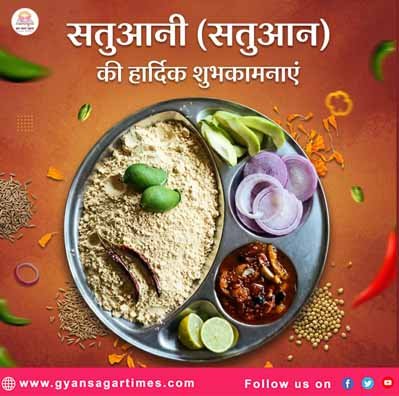
आज हम एक ऐसे लोकपर्व के बारे में बात कर रहें हैं जो मुख्यत: बिहार, झारखंड, पूर्वांचल तथा नेपाल के मिथिला क्षेत्र में बड़े हर्षोल्लास के साथ मनाया जाता है. वैसे भी भारतीय संस्कृति में प्रत्येक ऋतु का अपना एक विशेष महत्व है, और इन ऋतुओं के आगमन को चिह्नित करने के लिए अनेक पर्व एवं त्योहार मनाए जाते हैं. वैसा ही एक पर्व उत्तर भारत में हर वर्ष मेष संक्रांति के दिन मनाया जाता है. जिसे हम सभी सतुआनी (सतुआन) के नाम से जानते हैं. सतुआनी (सतुआन) का यह पर्व सूर्य के मेष राशि में प्रवेश, खरमास की समाप्ति और सौर नववर्ष की शुरुआत का भी प्रतीक है. ग्रामीण जीवन में नई फसल और स्वास्थ्य का उत्सव भी है.
बताते चलें कि, पौराणिक ग्रंथों और मान्यताओं के अनुसार, वैशाख माह में ही गंगा नदी का पृथ्वी पर अवतरण हुआ था. इसीलिए आज के दिन गंगा स्नान का विशेष महत्व होता है. संक्रांति शब्द का अर्थ होता है अपने अंदर के मन, विचार और आचरण को शुद्ध करना. सतुआनी शब्द संस्कृत के ‘सत्तु’ शब्द से व्युत्पन्न हुआ है, जिसका अर्थ होता है भुने हुए अनाज का चूर्ण (पॉउडर). यह पर्व न केवल ग्रीष्म ऋतु के आगमन का सूचक है, बल्कि किसानों की मेहनत से उपजी रबी फसलों के प्रति कृतज्ञता व्यक्त करने का भी एक सुन्दर अवसर है.
बताते चलें कि वैशाख का महीना हिंदू कैलेंडर का दूसरा माह होता है. और इसी दिन सूर्य मेष राशि में प्रवेश करता है, जिसे मेष संक्रांति भी कहा जाता है वहीं, मैथिली पंचांग के अनुसार यह वर्ष का का पहला दिन माना जाता है. मिथिला में आज के दिन ‘जुड़शीतल’ पर्व के रूप में मनाया जाता है. सतुआनी का यह पर्व केवल बिहार तक ही सीमित नहीं है, बल्कि विभिन्न नामों एवं रूपों में पूरे भारत में मनाया जाता है – पंजाब एवं हरियाणा में – वैशाखी, बंगाल में – पोहेला वैशाख, असम में – बोहाग बिहू, ओडिशा में – महाविषुव संक्रांति, उत्तराखंड में – विखोरी महोत्सव और केरल में – विशु के रूप में मनाया जाता है.
सतुआनी के पर्व का आधार वैज्ञानिक होता है. जहां हमारे पूर्वजों ने प्रकृति के नियमों को बारीकी से समझा और उन्हें पर्वों के माध्यम से संरक्षित किया है. सतुआनी के दिन बासी खाना खाने की भी परंपरा है. वैसे तो देखा जय तो यह परंपरा वास्तव में वैज्ञानिक दृष्टि से अत्यंत महत्वपूर्ण है चूकिं, गर्मियों में खाना बासी होने से उसमें प्राकृतिक रूप से किण्वन हो जाता है, जिससे प्रोबायोटिक बैक्टीरिया उत्पन्न होते हैं जो पाचन के लिए अत्यंत ही लाभकारी होते हैं.
बताते चलें कि, वैशाख माह में सूर्य अपने उच्च ताप पर होता है, जिससे लू लगने और शरीर में गर्मी बढ़ने की संभावना अधिक रहती है. इस समय प्रकृति हमें ऐसे फल और अनाज प्रदान करती है जिनमें शीतलता का प्राकृतिक गुण होता है. सतुआनी पर्व के विशेष अवसर पर विशेष रूप से जौ, चना, मकई, मडुआ (रागी) के भुने हुए सत्तू का सेवन किया जाता है, जो शरीर को ठंडक पहुंचाता है और ग्रीष्मकालीन रोगों से भी बचाता है.
बताते चलें कि, सत्तू को संपूर्ण आहार का दर्जा दिया गया है. महान व्याकरणाचार्य पाणिनि ने भी अपने ग्रंथ ‘अष्टाध्यायी’ में सत्तू का उल्लेख किया है वहीं, बुद्ध के समय में भी इसके सेवन के प्रमाण मिलते हैं. ज्ञात है कि, सत्तू में प्रोटीन, फाइबर और अन्य आवश्यक पोषक तत्व प्रचुर मात्रा में होते हैं, जो गर्मियों में ऊर्जा प्रदान करते हैं और पाचन तंत्र को स्वस्थ रखते हैं.
सतुआनी के दिन प्रातःकाल सूर्योदय से पहले उठकर गंगा स्नान या किसी पवित्र नदी में स्नान करने की भी परंपरा है. सूर्यदेव को जल अर्पित कर आशीर्वाद लिया जाता है. यह पर्व खेती-किसानी से गहराई से जुड़ा है और किसानों की मेहनत का सम्मान करता है. वहीं, सत्तू एक सस्ता और सर्वसुलभ आहार है, जिससे अमीर-गरीब सभी एक साथ बैठकर भोजन करते हैं.
सतुआनी पर्व पर तैयार किए जाने वाले व्यंजन अत्यंत सरल और स्वास्थ्यवर्धक होते हैं. सत्तू को पानी, नमक, भुना जीरा पाउडर और हरी मिर्च के साथ मिलाकर मुलायम गोले बनाकर कच्चे आम की की चटनी, प्याज और नमक मिलकर खायाजाता है. कहीं-कहीं दूध, मीठा और छाछ के साथ भी खाया जाता है. वर्तमान समय में सत्तू को ‘सुपरफूड’ माना जाता है चूकिं, सत्तू में प्रोटीन और फाइबर भरपूर मात्रा में पाया जाता है.
सतुआनी के दिन दान का विशेष महत्व होता है. आज के दिन लोग मिट्टी के बर्तनों में भोजन रखकर गरीबों एवं जरूरतमंदों को दान करते हैं. वास्तव में सतुआनी का यह पर्व सामाजिक समरसता और भाईचारे की भावना को मजबूत करता है. 21वीं सदी जो आभासी दुनिया का संसार है. इस संसार में खान-पान और जीवन शैली में काफी परिवर्तन आया है. जहां तीव्र गति से बदलती जीवनशैली ने हमें अपनी जड़ों से दूर कर दिया है वहीं, सतुआनी जैसे पर्व ने हमें हमारी सांस्कृतिक विरासत को जोड़े रखने का भी कार्य करते हैं. यह पर्व हमें सिखाता है कि कैसे हमारे पूर्वजों ने प्रकृति के साथ सामंजस्य बैठाकर जीना सीखा था.
सतुआनी पर्व केवल एक त्योहार नहीं है, बल्कि यह एक जीवंत दर्शन है जो प्रकृति के नियमों को समझने और उनके अनुरूप जीवन जीने की प्रेरणा देता है साथ ही यह पर्व किसानों के प्रति कृतज्ञता, ग्रीष्म ऋतु के प्रति सम्मान, और सामाजिक एकता का प्रतीक है. “सतुआनी पर्व हमें यह सिखाता है कि प्रकृति जब अपने चरम ताप पर होती है, तब भी वह हमें ठंडक प्रदान करने के उपाय देती है – बस जरूरत है उन्हें पहचानने और अपनाने की.” वर्तमान समय के दौर में हमें अपनी इन समृद्ध परंपराओं को न केवल संरक्षित कर अगली पीढ़ी तक पहुंचाएं तभी हमारी समृद्ध परंपरा पर गर्व होगा.
========== ========= ===========
Satuani (Satuan) Festival

Today, we are discussing a folk festival that is celebrated with great joy and enthusiasm, primarily in Bihar, Jharkhand, the Purvanchal region, and the Mithila region of Nepal. Indeed, in Indian culture, every season holds its own unique significance, and numerous festivals and celebrations are observed to mark the arrival of these seasons. One such festival is celebrated annually in North India on the day of Mesha Sankranti—a festival we all know as Satuani (or Satuan). The festival of Satuani symbolizes the Sun’s entry into the zodiac sign of Aries (*Mesha*), the conclusion of Kharmas (an inauspicious period), and the dawn of the solar New Year. In rural life, it also serves as a celebration of the new harvest and of good health.
It is worth noting that, according to mythological texts and beliefs, the River Ganges descended to Earth during the very month of Vaishakh. Consequently, taking a holy dip in the Ganges holds special significance on this day. The word Sankranti itself signifies the act of purifying one’s inner mind, thoughts, and conduct. The term Satuani is derived from the Sanskrit word ‘Sattu’, which refers to the powder of roasted grains. This festival not only heralds the arrival of the summer season but also presents a beautiful opportunity to express gratitude for the Rabi crops—the winter harvest—cultivated through the diligent labor of farmers.
Furthermore, Vaishakh is the second month of the Hindu calendar. It is on this very day that the Sun enters the sign of Aries—an astronomical event also known as Mesha Sankranti. Conversely, according to the Maithili almanac (Panchang), this day is regarded as the first day of the year. In the Mithila region, this day is celebrated as the festival of ‘Jurshital’. The festival of Satuani is not limited solely to Bihar; rather, it is celebrated across India under various names and forms—as Vaisakhi in Punjab and Haryana, Pohela Boishakh in Bengal, Bohag Bihu in Assam, Mahavishuva Sankranti in Odisha, Vikhoti Mahotsav in Uttarakhand, and Vishu in Kerala.
The festival of Satuani is grounded in scientific principles, reflecting how our ancestors keenly observed the laws of nature and preserved them through the medium of festivals. On the day of Satuani, there is also a tradition of consuming leftover food. From a scientific perspective, this tradition holds immense significance; during the summer months, allowing food to sit overnight naturally initiates a fermentation process, generating probiotic bacteria that are highly beneficial for digestion.
It is worth noting that during the month of Vaisakh, the sun reaches its peak intensity, increasing the risk of heatstroke and excessive body heat. During this period, nature provides us with fruits and grains that possess inherent cooling properties. On the special occasion of Satuani, it is customary to consume *sattu*—roasted flour made specifically from barley, chickpeas, maize, and madua (finger millet/ragi)—which cools the body and offers protection against summer-related ailments.
Furthermore, sattu has been accorded the status of a complete and wholesome food. The renowned grammarian Panini made mention of *sattu* in his seminal work, the Ashtadhyayi, and historical evidence suggests that it was also consumed during the era of the Buddha. It is well known that sattu is rich in protein, fiber, and other essential nutrients, providing sustained energy during the summer months and maintaining the health of the digestive system.
On the day of Satuani, there is also a tradition of rising early—before sunrise—to take a ritual bath in the Ganges or any other holy river. Devotees then offer water to the Sun God (*Surya Dev*) to seek his blessings. This festival is deeply intertwined with agriculture and farming, serving as a tribute to the hard work and dedication of farmers. Meanwhile, Sattu is an affordable and universally accessible food item, allowing people from all walks of life—rich and poor alike—to sit together and share a meal.
The dishes prepared during the Satuani festival are remarkably simple yet highly nutritious. Sattu is mixed with water, salt, roasted cumin powder, and green chilies to form soft balls, which are then enjoyed alongside raw mango chutney, onions, and salt. In some regions, it is also consumed with milk, sweeteners, or buttermilk. In contemporary times, Sattu is regarded as a “superfood,” primarily because it is abundantly rich in both protein and fiber.
On the day of Satuani, acts of charity hold special significance. On this day, people place food in earthen pots and donate it to the poor and the needy. In essence, this festival of Satuani serves to strengthen the spirit of social harmony and brotherhood. The 21st century is, in many respects, a world of virtual reality. Within this modern landscape, significant changes have taken place regarding dietary habits and lifestyles. While our rapidly evolving lifestyle has, in some ways, distanced us from our roots, festivals like Satuani play a vital role in keeping us connected to our cultural heritage. This festival teaches us how our ancestors learned to live in perfect harmony with nature.
The festival of Satuani is not merely a celebration; it is a living philosophy that inspires us to understand the laws of nature and to live in accordance with them. Furthermore, this festival stands as a symbol of gratitude toward farmers, reverence for the summer season, and social unity. “The festival of Satuani teaches us that even when nature is at the peak of its heat, it still provides us with ways to find coolness—all that is required is the ability to recognize and embrace them.” In these contemporary times, it is imperative that we not only preserve these rich traditions but also pass them on to the next generation; only then can we truly take pride in our magnificent cultural legacy.