
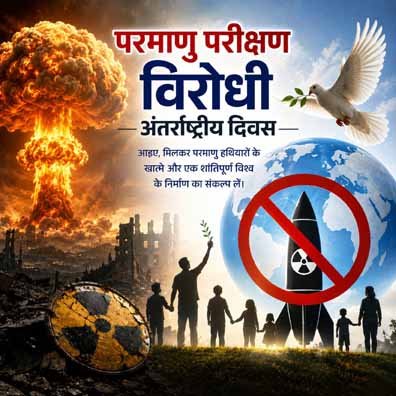
विश्व में आज परमाणु परीक्षण विरोधी अंतरराष्ट्रीय दिवस मनाया जा रहा है. इस दिवस का मुख्य उद्देश्य परमाणु हथियारों के परीक्षण विस्फोटों के दुष्प्रभावों के बारे में वैश्विक स्तर पर जागरूकता बढ़ाना साथ ही मानव जीवन, पर्यावरण, वैश्विक शांति और अंतरराष्ट्रीय सुरक्षा के बीच संबंध को समझने का भी महत्वपूर्ण अवसर है.
परमाणु युग की शुरुआत अमेरिका में हुई थी. अमेरिका ने अपना पहला परीक्षण 16 जुलाई 1945 को अमेरिका के न्यू मेक्सिको में ट्रिनिटी में किया था. इसके बाद परमाणु हथियारों की होड़ तेज हो गई. रूस (सोवियत संघ) ने भी अपना पहला परमाणु परीक्षण वर्ष 1949 में आज ही के दिन (29 अगस्त) को कजाकिस्तान के सेमिपालातिंस्क परीक्षण स्थल पर किया था. वर्ष 1945-96 तक करीब दो हजार से अधिक परमाणु परीक्षण पूरी दुनिया में किया गया. इन परीक्षणों में अमेरिका, सोवियत संघ, ब्रिटेन, फ्रांस और चीन प्रमुख थे. भारत ने भी वर्ष 1974 में अपना पहला परमाणु परीक्षण किया था. उसके बाद के दशकों में अन्य देशों ने भी परमाणु क्षमता विकसित कर ली.
शीत युद्ध के दौरान परमाणु परीक्षण केवल हथियार की शक्ति मापने का साधन नहीं रहे, बल्कि वे महाशक्तियों की सैन्य प्रतिस्पर्धा और राजनीतिक शक्ति-प्रदर्शन का माध्यम भी बन गया. ज्ञाता है कि उस वक्त के सोवियत संघ वर्तमान में रूस ने अपने पहले परमाणु परीक्षण स्थल पर चार दशकों तक करीब 456 परमाणु परीक्षण किए. उसके बाद 29 अगस्त 1991 को स्थायी रूप से बंद कर दिया था.
संयुक्त राष्ट्र महासभा ने अपने 64वें सत्र के दौरान सर्वसम्मति से प्रस्ताव पारित कर 29 अगस्त को परमाणु परीक्षण विरोधी अंतरराष्ट्रीय दिवस घोषित किया था. यह प्रस्ताव कज़ाखस्तान गणराज्य द्वारा की गई थी. 29 अगस्त की तारीख का ऐतिहासिक महत्व इसलिए है क्योंकि इसी दिन 1949 में कज़ाखस्तान स्थित सेमियामी (सेमीपालाटिंस्क) परीक्षण स्थल पर सोवियत संघ ने अपना पहला परमाणु परीक्षण किया था और इसी तारीख को वर्ष 1991 में कज़ाखस्तान सरकार ने आधिकारिक तौर पर इस विशाल परीक्षण स्थल को बंद कर दिया था.
परमाणु परीक्षण के बाद होने वाली रेडियोधर्मी पतन और दीर्घकालिक परिणामों को नजरअंदाज किया गया था. बताते चलें कि, परमाणु विस्फोट का प्रभाव केवल विस्फोट के तत्काल क्षेत्र तक सीमित नहीं रहता बल्कि, परमाणु विस्फोट से निकलने वाला विकिरण मानव शरीर की कोशिकाओं और आनुवंशिक संरचना को नुकसान पहुँचा सकता है. इसके रेडियोधर्मी पदार्थ के कारण वायुमंडल, जल स्रोत और उपजाऊ भूमि दूषित हो गए साथ ही नागरिकों और आने वाली पीढ़ियों में कैंसर, जन्मजात विकलांगता और गंभीर बीमारियां फैल गईं. इन विकिरणों के कारण महिलाओं और बच्चों पर असंतुलित और घातक प्रभाव पड़ा.
परमाणु परीक्षणों के दुष्प्रभावों के प्रति बढ़ती चिंता के कारण अंतरराष्ट्रीय स्तर पर कई महत्वपूर्ण कदम उठाए गए. वर्ष 1963 में वायुमंडल, बाहरी अंतरिक्ष और पानी के भीतर परमाणु परीक्षणों पर प्रतिबंध लगाया गया था. इसके बाद कई और प्रयास किए गये थे. वर्ष 1996 में सबसे महत्वपूर्ण कदम उठाते हुए व्यापक परमाणु-परीक्षण-प्रतिबंध संधि (सीटीबीटी), में हस्ताक्षर के लिए खोला गया था. जिसका उद्देश्य पृथ्वी पर कहीं भी, किसी भी वातावरण में परमाणु विस्फोटों को प्रतिबंधित करना है. सीटीबीटी का मह्तेव इसीलिए भी है कि, वास्तविक परमाणु परीक्षणों पर रोक नए परमाणु हथियारों के विकास और मौजूदा हथियारों में बड़े सुधार को कठिन बनाती है.
वैसे तो सीटीबीटी ने परमाणु परीक्षणों के विरुद्ध एक मजबूत वैश्विक मानक स्थापित किया है, लेकिन इसकी कानूनी रूप से प्रभावी होने की प्रक्रिया अभी पूरी नहीं हुई है. संयुक्त राष्ट्र के अनुसार संधि को लागू होने के लिए कुछ निर्धारित परमाणु-तकनीकी क्षमता वाले देशों की आवश्यक पुष्टि/अनुमोदन अभी बाकी है. वहीं, परमाणु शक्ति संपन्न देश अक्सर परमाणु हथियारों को अपनी रणनीतिक सुरक्षा का महत्वपूर्ण साधन मानते हैं. दूसरी ओर, परमाणु हथियारों से रहित देश तर्क देते हैं कि यदि परमाणु हथियार मानवता के लिए बड़ा खतरा हैं.
भारत के संदर्भ में बात करे तो, भारत स्वयं परमाणु शक्ति संपन्न देश है और उसकी सुरक्षा नीति में परमाणु प्रतिरोधक क्षमता की भूमिका है. भारत ने वर्ष 1974 में अपना पहला परमाणु परीक्षण किया था उसके बाद वर्ष 1998 में पोखरण में आगे के परीक्षण किए. भारत के दृष्टिकोण की बात करें तो वैश्विक परमाणु निरस्त्रीकरण सार्वभौमिक, गैर-भेदभावपूर्ण और सत्यापन योग्य होना चाहिए साथ ही विश्व में ऐसी व्यवस्था कैसे बनाई जाए जिसमें सभी देशों की सुरक्षा समान रूप से सुनिश्चित हो और परमाणु हथियारों पर निर्भरता धीरे-धीरे समाप्त हो जाय.
वर्तमान समय में भू-राजनीतिक तनाव बढ़ रहे हैं दुनिया के कई देशों में युद्ध व आपसी रंजिश चल रही है ऐसे में परमाणु परीक्षण विरोधी अंतरराष्ट्रीय दिवस का महत्व और अधिक प्रासंगिक हो जाता है. यह दिन सरकारों को परमाणु हथियारों के आधुनिकीकरण से दूर रहने और पूर्ण परमाणु निरस्त्रीकरण की दिशा में काम करने की भी याद दिलाता है. परमाणु परीक्षण विरोधी अंतरराष्ट्रीय दिवस मानवता को यह याद दिलाता है कि विज्ञान और तकनीक की प्रगति तभी सार्थक है जब उसका उपयोग मानव जीवन की रक्षा के लिए हो.
========== ========= ===========
International Day against Nuclear Tests

International Day against Nuclear Tests is being observed today. The main objective of this day is to raise global awareness about the adverse effects of nuclear weapons test explosions. It is also an important opportunity to understand the relationship between human life, the environment, global peace, and international security.
The nuclear age began in the United States. The United States conducted its first test on July 16, 1945, at Trinity, New Mexico. This sparked a nuclear arms race. Russia (the Soviet Union) also conducted its first nuclear test on this day (August 29), 1949, at the Semipalatinsk test site in Kazakhstan. From 1945 to 1996, more than 2,000 nuclear tests were conducted worldwide. The United States, the Soviet Union, Britain, France, and China were the major participants in these tests. India also conducted its first nuclear test in 1974. In the decades that followed, other countries also developed nuclear capabilities.
During the Cold War, nuclear tests were not just a means of measuring weapon power, but also a means of military competition and political power-mongering among the superpowers. It is known that the then Soviet Union, now Russia, conducted approximately 456 nuclear tests over four decades at its first nuclear test site, which was then permanently closed on August 29, 1991.
The United Nations General Assembly, during its 64th session, unanimously passed a resolution declaring August 29th as International Anti-Nuclear Testing Day. This resolution was submitted by the Republic of Kazakhstan. The date of August 29th holds historical significance because on this day in 1949, the Soviet Union conducted its first nuclear test at the Semipalatinsk (Semipalatinsk) test site in Kazakhstan, and on this date in 1991, the Kazakhstan government officially closed this massive test site.
The radioactive fallout and long-term consequences of nuclear testing were ignored. It should be noted that the effects of a nuclear explosion are not limited to the immediate area of the explosion; the radiation released from a nuclear explosion can damage the cells and genetic structure of the human body. Its radioactive material contaminates the atmosphere, water sources, and fertile soil, causing cancer, congenital disabilities, and serious illnesses among citizens and future generations. These radiations have had a disproportionate and fatal impact on women and children.
Growing concern about the adverse effects of nuclear testing led to several important international initiatives. In 1963, nuclear tests in the atmosphere, outer space, and underwater were banned. Several other initiatives followed. In 1996, the most significant step was taken when the Comprehensive Nuclear-Test-Ban Treaty (CTBT) was opened for signature. Its aim is to prohibit nuclear explosions anywhere on Earth, in any environment. The CTBT is also significant because a moratorium on actual nuclear tests complicates the development of new nuclear weapons and major improvements to existing weapons.
While the CTBT has established a strong global norm against nuclear testing, its legal force remains incomplete. According to the United Nations, the treaty still requires ratification by a certain number of countries with nuclear-technological capabilities. Meanwhile, nuclear-armed countries often consider nuclear weapons a vital means of their strategic security. On the other hand, non-nuclear-weapon countries argue that nuclear weapons pose a significant threat to humanity.
In the context of India, India is a nuclear power, and nuclear deterrence plays a key role in its security policy. India conducted its first nuclear test in 1974, followed by further tests in Pokhran in 1998. India’s vision focuses on global nuclear disarmament, which should be universal, non-discriminatory, and verifiable. It also focuses on creating a global system that ensures the security of all countries equally and gradually eliminates dependence on nuclear weapons.
Geopolitical tensions are currently escalating, and many countries are embroiled in war and mutual conflict, making the International Day against Nuclear Tests even more relevant. This day also reminds governments to refrain from modernizing nuclear weapons and work towards complete nuclear disarmament. International Day against Nuclear Tests reminds humanity that progress in science and technology is meaningful only when used to protect human life.