सनातनी नववर्ष का आगाज हो चुका है. यह केवल एक तारीख का बदलाव नहीं है, बल्कि उस परंपरा और संस्कृति का अभिन्न हिस्सा जो समय चक्र और प्रकृति के साथ सामंजस्य स्थापित करता है. जहाँ पूरी दुनिया के लोग एक जनवरी को नए वर्ष के रूप में मानती है वहीँ, सनातन धर्म में नव वर्ष की अवधारणा पूरी तरह से भिन्न है. यह समय की उस यात्रा का उद्घोष है जो ब्रह्मांडीय घड़ी के अनुसार चलती है, न कि किसी सुविधानुसार बनाये गए कैलेंडर से.
सनातनी नववर्ष (जिसे नव संवत्सर भी कहा जाता है) का आगाज चैत्र माह के शुक्ल पक्ष की प्रतिपदा तिथि से होता है. अंग्रेज़ी कैलेंडर के अनुसार वर्ष 2026 में 19 मार्च से विक्रम संवत् 2083 की शुरुआत होगी. चूकिं, 19 मार्च 2083 को गुरुवार का दिन है इसलिए हिंदू नववर्ष के राजा गुरु ग्रह ही होंगे. इसी दिन से चैत्र नवरात्रि के पावन पर्व की भी शुरूआत होगी. यह केवल एक उत्सव नहीं बल्कि, प्रकृति के नवजीवन का भी उत्सव है. शीत ऋतू की समाप्ति और वसंत ऋतू अपने यौवन पर हो. इस समय पेड़ों पर नए पत्ते और फूल खिलते हैं, चारों ओर हरियाली छा जाती है.
19 मार्च 2026 से विक्रम संवत 2083 का शुभारंभ होगा. पंचांग के अनुसार, इस वर्ष का नाम “सिद्धार्थ” या “रौद्र” संवत्सर है. गुरुवार का दिन, जो गुरु (बृहस्पति) ग्रह से संचालित होता है, अत्यंत शुभ माना जाता है. चुकिं, गुरु ज्ञान, बुद्धि, समृद्धि और धर्म के प्रतीक हैं, इसलिए यह संयोग समाज, शिक्षा और आध्यात्मिकता के लिए सकारात्मक संकेत लेकर आता है. पौराणिक धर्म ग्रंथ ब्रह्मा पुराण में चैत्र शुक्ल प्रतिपदा के बारे में विस्तार से बताया गया है. ब्रह्मा पुराण के अनुसार, “संवत्सरस्य प्रथमं दिनं चैत्रस्य शुक्लपक्षे। तस्मिन् दिने जगत्सृष्टिर्ब्रह्मणा समकल्पिता॥”. इसलिए यह दिन केवल एक नए वर्ष की शुरुआत नहीं, बल्कि समय के एक नए सृजन चक्र का प्रवेश द्वार भी है.
बताते चलें कि, सनातनी नव वर्ष का आगाज नवरात्रि से होता है. चैत्र नवरात्रि जिसे वसंत नवरात्रि भी कहा जाता है. यह त्योहार देवी दुर्गा के नौ रूपों की पूजा और सम्मान में मनाया जाता है. नवरात्रि का शाब्दिक अर्थ है ‘नौ रातें’, . 19 मार्च 2026 से शुरू होने वाले ये नौ दिन मां दुर्गा के नौ स्वरूपों की उपासना को समर्पित होते हैं. यह समय आंतरिक शुद्धि, तप और साधना का होता है. देवी महात्म्य के अनुसार –
“या देवी सर्वभूतेषु शक्तिरूपेण संस्थिता। नमस्तस्यै नमस्तस्यै नमस्तस्यै नमो नमः॥”
अर्थात, इस दिव्य शक्ति का स्मरण और आह्वान हमें आंतरिक बल और ऊर्जा प्रदान करता है. नवरात्रि के उपवास और पूजा-अर्चना के साथ नव वर्ष का यह संगम व्यक्ति को आध्यात्मिक ऊर्जा से भर देता है और उसे वर्ष भर के लिए संयम व भक्ति का मार्ग दिखाता है. वहीँ, भारतीय संस्कृति में इस एक ही तिथि को पूरे देश में अलग-अलग नामों और रीति-रिवाजों से मनाया जाता है. जैसे-
गुड़ी पड़वा – महाराष्ट्र में आज के दिन गुड़ी पड़वा का त्यौहार मानते हैं. लोग अपने घरों के बाहर गुड़ी (एक उल्टा लटकाया गया वस्त्र, जिस पर गुड़, नीम के पत्ते और फूलों की माला लगी होती है) फहराते हैं, जो विजय और समृद्धि का प्रतीक मना जाता है.
उगादि – आंध्र प्रदेश, तेलंगाना और कर्नाटक में आज के दिन उगादि नामक व्यंजन बनाया जाता है. यह एक ऐसा व्यंजन है जिसमें मीठा, खट्टा, कड़वा, नमकीन, तीखा और कसैला—छह रसों का समावेश होता है. यह जीवन के सभी भावनात्मक पहलुओं को समान भाव से स्वीकार करने की भी सीख देता है.
चेटी चंद – सिंधी समुदाय के लोग आज के दिन चेटी चंद के रूप में मानते हैं. सिंधी समुदाय के लोग आज के दिन अपने ईष्टदेव झूलेलाल के अवतरण दिवस के रूप में मानते हैं.
वहीं, उत्तर भारत के लोग हिंदू नव वर्ष या नव संवत के रूप में मनाया जाता है. आज के दिन लोग पंचांग पूजन करते हैं, मंदिरों में जाते हैं और शांतिपूर्वक पारिवारिक अनुष्ठान करते हैं. ज्योतिषशास्त्रियों के अनुसार वर्ष 2083 के संवत्सर का नाम होगा रौद्र संवत्सर. जिसके ग्रहाधिपति होंगें गुरु (राजा) और मंत्री मंगल होंगें। ज्योतिषशास्त्रियों के अनुसार इस वर्ष का फलादेश इस प्रकार होगा- राजनीतिक अस्थिरता और नए नेतृत्व का उदय, प्राकृतिक घटनाओं में तीव्रता (भूकंप, वर्षा या जलवायु परिवर्तन), आर्थिक क्षेत्र में उतार-चढ़ाव, परंतु व्यापारियों के लिए नए अवसर मिलेंगें साथ ही आध्यात्मिक साधना और धार्मिक आयोजनों में वृद्धि होगी. विक्रम संवत 2083 ‘ज्ञान’ (गुरु) और ‘शक्ति’ (मंगल) के मेल का वर्ष है. ‘रौद्र’ संवत्सर होने के नाते यह चुनौतियों भरा तो हो सकता है, लेकिन आध्यात्मिक जागृति और राष्ट्र निर्माण के दृष्टिकोण से यह एक मील का पत्थर साबित होगा.
सनातनी नववर्ष 2083 केवल एक पंचांग की तिथि नहीं है, बल्कि यह आध्यात्मिक जागरण, सामाजिक एकता और आर्थिक नवचेतना का भी प्रतीक है. यह नव वर्ष हमें बताता है कि, यह समय केवल सेकेंड और मिनटों का हिसाब नहीं है, बल्कि यह एक दिव्य प्रवाह है. सनातनी नववर्ष अपनी मूल चेतना से जुड़ने और प्रकृति के साथ तालमेल बिठाकर चलने का भी मार्ग दिखाता है. यह वो क्षण है जब हम अपने जीवन को धर्म, अर्थ, काम और मोक्ष के संतुलित पथ पर अग्रसर करने का संकल्प लेते हैं.
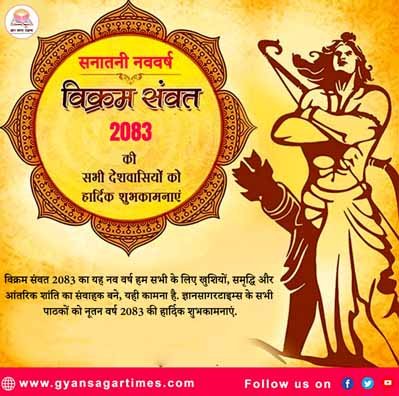
विक्रम संवत 2083 का यह नव वर्ष हम सभी के लिए खुशियों, समृद्धि और आंतरिक शांति का संवाहक बने, यही कामना है. ज्ञानसागरटाइम्स के सभी पाठकों को नूतन वर्ष 2083 की हार्दिक शुभकामनाएं.
========== ========= ===========
Sanatani New Year 2083
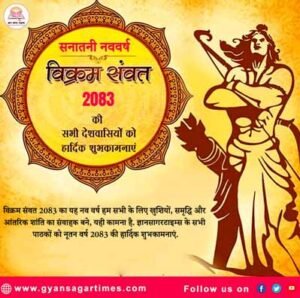
The Sanatani New Year has commenced. This marks not merely a date change but is integral to a tradition and culture that establishes harmony with the cycle of time and the rhythms of nature. While people across the globe observe January 1st as the New Year, the concept of the New Year within Sanatan Dharma is entirely distinct. It serves as the proclamation of a journey through time that moves in accordance with the cosmic clock, rather than a calendar devised merely for human convenience.
The Sanatani New Year (also known as Nav Samvatsar) begins on the Pratipada (first day) of the Shukla Paksha (waxing phase of the moon) during the month of Chaitra. According to the Gregorian calendar, Vikram Samvat 2083 will commence on March 19, 2026. Since March 19, 2026, falls on a Thursday, the planet Jupiter (Guru) will reign as the King of the Hindu New Year. This very day also marks the commencement of the auspicious festival of Chaitra Navratri. This is not merely a human celebration, but also a celebration of the rejuvenation of nature itself. It signifies the conclusion of the winter season and the arrival of spring in its full bloom. During this time, new leaves and flowers blossom on trees, and lush greenery blankets the surroundings.
The Vikram Samvat 2083 will be inaugurated on March 19, 2026. According to the Panchang (traditional almanac), the name of this year is Siddhartha or Raudra Samvatsar. Thursday—a day governed by the planet Jupiter (Guru)—is considered to be extremely auspicious. Since Jupiter symbolizes knowledge, wisdom, prosperity, and righteousness (Dharma), this celestial alignment brings positive omens for society, education, and spirituality. The Brahma Purana, an ancient religious scripture, describes the significance of Chaitra Shukla Pratipada in great detail. According to the Brahma Purana: “Samvatsarasya prathamam dinam Chaitrasya Shuklapakshe; Tasmin dine jagatsrishtir Brahmana samakalpita.” (The first day of the New Year falls during the Shukla Paksha of Chaitra; it was on this very day that Lord Brahma ordained the creation of the universe.) Therefore, this day marks not merely the beginning of a new year but also serves as a gateway to a new cycle of cosmic creation.
It is worth noting that the Sanatani New Year commences with Navratri, specifically Chaitra Navratri, also known as Vasant Navratri. This festival is celebrated in honor and worship of the nine forms of Goddess Durga. The literal meaning of Navratri is ‘nine nights.’ Beginning on March 19, 2026, these nine days are dedicated to the worship of the nine manifestations of Mother Durga. This period is a time for inner purification, penance, and spiritual practice. As stated in the Devi Mahatmyam:
“Ya Devi Sarvabhuteshu Shakti-rupena Samsthita | Namastasyai Namastasyai Namastasyai Namo Namah ||”
This translates to: the remembrance and invocation of this divine power bestows upon us inner strength and vitality. This confluence of the New Year with the fasting and worship of Navratri fills an individual with spiritual energy, guiding them onto a path of self-discipline and devotion for the entire year ahead. Furthermore, within Indian culture, this very same date is celebrated across the country under various names and distinct customs. For instance:
Gudi Padwa – In Maharashtra, this day is celebrated as the festival of Gudi Padwa. People hoist a ‘Gudi’—a cloth draped over a staff and adorned with jaggery, neem leaves, and a garland of flowers—outside their homes; this is regarded as a symbol of victory and prosperity.
Ugadi – In Andhra Pradesh, Telangana, and Karnataka, a special dish known as ‘Ugadi’ is prepared on this day. It is a unique delicacy that incorporates all six distinct flavors: sweet, sour, bitter, salty, spicy, and astringent. It serves as a lesson in accepting all the emotional facets of life with equanimity.
Cheti Chand – Members of the Sindhi community observe this day as Cheti Chand. For the Sindhi community, this day marks the auspicious birth anniversary of their revered deity, Lord Jhulelal.
Meanwhile, people in North India celebrate this occasion as the Hindu New Year or Nava Samvat. On this day, people perform Panchang Pujan (worship of the almanac), visit temples, and peacefully observe family rituals. According to astrologers, the Samvatsara (year) of 2083 will be named Raudra Samvatsara. Its planetary sovereign (Grahadhipati) will be Jupiter (acting as the King), while Mars will serve as the Minister. According to astrological predictions, the outlook for this year is as follows: political instability accompanied by the emergence of new leadership; an intensification of natural phenomena (such as earthquakes, rainfall, or climate fluctuations); and volatility in the economic sector—though new opportunities will arise for traders. Additionally, there will be a rise in spiritual practices and religious observances. Vikram Samvat 2083 marks a year of convergence between ‘Knowledge’ (represented by Jupiter) and ‘Power’ (represented by Mars). Given that it is the Raudra Samvatsara, it may indeed present its share of challenges; however, from the perspective of spiritual awakening and nation-building, it is poised to prove a significant milestone.
The Sanatani New Year 2083 is not merely a date on the almanac; it stands as a symbol of spiritual awakening, social unity, and economic revitalization. This New Year reminds us that time is not merely a calculation of seconds and minutes, but rather a divine continuum. The Sanatani New Year also illuminates the path toward reconnecting with our fundamental consciousness and living in harmony with nature. It is a moment when we resolve to steer our lives along the balanced path of Dharma (righteousness), Artha (material prosperity), Kama (fulfillment of desires), and Moksha (liberation).
It is our sincere wish that this New Year—Vikram Samvat 2083—brings happiness, prosperity, and inner peace to us all. Heartfelt wishes for a joyous New Year 2083 to all readers of *Gyansagar Times*.