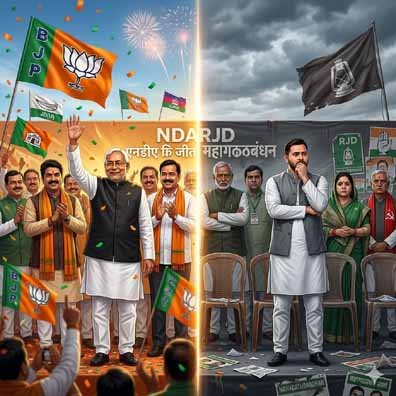
मार्च 2026 में दस राज्यों की 37 राज्यसभा सीटों के लिए हुए चुनावों में एनडीए ने शानदार प्रदर्शन करते हुए न केवल अपनी संख्या बल बढ़ाया, बल्कि कई राज्यों में विपक्षी इंडिया गठबंधन को करारा झटका भी दिया। बताते चलें कि, राज्यसभा चुनाव 2026 में सबसे अधिक चर्चा बिहार की पांचों सीटों पर एनडीए की ऐतिहासिक जीत की रही, जहां गठबंधन ने विपक्ष के दलबदल और आपसी कलह का फायदा उठाते हुए सफलता का परचम लहराया। इस चुनाव के साथ ही राज्यसभा में एनडीए की संख्या लगभग 140 के आसपास पहुंच गई है.
ज्ञाता है कि, बिहार विधानसभा की 243 सीटों में से 202 सीटों पर एनडीए का कब्जा है, लेकिन पांचवीं सीट के लिए उसे 41 वोटों का आंकड़ा छूने के लिए तीन वोटों की कमी थी. वहीं, राजद के नेतृत्व वाले महागठबंधन के पास 35 विधायक थे, और AIMIM के पांच तथा बसपा के एक विधायक के समर्थन से उसके 41 तक पहुंचने की उम्मीद थी. इस समीकरण के बीच राजद ने अपने उम्मीदवार अमरेंद्र धारी सिंह के समर्थन में पूरी ताकत झोंक दी थी. लेकिन मतदान के दिन विपक्ष की उम्मीदों पर पानी फिर गया। राजद के फैसल रहमान (धाका) और कांग्रेस के तीन विधायक – सुरेंद्र प्रसाद (वाल्मीकिनगर), मनोज बिश्वास (फारबिसगंज) और मनोहर प्रसाद सिंह (मणिहारी) – मतदान में शामिल ही नहीं हुए जिसके कारण इससे महागठबंधन का समर्थन घटकर मात्र 37 रह गया और एनडीए के लिए रास्ता भी साफ हो गया.
इस जीत के साथ बिहार के मुख्यमंत्री नीतीश कुमार, जिन्होंने अपना नामांकन दाखिल किया था, राज्यसभा पहुंचेंगे . उनके साथ जदयू के रामनाथ ठाकुर, भाजपा के राष्ट्रीय अध्यक्ष नितिन नवीन और शिवेश राम, तथा राष्ट्रीय लोक मोर्चा के उपेंद्र कुशवाहा ने भी जीत दर्ज की . नितिन नवीन और नीतीश कुमार सहित शीर्ष नेताओं ने 44 वोट हासिल किए, जबकि पांचवें उम्मीदवार शिवेश राम दूसरी वरीयता के वोटों के दम पर निर्वाचित हुए.
बताते चलें कि,बिहार के अलावा कई अन्य राज्यों में भी राज्यसभा की सीटों के लिए मतदान हुआ, हालांकि अधिकतर सीटों पर निर्विरोध निर्वाचन हुआ. दस राज्यों में कुल 37 सीटों में से 26 पर उम्मीदवार पहले ही निर्विरोध चुने जा चुके थे, जबकि 11 सीटों पर मतदान हुआ. इन नतीजों को एनडीए की एकजुटता और विपक्ष की कमजोर पकड़ के तौर पर देखा जा रहा है. बिहार में कांग्रेस के तीन विधायकों के गायब रहने से वहां कांग्रेस के भीतर चल रही असंतोष की कहानी भी सामने आ गई . वहीं, बिहार के मुख्यमंत्री नीतीश कुमार के राज्यसभा जाने से प्रदेश की सत्ता में बदलाव की अटकलों को बल मिला है, जिससे भाजपा को राज्य में और अधिक प्रभावी भूमिका निभाने का मौका मिल सकता है.
राज्यसभा चुनाव 2026 में एनडीए की जीत केवल संख्यात्मक नहीं बल्कि राजनीतिक संदेश भी है ‘गठबंधन की एकजुटता, विपक्ष की कमजोरी और केंद्र सरकार की नीतियों को आगे बढ़ाने की क्षमता’.बिहार में पांचों सीटों पर जीत एनडीए की चतुर रणनीति और विपक्षी दलों की आंतरिक कमजोरियों को उजागर करती है. भाजपा ने न केवल अपने सहयोगियों (जदयू, रालोमो, शिवसेना) को साधे रखा, बल्कि विपक्षी खेमे में मनोवैज्ञानिक बढ़त भी बना ली है.
========== ========= ===========
Rajya Sabha Elections 2026: A Setback for the Opposition’s Hopes…

In the elections held in March 2026 for 37 Rajya Sabha seats across ten states, the NDA delivered a stellar performance; not only did it bolster its numerical strength, but it also dealt a severe blow to the opposition’s INDIA alliance in several states. Notably, the most talked-about outcome of the 2026 Rajya Sabha elections was the NDA’s historic victory across all five seats in Bihar, where the alliance hoisted the flag of success by capitalizing on the opposition’s defections and internal discord. With this election, the NDA’s tally in the Rajya Sabha has reached approximately 140 seats.
It is pertinent to note that while the NDA holds 202 of the 243 seats in the Bihar Legislative Assembly, it fell short by three votes—needing 41 votes—to secure the fifth seat. Conversely, the RJD-led *Mahagathbandhan* (Grand Alliance) possessed 35 MLAs and, with the support of five MLAs from the AIMIM and one from the BSP, was expected to reach the 41-vote mark. Amidst this political arithmetic, the RJD had thrown its entire weight behind its candidate, Amarendra Dhari Singh. However, on the day of voting, the opposition’s hopes were dashed. RJD’s Faisal Rahman (Dhaka) and three Congress MLAs—Surendra Prasad (Valmikinagar), Manoj Biswas (Forbesganj), and Manohar Prasad Singh (Manihari)—did not participate in the voting process at all. Consequently, the *Mahagathbandhan’s* support base dwindled to just 37 votes, thereby clearing the path for the NDA.
With this victory, Bihar Chief Minister Nitish Kumar—who had filed his nomination papers—is set to enter the Rajya Sabha. Joining him in victory are the JD(U)’s Ramnath Thakur; the BJP’s national president Nitin Nabin and Shivsh Ram; and the Rashtriya Lok Morcha’s Upendra Kushwaha. Top leaders, including Nitin Nabin and Nitish Kumar, secured 44 votes each, while the fifth candidate, Shivsh Ram, was elected on the strength of second-preference votes.
It is worth mentioning that, in addition to Bihar, voting for Rajya Sabha seats took place in several other states as well, although most of these seats saw unopposed elections. Out of a total of 37 seats across ten states, candidates for 26 seats had already been elected unopposed, while voting took place for the remaining 11 seats. These results are being interpreted as a testament to the unity of the NDA and the weak hold of the opposition. In Bihar, the absence of three Congress MLAs during the proceedings also brought to light the simmering discontent within the state’s Congress unit. Meanwhile, Bihar Chief Minister Nitish Kumar’s move to the Rajya Sabha has fueled speculation regarding a potential shift in the state’s power dynamics. This development could pave the way for the BJP to assume a more prominent and influential role within the state.
The NDA’s victory in the 2026 Rajya Sabha elections conveys not merely a numerical outcome, but also a distinct political message: one of “alliance unity, opposition weakness, and the capacity to drive forward the Central Government’s policies.” The NDA’s clean sweep of all five seats in Bihar underscores both the alliance’s astute strategy and the opposition parties’ inherent internal vulnerabilities. The BJP has not only successfully kept its allies—the JD (U), RLMO, and Shiv Sena—firmly aligned, but has also secured a significant psychological advantage over the opposition camp.