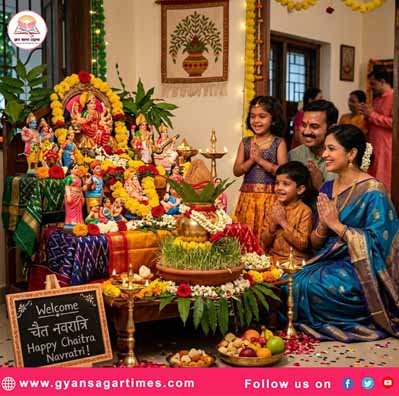
हिन्दू पंचांग के अनुसार, वर्ष का नया महीना चैत माना गया है. यह महीना बड़ा ही पावन और पवित्र माना गया है. ज्ञात है कि, चित्रा नक्षत्र के कारण इस महीने का नाम चैत पड़ा. चैत के इस महीने में वसंत ऋतु होती है.वसंत की शुरुआत और शरद की शुरुआत जलवायु और सूरज के प्रभावों का महत्वपूर्ण संगम माना जाता है. माँ भगवती की पूजा आराधना चैत और आश्विन महीने में बड़े धूमधाम से की जाती है. वसंत ऋतु होने के कारण चैत नवरात्र को वासंती नवरात्र भी कहते हैं. वासंती नवरात्र में देवी अंबा विद्युत का प्रतिनिधित्व करती है.
संस्कृत का शब्द है नवरात्रि जिसका अर्थ होता है ‘नौ रातें’. नौ रात्रियों का वैदिक साहित्य में बड़ा ही सुंदर वर्णन किया गया है. नवरात्री का संधि होता है नव+रात्रि. जिसमे ‘नव’ का अर्थ होता है ‘नया’ और ‘रात्रि’ का अर्थ होता है ‘अंधकार’. नवरात्र को आसान शब्दों में कहें तो,जब दो ऋतुओं का मिलन होता है तो इस काल को संधि काल कहते हैं. इस संधि काल में ब्रह्मांड से असीम शक्तियाँ या यूँ कहें कि, ऊर्जा प्रथ्वी पर पहुंचती है जिससे शारीरिक बीमारियाँ बढती है और इन बीमारियों से बचाव हेतु या यूँ कहें कि, शरीर को शुद्ध रखने के लिए, स्वस्थ रहने के लिए और तन-मन को निर्मल बनाए रखने की प्रक्रिया को ही नवरात्र के नाम से जानते हैं.
पौराणिक ग्रंथों के अनुसार, मानव शरीर में नौ मुख्य द्वार होते हैं. इन द्वारों में मुख्य द्वार होता है ‘इन्द्रिय’. इन्द्रियों में स्वच्छता और अनुशासन स्थापित करने के लिए ‘नौ’ द्वारों की शुद्धि का महापर्व ‘नौ’ दिनों तक मनाया जाता है. इस दौरान व्रत पालन, सात्विक आहार, शरीर की शुद्धि, उत्तम विचार और उत्तम कर्मों से मन शुद्ध और निर्मल होता है.
नवरात्रि के नौ रातों में त्रिदेवियों (महालक्ष्मी, महासरस्वती,और दुर्गा के नौ स्वरूपों की पूजा होती है जिन्हें नवदुर्गा भी कहा जाता है. इन नौ रातों और दस दिनों के दौरान, शक्ति या यूँ कहें कि, देवी के नौ रूपों की पूजा की जाती है. नवरात्रि के पहले तीन दिन देवी दुर्गा या यूँ कहें कि, ऊर्जा या शक्ति की आराधना की जाती है. जिसमें पहले दिन बालिका की पूजा, दुसरे दिन युवती की पूजा और तीसरे दिन वैसी महिला जो परिपक्वता के चरण में पहुंच गयी है उसकि पूजा की जाती है. नवरात्रि के चौथे से छठे दिन ‘लक्ष्मी—समृद्धी और शांति की देवी’ की आराधना की जाती है। सातवें दिन ज्ञान और कला की देवी माँ सरस्वती की आराधना की जाती है. आठवें दिन एक यज्ञ किया जाता है और नवमें दिन जिस महानवमी के नाम से भी जाना जाता है इस दिन दिन कन्या पूजन होता है.
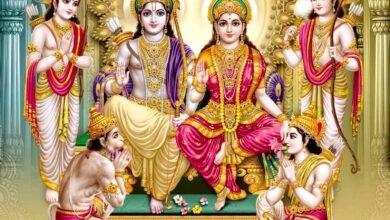
वासंती नवरात्र के नवमे दिन भगवान हनुमान की पूजा भी की जाती है और इस दिन को रामनवमी के नाम से भी जानते है. रामनवमी के दिन हनुमान की पूजा का रहस्य यह है कि, भगवान श्रीराम लंका पर चढाई और रावण के वध हेतु माँ चंडी की पूजा ‘ब्रह्माजी’ के बताए अनुसार चंडी पूजन और हवन हेतु दुर्लभ एक सौ आठ नीलकमल की व्यवस्था की गई. वहीं दूसरी ओर रावण ने भी अमरता के लोभ में विजय कामना से चंडी पाठ प्रारंभ किया. यह बात इंद्र देव ने पवन देव के माध्यम से श्रीराम के पास पहुँचाई और परामर्श दिया कि चंडी पाठ यथासभंव पूर्ण होने दिया जाए. इधर हवन सामग्री में पूजा स्थल से एक नीलकमल रावण की मायावी शक्ति से गायब हो गया और राम का संकल्प टूटता-सा नजर आने लगा.
तब भगवान राम को सहज ही स्मरण हुआ कि मुझे लोग ‘कमलनयन नवकंच लोचन’ कहते हैं, तो क्यों न संकल्प पूर्ति हेतु एक नेत्र अर्पित कर दिया जाए और प्रभु राम जैसे ही तूणीर से एक बाण निकालकर अपना नेत्र निकालने के लिए तैयार हुए, तब देवी ने प्रकट हो, हाथ पकड़कर कहा- राम मैं प्रसन्न हूँ और विजयश्री का आशीर्वाद दिया. वहीं रावण के चंडी पाठ में यज्ञ कर रहे ब्राह्मणों की सेवा में ब्राह्मण बालक का रूप धर कर हनुमानजी सेवा में जुट गए. निःस्वार्थ सेवा देखकर ब्राह्मणों ने हनुमानजी से वर माँगने को कहा. इस पर हनुमान ने विनम्रतापूर्वक कहा- प्रभु, आप प्रसन्न हैं तो जिस मंत्र से यज्ञ कर रहे हैं, उसका एक अक्षर मेरे कहने से बदल दीजिए. ब्राह्मण इस रहस्य को समझ नहीं सके और तथास्तु कह दिया. मंत्र में जयादेवी… भूर्तिहरिणी में ‘ह’ के स्थान पर ‘क’ उच्चारित करें, यही मेरी इच्छा है.
नवरात्री के आखरी दिन विजयोत्सव मनाते है चुकीं हम तीन गुणों के त्रिगुनातित अवस्था में पहुंच जाते हैं या यूँ कहें कि, काम, क्रोध, मोह और लोभ आदि जितने भी राक्षसी प्रवृतियाँ है उसका हनन कर विजयोत्सव मनाते हैं.
========== ========= ===========
Chaitra Navratri…
According to the Hindu almanac (Panchang), Chaitra is considered the first month of the year. This month is regarded as exceptionally sacred and holy. It is known that this month acquired the name ‘Chaitra’ due to its association with the Chitra Nakshatra (star constellation). The spring season (Vasant Ritu) prevails during this month of Chaitra. The onset of spring and the onset of autumn are considered significant junctures where climatic conditions and solar influences converge. The worship and adoration of Mother Bhagavati are celebrated with great pomp and fervor during the months of Chaitra and Ashwin. Since it occurs during the spring season, Chaitra Navratri is also known as Vasanti Navratri. During Vasanti Navratri, Goddess Amba is believed to represent the cosmic energy (Vidyut).
‘Navratri’ is a Sanskrit term meaning ‘nine nights.’ These nine nights are described with great beauty and depth in Vedic literature. The word Navratri is a compound (Sandhi) of Nav + Ratri, wherein Nav signifies ‘new’ and Ratri signifies ‘darkness’ or ‘night.’ To put it simply, when two distinct seasons converge, the intervening period is known as the Sandhi Kaal (transition phase). During this transition phase, immense cosmic powers—or rather, energies—descend from the universe onto the Earth. This influx of energy can sometimes lead to an increase in physical ailments; consequently, the process undertaken to guard against such illnesses—or more precisely, to purify the body, maintain good health, and keep the mind and body pristine—is what is known as Navratri.
According to mythological scriptures, the human body possesses nine primary gateways. Foremost among these gateways are the Indriyas (sensory organs). To instill purity and discipline within these senses, the grand festival of purifying these ‘nine’ gateways is celebrated over a period of ‘nine’ days. During this period, through the observance of fasting (Vrat), the consumption of Sattvic (pure and wholesome) food, physical purification, noble thoughts, and virtuous deeds, the mind becomes cleansed and attains a state of pristine purity. During the nine nights of Navaratri, the Tridevis—Mahalakshmi, Mahasaraswati, and the nine manifestations of Durga (collectively known as Navadurga)—are worshipped. Throughout these nine nights and ten days, Shakti—or more precisely, the nine forms of the Goddess—is venerated. The first three days of Navaratri are dedicated to the worship of Goddess Durga—the embodiment of energy and power. Specifically, the first day involves the worship of a young girl (Balika); the second day, a young woman (Yuvati); and the third day, a woman who has reached the stage of maturity. From the fourth to the sixth day of Navaratri, worship is offered to Lakshmi, the Goddess of prosperity and peace. The seventh day is dedicated to the worship of Mother Saraswati, the Goddess of knowledge and the arts. On the eighth day, a Yajna (sacrificial fire ritual) is performed; and on the ninth day—also known as Mahanavami—the ritual of Kanya Pujan (worship of young girls) takes place.
On the ninth day of Vasanti Navaratri (Spring Navaratri), Lord Hanuman is also worshipped; this day is famously known as Ram Navami. The significance behind worshipping Hanuman on Ram Navami lies in the events surrounding Lord Rama’s campaign against Lanka and his quest to slay Ravana. Acting upon the counsel of Lord Brahma, Lord Rama undertook a Chandi Pujan (worship of Goddess Chandi) and Havan (fire ritual); for this ritual, a rare collection of one hundred and eight blue lotuses (Neelkamal) was arranged. Meanwhile, Ravana—driven by his lust for immortality and a desire for victory—also commenced a Chandi Path (recitation of the Chandi scripture). Lord Indra, through the agency of the Wind God (Pawan Dev), conveyed this information to Lord Rama and advised him to allow Ravana’s Chandi Path to proceed to its natural conclusion as far as possible. During the ritual, however, one of the blue lotuses mysteriously vanished from the altar—stolen by Ravana’s illusory powers—and it appeared as though Lord Rama’s sacred vow (Sankalp) was on the verge of being broken.
At that moment, Lord Rama was suddenly reminded that he was revered by the people as “Kamalnayan” (the Lotus-Eyed One) and “Navkanch Lochan” (He with Eyes of Golden Lotuses). He thought: “Why not offer one of my own eyes to fulfill my sacred vow?” Just as Lord Rama drew an arrow from his quiver and prepared to pluck out his own eye, the Goddess suddenly manifested before him; grasping his hand, she declared, “Rama, I am pleased with you,” and bestowed upon him the blessing of victory. Meanwhile, at Ravana’s ritual site, Hanuman—having assumed the guise of a young Brahmin boy—began serving the priests who were conducting the Yajna for Ravana… Hanumanji dedicated himself wholeheartedly to service. Witnessing his selfless devotion, the Brahmins asked Hanumanji to request a boon. To this, Hanumanji humbly replied, “O Lords, if you are truly pleased with me, then—at my behest—please alter just one letter of the mantra you are chanting for this Yajna.” The Brahmins failed to grasp the significance of this request and simply responded, “So be it.” Hanumanji then revealed his wish: “In the mantra Jaya Devi… Bhutihariṇi, please pronounce the letter ‘Ka’ in place of ‘Ha’—this is my sole desire.”
On the final day of Navaratri, we celebrate Vijayotsav (the Festival of Victory); for on this day, we attain a state of transcendence—rising beyond the three Gunas (fundamental qualities of nature). Or, to put it another way, we celebrate this victory after having vanquished all demonic tendencies—such as lust, anger, attachment, and greed.