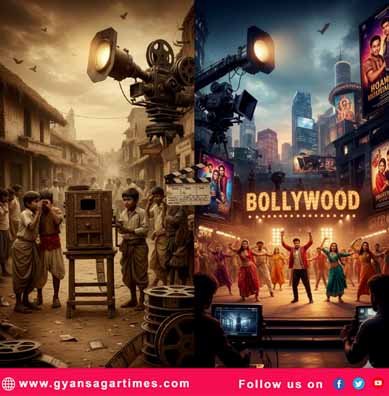
आज हम एक ऐसे सफर की और लेकर चलते है जब सिनेमा का विकाश हो रहा था. आप लोगों ने बायस्कोप देखा होगा या नाम ही सूना होगा. भारतीय सिनेमा का सफर एक बायस्कोप नामक साधारण उपकरण के छोटे-से प्रदर्शन से शुरू होकर आज दुनिया की सबसे बड़ी फिल्म इंडस्ट्री बॉलीवुड तक पहुँच गया है. यह यात्रा न सिर्फ तकनीकी विकास को दर्शाती है, बल्कि भारत के सामाजिक, सांस्कृतिक और राजनीतिक बदलावों का भी आईना है.
भारतीय सिनेमा की शुरुआत वर्ष 1896 में मुंबई के वॉटसन होटल में लूमियर बंधुओं के चलचित्र प्रदर्शनों के साथ हुई. शुरुआती दौर में, लोग एक छोटे से बॉक्स में लगी लेंस के माध्यम से स्थिर या चलती तस्वीरों को देखते थे, जिसे बायस्कोप या ‘टॉकींग मशीन’ कहा जाता था.
भारतीय सिनेमा के जनक कहे जाने वाले धुंडिराज गोविंद फाल्के ने वर्ष 1913 में भारत की पहली पूर्ण लंबाई वाली फीचर फिल्म, ‘राजा हरिश्चंद्र’ का निर्माण किया. यह एक मूक (साइलेंट) फिल्म थी, जिसने पौराणिक कथाओं को पर्दे पर जीवंत किया.
इस युग की फिल्में मुख्य रूप से पौराणिक कथाओं, ऐतिहासिक घटनाओं और सामाजिक नाटकों पर आधारित थीं. ये फिल्में श्वेत-श्याम (ब्लैक एंड व्हाइट) थीं और इनमें कोई संवाद या पार्श्व संगीत नहीं था, केवल स्क्रीन पर शीर्षक कार्ड (टाइटल कार्ड) के माध्यम से कहानी बताई जाती थी.
वर्ष 1931 में, ‘आलम आरा’ के रिलीज के साथ भारतीय सिनेमा में एक नई क्रांति आई. यह भारत की पहली बोलती (टॉकी) फिल्म थी, जिसने दर्शकों को आवाज और संगीत का एक नया अनुभव दिया. मूक से बोलती फिल्मों में संक्रमण ने सिनेमा को एक नया आयाम दिया. फिल्मों में संवाद, गीत और संगीत का समावेश हुआ.
वर्ष 1950 – 60 का दशक भारतीय सिनेमा का स्वर्णिम युग माना जाता है. इस दौरान गुरु दत्त, बिमल रॉय, सत्यजीत रे, महबूब खान जैसे महान निर्देशकों ने ‘प्यासा’, ‘मदर इंडिया’, ‘दो बीघा ज़मीन’, ‘साहिब बीबी और गुलाम’ जैसी कालजयी फिल्में बनाईं. इन फिल्मों ने स्वतंत्रता के बाद के भारत की सामाजिक समस्याओं, गरीबी, वर्ग संघर्ष और राष्ट्र-निर्माण के विषयों को प्रभावी ढंग से उठाया.
वर्ष 1970 के दशक में, फिल्म निर्माण में एक व्यावसायिक दृष्टिकोण आया, जिससे ‘एक्शन’, ‘रोमांस’ और ‘कॉमेडी’ का मिश्रण यानी मसाला फिल्में लोकप्रिय हुईं. अभिनेता अमिताभ बच्चन ने ‘एंग्री यंग मैन’ के रूप में पहचान बनाई, जो समाज की अव्यवस्था से लड़ने वाले आम आदमी का प्रतिनिधित्व करते थे. एक्शन दृश्यों और कैंची (catchy) संगीत का बोलबाला बढ़ा. इसी दौरान, श्याम बेनेगल, गोविंद निहलानी जैसे निर्देशकों ने ‘यथार्थवादी’ और कलात्मक समांतर सिनेमा को भी बढ़ावा दिया, जो बॉलीवुड की मुख्यधारा से अलग था.
वर्ष 1990 के दशक में भारत की अर्थव्यवस्था के उदारीकरण के साथ, भारतीय सिनेमा का रूप और दायरा दोनों बदल गए, और इसे विश्व स्तर पर ‘बॉलीवुड’ नाम से जाना जाने लगा. ‘दिलवाले दुल्हनिया ले जाएंगे’ जैसी फिल्मों ने विदेशों में शूटिंग, बड़े बजट, और पारिवारिक मूल्यों पर ज़ोर देना शुरू किया. वर्ष 2000 के दशक में मल्टीप्लेक्स के उदय से फिल्म देखने का अनुभव बदला और विषय-वस्तु में अधिक प्रयोग होने लगे. डिजिटल फिल्म निर्माण, बेहतर स्पेशल इफ़ेक्ट्स (VFX), और अंतर्राष्ट्रीय मानकों की सिनेमैटोग्राफी ने बॉलीवुड को विश्व स्तरीय बना दिया. वर्तमान में, ओटीटी (ओवर-द-टॉप) प्लेटफार्मों ने फिल्म निर्माण और वितरण के तरीके को बदल दिया है, जिससे प्रयोगधर्मी और यथार्थवादी कहानियों को अधिक दर्शक मिल रहे हैं.
बायस्कोप के एक झटके वाले प्रदर्शन से शुरू होकर, बॉलीवुड आज अरबों डॉलर का उद्योग बन चुका है. यह सफर तकनीक (मूक से डिजिटल), विषय-वस्तु (पौराणिक से समकालीन), और वितरण (चलती-फिरती प्रदर्शनी से ओटीटी) के निरंतर विकास की कहानी है.
========== ========= ===========
From Bioscope to Bollywood: A Cinematic Journey…
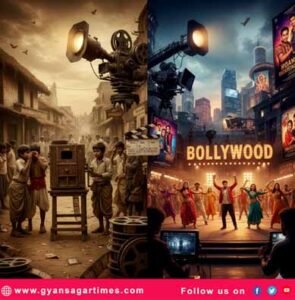
Today, we take you on a journey through the evolution of cinema. You may have seen a bioscope or at least heard the name. The journey of Indian cinema began with a small demonstration of a simple device called a bioscope and has now reached Bollywood, one of the world’s largest film industries. This journey not only reflects technological advancements but also mirrors the social, cultural, and political changes in India.
Indian cinema began in 1896 with the Lumière brothers’ film screenings at Watson’s Hotel in Mumbai. In the early days, people watched still or moving images through a lens mounted in a small box, called a bioscope or ‘talking machine’.
Dhundiraj Govind Phalke, considered the father of Indian cinema, produced India’s first full-length feature film, ‘Raja Harishchandra’, in 1913. It was a silent film that brought mythological stories to life on screen.
Films of this era were primarily based on mythological tales, historical events, and social dramas. These films were black and white and had no dialogue or background music; the story was told only through title cards on the screen.
In 1931, a new revolution came to Indian cinema with the release of ‘Alam Ara’. It was India’s first talking film, giving audiences a new experience of sound and music. The transition from silent to talking films gave cinema a new dimension. Dialogue, songs, and music were incorporated into films.
The 1950s and 60s are considered the golden age of Indian cinema. During this period, great directors like Guru Dutt, Bimal Roy, Satyajit Ray, and Mehboob Khan made timeless films like ‘Pyaasa’, ‘Mother India’, ‘Do Bigha Zameen’, and ‘Sahib Bibi Aur Ghulam’. These films effectively addressed social issues, poverty, class struggles, and nation-building themes in post-independence India.
In the 1970s, a commercial approach to filmmaking emerged, leading to the popularity of ‘masala’ films—a blend of action, romance, and comedy. Actor Amitabh Bachchan rose to prominence as the ‘angry young man,’ representing the common man fighting against societal injustices. Action sequences and catchy music became prevalent. During this time, directors like Shyam Benegal and Govind Nihalani also promoted ‘realistic’ and artistic parallel cinema, distinct from mainstream Bollywood.
With the liberalization of India’s economy in the 1990s, the form and scope of Indian cinema changed, and it became known globally as ‘Bollywood’. Films like ‘Dilwale Dulhania Le Jayenge’ began featuring overseas shooting locations, larger budgets, and an emphasis on family values. The rise of multiplexes in the 2000s transformed the film-watching experience and led to greater experimentation in subject matter. Digital filmmaking, improved special effects (VFX), and international-standard cinematography made Bollywood world-class. Currently, OTT (over-the-top) platforms have revolutionized the way films are made and distributed, giving experimental and realistic stories a wider audience.
From its humble beginnings with a flickering bioscope projection, Bollywood has grown into a multi-billion dollar industry. This journey is a story of continuous evolution in technology (from silent to digital), subject matter (from mythological to contemporary), and distribution (from traveling exhibitions to OTT).