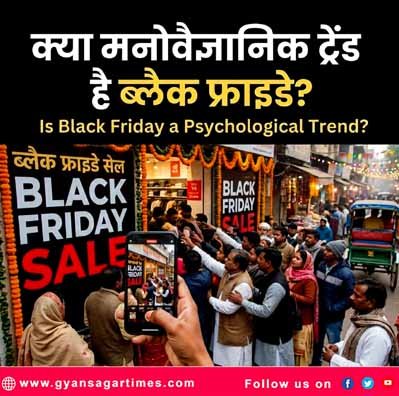
सनातन संस्कृति जहाँ हर दिन शुभ होता है वहीँ, अमेरिकन कंट्री में एक शब्द आम होता है “ब्लैक फ्राइडे”. वैसे तो देखा जय तो यह संस्कृति का हिस्सा नहीं था लेकिन, व्यापार जगत के कारण, यह अब संस्कृति का हिस्सा बन चुका है. समायंतर के साथ अब इसकी जड़े भारतवर्ष में भी पहुँच चुकी है और इसके दीवाने भी भारतवर्ष में मौजूद है. “ब्लैक फ्राइडे”. का इन्तजार ग्राहकों को पुरे वर्ष रहता है.
ब्लैक फ्राइडे अमेरिका के थैंक्सगिविंग के बाद शुरू हुई परंपरा से निकलकर एक वैश्विक रिटेल बन चुका है.ब्लैक फ्राइडे की भारी छूट और प्रचार लोगों को खरीदारी के लिए प्रेरित करने के लिए कई शक्तिशाली मनोवैज्ञानिक सिद्धांतों का उपयोग किया जाता है. सबसे बड़ी बात तो यह है कि, “जब तक स्टॉक है” या “पहले आओ, पहले पाओ” जैसे वाक्यांश ग्राहक को तुरंत खरीदने के लिए मजबूर करते हैं, यह सोचकर कि अगर वे इंतजार करेंगे तो अवसर चूक जाएगा.
यह डील्स अक्सर केवल 24 -48 घंटों के लिए ही मान्य होती हैं. यह तत्काल आवश्यकता की भावना पैदा करता है, जिसे मनोवैज्ञानिक रूप से ‘चूकने का डर’ कहा जाता है. उदाहरण के लिए : – एक ग्राहक जिसे नए टीवी, मोबाइल व अन्य उपकरण की आवश्यकता नहीं है, वह भी केवल इसलिए खरीद सकता है क्योंकि वह इतनी बड़ी छूट खोना नहीं चाहता है. यह तब होता है जब मूल कीमत पर अधिक भरोसा करते हैं. दूसरी तरफ ब्लैक फ्राइडे पर मूल कीमत की बजाय उस पर छूट मिले जो आकर्षक हो. यहाँ ग्राहक को विश्वास हो जाता है कि, उसे बड़ा फायदा मिल रहा है.
वहीँ, ग्राहक छूट को “पैसा बचाना” मानते हैं, न कि “पैसा खर्च करना”. उदाहरण- ग्राहक द्वारा बचाई गई राशि (जैसे, 50% छूट पर ₹10,000 बचाना) उन्हें खरीद के बाद में अच्छा महसूस कराती है.
जब से इंटरनेट पर बाजार उपलब्ध हुआ है तभी से ब्लैक फ्राइडे का इंतजार होने लगा है. जब ग्राहक देखते हैं कि अन्य लोग (ऑनलाइन या स्टोर में) किसी उत्पाद के लिए दौड़ रहे हैं, तो वे भी मान लेते हैं कि वह उत्पाद वांछनीय और मूल्यवान है.
ग्राहकों के लिए ब्लैक फ्राइडे की खरीदारी अक्सर एक “खोज” या “जीत” की तरह महसूस होती है. डील्स खोजने की प्रक्रिया एक पुरस्कार की उम्मीद से प्रेरित होती है. जब ग्राहक को एक अच्छी डील मिलती है, तो डोपामाइन (खुशी का हार्मोन) का स्राव होता है, जो उन्हें अधिक डील्स की तलाश जारी रखने के लिए प्रेरित करता है, यह डील भी जुए के ही समान है.
ब्लैक फ्राइडे जहाँ उपभोक्ताओं को ऐसी वस्तुएं खरीदने की अनुमति देता है, जो उनकी “आदर्श पहचान” से मेल खाती हैं. ग्राहक अक्सर यही सोचते हैं कि ये वस्तुएँ उन्हें खुश, सफल या अधिक आकर्षक महसूस कराएंगी। वहीँ, छूट इस खरीदारी को “बुद्धिमान” या “वित्तीय रूप से जिम्मेदार” बनाती है, जिससे आत्म-सम्मान को बढ़ावा मिलता है.
भारत में ब्लैक फ्राइडे का अपनाव सिर्फ सौदेबाज़ी नहीं बल्कि, यह डिजिटल-फर्स्ट पहचान, वैश्विक संस्कृति का हिस्सा बनने और “स्मार्ट-बायर” होने की सामाजिक छवि से जुड़ता है.
ब्लैक फ्राइडे हमारी इच्छाओं, पहचान और समय-बोध का आईना है. कोई भी डील उतनी ही अच्छी है जितना हम उसे समझने का समय देते हैं. ब्लैक फ्राइडे सिर्फ एक बिक्री कार्यक्रम नहीं है; यह मनोवैज्ञानिक ट्रिगर्स का एक सावधानीपूर्वक तैयार किया गया मिश्रण है जो ग्राहक की इच्छा को उत्तेजित करते हैं, ग्राहक अक्सर आवेगपूर्ण निर्णय लेते हैं और छूट की अवधि समाप्त होने पर पछताते भी है. वैसे तो देखा जाय तो “बचत सिर्फ कीमत में नहीं, जीवन के संतुलन में भी दिखे”…
========== ========= ===========
Is Black Friday a psychological trend?
While Sanatan culture considers every day auspicious, in American countries, the term “Black Friday” is common. While it wasn’t originally part of the culture, thanks to the business world, it has now become a part of the culture. Over time, it has taken root in India, and its fans are also present there. Customers wait for “Black Friday” all year long.
Black Friday has evolved from a tradition that began after Thanksgiving in America to a global retail phenomenon. Black Friday’s massive discounts and promotions use several powerful psychological principles to motivate people to shop. Most importantly, phrases like “while stocks last” or “first come, first served” compel customers to buy immediately, believing that waiting will miss the opportunity.
These deals are often valid for only 24-48 hours. This creates a sense of urgency, psychologically known as the “fear of missing out.” For example: A customer who doesn’t need a new TV, mobile phone, or other appliance may buy it simply because they don’t want to miss out on a significant discount. This occurs when customers trust the original price more. On Black Friday, on the other hand, the discount offered is attractive rather than the original price. This gives the customer confidence that they are receiving a significant benefit.
Consequently, customers perceive discounts as “saving money,” not “spending money.” For example, the amount saved (e.g., saving ₹10,000 at a 50% discount) makes them feel good after the purchase.
Black Friday has been awaited ever since the internet became available. When customers see others rushing to buy a product (either online or in-store), they also assume that the product is desirable and valuable.
For consumers, Black Friday shopping often feels like a “discovery” or a “win.” The process of finding deals is driven by the expectation of a reward. When consumers find a good deal, dopamine (the pleasure hormone) is released, motivating them to continue searching for more deals. This deal is also akin to gambling.
While Black Friday allows consumers to purchase items that align with their “ideal identity,” consumers often believe these items will make them feel happier, successful, or more attractive. Discounts also make these purchases appear “wise” or “financially responsible,” boosting self-esteem.
The adoption of Black Friday in India is not just about bargaining, but also about a digital-first identity, being part of a global culture, and the social image of being a “smart buyer.”
Black Friday mirrors our desires, identities, and sense of time. Any deal is only as good as the time we take to understand it. Black Friday isn’t just a sales event; it’s a carefully crafted blend of psychological triggers that stimulate customer desire, often leading to impulsive decisions and regret when the discount period ends. In other words, “savings shouldn’t just be seen in price, but also in life balance”…