
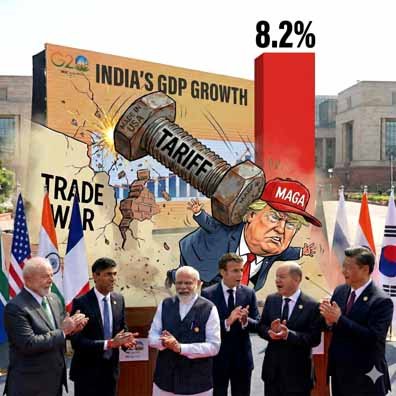
आम तौर पर एक कहावत लोग कहते है “नियत ठीक है तो बरकत मिलती है”. वर्तमान समय में यह कहावत “टैरिफ बम ” पर सटीक बैठती है. ट्रम्प का टैरिफ अब ट्रम्प पर ही भारी पड़ रहा है. नए भारत की विकसित और ऊँची सोच ने “ट्रम्प की कुटिल शतरंजी ” चालों को ध्वस्त करते हुए भारतीय अर्थव्यवस्था की रफ़्तार दूसरी तिमाही में करीब 8. 2% रहा.
अमेरिकी राष्ट्रपति डोनाल्ड ट्रम्प ने अपने देश की घाटे से उबारने व व्यापार संतुलन को सुधारने के उद्देश्य से लगाए गए टैरिफ (आयात शुल्क) से भारत के लिए एक चुनौती खड़ी की लेकिन भारतीय अर्थव्यवस्था और सरकार की प्रतिक्रिया ने ट्रम्प की नीतियों के इच्छित प्रभाव को काफी हद तक बेअसर कर दिया. कुछ क्षेत्रों में निर्यात में गिरावट के बावजूद, भारत ने एक हद तक मजबूती दिखाई, जिसके कारण यह कहा जा सकता है कि ट्रम्प अपने ‘टैरिफ के खेल’ में भारत पर अपेक्षित ‘डंक’ मारने में भौंचक रह गए.
ज्ञात है कि, ट्रम्प प्रशासन ने अमेरिका के व्यापार घाटे को कम करने और अमेरिकी उद्योगों की रक्षा के लिए विभिन्न देशों पर प्रतिशोधात्मक टैरिफ (Reciprocal Tariffs) लगाए. भारत पर भी कई वस्तुओं पर 10% से लेकर 50% तक के उच्च टैरिफ लगाए गए. रूस से तेल आयात जारी रखने के कारण भारत पर अतिरिक्त 25% टैरिफ भी लगाया गया था. जिसके कारण शुरुआत में ही निर्यात में गिरावट दर्ज की गई थी. जैसे : – इंजीनियरिंग सामान, कपड़ा, आभूषण और समुद्री भोजन जैसे कुछ प्रमुख भारतीय निर्यात क्षेत्रों पर टैरिफ का सीधा असर पड़ा. इंजीनियरिंग एक्सपोर्ट प्रमोशन काउंसिल (EEPC) के अनुसार, अमेरिका को भेजे जाने वाले इंजीनियरिंग सामानों में गिरावट देखी गई. अमेरिकी बाजार में भारतीय सामान महंगे होने के कारण, उनकी प्रतिस्पर्धात्मकता कम हुई और मांग पर असर पड़ा.
हकीकत तो यह है कि ट्रम्प की मंशा थी कि, उच्च टैरिफ लगाकर भारत को एक व्यापार समझौते पर झुकने के लिए मजबूर करना साथ ही निर्यात में भारी नुक्सान पहुंचाना लेकिन, भारतीय चालों के सामने अमेरिका को अपने ही घर में नुक्सान उठाना पड़ रहा है. वहीँ, वर्तमान समय भारत केवल अमेरिका पर निर्भर नहीं है. भारत ने अपने निर्यात बाजार को अन्य क्षेत्रों, जैसे यूएई (UAE) और आसियान (ASEAN) देशों की ओर सफलतापूर्वक बढ़ाया। भारत सरकार ने निर्यातकों को राहत देने और उनकी प्रतिस्पर्धात्मकता बनाए रखने के लिए विभिन्न प्रोत्साहन योजनाओं (जैसे क्रेडिट गारंटी) को मंजूरी दी. वहीं, वाणिज्य मंत्रालय की रिपोर्ट के अनुसार, कई भारतीय सामानों की मांग पर कोई खास नकारात्मक असर नहीं पड़ा, बल्कि कुछ मामलों में मांग बढ़ी भी.
सामरिक अवसर पर अमेरिका की संरक्षणवादी नीति ने भारत को अपनी स्वदेशी तकनीक और विनिर्माण पर अधिक जोर देने का एक रणनीतिक अवसर दिया। जैसे : – भारत ने अमेरिका के F-35 फाइटर जेट को सिरे से खारिज कर दिया और अपनी रक्षा उत्पादन क्षमताओं को मजबूत करने पर ध्यान केंद्रित किया. टैरिफ के संभावित दीर्घकालिक प्रभावों का मुकाबला करने के लिए, भारत लगभग 50 देशों के साथ मुक्त व्यापार समझौते (FTA) पर बातचीत कर रहा है, जो वैश्विक व्यापार में अपनी स्थिति को और मजबूत करेगा.
ट्रम्प की संरक्षणवादी व्यापार नीति जिसे वह ‘टैरिफ ब्रह्मास्त्र’ मानते थे, भारत के मामले में हुआ फेल. इसके कारण भारतीय निर्यातकों को निश्चित रूप से चुनौतियों का सामना करना. भारतीय अर्थव्यवस्था की बढ़ती घरेलू मांग, विविध बाजार और सरकार की सक्रिय प्रतिक्रिया ने अमेरिकी टैरिफ के सबसे बुरे प्रभावों को बेअसर कर दिया. एक तरफ ट्रम्प की ऊँची दरें तात्कालिक दबाव बनाती हैं, पर भारत की जीत वहीं है जहाँ वह बाजार के हिसाब से अपनी निर्यात-टोकरी को मानकों के साथ उन्नत कर रहा है. शतरंज के इस खेल में ट्रंप की चाल ट्रंप पर ही भारी पड़ गई. वहीँ भारत ने इन चुनौतियों को एक रणनीतिक अवसर में बदल दिया, जिसने उसे अपनी आत्मनिर्भरता और वैश्विक व्यापारिक संबंधों को मजबूत करने की दिशा में प्रेरित किया. साथ ही भारत ने ट्रम्प की टैरिफ रणनीति की धार को कुंद करते हुए वैश्विक बाजार में अपना स्थान मजबूत कर लिया.
========== ========= ===========
Trump Fumbled in Tariff Game…

People commonly say, “If the intentions are right, you’ll receive blessings.” This adage is aptly applied to the current “tariff bomb.” Trump’s tariffs are now proving to be a burden on Trump himself. The advanced and forward-thinking nature of New India thwarted Trump’s cunning chess moves, and the Indian economy grew at around 8.2% in the second quarter.
US President Donald Trump posed a challenge to India with the tariffs he imposed to address his country’s deficit and improve its trade balance. However, the Indian economy and government’s response largely neutralized the intended impact of Trump’s policies. Despite a decline in exports in some sectors, India displayed a degree of resilience, suggesting that Trump was fumbled in his “tariff game” in achieving the desired “sting” on India.
It is known that the Trump administration imposed reciprocal tariffs on various countries to reduce the US trade deficit and protect American industries. India was also hit with high tariffs ranging from 10% to 50% on several goods. An additional 25% tariff was also imposed on India due to its continued import of oil from Russia. This initially led to a decline in exports. For example, the tariffs directly impacted some key Indian export sectors, such as engineering goods, textiles, jewelry, and seafood. According to the Engineering Export Promotion Council (EEPC), engineering goods shipped to the US declined. As Indian goods became more expensive in the US market, their competitiveness decreased and demand was impacted.
The reality is that Trump’s intention was to force India to agree to a trade agreement by imposing high tariffs and causing significant losses to exports. However, India’s moves are causing the US to suffer losses at home. At the same time, India is not solely dependent on the US. India successfully expanded its export markets to other regions, such as the UAE and ASEAN countries. The Indian government approved various incentive schemes (such as credit guarantees) to provide relief to exporters and maintain their competitiveness. According to a report from the Ministry of Commerce, demand for many Indian goods was not significantly negatively impacted, and in some cases, even increased.
A strategic opportunity: America’s protectionist policy presented India with a strategic opportunity to place greater emphasis on its indigenous technology and manufacturing. For example, India rejected the US F-35 fighter jet outright and focused on strengthening its defense production capabilities. To counter the potential long-term effects of tariffs, India is negotiating free trade agreements (FTAs) with approximately 50 countries, which will further strengthen its position in global trade.
Trump’s protectionist trade policy, which he considered a “tariff Brahmastra,” failed in India’s case. This will undoubtedly pose challenges for Indian exporters. The Indian economy’s growing domestic demand, diverse markets, and proactive government response neutralized the worst effects of US tariffs. While Trump’s high tariffs create immediate pressure, India’s victory lies in upgrading its export basket to market-relevant standards. In this game of chess, Trump’s moves backfired on India. India, on the other hand, turned these challenges into a strategic opportunity, propelling it towards self-reliance and strengthening global trade relations. Furthermore, India blunted the edge of Trump’s tariff strategy and strengthened its position in the global market.